On this page
- Getting to One of Indonesia’s Most Isolated Archipelagos
- How Nutmeg Rewired the World: The Banda Islands’ Spice History
- The Historical Sites You Have to See
- Diving and Snorkeling in the Banda Sea
- Where to Eat and Drink on Banda Neira
- Getting to Banda Neira in 2026
- Getting Around the Banda Islands
- Island Hopping Beyond Banda Neira
- Where to Stay on Banda Neira
- Best Time to Visit the Banda Islands
- Practical Tips for Visiting Banda
- What Traveling in Banda Costs in 2026
- Frequently Asked Questions
💰 Click here to see Indonesia Budget Breakdown
💰 Prices updated: September, 2026. Budget figures are estimates — always verify before travel.
Exchange Rate: $1 USD = Rp17,928.47
Daily Budget (per person)
Shoestring: Rp358,569 – Rp896,424 ($20.00 – $50.00)
Mid-range: Rp1,254,993 – Rp2,689,271 ($70.00 – $150.00)
Comfortable: Rp2,689,271 – Rp4,482,118 ($150.00 – $250.00)
Accommodation (per night)
Hostel/guesthouse: Rp71,714 – Rp179,285 ($4.00 – $10.00)
Mid-range hotel: Rp448,212 – Rp896,424 ($25.00 – $50.00)
Food (per meal)
Budget meal: Rp26,893.00 ($1.50)
Mid-range meal: Rp143,428.00 ($8.00)
Upscale meal: Rp537,854.00 ($30.00)
Transport
Single metro/bus trip: Rp3,500.00 ($0.20)
Monthly transport pass: Rp200,000.00 ($11.16)
Getting to One of Indonesia’s Most Isolated Archipelagos
In 2026, the Banda Islands remain one of Indonesia’s most rewarding and most demanding destinations. Flights from Ambon to Banda Neira still depend heavily on weather and aircraft availability, and the onward Pelni ferry schedule continues to baffle even experienced travelers. Tourists who expect the convenience of Bali or Lombok will be caught off guard. But those who do the planning — book the right connections, carry enough cash, and embrace the pace — arrive somewhere that genuinely feels untouched. These ten volcanic islands sitting in the Banda Sea changed the course of world history, and most of their story is still right there on the surface, crumbling beautifully in the tropical heat.
How Nutmeg Rewired the World: The Banda Islands’ Spice History
For most of human history, nutmeg grew only here. Not in Sri Lanka, not in India, not in the Caribbean — only on these small volcanic islands in the Banda Sea. That biological accident made the Banda Islands the most strategically important real estate on the planet for roughly 300 years. European powers that controlled nutmeg controlled an ingredient worth more than gold by weight in medieval markets, used to preserve meat, treat plague, and signal extraordinary wealth at a dinner table.
The Portuguese arrived first in the early 1500s, establishing a trading footprint but never fully dominating the islands. The Dutch East India Company — the VOC — came next and had no interest in sharing. By 1621, VOC Governor-General Jan Pieterszoon Coen carried out what historians now call the Banda massacre: a systematic killing of nearly the entire indigenous Bandanese population, estimated at 15,000 people, to enforce an absolute nutmeg monopoly. The islands were then parcelled into perken — plantations — and handed to Dutch colonists who used enslaved labour to harvest the crop.
The story has a quietly extraordinary footnote. In 1667, the Dutch traded the island of Run — a tiny Banda island held by the English — to England in exchange for a swampy outpost on the North American coast. That outpost was New Amsterdam. The English renamed it New York. The Dutch got their nutmeg monopoly back. It is, by any measure, one of history’s stranger bargains.
By the late 1800s, the Dutch monopoly had collapsed after a French botanist smuggled nutmeg seedlings out of the islands, and the Banda Islands slipped into the obscurity they hold today. That isolation is exactly what preserved them.

The Historical Sites You Have to See
Fort Belgica
Fort Belgica sits on a hill above Banda Neira town and is the visual symbol of the islands. Built by the Dutch in 1611 and expanded after the massacre, it is a five-pointed pentagonal fort — an unusual design for this part of the world — and it is in remarkably solid condition. Climb to the upper ramparts at sunrise and you get a panorama that takes in the whole of Banda Neira, the harbour, and the smoking cone of Gunung Api across the water. The warm orange light hits the old Dutch cannons still pointing toward the sea, and the smell of frangipani drifts up from the gardens below. It costs around Rp 25,000 to enter and you can easily spend an hour here without rushing.
Fort Nassau
Down near the waterfront, Fort Nassau is older and more ruined than Belgica — the Portuguese originally built a structure here before the Dutch expanded it. The decay is part of the atmosphere. Tropical vegetation has pushed through the walls in places, and the outline of the original layout takes some imagination to read. It is a quieter, less-visited site than Belgica, which suits those who want to sit in the ruins without a crowd.
Dutch Colonial Town
Banda Neira’s main street is lined with Dutch colonial buildings in various states of preservation. Some are still inhabited; others are slowly returning to the earth. The old church, Gereja Banda Neira, dates to 1852 and still holds services. Walk slowly along the waterfront streets in the early morning, before the heat builds, and you pass warehouses with VOC-era ironwork on the doors, old plantation-owner mansions with shuttered windows, and small gardens where nutmeg trees grow as casually as weeds.
Working Nutmeg Plantations
Several of the old perken plantations on Banda Besar island are still operating. A local guide can walk you through a working plantation where the whole process — harvesting the fruit, separating the mace from the seed, drying the nutmeg — happens exactly as it did 400 years ago, minus the enslaved labour. The bright scarlet mace wrapped around a dark brown nutmeg seed is one of the more quietly striking things you’ll see on the islands.

Diving and Snorkeling in the Banda Sea
The Banda Sea is not well-marketed but it is, by the assessment of most serious divers who have made the effort to reach it, among the top five dive environments in Indonesia. The walls drop to extreme depths almost immediately off the islands’ edges, and the nutrient upwelling from the deep Banda Sea feeds an extraordinary density of marine life. Reef sharks, napoleon wrasse, schools of barracuda, manta rays on certain seasonal passes — the underwater topography here is dramatic in a way that the more crowded sites in Lombok or even Raja Ampat rarely deliver with this little boat traffic.
In 2026, there are two established dive operators on Banda Neira. Equipment rental is available but bring your own if you’re particular about fit. Snorkeling directly off the small beach near the main pier also delivers impressive visibility — the water is so clear on a calm day that the reef begins to reveal itself before you’ve put your mask on.
Gunung Api’s underwater lava fields, accessible by a short boat ride, are a genuinely alien diving experience. The hardened black lava formations contrast with the soft corals growing over them, and the whole structure feels like diving on the surface of another planet.
Where to Eat and Drink on Banda Neira
Banda Neira’s food scene is small, honest, and excellent if you know where to go. The town’s main market — Pasar Banda Neira — operates from around 6am and is where local fishermen sell the morning catch directly. Tuna, grouper, and reef fish are common. Buy something here and most guesthouse owners will cook it for you that evening for a small extra charge — this is how most independent travelers eat best on the island.
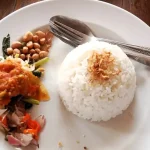
Warung Ibu Elly near the waterfront is the most consistently recommended local spot for a sit-down meal. Expect grilled fish, rice, and sambal, served on a table overlooking the harbour. The ikan bakar here comes off a charcoal grill with skin charred and crackling, the flesh still moist underneath, eaten with a sambal so fresh it smells of the morning’s tomatoes and chillies. It costs around Rp 50,000–80,000 for a full plate with rice.
Several of the mid-range guesthouses serve set meals in the evenings — often the best option after a long day of diving or island-hopping, when you want food without navigating the dark streets. The Maulana Heritage guesthouse in particular has a dining veranda that catches the evening breeze off the water.
For coffee in the morning, there are small stalls near the fort entrance that sell strong black kopi tubruk for Rp 8,000–12,000. There are no specialty cafes or smoothie bowls. This is part of the deal with Banda Neira.
Getting to Banda Neira in 2026
The most practical route in 2026 is to fly into Ambon (AMQ) from Makassar, Jakarta, or Surabaya, and then take the Wings Air or Susi Air flight from Ambon’s Pattimura Airport to Banda Neira’s Mathilda Batlayeri Airport. This flight takes approximately 45 minutes but operates only a few times per week, and cancellations for weather or technical reasons are not unusual. Book early and build in a buffer day in Ambon before your Banda departure.
The alternative is the Pelni ferry, which connects Ambon to Banda Neira on a route that continues through the Maluku islands. The ferry journey takes around 8–12 hours depending on the vessel and conditions. It is affordable — economy class is around Rp 150,000–200,000 — and it is genuinely atmospheric, but check the 2026 Pelni schedule carefully because the frequency and routing change seasonally and are updated irregularly on the Pelni website.
A fast speedboat service between Ambon and Banda has been discussed for several years but as of mid-2026 remains unreliable as a regular commercial route. Private speedboat charter is possible from Ambon for groups but costs several million rupiah.
From Ambon, there are direct flights to Jakarta (approximately 3.5 hours with Garuda or Lion Air), Makassar, and Surabaya, all with onward connections to the rest of Indonesia and internationally.
Getting Around the Banda Islands
Banda Neira itself is small enough to walk almost everywhere. The main historical sites — Fort Belgica, Fort Nassau, the colonial town, the museum — are all within 20 minutes of each other on foot. Ojek (motorcycle taxis) are available for hire around the pier area and charge Rp 20,000–40,000 for short trips around the island.
To reach the other islands, you hire a local wooden speedboat or longboat from the main pier. Prices are negotiable but generally run Rp 150,000–400,000 per boat depending on distance and duration. For Gunung Api, Banda Besar, and the closer snorkeling spots, this is straightforward to arrange independently. For the more remote islands like Run and Hatta, it helps to organize through your guesthouse, who will know reliable local boatmen and can help with timing around sea conditions.
Island Hopping Beyond Banda Neira
Gunung Api
A 15-minute boat ride from Banda Neira, this active volcano last erupted in 1988. The hike to the crater rim takes about 2–3 hours and is steep and demanding in the tropical heat. Start before 7am. The views from the top — down over the entire Banda archipelago on a clear day — are among the finest in Maluku.
Banda Besar
The largest island in the group, about 20 minutes by boat, is where the working nutmeg plantations are concentrated. The ruins of Fort Hollandia and Fort Concordia are here, more decayed than those on Banda Neira but with an atmosphere of profound quiet. Combine with a plantation walk for a half-day trip.
Run Island
The island traded for New York. It takes about 45 minutes by speedboat and feels genuinely remote — fewer than 2,000 people live here. The snorkeling off Run’s eastern tip is spectacular. There’s a small community, a few basic food stalls, and a monument acknowledging the island’s extraordinary historical role. Most visitors come for a day.
Hatta Island
Named after Indonesia’s first vice-president, who was exiled here by the Dutch alongside Sukarno, Hatta offers pristine reef diving and a genuinely end-of-the-road atmosphere. The dive sites off Hatta’s walls are considered among the best in the archipelago by the operators who run trips here.
Pulau Ai
Home to another Dutch fort — Fort Revenge — and excellent reef snorkeling in the shallows. Ai is quieter than Banda Besar and can be combined with Run in a full-day boat trip for visitors with limited time.
Where to Stay on Banda Neira
Accommodation on Banda Neira is limited but functional across budget tiers. There are no international hotel chains here and no boutique design hotels in the Seminyak sense. What exists is a small collection of family-run guesthouses, a couple of heritage properties, and basic homestay rooms.
- Budget (under Rp 250,000/night): Basic homestays around the main street offer clean rooms with fan, shared bathroom, and usually breakfast included. They are simple but well-maintained. Expect thin mattresses, intermittent WiFi, and hosts who are genuinely helpful with local information.
- Mid-range (Rp 300,000–600,000/night): Guesthouses like Maulana Heritage and Delfika 2 offer en-suite rooms, air conditioning, and access to a common veranda or dining area. Maulana Heritage is housed in a restored Dutch colonial building and has the most atmospheric common spaces on the island.
- Comfortable (Rp 700,000–1,200,000/night): The upper end of Banda’s accommodation market remains small. A few guesthouses have invested in better bedding, private bathrooms with hot water, and semi-reliable WiFi. Do not expect luxury by mainland Indonesia standards. The premium here is relative comfort, not amenity stacking.
Book ahead if traveling in peak season (July–August and December). The total number of available rooms on the island is small and fills up quickly when dive groups arrive.
Best Time to Visit the Banda Islands
The Banda Islands sit in the Banda Sea and experience two distinct seasons driven by the monsoon. The best time to visit for diving, island-hopping, and historical exploration is April through November, with the absolute sweet spot being May, June, and September. During these months, seas are calm, visibility underwater is at its finest, and the risk of cancelled flights from Ambon is lower.
July and August are peak visitor months and the islands get as busy as they ever get — which is still quiet by any comparison to mainstream Indonesian destinations. Prices for boats and accommodation nudge up slightly.
December through March brings the west monsoon, which delivers rougher seas, frequent rain, and reduced visibility for diving. Boat trips to the outer islands become less reliable. Some guesthouses reduce their hours or close partially. Flying in and out during this period carries a higher cancellation risk. If you have to visit in the wet season, build generous flexibility into your schedule.
There is no major festival calendar on Banda Neira that changes the visitor experience dramatically, but August 17th Indonesian Independence Day celebrations on the island are genuinely lively and worth timing a visit around if possible.
Practical Tips for Visiting Banda
- Cash is everything. There is one ATM on Banda Neira and it runs out of money regularly. Bring all the cash you expect to need from Ambon, plus a 30% buffer for unexpected boat hire, extra nights, or market purchases. In 2026 this has not changed despite calls from local tourism operators for better banking infrastructure.
- Power cuts happen, usually in the evenings. A portable power bank is essential. Most guesthouses have intermittent electricity.
- Connectivity is limited. Telkomsel has the strongest signal on Banda Neira but speeds are slow and unreliable. Download offline maps (Maps.me or Google Maps offline) for the islands before you leave Ambon.
- Water — drink bottled or filtered water only. Buy 1.5-litre bottles from the small shops near the market. Carry a reusable bottle and refill from the gallon dispensers at guesthouses where available.
- Health — the nearest hospital of any substance is in Ambon. Bring a personal first aid kit, prescription medications, and any seasickness medication if you plan on boat-heavy days. Sunscreen is important — the equatorial sun at sea level is intense.
- Dress respectfully in town. Banda Neira is a predominantly Muslim community. Cover shoulders and knees when walking through the town’s main streets and market areas.
- Guides — hiring a local guide for the fort and plantation visits costs around Rp 100,000–200,000 for a half-day and adds enormous depth to the historical sites. Most speak functional English and carry genuine family histories connected to the islands’ past.
What Traveling in Banda Costs in 2026
The Banda Islands are not expensive once you’re there — the cost lies in getting there. Here is a realistic breakdown of daily costs after arrival on Banda Neira:
- Budget traveler (Rp 300,000–450,000/day): Homestay bed with breakfast (Rp 200,000), meals from warung and market (Rp 80,000–100,000), snorkeling trips by splitting boat hire with other travelers (Rp 50,000–80,000 per person), fort entry (Rp 25,000).
- Mid-range traveler (Rp 600,000–900,000/day): Mid-range guesthouse with AC (Rp 400,000–500,000), restaurant meals at guesthouses (Rp 150,000), private or small-group boat hire for island hopping (Rp 200,000–300,000 split), guide fees.
- Comfortable traveler (Rp 1,000,000–1,500,000/day): Best available guesthouse room (Rp 700,000–1,000,000), all meals included or from better dining options, private boat for the day (Rp 400,000–600,000), guided dives with equipment rental (Rp 400,000–600,000 per dive).
Transport to and from Banda Neira adds significantly to any total trip budget. A return flight Ambon–Banda Neira is Rp 800,000–1,400,000 depending on timing and availability. Factor flights from your Indonesian hub city to Ambon on top of that.
Frequently Asked Questions
How do I get to the Banda Islands from Bali?
From Bali, fly to Ambon via Makassar or Surabaya — there is no direct Bali–Ambon service as of 2026. From Ambon, take the Wings Air or Susi Air flight to Banda Neira, which operates a few times weekly. Total travel time is typically 8–12 hours including connections. Build in a night in Ambon as a buffer.
Is it safe to visit the Banda Islands?
Yes. The Banda Islands are safe for independent travelers. Crime against tourists is extremely rare. The main risks are practical: rough seas on boat trips, limited medical facilities, and the logistical complexity of reaching and leaving the islands. Basic preparation eliminates most problems. Travel insurance with medical evacuation coverage is strongly recommended.
Do I need to speak Indonesian to visit Banda Neira?
Basic Indonesian phrases help enormously and are warmly received. English is understood by guesthouse owners, dive operators, and guides who work with tourists regularly, but you will not find English menus, English-language signage, or English-speaking staff at most local warungs. A translation app and a few Indonesian basics go a long way.
How many days should I spend on the Banda Islands?
A minimum of four nights gives you time to cover the main historical sites on Banda Neira, complete one or two island-hopping day trips, and do at least one diving or extended snorkeling session. Five to seven nights is better if you want to reach Run and Hatta, hike Gunung Api, and have rest days built in. Rushing the Banda Islands undermines the point of going.
What is the Banda Islands’ connection to Run and New York?
In 1667, the Treaty of Breda ended a series of Anglo-Dutch wars. As part of the settlement, England handed the Dutch their claim to Run Island — a small Banda island rich in nutmeg — in exchange for the Dutch colony of New Amsterdam on the North American coast. The English renamed that colony New York. The Dutch considered it a good trade because they reclaimed their nutmeg monopoly.
📷 Featured image by Ammar Andiko on Unsplash.