On this page
- Bali Is Bursting at the Seams — Here’s Where to Go Instead
- Sumba: Savanna, Surf, and Stone Tombs
- Banda Islands: The Forgotten Centre of the Spice World
- Morotai: War Relics and Empty Beaches
- Belitung: Granite Boulders and Empty Blue Water
- The Forgotten Gilis: Nanggu, Sudak, and Gede
- Siberut: Mentawai Culture and Legendary Surf
- Enggano: Indonesia’s Isolated Western Outpost
- Weh Island: Sabang and the Western Edge of Indonesia
- Ternate: Volcano, Sultanate, and the Gateway North
- Selayar: Dive Paradise South of Sulawesi
- How to Plan a Multi-Island Trip in 2026
- What It Actually Costs in 2026
- Frequently Asked Questions
💰 Click here to see Indonesia Budget Breakdown
💰 Prices updated: September, 2026. Budget figures are estimates — always verify before travel.
Exchange Rate: $1 USD = Rp17,928.47
Daily Budget (per person)
Shoestring: Rp358,569 – Rp896,424 ($20.00 – $50.00)
Mid-range: Rp1,254,993 – Rp2,689,271 ($70.00 – $150.00)
Comfortable: Rp2,689,271 – Rp4,482,118 ($150.00 – $250.00)
Accommodation (per night)
Hostel/guesthouse: Rp71,714 – Rp179,285 ($4.00 – $10.00)
Mid-range hotel: Rp448,212 – Rp896,424 ($25.00 – $50.00)
Food (per meal)
Budget meal: Rp26,893.00 ($1.50)
Mid-range meal: Rp143,428.00 ($8.00)
Upscale meal: Rp537,854.00 ($30.00)
Transport
Single metro/bus trip: Rp3,500.00 ($0.20)
Monthly transport pass: Rp200,000.00 ($11.16)
Bali Is Bursting at the Seams — Here’s Where to Go Instead
In 2026, Bali’s tourist levy is now IDR 150,000 per foreign visitor, Kuta’s streets are gridlocked before 9am, and Seminyak’s beach clubs charge IDR 500,000 minimum spend just to touch the sand. The island isn’t broken — it’s just full. Meanwhile, Indonesia stretches across 17,000 Islands, many of them staggeringly beautiful, genuinely affordable, and almost entirely free of Instagram crowds. This guide cuts through the noise and names ten islands that deserve your attention right now, before the algorithm finds them too.
Sumba: Savanna, Surf, and Stone Tombs
Sumba looks nothing like the rest of Indonesia. Drive east from Tambolaka airport and the landscape opens into golden grasslands, ikat-weaving villages, and megalithic stone tombs sitting in the middle of clan compounds like they’ve always belonged there. The air smells of dried grass and woodsmoke in the dry season, and the silence between villages is the kind that actually registers in your chest.
The island splits neatly into two personalities. West Sumba holds the most traditional villages — Ratenggaro and Kampung Tarung being the most visited — where clan chiefs still live in towering thatched rumah adat and ancestral graves sit among the living spaces. East Sumba tilts toward the boutique resort crowd, particularly around Nihiwatu (now Nihi Sumba) near Pero, which has some of the best left-hand surf in the world. The break is world-famous but access to the surf rights has historically been restricted to Nihi guests. In 2026, independent surfers can access Pero beach via local fishing boat and time it with local guides who know the swell windows.
The annual Pasola festival — a ritualistic horse-mounted spear-throwing battle between clans — happens in February and March. Timing your visit around it is legitimate chaos and spectacle in the best possible way.
- Fly into: Tambolaka (SWQ) for West Sumba, Waingapu (WGP) for East Sumba via Bali or Kupang
- Best for: Culture, surf, landscape photography, off-grid resort stays
- Avoid: July–August if you hate other tourists; December–March if you hate mud roads

Banda Islands: The Forgotten Centre of the Spice World
The Banda Islands sit in the middle of the Banda Sea, four hours by fast boat from Ambon, and they carry the weight of one of history’s most brutal trades. These ten tiny volcanic islands were the only place on earth where nutmeg grew naturally for centuries, which made them worth fighting wars over. The Dutch fort on Banda Neira — Fort Belgica — still stands on a hill above the bay, its walls intact, its cannons aimed at nothing in particular anymore.
What makes Banda extraordinary in 2026 is how little has changed. Banda Neira town has one main street, a handful of colonial-era mansions converted into guesthouses, and a population of a few thousand people who seem genuinely pleased when travelers show up. The diving here is some of the best in Maluku — the underwater wall at Pulau Hatta drops 200 metres into blue nothing, and the visibility regularly hits 30 metres or more. Above water, Gunung Api, the active volcano of the group, erupted as recently as 1988 and you can hike it in two hours for a view across the entire archipelago at dawn.
Getting here is the real commitment. Fly Ambon, then either take the Pelni ferry (overnight, cheap, basic) or the Banda Express fast boat (4 hours, IDR 450,000–600,000 depending on the season). The effort filters the crowd. You will not find tour groups here.

- Best for: Serious divers, history obsessives, travelers who value solitude
- Stay: Guesthouses in Banda Neira run IDR 200,000–450,000 per night
Morotai: War Relics and Empty Beaches
Morotai is a North Maluku island that most Indonesians couldn’t point to on a map, which is exactly why it’s on this list. During World War II, it was a major Allied base — General MacArthur launched his Philippines campaign from here — and the seafloor around the island is scattered with sunken planes, tanks, and military equipment that’s been quietly corroding into reef habitat for 80 years.
The wreck diving is the main draw, and it’s legitimately world-class. A Japanese Zero fighter plane sits in about 15 metres of water near the coast, surrounded by glass fish and lionfish. There are also rusting landing craft, ammunition dumps, and hulks of military vehicles on the shallow sandy bottom that even snorkelers can see clearly. The beaches backing all this — particularly on the small islands off Morotai’s coast like Pulau Zum-Zum and Pulau Dodola — are white, clean, and almost entirely deserted on weekdays.
In 2026, Ternate to Morotai now has a twice-weekly direct Wings Air connection, replacing what used to be a full-day boat journey. The island’s tourism infrastructure is still early-stage — expect simple homestays rather than resorts, patchy electricity, and meals that depend on what was caught that morning.
Belitung: Granite Boulders and Empty Blue Water
Belitung is the island that appeared in the 2008 Indonesian film Laskar Pelangi and briefly put the island on the domestic tourism map. In 2026, it remains significantly undervisited by international travelers despite having a direct Citilink flight from Jakarta that takes under an hour and costs as little as IDR 400,000 one way if you book early.

The landscape is genuinely unusual. Giant granite boulders — some the size of houses — rise from the shallow turquoise sea around Tanjung Kelayang beach and the surrounding islands. The water between them is so clear and so still that boats appear to float on glass. Pulau Lengkuas, reachable by a 20-minute speedboat from Tanjung Kelayang, has a working Dutch colonial lighthouse from 1882 that you can climb for views across the boulder-dotted sea.
The island also has a surprisingly good food scene rooted in its Chinese-Indonesian (Tionghoa) heritage. Pasar Malam Tanjungpandan — the night market in the main town — runs every evening from around 6pm and serves mie Belitung (yellow noodles with prawn broth and potato) from stalls for IDR 20,000–35,000 a bowl. It’s thick, savoury, and warming in a way that cuts through the sea salt air.
- Fly into: H.A.S. Hanandjoeddin Airport (TJQ) from Jakarta, Batam, or Palembang
- Best for: Families, couples, first-time island-hoppers, budget travelers
- Day trip islands: Pulau Lengkuas, Pulau Babi, Pulau Kepayang
The Forgotten Gilis: Nanggu, Sudak, and Gede
Everyone knows Gili Trawangan, Gili Air, and Gili Meno off Lombok’s northwest coast. Far fewer people know that Lombok has a second cluster of Gilis off its southwest coast — Gili Nanggu, Gili Sudak, and Gili Gede — which have almost no tourist infrastructure and almost no tourists. These are reached by public boat from Tawun harbour near Sekotong, about 90 minutes from Mataram by car.
Gili Nanggu has one small resort and a beach that looks like it was styled by a photographer. Gili Gede is the largest of the group and has a small local village where fishing families still dry their catch on bamboo racks in the morning sun, the smell of salt and fish mixing with coconut smoke from cooking fires. Gili Sudak has a sandbar that appears at low tide and disappears by afternoon.

The snorkelling across all three is good — healthy coral and sea turtles are common — but the reef has seen some bleaching pressure. Visibility and coral health are still well ahead of the overcrowded northern Gilis. Day trip boats can be chartered from Tawun for around IDR 400,000–600,000 return for the boat (not per person).
Siberut: Mentawai Culture and Legendary Surf
Siberut is the largest of the Mentawai Islands, sitting off the west coast of Sumatra across the Mentawai Strait. Surfers have known about the Mentawais for decades — breaks like Macaronis, Lance’s Right, and Telescopes are on every serious surfer’s list — but Siberut itself has a second identity that most surf tourists miss entirely.
The interior of the island is primary rainforest, and the Mentawai people who live there have maintained a way of life that includes tattooing, shamanic healing practices, and a relationship with the forest that has kept the ecosystem largely intact. Cultural visits to interior villages are possible through locally-run guides based in Muara Siberut town — expect a full day of river travel by longboat, and a completely different Indonesia than the coast shows you.
Surf charters around the Mentawais operate out of Padang on the Sumatran mainland, typically running 7–14 day liveaboard trips that cost USD 200–400 per person per day. Land-based surf camps on the outer islands (not Siberut itself but nearby Sipora) offer cheaper access from IDR 1,500,000–3,000,000 per night including meals and guiding. Ferry service from Padang to Muara Siberut runs several times weekly and costs around IDR 100,000–150,000 deck class.
Enggano: Indonesia’s Isolated Western Outpost
Most Indonesians have never heard of Enggano, and that’s not an exaggeration. This island sits 100 kilometres off the southwest coast of Sumatra in the Indian Ocean, has a population of around 4,000 people spread across six villages, and receives almost no international visitors. It appears on the administrative map of Bengkulu province but functions like a different world.

Getting there means flying to Bengkulu city, then taking a small Susi Air or CASA propeller plane twice a week (weather permitting) or a ferry that takes 12–16 hours and runs sporadically. This is not a casual destination. But travelers who make it describe forests full of endemic birds, deserted beaches with serious Indian Ocean swell, and a community completely unaccustomed to tourism in the sense that they’re genuinely curious rather than commercially oriented about foreign visitors.
There is no resort. There is no ATM. You stay in basic government guesthouses (losmen) or with local families, eat whatever the family eats, and spend your days as a genuine guest rather than a customer. Budget IDR 100,000–200,000 per night for accommodation and bring enough cash for your entire stay from Bengkulu.
Weh Island: Sabang and the Western Edge of Indonesia
Pulau Weh, off the northern tip of Aceh province, is geographically the westernmost inhabited point of Indonesia. The small city of Sabang on its south coast is a duty-free port, which makes it oddly affordable for electronics and imported goods, but the real draw is underwater. The reefs around Weh — particularly at Rubiah Sea Garden near Iboih village — are among the healthiest in the western archipelago, partly because of the island’s relative remoteness and partly because of strong local conservation attitudes shaped by the post-2004 tsunami recovery.
The tsunami memorial at Banda Aceh, 30 kilometres away on the Sumatran mainland, is a powerful and sobering half-day visit that pairs with the natural beauty of Weh in a way that gives the whole trip more depth than pure beach tourism. A fishing boat used as a mosque sits on top of a two-storey house where the wave deposited it — it’s been left there as a monument.

Getting to Weh involves flying to Banda Aceh (Sultan Iskandar Muda Airport has good connections from Medan and Jakarta), then taking a 45-minute fast ferry from Ulee Lheue port to Balohan on Weh. The ferry runs several times daily and costs around IDR 75,000–100,000. Budget guesthouses in Iboih village start from IDR 150,000 per night and dive packages with local operators run IDR 400,000–600,000 per dive.
Ternate: Volcano, Sultanate, and the Gateway North
Ternate is a near-perfect volcanic cone rising from the Maluku Sea in North Maluku province. Gamalama volcano dominates the entire island — at 1,715 metres, it’s visible from every corner of the coastline, and on clear mornings the summit wears a thin collar of cloud while the town below is already hot and bright with activity. The smell of cloves from local gardens drifts through the streets of the old town, where Portuguese, Spanish, Dutch, and Ternatan history have layered into a surprisingly rich urban texture.
Kesultanan Ternate — the Ternate Sultanate — is still an active cultural institution. The sultan’s palace (Kedaton) is open to visitors and houses an extraordinary collection of heirlooms, Portuguese-era cannons, and royal regalia. The guide who shows you through will tell you stories that connect Ternate to European colonial history in ways that make you realize how globally significant this small volcanic island once was.
Ternate is also the practical jumping-off point for reaching Halmahera’s interior and, for more adventurous travelers, making the connection north toward Morotai. The airport (Sultan Babullah, TTE) has direct flights from Makassar, Manado, and Jakarta, making it more accessible than most of North Maluku.
Selayar: Dive Paradise South of Sulawesi

Selayar Island hangs off the southern tip of Sulawesi like a pendant, connected to the mainland by ferry from Bira harbour (about 2.5 hours). The island itself has beautiful beaches and a relaxed local character, but it’s primarily on this list as the gateway to Taka Bonerate National Park — the third-largest atoll in the world and one of Indonesia’s most spectacular and least-visited marine protected areas.
Taka Bonerate covers nearly 530,000 hectares of shallow reef, open ocean, and small sandy islands. Live-aboard dive operations out of Benteng town on Selayar run 3–5 day trips to the atoll and consistently report manta rays, whale sharks (seasonal), grey reef sharks, and pristine table coral formations in visibility that exceeds 25 metres. In 2026, day trips to the nearer sections of the atoll are now possible with local boat operators in Selayar for around IDR 800,000–1,200,000 per person, making it more accessible than the liveaboard-only model of previous years.
Fly into H. Aroeppala Airport (KSR) on Selayar directly from Makassar (Hasanuddin) on Wings Air — the route was formalized in 2024 and now runs daily, cutting what was once a 6-hour overland-and-ferry journey to 45 minutes in the air.
How to Plan a Multi-Island Trip in 2026
The biggest mistake travelers make with Indonesia’s outer islands is treating each destination as a standalone trip. Indonesia’s domestic aviation network has genuinely improved since 2024 — Lion Air, Wings Air, Citilink, and Batik Air now cover most provincial capitals with reasonable frequency — but the key hub-and-spoke logic still applies. You need a hub city for almost every region.
- Eastern Indonesia (Banda, Ternate, Morotai): Hub through Ambon or Ternate
- Nusa Tenggara (Sumba, Flores, Selayar): Hub through Makassar or Bali
- Sumatra’s West (Siberut, Weh, Enggano): Hub through Padang or Banda Aceh
- Belitung: Direct from Jakarta — no hub needed
- Southwest Lombok Gilis: Via Mataram — 90-minute drive to Tawun harbour

The Pelni ferry network — Indonesia’s national shipping line — connects many of these destinations on fixed schedules that run every 1–2 weeks depending on the route. For travelers with time but not money, Pelni is the classic Indonesia overland-and-sea experience. Deck class on a 24-hour Pelni voyage runs IDR 150,000–300,000. Cabin class is IDR 400,000–900,000 depending on the route and berth type. Check pelni.co.id for 2026 schedules, which updated significantly after the Ambon–Banda route restructure in late 2025.
Travel insurance with medevac coverage is not optional for the more remote islands on this list. Enggano, Banda, and Morotai all have limited or no hospital facilities. The nearest serious medical care may be 4–12 hours away by boat and plane combined.
What It Actually Costs in 2026
Prices across Indonesia’s outer islands vary enormously, but here’s a realistic daily budget breakdown for different travel styles:
Budget Traveler (IDR 300,000–550,000 per day)
- Homestay or basic losmen: IDR 100,000–200,000
- Three meals from warung or market stalls: IDR 60,000–120,000
- Local transport (ojek, shared minibus): IDR 40,000–80,000
- Basic snorkelling or village visit: IDR 50,000–100,000
Mid-Range Traveler (IDR 700,000–1,500,000 per day)
- Simple guesthouse with private bathroom and fan: IDR 250,000–450,000
- Meals mixing warung and occasional restaurant: IDR 150,000–250,000
- Guided excursions or dive: IDR 300,000–700,000
- Private boat charters or private driver: IDR 300,000–600,000 (split across group)
Comfortable Traveler (IDR 2,000,000–5,000,000 per day)
- Boutique resort or eco-lodge: IDR 1,200,000–3,000,000
- Private guided tours and boat charters: IDR 500,000–1,500,000
- Meals at resort or quality local restaurants: IDR 200,000–500,000
- Premium dive packages or surf guide access: IDR 600,000–1,500,000
Note: Domestic flights are the biggest variable expense. Jakarta to Ternate with one connection can cost IDR 700,000–2,500,000 one way depending on airline and booking window. Jakarta to Belitung on Citilink can be IDR 380,000 if you book 6–8 weeks ahead. Flight cost planning makes or breaks an outer island budget.

Frequently Asked Questions
Which Indonesian island is easiest to visit if I’ve never traveled independently in Indonesia before?
Belitung. It has a simple airport with direct Jakarta flights, good local transport options, all attractions within easy day-trip distance of the main town, and a well-worn domestic tourism circuit that means guesthouses and guides are easy to find. The southwest Lombok Gilis are also a strong choice if you’re already planning a Lombok trip.
Do I need a visa to visit Indonesia’s outer islands in 2026?
Most nationalities enter Indonesia on a Visa on Arrival (VoA) valid for 30 days, extendable once for another 30 days, at a cost of USD 35 (approximately IDR 570,000 at 2026 rates). The VoA covers the entire country including all remote islands. Check your specific nationality at imigrasi.go.id as exemptions and rules do update.
Is it safe to travel to North Maluku (Ternate, Morotai) in 2026?
Yes. North Maluku has been stable and safe for international travelers for many years. The conflict-era of the early 2000s is long past. Standard precautions apply — respect local customs, dress modestly in Islamic areas, and be aware that emergency services are limited. Always register your travel plans with your accommodation.
What’s the best time of year to visit Indonesia’s outer islands?
The dry season (April–October) applies broadly across most of eastern Indonesia including Sumba, Maluku, and Sulawesi, making this the most reliable window for travel. Sumatra’s west coast (Siberut, Weh) has a different pattern — the dry season runs roughly November–April. Belitung is accessible year-round but sea trips are calmer May–September.
How do I find reliable local guides on remote Indonesian islands?
In 2026, the most reliable method remains arriving in the nearest major town (Ambon for Banda, Bengkulu for Enggano, Mataram for southwest Lombok) and asking your guesthouse for a recommended local contact. Regional Facebook groups and WhatsApp networks often connect travelers to guides before arrival. Avoid booking “remote island” packages through large Bali-based operators — they routinely subcontract to people who’ve never visited the island you’re going to.
Explore more
The Ultimate Bali Shopping Guide: Markets, Malls & Unique Finds
Ultimate Sumatra Travel Guide: Explore Wild Adventures & Rich Culture
Ubud Food Guide: Best Local Restaurants & Warungs for Authentic Balinese Eats
Derawan Islands Travel Guide: Kalimantan’s Best Kept Secret for Diving & Beaches
Getting Around Indonesia: Your Ultimate Local Transport Guide
Wakatobi National Park: An Underwater Paradise in Southeast Sulawesi
Pulau Weh Travel Guide: Diving, Snorkeling & Relaxation at Indonesia’s Zero Kilometer
Is Lake Toba Worth Visiting? Your Guide to Sumatra’s Volcanic Lake & Batak Culture
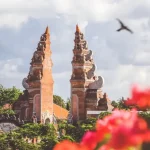
📷 Featured image by Affan Fadhlan on Unsplash.