On this page
- Senggigi’s Reputation Problem — And Why It Doesn’t Matter
- The Senggigi Strip: What the Main Drag Actually Looks Like in 2026
- North of Senggigi: The Quieter Coastal Villages Worth Exploring
- South Toward Mataram: Where the City Bleeds Into the Coast
- Gili Islands Access: Using Senggigi as Your Departure Point
- Where to Eat in Senggigi: Warungs, Seafood Grills & Rooftop Tables
- Nightlife & After-Dark Scene: What’s Still Alive, What’s Faded
- 2026 Budget Reality: What Things Actually Cost in Senggigi
- Getting To and Around Senggigi: Transfers, Ojeks & the Coastal Road
- Frequently Asked Questions
💰 Click here to see Indonesia Budget Breakdown
💰 Prices updated: September, 2026. Budget figures are estimates — always verify before travel.
Exchange Rate: $1 USD = Rp17,928.47
Daily Budget (per person)
Shoestring: Rp358,569 – Rp896,424 ($20.00 – $50.00)
Mid-range: Rp1,254,993 – Rp2,689,271 ($70.00 – $150.00)
Comfortable: Rp2,689,271 – Rp4,482,118 ($150.00 – $250.00)
Accommodation (per night)
Hostel/guesthouse: Rp71,714 – Rp179,285 ($4.00 – $10.00)
Mid-range hotel: Rp448,212 – Rp896,424 ($25.00 – $50.00)
Food (per meal)
Budget meal: Rp26,893.00 ($1.50)
Mid-range meal: Rp143,428.00 ($8.00)
Upscale meal: Rp537,854.00 ($30.00)
Transport
Single metro/bus trip: Rp3,500.00 ($0.20)
Monthly transport pass: Rp200,000.00 ($11.16)
Senggigi’s Reputation Problem — And Why It Doesn’t Matter
If you’ve googled Senggigi recently, you’ve probably seen the same tired debate: is it dead, is it recovering, is it worth it? The honest answer in 2026 is that Senggigi stopped trying to be Bali about three years ago, and the place is better for it. Yes, some hotels from the early 2000s still sit half-empty. Yes, the strip is quieter than Kuta ever was. But for travellers who want a base on Lombok‘s west coast — close to the Gili Islands, close to Mataram, with a sunset view that costs nothing — Senggigi still delivers in ways that its critics rarely acknowledge. The 2026 version of this town is leaner, more locally run, and easier to enjoy without a crowd.
The Senggigi Strip: What the Main Drag Actually Looks Like in 2026
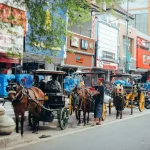
Jalan Raya Senggigi runs roughly four kilometres along the coast, and walking it gives you the full picture in about forty minutes. The southern end near the main roundabout is where most of the action concentrates — a mix of small warungs, a handful of surf shops, a convenience store or two, and a string of guesthouses with balconies facing the water. The road here hugs a narrow strip of land between the hillside and the sea, and in the late afternoon, when the light goes orange and motorbikes slow down, it genuinely looks like a postcard.
The middle section of the strip is patchier. A few large resort properties from the tourism boom of the 2000s sit behind high walls, some still operating, some not. Ignore those. What matters are the smaller spots tucked between them: a batik seller who’s been in the same spot for fifteen years, a juice warung with a hand-painted sign, a dive shop that also rents snorkel gear by the hour. This is where Senggigi’s actual texture lives in 2026 — not in any single landmark, but in the accumulation of small, human-scaled details along the roadside.

The northern end of the strip, past the Pura Batu Bolong temple, gets quieter and more residential. Batu Bolong itself is worth ten minutes of your time. It’s a small Hindu sea temple perched on a volcanic rock formation that juts into the water — the kind of place where locals come to pray at dusk while the waves crash below. You’ll hear the gamelan sounds drifting out during ceremony days, and if the tide is low, you can walk around the base of the rock and feel the ocean spray. There’s no entrance fee but a small donation box sits at the entrance.
North of Senggigi: The Quieter Coastal Villages Worth Exploring
Most visitors never go north of Batu Bolong, which is exactly why you should. The coastal road from Senggigi toward Pemenang winds through some of the most underrated scenery on Lombok’s west coast — steep hills falling directly into the sea, small fishing kampungs, and a road that demands a motorbike rather than a car simply because stopping is half the point.
Mangsit, about three kilometres north of the main strip, is the first village worth stopping in. It’s quieter, has a handful of small boutique guesthouses that charge less than equivalent places on the strip, and the beach here is coarser and darker than the main Senggigi beach but completely uncrowded. A few small warungs open in the evenings selling grilled fish caught that morning.
Continue north and you’ll pass through Klui and Nipah, two more coastal settlements where tourism exists but doesn’t dominate. Nipah beach in particular has a calm, almost meditative quality on weekday mornings — fishing boats anchored offshore, a few local kids swimming, and nothing competing for your attention. The road beyond Nipah climbs into the hills before dropping down toward Pemenang and the ferry terminal for the Gili Islands.
South Toward Mataram: Where the City Bleeds Into the Coast
Head south from Senggigi and within about eight kilometres you’re entering the outskirts of Mataram, Lombok’s capital. Most travellers treat this as a through-road to the airport or a place to get SIM cards and money, but the transition zone between Senggigi and Mataram has a few things worth knowing about.
Ampenan, the old port district of Mataram, sits just south of the Senggigi boundary and has a quiet, faded colonial character that’s easy to miss if you’re moving fast. The old Dutch-era warehouses along the seafront have mostly been repurposed as small workshops and residences. It’s not a tourist attraction in the conventional sense, but it’s a grounding reminder of how cosmopolitan this part of Lombok once was — there’s a Chinese temple, an old Arab quarter, and a Balinese neighbourhood all within walking distance of each other.
The Mayura Water Palace and the nearby Pura Meru temple, both in central Mataram, are easy half-day additions from Senggigi if you have a motorbike. Pura Meru is the largest Hindu temple on Lombok, built in 1720, and the grounds are calm and shaded. Entry for foreign visitors is IDR 20,000 in 2026. Neither site gets crowded — you’re unlikely to share the space with more than a handful of other visitors on any given morning.

Gili Islands Access: Using Senggigi as Your Departure Point
This is one of Senggigi’s most practical functions in 2026, and it’s better organised than it was a few years ago. Fast boats to Gili Trawangan, Gili Air, and Gili Meno depart from Bangsal harbour, about 25 kilometres north of Senggigi near Pemenang. The journey from Senggigi to Bangsal by hired car takes around 35–40 minutes along the coastal road.
At Bangsal, you have two options: join a public boat (very cheap, runs when full, takes about 30 minutes to Gili Trawangan) or take a private fast boat charter. In 2026, public boat fares from Bangsal to the Gilis range from IDR 20,000 to IDR 50,000 depending on which island. Private charters run IDR 600,000–IDR 900,000 for the whole boat, worth splitting if you’re in a group of four or more.
Some travellers also use the direct fast boat services that now operate seasonally from a small pier in Senggigi itself — check with your accommodation about which operators are running in the month you’re visiting, as schedules shift between high season (July–August, December–January) and the shoulder months. These direct Senggigi departures skip Bangsal entirely and are convenient but cost IDR 150,000–200,000 more per person than the Bangsal public boat.
One logistics note that catches people out: Bangsal has a reputation for aggressive touts near the ticket counter. The official ticket booth is run by a cooperative and the prices are fixed — the men who approach you before you reach the booth are selling the same tickets at a markup. Walk past them, find the official counter, buy there.
Where to Eat in Senggigi: Warungs, Seafood Grills & Rooftop Tables
Food in Senggigi in 2026 spans a wider range than its size suggests, partly because the town serves both budget backpackers and families staying in mid-range resorts, and partly because the Sasak culinary tradition is genuinely distinct from anything you’d find in Java or Bali.

The most important thing to eat here is plecing kangkung — water spinach blanched and dressed with a raw sambal of shrimp paste, chilli, and lime that has a sharp, almost brutal freshness to it. Every warung on the strip serves it, but the best versions come from places with no English menus. Pair it with ayam taliwang, the Lombok-style grilled chicken that’s been split flat, rubbed with a paste of galangal, turmeric, and red chilli, then cooked over coconut husks until the skin is charred and crackling. The smoke from those grills drifts across the evening air on Jalan Raya Senggigi like an unofficial signal that dinner has started.
For seafood, the warung cluster at the southern end of the beach road is your best option for price and freshness. Fish is displayed on ice at the front — you pick what you want, agree on weight and cooking method (grilled is almost always the right answer), and it comes out with rice, sambal, and sliced cucumber. A full meal for two with drinks runs IDR 90,000–IDR 150,000 at these places.
If you want something with a view rather than a plastic stool, there are a few restaurants along the strip with upper-floor terraces where you can watch the sunset over the Bali Strait with a Bintang in hand. These cost more — expect to pay IDR 50,000–IDR 80,000 for a main dish — but the vantage point on a clear evening, when you can see the outline of Gunung Agung in Bali across the water catching the last light, is worth it occasionally.
Nightlife & After-Dark Scene: What’s Still Alive, What’s Faded
Senggigi was never Bangkok or Seminyak, but it had a recognisable bar scene through the early 2010s. That era is definitively over, and the bars that tried hardest to sustain it have mostly closed or converted into restaurants. What exists now in 2026 is smaller, more honest, and actually more enjoyable if you’re not expecting a scene.

The live music circuit is the backbone of Senggigi’s nights. Several bars along the strip host Indonesian bands on rotating schedules — typically Thursday through Saturday. The style varies from Lombok-rooted acoustic sets to covers of Western rock, and the quality is inconsistent, but on a good night there’s a loose, communal energy that you won’t find in more polished tourist bars. Beers cost IDR 35,000–IDR 55,000, and nobody pressures you to buy more than you want.
The beach itself becomes a quieter social space after 9pm — small groups of locals and travellers sitting on the sand, occasionally someone with a guitar. There are no formal beach clubs here, which is either a disappointment or a relief depending on your expectations. The town genuinely goes quiet by midnight most nights.
2026 Budget Reality: What Things Actually Cost in Senggigi
Senggigi offers better value than Bali’s tourist corridors in almost every category, and costs have stabilised after a period of post-pandemic volatility. Here’s what you can realistically expect to pay in 2026:
Accommodation
- Budget: Simple fan rooms in guesthouses or homestays — IDR 150,000–IDR 250,000 per night. Clean, functional, usually include breakfast.
- Mid-range: Air-conditioned rooms with hot water and a pool — IDR 350,000–IDR 600,000 per night. Several solid options exist both on the strip and in Mangsit.
- Comfortable: Boutique resorts with sea views and full amenities — IDR 900,000–IDR 1,800,000 per night. The best options here are genuinely good value compared to equivalent Bali properties.
Food & Drink
- Warung breakfast (nasi goreng, tea): IDR 25,000–IDR 40,000
- Full lunch or dinner at a local warung: IDR 35,000–IDR 75,000
- Seafood dinner for two at a beach warung: IDR 90,000–IDR 150,000
- Sit-down restaurant with a view: IDR 100,000–IDR 200,000 per person
- Bintang beer: IDR 35,000–IDR 55,000

Transport & Activities
- Motorbike rental per day: IDR 70,000–IDR 100,000
- Ojek (motorbike taxi) for short trips on the strip: IDR 15,000–IDR 30,000
- Hired car with driver for a full day: IDR 400,000–IDR 600,000
- Snorkelling day trip (local operator, includes equipment): IDR 250,000–IDR 400,000 per person
- Public boat to Gili Trawangan from Bangsal: IDR 20,000–IDR 50,000
Getting To and Around Senggigi: Transfers, Ojeks & the Coastal Road
Lombok International Airport (LOP) sits on the south side of the island, about 55–65 kilometres from Senggigi depending on your exact destination on the strip. That distance matters for your transfer budget. In 2026, the airport taxi cooperative charges a fixed rate of around IDR 250,000–IDR 300,000 for the trip to Senggigi — confirm the rate before you get in. Ride-hailing apps including Gojek and Grab operate at the airport but coverage on the road between the airport and Senggigi can be patchy, so the fixed taxi is more reliable for this specific route.
If you’re arriving from Bali by sea, the Padangbai–Lembar ferry is the main option — Lembar is Lombok’s western port, about 20 kilometres south of Senggigi. The ferry crossing takes around four to five hours and runs multiple times daily. From Lembar, an ojek to Senggigi costs IDR 60,000–IDR 80,000, or you can take a share minibus (bemo) toward Mataram and then connect onward. A private car transfer from Lembar to Senggigi runs IDR 150,000–IDR 200,000.
Getting around Senggigi itself is straightforward. The strip is walkable for most purposes, and a motorbike opens up the coastal road north and south without any complication. Ojeks are easy to flag on Jalan Raya Senggigi and prices are short enough that bargaining is rarely worth the energy — agree on a price before you ride and that’s generally the end of it.

One 2026 update worth knowing: the Trans-Lombok road improvement project that began upgrading the east-west routes across the island has had some indirect effect on the north coast road, with several sections between Pemenang and Gangga now better surfaced than they were in 2024. If you’re planning to go further north along the coast toward Sire beach or the Gili Nanggu area, conditions are noticeably smoother than travellers’ older reports might suggest.
Frequently Asked Questions
Is Senggigi worth visiting in 2026?
Yes, for the right reasons. Senggigi works well as a relaxed base for exploring Lombok’s west coast, accessing the Gili Islands, and eating well without overpaying. It’s not a party destination and the beach isn’t Lombok’s best, but the combination of convenience, value, and atmosphere makes it a solid choice, especially for first-time Lombok visitors.
Which beach in Senggigi is the best for swimming?
The main Senggigi beach is calm and safe for swimming, particularly in front of the central strip. The water is generally clearer at the northern end near Batu Bolong. For better sand and fewer people, Mangsit beach about three kilometres north is the local preference. Avoid swimming during the wet season (November–March) when swell and currents increase.
How far is Senggigi from the Gili Islands?
Senggigi is about 25 kilometres by road from Bangsal harbour, where most public boats to the Gilis depart. The drive takes 35–40 minutes. From Bangsal, the boat crossing to Gili Trawangan takes around 30 minutes on a public boat. Direct fast boats from Senggigi’s own pier also operate seasonally and skip the Bangsal leg entirely.
What is the best time of year to visit Senggigi?
The dry season from May to October is the most reliable period, with July and August being peak season. June and September offer good weather with fewer crowds. The wet season from November to March brings regular rain and rougher seas that can affect boat crossings to the Gilis. Shoulder months like April and October often provide the best balance of weather and availability.
Is Senggigi safe for solo travellers?
Senggigi is generally safe and relaxed for solo travellers, including solo women. The town is small enough that you quickly develop a sense of your surroundings. Standard precautions apply — don’t leave valuables visible on a parked motorbike, be aware on the road at night, and stick to lit streets after dark. Locals along the strip are accustomed to international visitors and interactions are typically straightforward.
Explore more
Lombok vs Bali: Which Indonesian Island is Right for Your Trip?
Beyond the Gili Islands: Unforgettable Things to Do in Lombok
Ultimate Kuta Lombok Guide: Beaches, Surfing & Best Places to Stay
📷 Featured image by Maximus Beaumont on Unsplash.