On this page
- What Makes Raja Ampat Unlike Anywhere Else in Indonesia
- Best Islands and Dive Zones to Know Before You Go
- Top Experiences: What You Actually Come Here to Do
- Where to Eat and Drink in Raja Ampat
- Getting to Raja Ampat and Moving Around
- Island-Hopping: The Best Circuits Around Raja Ampat
- Evenings in Raja Ampat: What to Realistically Expect
- Shopping in Raja Ampat
- Where to Stay: Accommodation in Raja Ampat by Budget
- Best Time to Visit Raja Ampat
- Practical Tips for Visiting Raja Ampat in 2026
- Raja Ampat Budget Breakdown: Daily Costs in IDR (2026)
- Frequently Asked Questions
💰 Click here to see Indonesia Budget Breakdown
💰 Prices updated: September, 2026. Budget figures are estimates — always verify before travel.
Exchange Rate: $1 USD = Rp17,928.47
Daily Budget (per person)
Shoestring: Rp358,569 – Rp896,424 ($20.00 – $50.00)
Mid-range: Rp1,254,993 – Rp2,689,271 ($70.00 – $150.00)
Comfortable: Rp2,689,271 – Rp4,482,118 ($150.00 – $250.00)
Accommodation (per night)
Hostel/guesthouse: Rp71,714 – Rp179,285 ($4.00 – $10.00)
Mid-range hotel: Rp448,212 – Rp896,424 ($25.00 – $50.00)
Food (per meal)
Budget meal: Rp26,893.00 ($1.50)
Mid-range meal: Rp143,428.00 ($8.00)
Upscale meal: Rp537,854.00 ($30.00)
Transport
Single metro/bus trip: Rp3,500.00 ($0.20)
Monthly transport pass: Rp200,000.00 ($11.16)
Getting to Raja Ampat in 2026 is easier than it was three years ago, but it still demands planning. New domestic flight frequency into Sorong has improved, yet the ferry schedule to Waisai remains the bottleneck most travelers underestimate. On top of that, Indonesia’s marine conservation authority tightened entry requirements in late 2025 — the Raja Ampat Marine Park Entry Fee is now mandatory to register online before arrival, not at the gate. If you show up without a registration QR code, you will be turned back at the Waisai pier. Get that sorted before you pack a single bag.
What Makes Raja Ampat Unlike Anywhere Else in Indonesia
Most destinations in Indonesia sell themselves on temples or rice terraces. Raja Ampat sells itself on what you cannot see until you put your face in the water. Sitting at the convergence of the Indian and Pacific Oceans in the far northwest of West Papua, these 1,500-plus Islands host the highest marine biodiversity on the planet. Scientists have recorded over 600 coral species here — more than the entire Caribbean combined — along with roughly 1,700 species of reef fish.
Above the waterline, the landscape is just as disorienting. Limestone karst towers erupt from flat, mirror-still lagoons. The jungle on top of these formations is dense and humid, filled with the calls of red bird-of-paradise and the prehistoric wingbeats of hornbills cutting through the canopy. There is a specific kind of silence here in the early morning — before the speedboat engines start — when the water is the colour of hammered pewter and the towers disappear into low cloud. It is one of those places that makes you recalibrate what “remote” actually means.
The community-based conservation model here is also serious. Raja Ampat’s local sasi system — traditional marine law managed by villages — means certain zones are closed to fishing at specific times of year. Travelers benefit from this directly: the fish populations are visibly healthier than in almost any other dive destination in Southeast Asia.
Best Islands and Dive Zones to Know Before You Go
Raja Ampat is not one island — it is four major islands and hundreds of smaller ones spread across a massive marine area. Each zone has a different character.
Waigeo
The largest island and the administrative hub. Waisai, the main town, is on Waigeo’s southern coast. Most travelers pass through here quickly, but it is worth spending a night to get your bearings, stock up on cash, and check into any logistical details. The northern part of Waigeo, around the Dampier Strait, has some of the best dive sites in the entire archipelago, including Cape Kri and Sardine Reef.
Misool
In the south, Misool is the most visually dramatic part of Raja Ampat for non-divers. Lagoons of improbable turquoise are ringed by vertical karst walls draped in ferns and fig trees. The diving here focuses more on soft corals and current-driven walls rather than the manta and shark action of the north. Misool requires a liveaboard or a stay at one of its dedicated eco-resorts — there is no day-trip option from Waisai.
Batanta and Salawati
These two western islands see almost no tourist infrastructure. Batanta is a hiking destination with freshwater rivers and a serious bird-of-paradise trekking scene. Salawati is largely undeveloped and visited only by liveaboards passing through. For most travelers, these islands are a glimpse from the deck rather than a landing.

The Dampier Strait Zone
The stretch of water between Waigeo and Batanta is Raja Ampat’s dive heartland. Cape Kri, Sardine Reef, Chicken Reef, and Blue Magic are all here. Current conditions vary dramatically — some of these sites are beginner-friendly at low tide, genuinely challenging in full flow. Ask your dive operator about conditions on the specific day you plan to go out.
Top Experiences: What You Actually Come Here to Do
Manta Rays at Manta Sandy and Manta Ridge
Between October and April, oceanic and reef mantas aggregate at Manta Sandy (near Arborek village) in numbers that are difficult to process. You float at five metres depth on the edge of a sandy slope and they pass beneath and above you — wingspans of up to four metres, utterly indifferent to your presence. The cleaning station dynamic means they hover and circle rather than swim off, giving you long, slow encounters. Go at slack tide for the calmest conditions.
Piaynemo Viewpoint
The most-photographed view in Raja Ampat: a 360-degree panorama of mushroom-shaped limestone islands rising from a green-blue lagoon. The climb takes about 15 minutes on steep wooden stairs and some fixed ropes, and on a clear morning the light hits the water in a way that looks edited even when you’re standing right in it. Go before 9 a.m. — by mid-morning, tour boats from multiple resorts converge and the viewing platform gets crowded.
WOW Viewpoint on Waigeo
A lesser-visited alternative to Piaynemo, the WOW viewpoint (Wayag Island Overlook) is further north and requires a longer speedboat trip. The karst formations here are even more concentrated and the crowds are substantially thinner — most day-trip itineraries skip it due to fuel costs. If you have time and budget for the extra boat ride, it is worth it.

Jellyfish Lake on Gam Island
A landlocked saltwater lake on Gam Island holds a population of stingless jellyfish — specifically, mastigias jellyfish that follow the sun around the lake each day. Swimming through a pulsing cloud of golden jellyfish is one of those sensory experiences that cannot be adequately photographed. The entry to the lake requires a short jungle walk of about 10 minutes through thick, humid vegetation where you’ll hear the steady drip of the forest canopy and the distant splash of fish in the lake ahead.
Bird of Paradise Trekking
Red bird-of-paradise viewing is possible on Waigeo island, typically from a platform hide before dawn. You wait in darkness, listening to the forest warm up around you, and then the males begin their display — fluorescent flank feathers fanned out, bouncing on a branch, making a sound somewhere between a screech and a mechanical clicking. Guides from local villages are mandatory for this activity and need to be booked at least 24 hours in advance through your homestay or resort.
Where to Eat and Drink in Raja Ampat
Food in Raja Ampat is honest and simple, not diverse. The culinary variety of Bali or Yogyakarta does not exist here. What does exist is fresh-caught fish prepared in straightforward Papuan and Indonesian styles, and a handful of spots in Waisai that do the basics well.
In Waisai
The main market area near the Waisai ferry terminal has a cluster of warungs operating from around 7 a.m. to 8 p.m. Warung Mama Ros, a two-table setup on the street behind the market, serves grilled ikan bakar with sambal rica-rica — a Manadonese-style chilli paste that layers bird’s eye, tomato, and lemongrass into a sauce that is all heat and brightness. It costs around Rp 35,000–50,000 for a full plate of fish, rice, and vegetables. Get there before noon; they frequently sell out by early afternoon.

There are two modest restaurants near the Waisai pier that cater to backpackers and liveaboard crew — both serve nasi goreng, mie goreng, and basic Western-style breakfasts with eggs and toast. Prices run Rp 25,000–45,000 per dish. Do not expect anything beyond that level of variety in town.
At Resorts and Homestays
Most accommodation outside Waisai runs on a half-board or full-board basis, and for good reason — there is nowhere else to eat. Homestay meals are typically served family-style: rice, a grilled or fried fish, boiled greens, and sambal on the side. The quality depends entirely on the family. The better homestays around Arborek and Friwen villages serve surprisingly good food. Some mid-range eco-resorts bring in outside cooks who add more variety — expect pasta nights, fresh salads, and decent Western breakfasts.
Beer (Bintang) is available at most resorts and some homestays at Rp 50,000–80,000 per can. Spirits are limited. Several of the more conservative homestays — run by local families following Islamic practices — do not serve alcohol at all. Check before you book if this matters to you.
Getting to Raja Ampat and Moving Around
Flights to Sorong
Sorong is the gateway city. In 2026, Garuda Indonesia and Lion Air both operate direct flights from Jakarta (Soekarno-Hatta), and Wings Air connects Sorong to Manado, Ambon, and Makassar. Batik Air added a second daily Jakarta–Sorong service in early 2026, which has meaningfully reduced flight prices in shoulder season. Expect to pay Rp 1,800,000–3,500,000 for a one-way economy ticket from Jakarta depending on how far in advance you book.
Sorong’s Domine Eduard Osok Airport is small but functional. There is one ATM in the arrivals hall that works reliably with international cards — withdraw cash here before the ferry, as Raja Ampat is almost entirely cash-only.

Ferry from Sorong to Waisai
The public ASDP ferry from Sorong’s Pelabuhan Rakyat (people’s port) to Waisai runs twice daily — typically at 9 a.m. and 2 p.m., though schedules shift seasonally. The crossing takes about two hours. Economy class costs Rp 120,000; VIP class (air-conditioned cabin with seats) is Rp 165,000. The VIP cabin is worth the difference — the economy deck is exposed and can get choppy in rough weather. Tickets can now be booked through the ASDP Ferizy app, which launched its Sorong–Waisai route booking feature in mid-2025.
Getting Around the Islands
Once in Waisai, you move by speedboat. There are no roads connecting the islands. Most resorts and homestays arrange transfers in their own boats. Independent travelers can charter speedboats through operators at the Waisai harbor — rates start at around Rp 800,000–1,500,000 per day for a small wooden boat with a guide, depending on fuel costs and distance. For longer island-hopping routes, liveaboards are the most practical and economical option per dive or snorkel site visited.
Liveaboards
A liveaboard in Raja Ampat means sleeping on a boat anchored at dive sites — you wake up, jump in, eat, dive again, and move to the next location. Routes typically cover the Dampier Strait, Misool, and the outer islands over 7–10 nights. Indonesian-flagged liveaboards must be used by regulation. Prices range from Rp 6,500,000–15,000,000 per person per night depending on the vessel’s quality, including all meals and dives.
Island-Hopping: The Best Circuits Around Raja Ampat
Arborek Village Circuit (1 Day)
Arborek is a small fishing village on a tiny island with a jetty that doubles as one of the best snorkel spots in the north. The reef directly off the jetty drops into a wall dense with soft corals and schooling fish. From Arborek, you can easily extend to Friwen Island’s wall snorkel and the Piaynemo viewpoint in a single day-trip loop from Waisai. This is the classic Raja Ampat day circuit and costs around Rp 1,200,000–1,800,000 per boat for the full route.

Cape Kri and Sardine Reef (1 Day)
These two dive sites in the Dampier Strait are best as a dedicated boat trip. Cape Kri holds the world record for the number of fish species counted on a single dive — 374 species in one dive in 1995, a record that still stands. Sardine Reef, nearby, produces enormous schools of fusiliers and jacks that form moving columns you can swim through. Plan for two to three dives and a surface interval lunch on the boat.
Misool Circuit (3–5 Days)
Misool is too far south for a day trip — it is a 6–8 hour speedboat ride from Waisai in a private boat, or accessed by liveaboard. Budget 3–5 days minimum. The lagoons around Misool’s eastern coast (Fiabacet, Yellu, Tomolol) are the focus, with drone-worthy views that look nothing like the northern islands. Combine with soft-coral diving on Misool’s walls for the most complete Raja Ampat experience.
Gam Island and Surrounding Area (1 Day)
Gam Island combines the Jellyfish Lake walk, snorkeling on the blue lagoon between Gam and Waigeo (called the “slot” or “blue lagoon passage”), and a visit to Sauwandarek village where turtles are regularly spotted in the shallows. A comfortable full-day circuit from most northern homestays.
Evenings in Raja Ampat: What to Realistically Expect
There is no bar street here. There are no clubs, no live music venues, no rooftop bars in the conventional sense. Nightlife in Raja Ampat is quieter than almost anywhere else you could travel in Indonesia, and that is the point. Travelers who come for the underwater world tend to be in bed by 9 p.m. anyway — early morning dives are common at 6 a.m. or earlier.

What evenings do offer is remarkable in a different way. Sitting on a homestay deck at dusk while the limestone towers turn from green to black against an orange sky, with the sound of water lapping the stilts beneath you and the distant call of a bird-of-paradise carrying across the strait — this is the Raja Ampat evening experience, and it is genuinely difficult to want anything else.
Some larger eco-resorts occasionally organize cultural evenings with local village dance performances. These are typically informal and community-led rather than staged-for-tourists productions. Arborek village hosts occasional craft evenings where women weave the famous Raja Ampat noken bags and visitors can observe and sometimes participate.
A few of the mid-range resorts have small bars with Bintang beer, wine from Jakarta, and simple cocktails. These become social hubs in the evenings where divers compare footage and plan the next day’s sites — often the best source of real-time local intelligence about what is being seen where.
Shopping in Raja Ampat
Shopping is limited but what exists is worth your attention. The best buys here are things made locally that you will not find at the same quality elsewhere in Indonesia.
Noken Bags
The noken is a traditional Papuan carrying bag hand-woven from orchid bark or pandanus leaf. In Raja Ampat, noken from Arborek village are particularly well-made. Prices start at around Rp 150,000 for small bags and go up to Rp 500,000 for large decorative pieces. Buy directly from weavers in the village rather than from resort gift shops where markups are significant.
Pearls
The waters around Raja Ampat produce South Sea pearls — large, lustrous pearls in white, gold, and silver tones. Pearl farms operate in the southern islands. Several vendors in Waisai sell pearls loose or set in simple silver settings. Quality and pricing vary widely; if you are serious about pearls, ask your homestay owner for a recommendation to a trusted vendor rather than buying from the market stalls near the ferry.
Waisai Market
The morning market in Waisai is the best place for practical supplies — fresh fruit, bottled water (buy plenty; drinking water is not available in the outer islands), snacks, and basic sundries. A handful of stalls also sell locally made handicrafts and batik from Sorong-based producers. The market is liveliest between 6–9 a.m.
Where to Stay: Accommodation in Raja Ampat by Budget
Budget: Homestays (Rp 350,000–750,000 per night)
Village homestays are the backbone of budget travel here. Arborek, Sauwandarek, Friwen, and Yenbuba villages all have homestay programs where local families rent out rooms — often overwater bungalows on stilts above the reef. Meals are included in most homestay rates. Facilities are basic: squat toilets in older homestays, simple fan rooms, inconsistent electricity. What you gain is proximity to the reef (you can snorkel directly from the dock), genuine local hospitality, and the best value-per-experience ratio in Raja Ampat. Book through WhatsApp — most homestays are not on booking platforms.
Mid-Range: Eco-Resorts (Rp 1,800,000–4,500,000 per night)
A growing number of small eco-resorts operate across the northern islands. These typically include en-suite bathrooms, Western-style toilets, ceiling fans or air conditioning, and better food variety. Raja Ampat Dive Lodge, Kri Eco Resort, and Papua Paradise Eco Resort fall into this tier. Most operate on full-board or half-board packages only. Book at least 3–4 months in advance for the dry season.
Luxury: High-End Resorts and Liveaboards (Rp 5,000,000–20,000,000+ per night)
Misool Eco Resort is the benchmark for high-end Raja Ampat stays — a private island resort with overwater bungalows, a no-fishing zone around the property, and house reefs that consistently deliver exceptional diving. Raja Ampat Biodiversity Eco Resort in the north is another well-regarded option. Liveaboards at this tier include private charter vessels with dedicated guides, chefs, and dive masters. All-inclusive pricing is standard.
Best Time to Visit Raja Ampat
Raja Ampat has two distinct seasons and the difference matters enormously.
Dry Season: October to April
This is peak season and peak manta season. The Dampier Strait and Manta Sandy sites are most reliably calm between October and January. Visibility underwater is best from November to March — often exceeding 20–30 metres. This period aligns with the manta cleaning station activity and whale shark sightings in some years. Expect fully booked accommodation, higher prices, and the most competition for boat charters. Book 6 months ahead for dry season travel.
Wet Season: May to September
The wet season brings stronger winds, choppier water in exposed sites, and reduced visibility in some areas. However, this is also when the mantas move offshore and wobbegong sharks are more frequently seen in certain sites. Prices drop by 20–35% at most resorts. The southern Misool area is sometimes calmer during this period than the north. Some liveaboards reduce operations between June and August due to swell. If you are primarily a snorkeler rather than a diver, the wet season is harder to manage — wave conditions on exposed reef edges can be difficult.
Festivals and Events
The Raja Ampat Dive and Cruise Expo, held annually in October in Sorong, draws regional liveaboard operators and conservation organizations. It is a useful event for liveaboard comparisons if you are arriving around that time. Local village festivals tied to the sasi harvest cycle happen irregularly — your homestay host will know if anything is scheduled during your stay.
Practical Tips for Visiting Raja Ampat in 2026
No Single-Use Plastics
Raja Ampat has enforced a ban on single-use plastics since 2019, and enforcement has strengthened year by year. In 2026, this includes plastic water bottles — bring a reusable bottle and a water purification method (Steripen or filter). Some eco-resorts provide filtered water stations. Do not arrive expecting to buy plastic-bottled water freely.
Reef Etiquette
Do not stand on coral — ever. Do not touch manta rays or any marine life. Resist the urge to chase turtles. Apply only reef-safe sunscreen (chemical sunscreens are banned at several sites). These are not just suggestions — resort dive masters and local rangers actively enforce these rules, and violations can result in being removed from the water.
Cash Only
Raja Ampat is cash-based outside of a few mid-range and luxury resorts that have card payment capability. Withdraw enough IDR in Sorong before taking the ferry. Waisai has one Bank Papua ATM that works intermittently. Do not rely on it.
Connectivity
Telkomsel has the broadest signal reach in Raja Ampat, but outside of Waisai, signal is patchy to nonexistent. Satellite-based WiFi is available at some resorts. Come prepared to be genuinely offline for much of your stay — for most people who make it this far, that is not a hardship.
Language
Indonesian (Bahasa Indonesia) works throughout Raja Ampat. English is spoken at mid-range and luxury resorts but is limited at village homestays. Learning a handful of Bahasa Indonesia phrases — terima kasih (thank you), berapa harganya (how much), enak sekali (very delicious) — will be warmly received by local families.
Raja Ampat Budget Breakdown: Daily Costs in IDR (2026)
Budget Traveler: Rp 400,000–750,000 per day
- Homestay accommodation with meals: Rp 350,000–500,000 per night (full board)
- Snorkeling day trip (shared boat): Rp 100,000–200,000 per person
- Drinks and incidentals in Waisai: Rp 50,000–100,000
- Excludes flights and marine park entry fee
Mid-Range Traveler: Rp 1,800,000–4,000,000 per day
- Eco-resort full board: Rp 1,500,000–3,500,000 per night
- Private boat day charter: Rp 800,000–1,500,000 split between 2–4 people
- Dive package add-ons: Rp 400,000–600,000 per dive (equipment included)
- Beer at resort bar: Rp 50,000–80,000 per can
Comfortable/Luxury Traveler: Rp 6,000,000–20,000,000+ per day
- High-end eco-resort all-inclusive: Rp 4,500,000–8,000,000 per night
- Liveaboard (mid to premium vessel): Rp 6,500,000–15,000,000 per night (all inclusive)
- Private speedboat charter: Rp 2,000,000–4,000,000 per day
- Private dive guide: Rp 800,000–1,500,000 per day
One-time costs every traveler pays: Marine park entry fee (Rp 1,500,000 foreign / Rp 500,000 Indonesian), Sorong to Waisai ferry (Rp 165,000 VIP), flights to Sorong (Rp 1,800,000–3,500,000 from Jakarta one way).
Frequently Asked Questions
Do I need to be a certified diver to enjoy Raja Ampat?
No. Many of Raja Ampat’s best marine encounters — manta rays, reef fish, turtles, and corals — are accessible by snorkeling from the surface. Sites like Arborek jetty, Friwen Wall, and Sauwandarek are excellent for non-divers. That said, the deepest and most dramatic experiences require diving certification. Consider doing an Open Water course before you arrive.
Is Raja Ampat safe for solo travelers?
Generally yes. Crime against tourists is extremely rare. The main safety considerations are water-related: strong currents at certain dive sites, boat travel in rough weather, and the remoteness of the location if a medical emergency occurs. Travel with proper dive insurance (DAN or equivalent), know your physical limits in currents, and inform your homestay host of your daily plans.
How many days should I spend in Raja Ampat?
Minimum 5 days to see the main northern highlights — Piaynemo, Manta Sandy, Arborek, Gam Island. Seven to ten days allows you to dive properly, explore more remote sites, and avoid rushing. If you want to include Misool in the south, add at least 3 more days or switch to a liveaboard format.
What is the best way to book accommodation in Raja Ampat?
Most village homestays are not listed on Booking.com or Airbnb. Contact them directly via WhatsApp — numbers are shared in dive community forums, Facebook groups like “Raja Ampat Travelers,” and from your resort if you are staying elsewhere first. Eco-resorts can be booked through their own websites. Book 3–6 months ahead for the October–March dry season peak.
Can I use my credit card in Raja Ampat?
A small number of mid-range and luxury resorts accept credit cards, but Raja Ampat is overwhelmingly cash-based. The one ATM in Waisai is unreliable. Withdraw sufficient IDR cash at Sorong Airport or in the city of Sorong before boarding the ferry. Bring more than you think you need — there is no way to access more once you are on the outer islands.
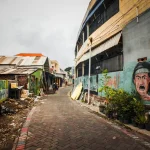
📷 Featured image by Abdul Ridwan on Unsplash.