On this page
- Why Lake Toba Still Catches Travelers Off Guard in 2026
- Samosir Island — The Heart of the Toba Experience
- Batak Culture Up Close — Music, Architecture, and Living Traditions
- Where and What to Eat Around Lake Toba
- Getting to Lake Toba in 2026 — Flights, Buses, and the New Road Links
- Getting Around the Lake — Ferries, Motorbikes, and Dirt Roads
- Day Trips and Excursions Beyond the Lakeside
- Nightlife and Evening Life Around Toba
- Shopping — Batak Textiles, Carvings, and Where to Find Them
- Where to Stay — Accommodation by Budget and Location
- Best Time to Visit Lake Toba
- Practical Tips — Safety, Etiquette, SIM Cards, and Money
- 2026 Budget Breakdown — Daily Costs in IDR
- Frequently Asked Questions
💰 Click here to see Indonesia Budget Breakdown
💰 Prices updated: September, 2026. Budget figures are estimates — always verify before travel.
Exchange Rate: $1 USD = Rp17,928.47
Daily Budget (per person)
Shoestring: Rp358,569 – Rp896,424 ($20.00 – $50.00)
Mid-range: Rp1,254,993 – Rp2,689,271 ($70.00 – $150.00)
Comfortable: Rp2,689,271 – Rp4,482,118 ($150.00 – $250.00)
Accommodation (per night)
Hostel/guesthouse: Rp71,714 – Rp179,285 ($4.00 – $10.00)
Mid-range hotel: Rp448,212 – Rp896,424 ($25.00 – $50.00)
Food (per meal)
Budget meal: Rp26,893.00 ($1.50)
Mid-range meal: Rp143,428.00 ($8.00)
Upscale meal: Rp537,854.00 ($30.00)
Transport
Single metro/bus trip: Rp3,500.00 ($0.20)
Monthly transport pass: Rp200,000.00 ($11.16)
A lot of travelers added Lake Toba to their Indonesia itinerary after the Toba Caldera UNESCO Global Geopark designation got renewed attention in 2025, and then arrived not quite knowing what to do with themselves. The lake is vast — 100 kilometres long, 30 kilometres wide, sitting inside the collapsed crater of a supervolcano — and the tourism infrastructure is still catching up to its scale. If you’re planning a visit in 2026 and want honest answers about whether it’s actually worth the trip from Medan (or further), this guide covers everything you need.
Why Lake Toba Still Catches Travelers Off Guard in 2026
The short answer: yes, it’s worth it. But Toba rewards a specific kind of traveler. This is not Bali. There are no infinity pools overlooking temples every 500 metres, no beach clubs, no meticulously curated Instagram setups waiting for you at every corner. What Toba offers instead is a raw, almost overwhelming sense of scale. Standing at the rim of the caldera and looking down at water that extends further than your eyes can comfortably process — with the island of Samosir floating in the middle like a misplaced continent — is genuinely one of Indonesia’s most dramatic natural moments.
The Batak communities who have lived around this lake for centuries add a cultural dimension that most visitors underestimate. Their architecture, music, weaving traditions, and clan-based social structures are unlike anything else in Sumatra. In 2026, with the road from Medan to Parapat improved and direct flights into Silangit (Siborong-borong) Airport now operating on more carriers, access has genuinely improved without the lake losing its sense of remoteness.
Samosir Island — The Heart of the Toba Experience
Samosir is technically the world’s largest island within an island, and once you’re on it, the size becomes apparent quickly. The main tourist area is Tuk Tuk Peninsula — a small finger of land on the eastern side of Samosir with guesthouses, restaurants, and rental shops clustered together. Most visitors base themselves here, and honestly, it’s a good call for a first visit.
The lake sits at around 900 metres above sea level, which means the air is cool — often 18°C to 22°C during the day, dropping to 15°C or lower at night. After the heat and humidity of Medan, stepping off the ferry in Tuk Tuk feels like someone opened a refrigerator door. Bring a light jacket.
Beyond Tuk Tuk, Samosir opens up into rice fields, traditional Batak villages, and roads that circle the island’s interior highlands. The village of Ambarita has stone chairs and tables where — according to local history — village judgments were once carried out. The site feels genuinely old and slightly eerie, surrounded by banyan trees. Tomok is the main ferry arrival point from Parapat and has the largest concentration of souvenir stalls, plus the ancient royal tombs of the Sidabutar kings.

The interior of Samosir — the plateau at the centre of the island — is reached by a steep road from Pangururan (the island’s main town, connected to the mainland by a narrow bridge). Up there, at around 1,400 metres, are small farming communities, views back down over the entire lake, and the hot springs at Aek Rangat. It feels like a completely different world from the lakeside tourist belt.
The traveler crowd in 2026 is a mix of domestic Indonesian tourists (especially during school holidays), backpackers doing the Sumatra overland route, and a growing number of European visitors who discovered Toba after reading about the geopark status. It’s friendly, unhurried, and occasionally completely empty of tourists in the right spots.
Batak Culture Up Close — Music, Architecture, and Living Traditions
The Toba Batak have one of the most distinctive cultural identities in all of Indonesia. Their traditional houses — rumah adat — are immediately recognizable: massive saddleback roofs that sweep up at both ends, the underside decorated with red, black, and white geometric patterns representing clan symbols. In the village of Simanindo, on the northern tip of Samosir, a preserved complex of these houses sits beside a small museum where traditional sigale-gale puppet dances are performed. The puppet itself — a wooden marionette manipulated by strings — is believed to represent the spirit of a deceased person, and watching the performance while live gondang music plays (a hypnotic, cycling ensemble of drums and gongs) is one of those genuinely unforgettable travel experiences.
The ulos textile tradition is central to Batak life. These hand-woven ceremonial cloths are used at births, weddings, funerals, and nearly every significant life event. Watching a weaver work at a backstrap loom in a village — the rhythmic click of the shuttle, the intricate patterns emerging slowly from threads dyed with natural colours — is a reminder of how much skill these traditions require. In 2026, a few cooperatives near Tuk Tuk and in Pangururan offer weaving demonstrations that are genuinely educational rather than tourist theatre.
One thing worth knowing: Batak culture is built around clans (marga). When Batak people meet, they often establish clan connections before anything else. If you speak to locals and they ask your family name, they’re not being intrusive — they’re doing the social calculation that tells them how to relate to you. It’s polite to engage with the question rather than brush it off.
The lake communities, particularly those on Samosir Island, operate on a rhythm tied to ferry schedules, market days, and religious celebrations. Most of the people you’ll meet are Toba Batak — predominantly Christian (Protestant), which makes Toba feel culturally distinct from the Muslim-majority rest of Sumatra. Churches outnumber mosques. Hymns drift through the morning air rather than the call to prayer. Sunday is genuinely observed as a rest day in many villages.
Where and What to Eat Around Lake Toba
The food scene at Toba is small but specific, and if you eat like a local, you eat well. The Toba Batak cuisine is among the most distinctive in Sumatra — heavier use of spice, a lot of freshwater fish, and an openness to pork that you won’t find in most other Sumatran regions.
Ikan mas arsik — carp cooked with torch ginger, andaliman pepper (a local citrus-like spice that creates a gentle numbing sensation on the tongue), and turmeric — is the dish to order at any lakeside warung. The fish are pulled from the lake itself. A good plate, served with white rice and sambal, costs around IDR 35,000–60,000 at a local warung.
In Tuk Tuk, Warung Bu Ida and several similar family-run stalls near the main road serve reliable local food at genuine local prices. The peninsula also has a handful of restaurants catering to backpackers — banana pancakes, pasta, cold Bintang — which are exactly what they are.
In Parapat on the mainland, the morning market near the ferry terminal is worth visiting before you cross to Samosir. Grilled corn, fried snacks, and fresh fruit stalls set up from around 6am. The smell of grilled corn slathered with chilli butter hits you from half a block away.
For something different, the small warung inside the Tomok village market area serve saksang — a Batak spiced meat dish — for those who want to try genuinely traditional Batak food in a local setting rather than a tourist restaurant.
Getting to Lake Toba in 2026 — Flights, Buses, and the New Road Links
The main gateway to Toba has historically been Medan, a 4–5 hour drive away. In 2026, this route has improved significantly. The toll road extension connecting Medan to Tebing Tinggi was fully operational by late 2024, and combined with upgraded sections toward Pematangsiantar, the journey from Kualanamu Airport to Parapat now takes roughly 3.5–4 hours in good traffic rather than 5–6.
The alternative is flying directly into Silangit Airport (code: DTB) in North Tapanuli, which sits about 45 kilometres from the lake. Garuda Indonesia and Lion Air both operate routes to Silangit from Jakarta and Medan as of 2026, with improved frequency compared to 2023. From Silangit, a shared car or private car to Parapat takes about 1 hour and costs IDR 100,000–200,000 per person in shared transport, or IDR 400,000–600,000 for a private charter.
Long-distance buses from Medan’s Amplas terminal to Parapat depart throughout the day. Economy tickets cost IDR 60,000–80,000. Travel time is 4–5 hours depending on traffic through Pematangsiantar. This is the most common approach for budget travelers doing the Sumatra backpacker circuit.
Getting Around the Lake — Ferries, Motorbikes, and Dirt Roads
The ferry from Parapat’s dock to Tuk Tuk on Samosir is the definitive Toba arrival experience. The crossing takes 30–45 minutes, costs IDR 15,000–25,000 per person, and the view of the lake opening up around you — the blue-grey water, the green hills of Samosir ahead, the volcanic rim in the distance — sets the tone for the whole visit.
On Samosir itself, motorbike rental is the standard way to get around. Expect to pay IDR 80,000–120,000 per day for a basic automatic scooter from any of the guesthouses or rental shops in Tuk Tuk. The roads on the eastern coast are sealed and in reasonable condition. The road circling the island’s interior is a mix of sealed and unsealed, which gets interesting in wet weather. Gojek and Grab do not operate meaningfully on Samosir — this is an offline, negotiate-with-the-driver kind of place.
There are local boat services between various points on Samosir and the mainland, but they run on informal schedules. Ask your guesthouse to help you arrange the right ferry for your destination.
Day Trips and Excursions Beyond the Lakeside
Berastagi is the most popular day trip from Toba for travelers who are driving rather than backpacking. The highland town sits about 3.5 hours from Parapat through spectacular scenery, with the active volcanoes Sinabung and Sibayak visible from town. Sibayak can be hiked in 4–5 hours total with a local guide. Note: Sinabung remains in restricted zones as of 2026 — check current advisories before planning anything close to it.
The Sipiso-piso Waterfall at the northern tip of the lake, near Tongging village, is a genuine jaw-dropper — a 120-metre cascade dropping from the plateau into the lake basin. The drive from Parapat takes about 2 hours and the views from the rim here are among the best perspectives on the whole lake. It’s not doable as a day trip on public transport easily; you’ll need a chartered vehicle (IDR 400,000–600,000 for the day from Parapat) or a motorbike for more experienced riders.
Within Samosir itself, the Pangururan hot springs on the western side (where Samosir technically connects to the mainland) make for a half-day excursion. The springs are basic — concrete pools, sulphur smell, occasional vendors — but soaking in them while looking across a stretch of the lake is genuinely relaxing. Entry costs around IDR 15,000–25,000.
For a slower alternative, hire a local fisherman in Tuk Tuk to take you out onto the lake at dawn. The early morning light on the caldera walls, the silence broken only by the outboard motor and occasional bird call — it’s worth waking up early for.
Nightlife and Evening Life Around Toba
Toba is not a nightlife destination. If that’s what you need, Medan is waiting for you. But evenings around Tuk Tuk have their own low-key appeal. A handful of small bars and restaurants along the peninsula stay open until 11pm–midnight, serving cold Bintang, local palm wine (tuak), and the occasional live acoustic set. The atmosphere is backpacker-social without being rowdy.
Tuak is worth trying at least once — a mildly fermented rice or palm sap drink that tastes sour-sweet and goes down easier than it should. Local warungs sell it by the glass for IDR 10,000–20,000. Traditional Batak music performances happen on some evenings at Simanindo and occasionally in Tomok — ask your guesthouse for current schedules, as they vary.
The best evening activity at Toba requires no venue at all: sitting on a guesthouse dock as the last light dies over the caldera rim, watching the lake go from silver to black. It’s the kind of quiet that feels increasingly rare.
Shopping — Batak Textiles, Carvings, and Where to Find Them
Tomok’s main street near the ferry landing is lined with souvenir stalls selling everything from mass-produced keychains to genuinely beautiful hand-carved Batak tunggal panaluan staffs and wooden figures. Quality varies enormously — look closely to distinguish machine-made items from hand-carved ones. Price: IDR 50,000 for basic souvenirs up to IDR 800,000–2,000,000 for quality hand-carved pieces.
Ulos textiles are the most meaningful thing to buy here. Authentic hand-woven ulos (as opposed to machine-woven imitations) cost IDR 200,000–600,000 for smaller pieces and IDR 500,000–1,500,000 for ceremonial-grade cloths. In Tuk Tuk and Pangururan, some cooperatives sell directly from the weavers, which means better prices and the assurance that the money goes to the artisan. The patterns and colours carry specific clan and ceremonial meanings — if you ask, most sellers will explain what you’re looking at.
Pangururan’s weekly market is worth timing a visit around. Local produce, fresh fish from the lake, textiles, and everyday goods create the kind of atmosphere that tourist markets try to recreate and never quite manage.
Where to Stay — Accommodation by Budget and Location
Most visitors stay on Tuk Tuk Peninsula, and for good reason — it concentrates the guesthouses, restaurants, and rental shops in a walkable area. The choice between Tuk Tuk and other spots depends more on what you want from the visit than on cost.
Budget (IDR 150,000–300,000 per night): Basic guesthouses in Tuk Tuk offer simple rooms, usually with a fan, shared or private cold-water bathrooms, and lake views from a shared terrace. Several of these family-run operations have been there for decades and have a reliable, if spartan, appeal.
Mid-range (IDR 350,000–700,000 per night): Wooden bungalows with hot water, air conditioning (rarely needed at this altitude), and lake views. Some guesthouses in this range have their own docks and breakfast included. Silintong Hotel near Balige on the mainland offers this tier with good road access for those arriving by private vehicle.
Comfortable/Upper (IDR 800,000–2,000,000 per night): The Toba Village Inn and a few similar properties on Samosir offer more polished rooms, better facilities, and lake-facing balconies. For genuine comfort, some travelers stay in Parapat at larger hotels and do day trips to Samosir, though this misses the slower island atmosphere.
Best Time to Visit Lake Toba
Toba sits in a caldera that creates its own microclimate. Rain can fall at any time of year, but the driest months are generally June to September, with July and August being the most reliably clear. This is also when domestic tourism peaks — school holidays, couples, families — and prices for accommodation can rise 20–40%.
The shoulder months of April–May and October–November offer a good balance: fewer crowds, lower prices, and weather that’s mostly cooperative. Expect afternoon cloud build-up and occasional rain, but mornings are usually clear.
December through February is the wettest period. Travel is still possible, the lake looks dramatic under storm light, and prices drop — but roads on Samosir can become difficult after heavy rain.
If you can time your visit around the Pesta Danau Toba festival, usually held in August, you’ll see traditional Batak music, dance performances, boat races on the lake, and a level of community celebration that shows the culture at its most alive. Dates change year to year — check the North Sumatra provincial tourism calendar for 2026 specifics.
Practical Tips — Safety, Etiquette, SIM Cards, and Money
Lake Toba is one of Indonesia’s safer travel destinations. Petty crime is low, and the communities are welcoming to visitors. The main safety consideration is practical rather than crime-related: mountain roads, particularly on Samosir’s interior and around the caldera rim, can be narrow and slippery. Ride motorbikes carefully, wear a helmet, and don’t underestimate how quickly conditions can change.
ATMs exist in Parapat and Pangururan but are limited in number. Carry enough cash before you arrive. Most guesthouses and warungs in Tuk Tuk are cash-only, though some mid-range places accept bank transfers via QRIS.
SIM cards from Telkomsel give the best coverage in the Toba region. Grab a card at Kualanamu Airport or in Medan before you travel — don’t assume you can find a reliable vendor in Parapat. Data speeds on Samosir are functional but not fast.
Etiquette: This is a predominantly Christian Batak community, but respect for local norms still applies. Dress modestly in villages and when visiting churches or traditional ceremonies. Ask before photographing people, particularly during rituals. If you’re invited to a family event or ceremony, accept — these are not tourist performances and the generosity behind the invitation is genuine.
Tipping is not a strong cultural expectation in this region, but it’s appreciated at guesthouses and by boat operators or guides. Round up to the nearest IDR 10,000 or IDR 20,000 as a general approach.
2026 Budget Breakdown — Daily Costs in IDR
Budget traveler (IDR 200,000–350,000 per day): Dorm or basic guesthouse room (IDR 100,000–150,000), warung meals three times a day (IDR 60,000–90,000 total), shared ferry and motorbike rental split with others, and local tuak in the evening. Entirely doable and genuinely comfortable at this price point.
Mid-range traveler (IDR 400,000–750,000 per day): Private guesthouse bungalow (IDR 250,000–400,000), mix of local and traveler-oriented restaurants (IDR 100,000–150,000 food budget), motorbike rental (IDR 100,000/day), entry fees to sites like Simanindo (IDR 20,000–50,000).
Comfortable traveler (IDR 800,000–1,800,000 per day): Better-appointed lakeside accommodation (IDR 500,000–1,000,000), private vehicle hire for excursions, chartered boat trips, ulos textile purchases, and restaurant meals rather than warungs. This tier gets you a significantly more comfortable experience without Toba ever feeling expensive by international standards.
Getting to Toba is often the largest single cost: a return economy flight from Jakarta to Silangit runs IDR 600,000–1,400,000 depending on timing and carrier. The Medan-to-Parapat bus is IDR 60,000–80,000 one way.
Frequently Asked Questions
Is Lake Toba safe for solo travelers?
Yes. Lake Toba is one of the more relaxed destinations in Sumatra for solo travel. The Tuk Tuk traveler community means you’ll rarely feel isolated, and the local Batak communities are genuinely hospitable. The main caution is on the roads — motorbike riding on mountain and lakeside roads deserves care, especially for solo riders unfamiliar with Indonesian road conditions.
How many days do you need at Lake Toba?
A minimum of three full days gives you time to settle into Tuk Tuk, explore Samosir by motorbike, visit the key cultural sites like Simanindo and Ambarita, and do one excursion such as Sipiso-piso Waterfall. Five days is ideal for also reaching the island’s interior plateau and spending time at a slower pace rather than rushing between checkpoints.
Can you visit Lake Toba as a day trip from Medan?
Technically possible but genuinely not worth it. The journey takes 3.5–4 hours each way in 2026, leaving you barely 2–3 hours at the lake. Toba is a place that reveals itself slowly. If you only have one day, you’ll spend most of it in a vehicle and leave without understanding why people love this place so much.
What’s the difference between staying in Parapat versus Samosir?
Parapat is a mainland town with better road links, more ATMs, and larger hotels — practical if you have a vehicle and want easy access onward to Berastagi or Medan. Samosir (specifically Tuk Tuk) is where the experience actually is: the lake views, the culture, the guesthouse community atmosphere. Almost all first-time visitors are better off basing themselves on Samosir.
Do I need to speak Bahasa Indonesia at Lake Toba?
Basic Bahasa Indonesia is useful and appreciated, but not essential in the main tourist area of Tuk Tuk. Most guesthouse owners and restaurant staff in that area speak functional English. Away from Tuk Tuk — in villages, markets, and more remote parts of Samosir — Bahasa Indonesia becomes much more important. A few phrases go a long way and visibly improve how locals respond to you.
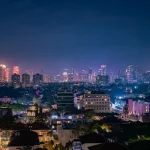
📷 Featured image by Naufal Hilmy on Unsplash.