On this page
- What Indonesian Warmth Really Means
- Greetings That Open Doors
- Six Phrases That Change the Conversation
- Sharing a Meal the Right Way
- Visiting a Home
- Mosques and Bali Temples
- Photos, Personal Questions, and Staying Calm
- How 2026 Has Changed Local Connections
- 2026 Budget Reality
- Frequently Asked Questions
In 2026, it is easy to cross Indonesia booking everything through apps and talk only to drivers and front desk staff. The warmth people rave about is real, but it does not appear on its own. It opens when you know a few customs, and the effort is smaller than you think.
What Indonesian Warmth Really Means
Indonesians call it being ramah: friendly, open, and welcoming to strangers. When a man on a motorbike asks “Mau ke mana?” (where are you going?), he is not being nosy. It is the local version of “hello, how are you?”
Behind this sits gotong royong, the idea that a community carries its burdens together. You will see it when neighbours cook for a wedding, repair a village road, or share food at a funeral. As a visitor you are treated as a temporary guest of that community. Hospitality is a duty, and a happy guest is a point of pride for the host.
The country is also very diverse. Javanese people tend to speak softly and avoid direct “no” answers. Minangkabau and Batak people are often more blunt and loud. Balinese life follows Hindu rhythms. Do not expect one set of manners everywhere.
Greetings That Open Doors
A handshake in Indonesia is light and a little long. Do not squeeze hard. Many people then touch their right hand to their chest, which means “I greet you from the heart.” Devout Muslim men and women may not shake hands with the opposite gender, so wait for the other person to offer a hand. A smile with a small nod works every time.
- Salim: Younger people take an elder’s hand and touch it to their forehead. You do not have to do this, but elders will notice and appreciate it.
- Bali: Press your palms together at chest height and say “Om swastiastu.”
- Pointing: Use your whole hand or your thumb, not your index finger.
- Heads and feet: Do not touch anyone’s head, and do not point your feet at people or sacred objects.
- Hands: Give and receive things with your right hand, or both hands for elders.
Six Phrases That Change the Conversation
Indonesian has no verb tenses and no gender. It is one of the easiest Asian languages for English speakers, and people light up when you try. Bahasa Indonesia is understood nearly everywhere, even where local languages dominate.
- Selamat pagi (suh-LAH-maht PAH-ghee): good morning
- Terima kasih (tuh-REE-mah KAH-see): thank you
- Permisi (per-MEE-see): excuse me, used when passing in front of someone
- Berapa? (buh-RAH-pah): how much?
- Enak sekali (EH-nak suh-KAH-lee): very delicious
- Tolong (TOH-long): please or help, depending on context

Add titles for extra respect. Use Bapak (sir) and Ibu (madam) for older people. In Java, Mas and Mbak (older brother and sister) are friendly for people around your age. Say “c” like “ch,” and keep your vowels short and clear.
Sharing a Meal the Right Way
Eating is the fastest route to friendship. Picture a plastic stool by a roadside warung: sweet tea in a tall glass, tempeh crackling in the wok, and a sambal that makes your eyes water. Hosts will urge you to eat with “Ayo, makan!” Taking at least a small portion is polite.
Use your right hand for eating, passing, and paying. The left hand is traditionally for hygiene, and using it at the table can cause real discomfort. If you eat with a spoon and fork, as most Indonesians do in daily life, that is perfectly fine.
To decline, say “Sudah kenyang, terima kasih” (SOO-dah kuh-NYANG, I’m already full, thanks) and put a hand on your chest. During Ramadan, avoid eating or drinking openly in front of fasting people in conservative areas. If someone invites you to buka puasa (breaking the fast at sunset), accept. It is a generous gesture.
Visiting a Home
An invitation home is a big moment. Remove your shoes at the door, and follow what the family does. Bring a small gift, such as fruit, pastries, or sweets. Avoid alcohol and anything with pork in Muslim homes.
Your host will likely serve tea or a cold drink. Wait for “Silakan” (please, go ahead) before drinking. If you are invited to stay longer, “Mampir dulu” (stop by for a while), a warm refusal is “Lain kali ya” (next time). Do not just say no, because the offer is a sign of affection.
Mosques and Bali Temples
About 87 percent of Indonesians are Muslim, but Bali is mostly Hindu. Each has different rules.
Mosques
- Remove your shoes before entering.
- Cover shoulders and knees. Women should cover their hair, and scarves are often provided.
- Do not walk in front of someone praying. Stay quiet during prayer times.
- Many mosques only allow non-Muslims in certain areas, so ask first.
Balinese temples
- Wear a sarong and sash. You can buy or rent them at the gate.
- Women who are menstruating are traditionally asked not to enter. Signs are posted at many temples.
- Do not step on canang sari, the small woven offerings on the ground. Walk around them.
- Do not climb on shrines, and keep your head lower than a priest during ceremonies.

Photos, Personal Questions, and Staying Calm
Ask before you photograph people, especially at ceremonies. “Boleh foto?” (may I take a photo?) is enough. Outside big cities, you may be the one asked for a selfie. It is almost always friendly, and a quick smile usually ends it.
Expect personal questions about your age, marriage, children, and religion. They are signs of interest, not rudeness. Answer lightly, and if you are not religious, “I’m not very religious” lands better than a flat “no religion.”
Keep your temper. Public anger causes people to lose face and rarely solves anything. If you disagree on a price or a mistake, smile and speak softly. A calm tone gets you much further than a raised voice.
How 2026 Has Changed Local Connections
Since 2024, a few shifts affect how you meet people. QRIS, the national QR payment system, is now common at small stalls, so you may pay even a roadside seller with a phone. Still, carry small cash for temple donations and tips. Bali charges foreign visitors a levy of Rp150,000 to support culture and environment, and many local-run village programmes are growing as a result. More villages now offer community-run homestays and craft sessions, which means easier, more respectful ways to meet families.
2026 Budget Reality
Authentic connections cost little. These are typical 2026 prices.
- Budget: a warung meal at Rp15,000–30,000, a village homestay at Rp150,000–350,000 per night, a temple donation at Rp10,000–50,000, and a sarong at Rp50,000–100,000.
- Mid-range: a sit-down local meal at Rp50,000–120,000, a family homestay with meals at Rp400,000–900,000 per night, and a cooking or batik class at Rp350,000–600,000.
- Comfortable: a private cultural guide at Rp600,000–1,000,000 per day, a small boutique stay run by a local family at Rp1,200,000 or more, and a custom village or ceremony experience at Rp800,000–1,500,000.

A small gift for a host, such as fruit or pastries, costs Rp30,000–100,000. Make sure fees go to the community, not only a middleman.
Frequently Asked Questions
Is it rude to refuse food offered by an Indonesian host?
Not if you do it kindly. Take a small taste first, then say “Sudah kenyang, terima kasih” with a hand on your chest. Refusing outright can seem cold. Hosts see feeding you as a way to show care, so accepting even a little is the polite choice.
Should I shake hands with Indonesians?
Yes, but keep it gentle. Many people follow a handshake by touching their chest. Some Muslim men and women avoid contact with the opposite gender, so wait for them to offer a hand. If they don’t, a smile, small nod, and hand on the chest is enough.
What should I wear to visit a mosque in Indonesia?
Wear loose clothing that covers your shoulders and knees. Women should bring a scarf for their hair, though many mosques lend one. Take off your shoes at the entrance. Visit outside prayer times, and ask staff where non-Muslim visitors are allowed to go.
Do I need to speak Indonesian to meet locals?
No, but a few words help a lot. English is common in tourist areas, less so in villages. Basic phrases like “terima kasih,” “permisi,” and “enak sekali” show respect. Indonesian is simple, with no tenses or genders, so learning the basics takes only days.
Can I join a village ceremony as a tourist?
Often yes, if you are invited or have asked permission. Dress modestly, follow the family’s lead, stay at the back, and ask before taking photos. In Bali, wear a sarong and sash. A small donation, usually Rp50,000 or less, is a thoughtful way to say thanks.
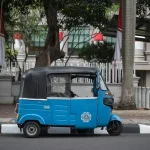
📷 Featured image by Luís Moura on Unsplash.