On this page
- Sulawesi on a Budget in 2026: Still One of Indonesia’s Best-Value Islands
- Why Sulawesi Still Rewards Budget Travelers
- The Best Base Cities for Backpackers
- Where to Sleep Without Draining Your Wallet
- Eating Cheap and Eating Well Across Sulawesi
- Getting Around the Island on a Shoestring
- The Highlights Worth Every Rupiah
- Day Trips That Cost Almost Nothing
- Practical Money-Saving Strategies Specific to Sulawesi
- Budget Breakdown: What a Day Actually Costs in 2026
- When to Go for the Best Value
- Safety and Practical Reality for Backpackers
- Frequently Asked Questions
💰 Click here to see Indonesia Budget Breakdown
💰 Prices updated: September, 2026. Budget figures are estimates — always verify before travel.
Exchange Rate: $1 USD = Rp17,928.47
Daily Budget (per person)
Shoestring: Rp358,569 – Rp896,424 ($20.00 – $50.00)
Mid-range: Rp1,254,993 – Rp2,689,271 ($70.00 – $150.00)
Comfortable: Rp2,689,271 – Rp4,482,118 ($150.00 – $250.00)
Accommodation (per night)
Hostel/guesthouse: Rp71,714 – Rp179,285 ($4.00 – $10.00)
Mid-range hotel: Rp448,212 – Rp896,424 ($25.00 – $50.00)
Food (per meal)
Budget meal: Rp26,893.00 ($1.50)
Mid-range meal: Rp143,428.00 ($8.00)
Upscale meal: Rp537,854.00 ($30.00)
Transport
Single metro/bus trip: Rp3,500.00 ($0.20)
Monthly transport pass: Rp200,000.00 ($11.16)
Sulawesi on a Budget in 2026: Still One of Indonesia’s Best-Value Islands
Bali has priced out a generation of backpackers. Lombok is catching up fast. But Sulawesi — this sprawling, spider-shaped island in eastern Indonesia — still offers the kind of travel that feels genuinely rewarding without punishing your bank account. The challenge in 2026 is that domestic flight prices have climbed since the post-pandemic recovery, and some popular areas around Tana Toraja and the Togean Islands have quietly raised their prices. Knowing where the value still lives, and where the tourist markup has crept in, makes all the difference on a tight budget.
Why Sulawesi Still Rewards Budget Travelers
Sulawesi doesn’t run on tourism the way Bali does. Outside of Tana Toraja and a handful of dive sites near Manado, most of the island’s economy is built on fishing, agriculture, trade, and mining. That means local prices for food, accommodation, and transport are set by what local people can afford — not what a tourist from Europe will pay without blinking.
Walk through the pre-dawn fish market at Pasar Sentral in Makassar and you understand this immediately. The smell of fresh tuna and salt water hits you before you even see the stalls, and the prices being shouted across the aisles are for the fishing families who sell here every morning, not for travelers. That reality — that most of Sulawesi exists on its own economic terms — is exactly why it remains one of Indonesia’s most rewarding destinations for budget travelers in 2026.
Tourism infrastructure has improved in certain corridors. The trans-Sulawesi highway connecting Makassar northward through Pare-Pare and toward Mamuju has seen upgrades, making bus travel faster and more comfortable than it was in 2022. New budget guesthouses have opened in Rantepao and Tentena, and competition has kept prices honest.
The Best Base Cities for Backpackers

Makassar (South Sulawesi)
Makassar is where most travelers land, and it’s a genuinely useful base. The city is noisy, hot, and chaotic in the best possible way — becak drivers weaving past modern malls, fish grilling over coconut husks on the waterfront at sunset. As the economic capital of eastern Indonesia, Makassar has good transport links in every direction. Budget accommodation is concentrated around Jalan Somba Opu and near the old Fort Rotterdam area. From here you can reach Tana Toraja by night bus, connect north by road, or fly to Manado.
Rantepao (Tana Toraja)
Rantepao is the main town in the Toraja highlands, around 320 kilometres north of Makassar. It’s the gateway to traditional villages, rice terraces, and the famous funeral ceremonies. Guesthouses here cater specifically to backpackers. The town itself is walkable and compact, with a small market, warungs on every street, and enough infrastructure to keep costs low. The surrounding countryside is best explored by rented motorbike.
Manado (North Sulawesi)
Manado is the gateway to Bunaken Marine Park, one of the world’s great dive sites, and to the Minahasa highlands. The city itself is a functional transit hub rather than a destination, but it has a strong local restaurant scene and good value accommodation outside the waterfront hotel strip. Budget travelers base here before heading to Bunaken or continuing to the Togean Islands.
Tentena (Central Sulawesi)
Tentena sits on the shore of Lake Poso in Central Sulawesi and remains one of the island’s most underrated stops. It’s quiet, genuinely cheap, and acts as a stepping stone between south and north. The lake views are extraordinary at dawn — mist lifting off the water while wooden outriggers head out for the morning catch. A handful of small guesthouses and warungs keep backpacker costs minimal.
Where to Sleep Without Draining Your Wallet

Sulawesi’s budget accommodation landscape in 2026 is uneven. The well-traveled corridor between Makassar and Rantepao has real competition, which keeps prices low. Off that main route, guesthouses are often family-run, basic, and very cheap — but you get what you pay for.
- Makassar: Budget guesthouses around Jalan Sarappo and near Fort Rotterdam run between Rp 120,000–Rp 200,000 per night for a fan room with shared bathroom. Air-con rooms with private bathroom sit at Rp 250,000–Rp 350,000.
- Rantepao: Backpacker guesthouses including the long-running Wisma Maria and newer spots on Jalan Mappanyuki charge Rp 100,000–Rp 180,000 for a basic room. Many include simple breakfast.
- Manado: Fan rooms near the city center start around Rp 150,000. The budget-friendly strip near the Mega Mall area has several decent options at Rp 200,000–Rp 280,000 with air-con.
- Tentena: The cheapest sleep on the island. Simple guesthouses along the lakeshore charge Rp 80,000–Rp 130,000 per night. Don’t expect hot water, but the lake views compensate.
- Bunaken Island: Dive resort bungalows start around Rp 250,000, but this usually includes meals, making it better value than it sounds.
Eating Cheap and Eating Well Across Sulawesi
Sulawesi’s food scene is deeply regional. What you eat in Makassar is nothing like what you find in Manado, and the differences aren’t just interesting — they’re also price-relevant.
Makassar
The cheapest and most satisfying meals in Makassar come from the warung clusters around Pasar Sentral and along the Losari waterfront. Warung Daeng Ati near the fort area serves coto makassar — a rich, dark beef offal soup with rice cakes — for around Rp 20,000 a bowl. The smell of the soup, all toasted coriander and slow-cooked marrow, drifts across the street and draws a queue from early morning. For Rp 35,000 you eat very well. The pasar malam (night market) along the Losari waterfront comes alive after 6pm with grilled fish, corn, and pisang epe (flattened grilled banana with palm sugar) for Rp 10,000–Rp 15,000 each.

Rantepao
The market area in central Rantepao has the best cheap eating. Warung-style places serve nasi campur (mixed rice plate) for Rp 20,000–Rp 30,000. Pasar Bolu, the buffalo and pig market held every six days, also has a cluster of food stalls where you can eat alongside traders for Rp 15,000. Local coffee shops sell strong Torajan arabica for Rp 8,000–Rp 12,000 a cup — far better quality than anything you’d pay five times more for in a Bali café.
Manado
Manado’s food scene is the spiciest and most distinctive in Sulawesi. The pasar tradisional at Pasar 45 in central Manado has a busy eating section with rica-rica dishes (fiery chili-based preparations), grilled fish, and local vegetable stews. Budget around Rp 25,000–Rp 40,000 for a full meal here. Street food carts near the waterfront sell grilled corn and fresh coconut for Rp 5,000–Rp 10,000.
Tentena and Central Sulawesi
Food options are limited but cheap. Small warungs in Tentena serve rice and fish from Lake Poso for Rp 20,000–Rp 25,000. The ikan mas bakar (grilled goldfish) is a local specialty and worth ordering at least once — smoky, crisp-skinned, served with sambal and steamed greens.
Getting Around the Island on a Shoestring
Sulawesi’s geography — four peninsulas reaching in different directions — makes getting around more complex than most Indonesian islands. There is no single ring road and no rail network. Your options are buses, shared minivans (called pete-pete or angkot depending on the region), motorbikes, and domestic flights.

Buses and Shared Minivans
The Makassar to Rantepao route is the most-traveled by backpackers. Night buses leave from Makassar’s Daya terminal and take around 8–9 hours, costing Rp 120,000–Rp 180,000. In 2026, several companies including Bintang Prima and Litha operate this route with air-conditioned coaches that are genuinely comfortable. Book at the terminal or through local agents in your guesthouse.
Within cities, pete-pete (shared minivans) cover fixed routes for Rp 5,000–Rp 8,000 per journey. They’re slow and crowded but extremely cheap. In Makassar and Manado, Gojek and Grab are both active and usually cheaper than negotiating with ojek (motorbike taxis). A Gojek ride across central Makassar rarely exceeds Rp 15,000–Rp 25,000.
Motorbike Rental
For exploring the Toraja highlands or the Minahasa plateau around Manado, a rented motorbike is the most flexible and cost-effective option. Rental runs Rp 75,000–Rp 100,000 per day in Rantepao, with petrol adding Rp 15,000–Rp 20,000 for a full day of riding. Make sure your travel insurance covers motorbike use — this matters if anything goes wrong.
Domestic Flights
Sulawesi is big. The overland journey from Makassar to Manado takes two or more days if done straight through. For most backpackers with limited time, flying one leg makes sense. Lion Air and Wings Air dominate budget routes in 2026. Makassar (UPG) to Manado (MDC) typically costs Rp 450,000–Rp 750,000 booked two to three weeks ahead. Book through Traveloka for the best prices and check for flash sales on weekday departures.
Ferries and Boats
Reaching the Togean Islands in Central Sulawesi requires a ferry from Ampana or Gorontalo. The ferry from Ampana to Wakai (main Togean hub) costs around Rp 70,000–Rp 100,000 and takes 4–6 hours depending on the vessel. PELNI also operates a national ferry network connecting Makassar to various Sulawesi ports — useful for budget travelers with time to spare. The economy class PELNI deck experience is a genuine adventure: bring a sleeping mat, food, and patience.

The Highlights Worth Every Rupiah
Tana Toraja Funeral Ceremonies
Attending a traditional funeral in Tana Toraja is one of the most extraordinary experiences available to travelers in Indonesia. These are community events, and visitors are generally welcomed with an offering of sugar, coffee, or cigarettes (ask your guesthouse owner for current etiquette — it shifts). The ceremonies involve buffalo sacrifice, traditional chanting, and multi-day rituals that celebrate the deceased’s journey to the afterlife. Ceremonies happen year-round but peak between July and September. Entry by invitation via a local guide is standard; many guesthouses in Rantepao can connect you. A guide for the day costs Rp 200,000–Rp 350,000.
Bunaken Marine Park
The reef walls around Bunaken Island drop vertically for hundreds of metres and are home to extraordinary biodiversity. The marine park entrance fee in 2026 is Rp 150,000 for a multi-day pass. Snorkeling gear can be rented from island homestays for Rp 50,000–Rp 75,000. Budget dive packages — two dives with equipment — run Rp 500,000–Rp 700,000 at the more competitive dive operators on the island. The visibility is often above 30 metres and the coral health here outclasses many of Indonesia’s better-known dive sites.
Togean Islands
Getting to the Togeans is genuinely difficult, which keeps them relatively uncrowded. The reward is remote island life at minimal cost — small bungalows on the water, snorkeling in shallow reefs, and the near-total absence of tourist infrastructure pressure. All-inclusive packages at simple guesthouses (meals, snorkeling, boat trips) run Rp 250,000–Rp 400,000 per day. The journey to get there — bus from Tentena to Ampana, then ferry to Wakai — is long but scenic.
Lore Lindu National Park
This undervisited national park in Central Sulawesi protects highland rainforest that’s home to the babirusa (pig-deer), the maleo bird, and the anoa (dwarf buffalo). Entry is Rp 50,000 for foreign visitors. Hiring a local guide from the park office in Gimpu or Wuasa costs Rp 200,000–Rp 300,000 per day. The park contains mysterious ancient megalithic statues whose origins remain genuinely unknown — they stand in jungle clearings and rice fields, centuries old, unexplained.

Day Trips That Cost Almost Nothing
Sulawesi’s rural character means that some of its most rewarding experiences are within easy reach of your guesthouse and cost nearly nothing to access.
- From Rantepao: Ride a rented motorbike to Ke’te’ Kesu’, a traditional Torajan village with cliff-face hanging graves, for a Rp 20,000 entry fee. The rice barns and carved ancestral houses here are in genuine everyday use, not reconstructed for tourism. Ride further to Batutumonga for panoramic views over the valley — just a 45-minute ride on mountain roads.
- From Manado: The Minahasa highlands and Lake Tondano are 30–45 minutes by angkot or rented motorbike. The crater lake at Linow near Tomohon changes colour with volcanic mineral activity — entry is Rp 25,000. Tomohon’s traditional market also sells an extraordinary range of local produce (and some confronting bush meat).
- From Makassar: Bantimurung Waterfall in Maros Regency, about 40 kilometres northeast, is a popular local escape. Entry costs Rp 30,000 and the falls drop into a cool limestone canyon. Combine it with the Rammang-Rammang karst landscape — one of the largest karst areas in the world — reached by a short boat ride for Rp 15,000.
- From Tentena: The Saluopa Waterfalls are 12 kilometres from town, reachable by ojek for Rp 30,000 return. Swimming in the multi-tiered falls costs nothing beyond the small entrance fee of Rp 10,000.
Practical Money-Saving Strategies Specific to Sulawesi
General Indonesia budget advice doesn’t always translate directly to Sulawesi. Here’s what actually works on this island in 2026:

- Travel by night bus between major stops. The Makassar–Rantepao night bus saves you a night’s accommodation cost while covering the distance. Budget Rp 150,000 for the bus instead of Rp 200,000 for accommodation.
- Use local SIM cards at the first opportunity. Telkomsel has the best coverage across Sulawesi’s rural areas. Buy at Makassar airport or any city center. A 30-day data package with 30GB runs around Rp 80,000–Rp 100,000. This matters more in Sulawesi than in western Indonesia because Gojek and offline maps are your navigation lifeline on an island with few English signs.
- Avoid tourist-facing tour packages in Rantepao. The standard “Toraja tour” sold at guesthouses for Rp 400,000–Rp 600,000 covers sites you can easily reach alone on a rented motorbike for Rp 100,000 total. A guide is genuinely worth hiring only for ceremonial context — not for navigating to the sights.
- Eat at markets, not at restaurants near guesthouses. The café attached to your guesthouse charges double or triple what the warung around the corner does. In Rantepao, the morning market near Jalan Abdul Gani has cooked food from 6am at local prices.
- Check ATM availability before you go off-grid. The Togean Islands and parts of Central Sulawesi have no ATMs. Withdraw enough in Ampana or Poso before heading into remote areas. BRI ATMs have the widest reach in rural areas across Sulawesi.
Budget Breakdown: What a Day Actually Costs in 2026
These figures reflect real 2026 prices and assume you’re making smart local choices rather than eating at tourist restaurants or taking private transport everywhere.
Budget Tier (Rp 200,000–Rp 350,000 per day)
- Accommodation: Rp 100,000–Rp 150,000 (fan room, shared bathroom)
- Food: Rp 60,000–Rp 80,000 (three meals at warungs and markets)
- Transport: Rp 20,000–Rp 50,000 (pete-pete, Gojek, or short motorbike rides)
- Sightseeing: Rp 20,000–Rp 50,000 (village entry fees, waterfalls)
- Total: approximately Rp 200,000–Rp 330,000
Mid-Range Tier (Rp 400,000–Rp 700,000 per day)
- Accommodation: Rp 200,000–Rp 300,000 (air-con room, private bathroom)
- Food: Rp 100,000–Rp 150,000 (mix of warungs and occasional sit-down restaurants)
- Transport: Rp 50,000–Rp 100,000 (motorbike rental or Grab)
- Sightseeing/guides: Rp 100,000–Rp 200,000
- Total: approximately Rp 450,000–Rp 750,000
Comfortable Backpacker (Rp 750,000–Rp 1,200,000 per day)
- Accommodation: Rp 350,000–Rp 500,000 (good guesthouse or small hotel with air-con)
- Food: Rp 150,000–Rp 200,000
- Activities: Rp 200,000–Rp 400,000 (one dive, guided tour, or long motorbike day)
- Transport: Rp 100,000–Rp 150,000
- Total: approximately Rp 800,000–Rp 1,250,000
Note: Diving days will push costs higher regardless of tier. Two dives with equipment rental in Bunaken adds Rp 500,000–Rp 700,000 to your daily total.
When to Go for the Best Value
Sulawesi’s weather patterns are complex because the island spans multiple climate zones. Unlike Bali’s clear dry and wet season split, different peninsulas peak at different times.
South Sulawesi (Makassar, Tana Toraja): The dry season runs April to October. July and August bring the most reliable weather for highland travel in Toraja but also the most tourists and ceremony season — prices for guides and some guesthouses nudge up. May, June, and September offer excellent weather with fewer crowds.
North Sulawesi (Manado, Bunaken): The dry season shifts to roughly October to April, which is the opposite of the south. The best diving visibility at Bunaken is typically October through January. Budget travelers can exploit the shoulder months of October and March–April when accommodation deals are easier to negotiate.
Central Sulawesi (Tentena, Togeans): The Togean Islands receive rain year-round but have a drier period from April to October. The wet season (November to March) can make the ferry crossing from Ampana rough and some island guesthouses close. Tentena is accessible year-round.
For budget travelers, the best value months across most of Sulawesi are May, June, and early October — good weather, no peak-season premium, and better negotiating position on accommodation and tours.
Safety and Practical Reality for Backpackers
Sulawesi has a complicated historical reputation. The communal conflicts that affected parts of Central Sulawesi in the early 2000s are now more than two decades past, and the areas most visited by travelers — Tana Toraja, Bunaken, the Togeans, and Makassar — have been safe and stable for many years. Standard travel precautions apply everywhere.
- Theft: Petty theft is relatively uncommon in Sulawesi compared to Java and Bali, but keep valuables secured in your guesthouse. Don’t leave motorbike helmets on the bike overnight.
- Traffic: Roads in the highlands around Toraja are narrow, winding, and can be slippery after rain. Ride within your skill level. Road fatalities involving foreign tourists on rented motorbikes are a real risk across Indonesia.
- Water: Tap water is not safe to drink anywhere in Sulawesi. Refill stations charging Rp 5,000 for 5 litres are widely available in towns — use these rather than constantly buying plastic bottles. In remote areas, carry water purification tablets.
- Health: Malaria risk exists in rural Central Sulawesi and remote parts of the Togean Islands. Consult a travel health clinic before departure. Dengue fever is present island-wide; use repellent at dawn and dusk.
- Language: English is spoken in guesthouses and at tourist sites, but not widely elsewhere. Learning basic Indonesian phrases — numbers, food words, directional terms — will dramatically improve your experience and is easily the best investment of two or three hours of preparation time before you arrive.
- SIM and connectivity: Telkomsel covers the main corridors well. Remote areas like the Togean Islands have very weak or no signal. Download offline maps (Maps.me or Google Maps offline) and carry written notes of key guesthouse addresses before heading off-grid.
Frequently Asked Questions
How much money do I need per day to backpack Sulawesi?
On a genuine budget in 2026, Rp 250,000–Rp 350,000 per day covers a basic fan room, three warung meals, and local transport. On dive days or when hiring guides in Tana Toraja, budget at least Rp 600,000–Rp 800,000. Flying between cities is the main expense that can disrupt a tight budget.
Is Sulawesi safe for solo backpackers in 2026?
Yes, the main tourist corridors — Makassar, Tana Toraja, Manado, Bunaken, and Tentena — are safe and well-established for independent travelers. Solo female travelers report generally positive experiences, though conservative dress and standard awareness practices apply in more rural and Islamic communities.
What’s the cheapest way to get from Makassar to Tana Toraja?
The overnight bus from Makassar’s Daya terminal to Rantepao is the cheapest option at Rp 120,000–Rp 180,000. It takes around 8–9 hours and saves you a night’s accommodation cost. Multiple companies operate this route daily, with departures typically in the late afternoon and evening.
Do I need to book Sulawesi accommodation in advance?
Outside of peak ceremony season in Tana Toraja (July–August) and school holiday periods, advance booking is rarely necessary. For the Togean Islands, it’s worth messaging guesthouses ahead of time since ferries have limited schedules and some places have only a handful of rooms. In most other areas, arriving and looking is fine.
What’s the best mobile network for traveling around Sulawesi?
Telkomsel is consistently the best choice for coverage across Sulawesi, including in rural areas of Central and South Sulawesi. XL Axiata works well in Manado and Makassar but drops off quickly outside cities. Buy a Telkomsel SIM at the airport or any official outlet and activate a data package immediately on arrival.
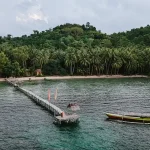
📷 Featured image by Crispin Jones on Unsplash.