On this page
- How Yogyakarta’s Neighborhoods Actually Fit Together
- Kraton District: Best for Culture-Seekers and First-Time Visitors
- Prawirotaman: Best for Design Lovers, Slow Travelers, and Digital Nomads
- Sosrowijayan and the Jalan Malioboro Corridor: Best for Budget Backpackers
- Kota Baru: Best for Mid-Range Comfort and Local Life
- Sleman: Best for Families and Resort-Style Stays Near Merapi
- 2026 Budget Reality: What Accommodation Actually Costs
- Getting Between Neighborhoods: Practical Transport in 2026
- Frequently Asked Questions
💰 Click here to see Indonesia Budget Breakdown
💰 Prices updated: September, 2026. Budget figures are estimates — always verify before travel.
Exchange Rate: $1 USD = Rp17,928.47
Daily Budget (per person)
Shoestring: Rp358,569 – Rp896,424 ($20.00 – $50.00)
Mid-range: Rp1,254,993 – Rp2,689,271 ($70.00 – $150.00)
Comfortable: Rp2,689,271 – Rp4,482,118 ($150.00 – $250.00)
Accommodation (per night)
Hostel/guesthouse: Rp71,714 – Rp179,285 ($4.00 – $10.00)
Mid-range hotel: Rp448,212 – Rp896,424 ($25.00 – $50.00)
Food (per meal)
Budget meal: Rp26,893.00 ($1.50)
Mid-range meal: Rp143,428.00 ($8.00)
Upscale meal: Rp537,854.00 ($30.00)
Transport
Single metro/bus trip: Rp3,500.00 ($0.20)
Monthly transport pass: Rp200,000.00 ($11.16)
Yogyakarta‘s accommodation scene has expanded fast. Since the Trans-Java toll road improvements and the growth of Yogyakarta International Airport (YIA) traffic in 2025–2026, new hotels and guesthouses have popped up across the city in areas that weren’t really on the tourist map five years ago. That’s good for variety — but it makes choosing a base genuinely confusing. Stay too far south and you’re far from the temples. Stay in the wrong part of Malioboro and you’re in a tourist bubble. This guide cuts through that noise and tells you exactly where to stay based on how you actually travel.
How Yogyakarta’s Neighborhoods Actually Fit Together
Yogyakarta is not a big city by Indonesian standards, but it sprawls in ways that catch first-timers off guard. The city’s core runs roughly north to south along a cultural axis: Gunung Merapi sits to the north, the Kraton (royal palace) sits in the center, and the South Sea — Pantai Parangtritis — lies to the south. Almost everything tourists care about sits within or around this axis.
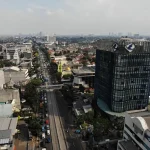
Jalan Malioboro is the main commercial spine running north to south through the center. The Kraton sits just below it. East of Malioboro, the streets get quieter and more residential. West of it, you hit the commercial chaos of the ring road. Prawirotaman is about two kilometers south of the Kraton — close enough to walk if you’re energetic, easy by becak or Gojek. Kota Baru is north of Malioboro, near the main train station (Stasiun Tugu). Sleman is a separate regency to the north, technically outside the city but heavily used by families and resort travelers.
Understanding this layout before you book saves you a lot of sweaty, confused afternoons on a motorbike wondering why your hotel feels so far from everything.
Kraton District: Best for Culture-Seekers and First-Time Visitors

If this is your first time in Yogyakarta and you want to feel the city rather than just see it, stay in or around the Kraton district. The streets here — particularly around Jalan Ngasem, Jalan Rotowijayan, and the lanes running east from Alun-Alun Utara — are lined with traditional Javanese architecture, small family-run warungs, and the kind of slow neighborhood rhythm that larger Indonesian cities have mostly lost.
In the early morning, you’ll hear the gamelan practice drifting from inside the palace walls. Street vendors set up before 7 AM selling bubur ayam and kopi tubruk from small carts, the coffee thick and sweet, served in a glass with grounds still settling at the bottom. This is the oldest part of the city, and it shows — in a good way.
The Kraton itself (the Sultan’s Palace complex) is walkable from almost any guesthouse in this area. Taman Sari water castle is a ten-minute walk west. The batik workshops on Jalan Tirtodipuran are nearby. For temple day trips, Prambanan is about 17 kilometers east — a straightforward Gojek or tour ride.
Who should stay here
- First-time visitors who want immediate access to cultural sites
- Travelers interested in traditional Javanese arts, wayang, and batik
- Anyone who prefers walking over relying on transport
What to watch out for
Some streets inside the Kraton district are narrow and not well-signed. A few guesthouses in the very center have limited vehicle access — confirm this before booking if you’re arriving with large bags. The area also gets loud during royal ceremonies and public events on Alun-Alun Utara, which happen more often than you might expect.

Prawirotaman: Best for Design Lovers, Slow Travelers, and Digital Nomads
Prawirotaman is Yogyakarta’s most grown-up neighborhood. It sits about 2.5 kilometers south of the Kraton, and it has a character completely different from the tourist-heavy north. The streets — particularly Jalan Prawirotaman I and II — are shaded by large trees, lined with boutique guesthouses in converted colonial-era buildings, independent art galleries, and some of the best mid-range restaurants in the city.
This is where Yogyakarta’s creative class lives and works. You’ll find textile designers with studio-guesthouses, internationally-minded cafés with real espresso machines, and a pace that doesn’t feel rushed. The area has a long history as a batik trading district, and while the commercial batik trade has moved elsewhere, that legacy shows in the design sensibility of the buildings and businesses that replaced it.
For digital nomads, Prawirotaman has the best concentration of cafés with reliable WiFi and actual working infrastructure — power points at tables, fast connections, and owners who don’t mind you sitting for three hours. Spots like Via Via (still operating in 2026 under updated management) and several newer cafés along Jalan Tirtodipuran offer this without the fake-productivity atmosphere of a formal co-working space.
Who should stay here
- Travelers staying more than four or five days who want a livable neighborhood, not just a base
- Digital nomads who want cafés over co-working spaces
- Anyone interested in contemporary Indonesian art and design
- Couples looking for boutique stays with atmosphere
Getting around from Prawirotaman
Malioboro is about 25 minutes on foot north — a pleasant walk in the early morning, less so at midday in the heat. Gojek and Grab rides to the Kraton take under ten minutes and cost around IDR 8,000–12,000. The area is not served by the Trans Jogja bus lines as conveniently as the center, so you’ll rely on app-based transport or a rented bicycle for most movement.

Sosrowijayan and the Jalan Malioboro Corridor: Best for Budget Backpackers
Sosrowijayan — the small gang (alley) running west off Jalan Malioboro — has been Yogyakarta’s backpacker heartland for decades. In 2026, it still serves that function, though it has matured slightly. The cheapest beds in the city cluster here: small guesthouses, losmen, and budget hotels packed into a dense grid of narrow lanes just a short walk from Malioboro’s bustle.
This is a good choice if your priorities are cost, convenience, and meeting other travelers. You step out of your guesthouse and you’re thirty seconds from street food, souvenir stalls, and easy access to tour operators. The flip side is that it’s noisy, dense, and not particularly restful. The lanes around Gang I and Gang II come alive at night with the smell of grilled corn and cigarette smoke, motorcycle engines idling, and groups of travelers comparing temple itineraries.
For Borobudur day trips, this location is particularly useful — the main tourist buses and shared minivans still depart from points near Malioboro and Jalan Sosrowijayan in the early morning. It saves you the extra coordination of getting across the city before dawn.
Who should stay here
- Solo budget travelers and backpackers
- Short-stay visitors doing the standard Yogyakarta highlights in two to three days
- Anyone who values walking distance to everything over quiet or comfort
What’s changed in 2026
The Malioboro pedestrianization project, which expanded in stages through 2024–2025, has made the main strip more walkable but pushed vehicle traffic onto surrounding streets — including some that run through the Sosrowijayan area. It’s more pleasant on Malioboro itself now, but the side streets can feel more congested during peak tourist hours.

Kota Baru: Best for Mid-Range Comfort and Local Life
Kota Baru is Yogyakarta’s Dutch colonial-era quarter, sitting north of Malioboro and just east of Stasiun Tugu (the main train station). It doesn’t make most travel lists, which is exactly why it’s worth knowing about. The neighborhood has a genuine mixed-use character — local government offices, old Dutch-era buildings now repurposed as shops and cafés, residential streets, and a scattering of solid mid-range hotels that serve business travelers and independent tourists in roughly equal measure.
For train travelers arriving from Jakarta or Surabaya, Kota Baru is the most practical base. Stasiun Tugu is walkable from most hotels here — no taxi required when you arrive at 6 AM with heavy bags. The area also has better road access than the Kraton district, which matters if you’re renting a car or motorcycle.
The food scene here skews local rather than tourist. The warung strip along Jalan Mangkubumi and the night market area near the station serve Yogyakarta staples — gudeg, nasi kucing, soto ayam — at prices that reflect what locals actually pay, not tourist rates. Gudeg at a proper warung here costs IDR 15,000–25,000 for a full portion, and the jackfruit is slow-cooked until it’s tender with a slightly sweet, deeply savory flavor that you won’t replicate elsewhere.
Who should stay here
- Train travelers who want immediate proximity to Stasiun Tugu
- Mid-range travelers who want comfort without paying boutique prices
- Visitors who prefer eating where locals eat over tourist-facing restaurants
Sleman: Best for Families and Resort-Style Stays Near Merapi
Sleman is technically a separate regency north of Yogyakarta city proper, but for accommodation purposes it functions as the city’s northern residential and resort belt. The area runs from the affluent suburbs of Condongcatur and Seturan (where several universities sit, giving the area a young, student-heavy energy) up toward the Merapi volcano slopes around Kaliurang.

This is where you’ll find Yogyakarta’s larger resort hotels with pools, gardens, and space — things that simply don’t exist in the denser city center. Families with young children gravitate here because the properties have actual grounds, children’s facilities, and quieter surroundings. The Kaliurang area in particular, about 25 kilometers north of the city center, sits at a higher elevation (around 900 meters) where temperatures are noticeably cooler than the city — useful from October to April when Yogyakarta’s lowland heat becomes heavy.
The trade-off is distance. Getting to Borobudur or Prambanan from Sleman takes longer than from the city center. You will need a vehicle — either a rented motorbike, a private car, or consistent app-based rides. The Trans Jogja bus system connects Sleman to the city center, but journey times can stretch to 45–60 minutes depending on traffic.
Who should stay here
- Families with young children who need resort facilities and space
- Travelers specifically visiting Merapi volcano — lava tours depart from Kaliurang
- Anyone who prioritizes quiet, greenery, and cooler air over central access
2026 Budget Reality: What Accommodation Actually Costs
Yogyakarta remains one of Indonesia’s most affordable cities for accommodation, but prices have risen since 2023 as domestic tourism has surged and the city has attracted more international visitors through Yogyakarta International Airport. Here’s what to expect across the main neighborhoods in 2026.
Budget tier (IDR 100,000–300,000 per night)
- Sosrowijayan gang guesthouses and losmen: IDR 100,000–180,000 for a fan room, IDR 180,000–280,000 for air-con
- Basic guesthouses around Kraton district: IDR 150,000–300,000
- Dorm beds in backpacker hostels near Malioboro: IDR 100,000–150,000 per bed

Mid-range tier (IDR 300,000–900,000 per night)
- Boutique guesthouses in Prawirotaman: IDR 350,000–700,000
- Business hotels in Kota Baru: IDR 300,000–600,000
- Smaller hotels in Sleman/Condongcatur: IDR 350,000–650,000
Comfortable tier (IDR 900,000–3,000,000+ per night)
- Design boutique hotels in Prawirotaman: IDR 900,000–2,000,000
- Resort hotels in Kaliurang/Sleman with pools: IDR 1,200,000–3,000,000
- Heritage properties near the Kraton: IDR 1,500,000–4,000,000 (rare but available)
Note that weekend rates (Friday–Saturday nights) run 15–30% higher across almost all properties in Yogyakarta, particularly during school holiday periods in June–July and December–January. Book at least two weeks ahead for stays during those windows.
Getting Between Neighborhoods: Practical Transport in 2026
Yogyakarta’s city transport has improved meaningfully in the last two years, but it still requires some navigation. Here’s how movement actually works between the neighborhoods covered in this guide.
Gojek and Grab
These remain the fastest and most practical option for cross-neighborhood trips. A Gojek ride between Prawirotaman and Malioboro costs IDR 8,000–15,000. From Kota Baru to the Kraton is IDR 10,000–18,000. For longer trips to Sleman, expect IDR 35,000–60,000 depending on exact destination and traffic. Both apps work reliably throughout the city in 2026, including in Kaliurang — though coverage at the very top of the Merapi approach roads can be spotty.
Trans Jogja Bus
The Trans Jogja bus system covers major corridors across the city and is very cheap — flat fare of IDR 3,500 per trip in 2026. It connects Stasiun Tugu, Malioboro, the Kraton area, and extends into Sleman. The limitation is frequency and journey time: buses run every 15–30 minutes on most routes, and traffic on main roads can push journey times well past what the map suggests.
Bicycle rental
For the central cluster — Sosrowijayan, Malioboro, Kraton, and Prawirotaman — a bicycle is genuinely useful and fits the pace of the streets. Rentals are available near Gang I Sosrowijayan and in Prawirotaman for IDR 30,000–60,000 per day. The roads here are flat and manageable, though traffic requires attention.

Becak
The cycle rickshaw remains functional for short, unhurried trips within the Kraton-Malioboro area. Negotiate the price before you get in — IDR 20,000–40,000 for short hops is reasonable. They’re not useful for longer distances but suit the pace of the older neighborhoods perfectly.
Frequently Asked Questions
Which neighborhood in Yogyakarta is best for first-time visitors?
The Kraton district gives first-timers the most immediate access to Yogyakarta’s cultural core — the palace, Taman Sari, batik workshops, and traditional food. You can walk to most key sights without needing transport. It’s not the cheapest option, but it’s the most immersive starting point for someone visiting Yogyakarta for the first time.
Is Prawirotaman far from Borobudur and Prambanan?
Not prohibitively. Prambanan is about 19 kilometers east — a 30–40 minute Gojek or tour ride. Borobudur is about 40 kilometers northwest — typically a 60–90 minute drive depending on traffic. Most guesthouses in Prawirotaman can arrange day trips to both. The distance is manageable for day trips with an early start.
What’s the cheapest neighborhood to stay in Yogyakarta in 2026?
Sosrowijayan (the gang off Jalan Malioboro) remains the cheapest area, with fan rooms from IDR 100,000 per night and dorm beds from IDR 100,000–150,000. It’s noisier and denser than other areas but has unbeatable access to transport, food, and tour operators at budget prices.
Can I rely on public transport to get around Yogyakarta, or do I need to rent a motorbike?
For the central neighborhoods — Malioboro, Kraton, Prawirotaman, Kota Baru — you can manage with Trans Jogja buses and Gojek without renting anything. If you’re staying in Sleman or planning independent day trips to villages outside the city, a rented motorbike (IDR 70,000–120,000 per day) gives you significantly more flexibility and saves time.
Is Yogyakarta safe for solo female travelers across all neighborhoods?
Yogyakarta is widely considered one of Indonesia’s safest cities for solo female travelers. All neighborhoods in this guide — including the budget Sosrowijayan area — are generally safe after dark. The usual urban awareness applies: stay on main streets at night, keep valuables secured, and use app-based transport rather than unmarked taxis for late-night journeys.
Explore more
Yogyakarta Itinerary: The Best Things to Do in 3 Days
Things to Do in Yogyakarta: Your Ultimate Guide to Java’s Cultural Capital
20 Best Things to Do in Yogyakarta for First-Timers
📷 Featured image by Rizal Setiya on Unsplash.