On this page
- Why Yogyakarta Still Stops First-Timers in Their Tracks
- How to Arrive and Get Your Bearings
- Day 1 – Temples, Kraton, and the Soul of the Old City
- Day 2 – Borobudur at Dawn and an Afternoon at Prambanan
- Day 3 – Merapi, Art Villages, and a Final Night on Malioboro
- Where to Eat: Markets, Warungs, and Night Food Spots
- Getting Around Yogyakarta
- Where to Stay: Accommodation by Budget Tier
- 2026 Budget Breakdown: What Three Days Actually Costs
- Practical Tips for First-Timers in 2026
- Frequently Asked Questions
💰 Click here to see Indonesia Budget Breakdown
💰 Prices updated: September, 2026. Budget figures are estimates — always verify before travel.
Exchange Rate: $1 USD = Rp17,928.47
Daily Budget (per person)
Shoestring: Rp358,569 – Rp896,424 ($20.00 – $50.00)
Mid-range: Rp1,254,993 – Rp2,689,271 ($70.00 – $150.00)
Comfortable: Rp2,689,271 – Rp4,482,118 ($150.00 – $250.00)
Accommodation (per night)
Hostel/guesthouse: Rp71,714 – Rp179,285 ($4.00 – $10.00)
Mid-range hotel: Rp448,212 – Rp896,424 ($25.00 – $50.00)
Food (per meal)
Budget meal: Rp26,893.00 ($1.50)
Mid-range meal: Rp143,428.00 ($8.00)
Upscale meal: Rp537,854.00 ($30.00)
Transport
Single metro/bus trip: Rp3,500.00 ($0.20)
Monthly transport pass: Rp200,000.00 ($11.16)
Yogyakarta has a reputation for being Indonesia’s cultural heartland, and in 2026, that reputation still holds — but the city is busier than ever. Domestic tourism has surged since the new Yogyakarta International Airport (YIA) opened its second terminal expansion in late 2025, and weekend crowds at Borobudur can be genuinely overwhelming if you arrive without a plan. This three-day itinerary is built around that reality: how to see the temples, the kraton, the volcanoes, and the food without spending your trip stuck in traffic or queuing in the midday heat.
Why Yogyakarta Still Stops First-Timers in Their Tracks
Most Indonesian cities hustle. Yogyakarta meditates. The pace here is different — not slow, exactly, but deliberate. The city still revolves around the Sultan’s palace at its geographic and cultural center, and the neighborhoods radiating outward have their own distinct characters: batik workshops in Kotagede, wayang puppet carvers on Jalan Mataram, student cafes packed until 2am along Jalan Kaliurang.
What first-timers notice immediately is the density of meaning packed into a relatively small city. Within 60 kilometres of each other, you have two of the greatest religious monuments on earth — Buddhist Borobudur and Hindu Prambanan — plus an active stratovolcano, a living royal court, a world-class contemporary art scene, and some of the most obsessively good street food in Java. Three days gives you just enough time to touch all of it without rushing.
The air carries something specific in Yogyakarta at dawn: incense from the small offerings left on doorsteps, mixed with wood smoke from warungs firing up their first batches of tempe and tofu. By 6am the streets around Jalan Malioboro are already alive, and that early-morning energy is one of the best reasons to arrive the night before and start fresh on day one.
How to Arrive and Get Your Bearings
Yogyakarta International Airport (YIA) is in Kulon Progo, about 45 kilometres west of the city center. The Bandara rail link — the dedicated airport train — runs directly into Yogyakarta’s main Tugu Station and takes around 40 minutes, costing IDR 20,000 per person. It runs roughly every 30 minutes from early morning until late evening. In 2026, this is the smartest way to arrive: fast, cheap, air-conditioned, and it drops you right at the northern tip of Jalan Malioboro.
If you’re arriving from Jakarta by train, the overnight Argo Lawu and Argo Dwipangga services pull into Tugu Station after roughly eight hours. From Tugu, everything in central Yogyakarta is reachable on foot, by becak (cycle rickshaw), or by a short Gojek ride. Get oriented quickly: Jalan Malioboro runs north–south as your main artery, the Kraton sits at its southern end, and Borobudur is northwest. Prambanan is 17 kilometres to the east.
Day 1 – Temples, Kraton, and the Soul of the Old City
Start your first morning at the Kraton (Sultan’s Palace), which opens at 8:30am. The palace complex is still an active royal residence — the current Sultan, Hamengkubuwono X, remains both the hereditary ruler of Yogyakarta and the elected governor of the Special Region. That dual role makes the Kraton genuinely unlike any other palace in Southeast Asia. Entry is IDR 20,000 for foreigners. Guided tours in English run every 45 minutes and are worth taking — the guides have been trained by the palace itself and know things about the layout and ceremonies that no guidebook covers.
After the Kraton, walk five minutes south to Tamansari (Water Castle), a ruined Portuguese-influenced pleasure garden built in 1758. The upper pools have been restored; the underground mosque and bathing chambers have not, and the crumbling brick corridors are genuinely atmospheric. Budget around 90 minutes here. Entry is IDR 15,000.

Spend your afternoon in Kotagede, the old silver-working district about 4 kilometres southeast of the Kraton. Workshops here have been producing silverwork for centuries, and you can watch craftspeople hammer, etch, and solder intricate pieces in small family studios. The neighborhood’s narrow lanes and surviving Dutch-era shophouses are among the most photogenic in Yogyakarta. Have a cold es dawet from one of the pasar stalls — the coconut milk, palm sugar, and chewy pandan jelly are the color of a rice paddy.
In the evening, return to Jalan Malioboro as the sun drops. The street transforms after 6pm: hawkers set up, the smell of grilling satay fills the air, and the batik shops stay open until 10pm. Eat your first gudeg dinner at the covered food stalls along Jalan Wijilan, two blocks east of the Kraton, which is Yogyakarta’s dedicated gudeg street.
Day 1 Key Stops
- Kraton — 8:30am, allow 90 minutes
- Tamansari — 10:30am, allow 60–90 minutes
- Kotagede — afternoon, allow 2 hours
- Jalan Wijilan — dinner, gudeg and nasi kucing
Day 2 – Borobudur at Dawn and an Afternoon at Prambanan
Wake up at 4am. This is non-negotiable if you want the sunrise slot at Borobudur. Your timed-entry sunrise ticket gets you access to the upper terraces from 5:30am, before the main crowds arrive on the standard 8am opening. Hire a car and driver for the day — the standard rate from central Yogyakarta for a Borobudur-Prambanan combo is IDR 400,000–550,000 for the whole day, depending on the vehicle. The drive west to Borobudur takes about 75 minutes without traffic at that hour.
Standing on Borobudur’s upper platform as the mist burns off the Kedu Valley is one of those travel experiences that genuinely earns the word transcendent. The 72 stupas on the upper three circular terraces, each containing a seated Buddha, catch the early light as the volcanoes Merapi and Merbabu appear on the horizon behind you. The complex covers nearly 2,500 square metres and took an estimated 75 years to build in the 9th century. Sunrise entry tickets cost IDR 470,000 per person in 2026 (standard entry is IDR 350,000).

After Borobudur, ask your driver to stop at Pawon Temple and Mendut Temple on the way back — both sit on the same ancient pilgrimage axis as Borobudur, and most visitors skip them. Mendut contains three extraordinary statues: a central Buddha flanked by two Bodhisattvas, all carved from single stones in the 9th century. Entry to each is IDR 10,000 and you’ll likely have them to yourself.
After lunch, drive east to Prambanan. The main compound of six temples dedicated to the Hindu Trimurti (Brahma, Vishnu, Shiva) is dramatic in the afternoon light — the central Shiva temple rises 47 metres and its carved bas-reliefs depicting the Ramayana are extraordinarily detailed. The full Prambanan Archaeological Park includes scattered outlier temples that most visitors never reach. Entry is IDR 350,000 for foreigners. Allow two hours minimum.
Back in the city by early evening, head to Alun-Alun Kidul (the southern palace square) after dark. This is where locals bring their families on weeknights: kids riding glowing becaks, young couples attempting the traditional blindfolded walk between two banyan trees (local belief says those who can walk straight between them will have their wishes granted), and food carts selling wedang ronde and roasted corn. It costs nothing and feels completely, irreplaceably Javanese.
Day 2 Key Stops
- Borobudur — 5:30am sunrise entry, allow 2.5 hours
- Mendut Temple — on the way back, 30 minutes
- Prambanan — early afternoon, allow 2 hours
- Alun-Alun Kidul — evening, free, no time limit

Day 3 – Merapi, Art Villages, and a Final Night on Malioboro
Mount Merapi — one of the most active volcanoes on earth — looms over Yogyakarta’s northern skyline. On your third morning, take a Jeep tour up its slopes. Tours depart from the village of Kaliurang, about 25 kilometres north of the city center. The standard 1.5-hour lava tour covers the 2010 eruption zone, the hardened lava fields, and the ruins of houses buried under volcanic ash. Cost is IDR 350,000–500,000 per Jeep (seats four people). The panoramic views of the summit and down across the city below are extraordinary on a clear morning, and the cooler mountain air — usually around 20–22°C at 7am — is a genuine relief after the lowland heat.
On the way back south, stop at Ullen Sentalu Museum in Kaliurang (IDR 100,000 entry, guided tour only). This is genuinely one of the best museums in Indonesia: it documents the history of Javanese royal families through royal portraits, letters, batik, and artifacts in a beautifully designed garden complex. The Dutch colonial building merged with Javanese design creates rooms that feel like you’ve stepped into a different century.
Spend your final afternoon in the art and craft villages between the city center and Prambanan. Kotagede you’ve already seen, but Kasongan (pottery village, 7km south) and Manding (leather goods) are worth the detour if you’re shopping. Further east, Prambanan village market operates from midday and sells hand-painted wayang leather puppets at better prices than Malioboro.
For your final evening, revisit Jalan Malioboro with purpose. The section between Tugu Monument and the Kraton gates is the full pedestrianized stretch. Buy batik fabric from the shops with fixed prices (avoid anyone who immediately offers you a “special price” — it means the starting price is triple what it should be). Have a final dinner at Via Via Restaurant on Jalan Prawirotaman or catch a wayang kulit shadow puppet performance at the Kraton pavilion, which runs most nights from 8pm.

Day 3 Key Stops
- Merapi Jeep Tour — 7am from Kaliurang, 1.5 hours
- Ullen Sentalu Museum — mid-morning, allow 90 minutes
- Kasongan / Manding — afternoon, 1–2 hours
- Jalan Malioboro — evening shopping, dinner, performance
Where to Eat: Markets, Warungs, and Night Food Spots
Yogyakarta’s food scene is concentrated in specific streets and markets rather than scattered restaurants, and knowing where to go saves time and money.
Pasar Beringharjo on Jalan Malioboro is the city’s main traditional market, and the upper floor food section is where you want to be for breakfast. Vendors sell warm bubur sumsum (rice porridge with palm sugar), lontong opor, and fresh-fried bakwan for IDR 5,000–15,000 per serving. The market opens at 7am and the food section is busiest between 7–9am.
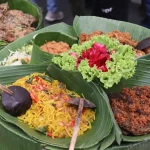
Jalan Wijilan is the city’s gudeg street, two blocks east of the Kraton south gate. Around a dozen warung here serve gudeg — the slow-cooked unripe jackfruit stew that Yogyakarta is famous for — from early evening until late night. Bu Djuminten and Warung Gudeg Yu Djum are the most established names. A full gudeg set with rice, chicken, egg, and krecek (spiced crackling rind) costs IDR 30,000–50,000.
Angkringan stalls are Yogyakarta’s answer to the late-night snack problem. These small cart operations serve nasi kucing (tiny rice parcels with a spoonful of filling), various skewered items, and sweet tea for almost nothing — a full meal costs IDR 15,000–25,000. The best concentration is along Jalan Malioboro itself after 9pm and around the Tugu Monument at the northern end of the street.
For something more substantial, Jalan Prawirotaman in the south of the city is where Yogyakarta’s creative class eats. The street runs through the batik gallery district and has a strong mix of traditional Javanese warungs, Indonesian-fusion cafes, and rooftop spots. Bale Raos restaurant, inside the Kraton grounds, serves royal Javanese recipes that the palace kitchen has cooked for generations — the smoked duck and young coconut desserts are worth the higher price point (mains IDR 85,000–150,000).

For coffee, the specialty cafe scene along Jalan Kaliurang and in the Papringan Bamboo Market (a rotating weekend market in a bamboo forest in Temanggung, about 40 minutes north) has developed significantly since 2024. Single-origin Javanese beans — particularly Merapi-slope arabica — are worth trying.
Getting Around Yogyakarta
Gojek and Grab are the fastest and cheapest options for most in-city trips. A ride from Tugu Station to the Kraton costs IDR 8,000–12,000. Both apps work reliably in 2026 throughout the city and the surge pricing is usually minimal outside of peak hours.
TransJogja is the city’s air-conditioned bus rapid transit system. It covers most major tourist sites including Prambanan (Route 1A) for IDR 4,500 per trip. The system expanded its routes in 2025 to better connect the southern batik district with the northern Kaliurang road, making it a genuinely useful option if you’re comfortable with bus travel.
Becak (cycle rickshaws) are best for slow, short trips in the Malioboro area and around the Kraton. Always agree on the price before getting in — IDR 15,000–30,000 is fair for most short trips. Becak drivers will always open higher; IDR 50,000 for a 10-minute ride is a tourist price.
Renting a scooter is popular and costs IDR 70,000–100,000 per day from rental shops on Jalan Sosrowijayan. You need an international driving permit. Traffic around Malioboro and the ring roads can be heavy during morning rush hours (7–9am) and late afternoon (4–6pm), but outside those windows, the city is easy to navigate independently.

For the Borobudur–Prambanan day trip, a private car with driver is the most practical option. Most guesthouses and hotels can arrange this; the going rate is IDR 400,000–550,000 for a full day. Compare prices with your accommodation’s front desk and a direct Gojek Car booking before committing.
Where to Stay: Accommodation by Budget Tier
Budget (under IDR 250,000/night): The backpacker strip runs along Jalan Sosrowijayan (Gang 1 and Gang 2), immediately west of Jalan Malioboro. Guesthouses here are basic but functional — clean sheets, cold-water bathrooms, usually free breakfast. The location directly on Malioboro is unbeatable for first-timers who want to walk everywhere.
Mid-range (IDR 400,000–900,000/night): Jalan Prawirotaman is the best mid-range area. The street is lined with boutique guesthouses and small hotels, many inside converted Javanese joglo houses with inner gardens. It’s quieter than Malioboro but only a 10-minute becak ride away. Options in this range include Greenhost Boutique Hotel and the reliably comfortable Prawirotaman-area independents that have good TripAdvisor reputations from 2024–2025.
Comfortable/Luxury (IDR 1,500,000+/night): The Royal Ambarrukmo sits on the grounds of a former royal pleasure garden on Jalan Laksda Adisucipto, about 5 kilometres east of the center near the main airport access road. Its design draws from traditional Javanese palace architecture, and the pool complex and restaurant quality justify the price for those willing to use ride-hailing to get downtown. Alternatively, Hyatt Regency Yogyakarta on the northern fringe of the city gives direct views of Mount Merapi from the upper floors.
2026 Budget Breakdown: What Three Days Actually Costs
These are realistic daily totals including accommodation, meals, transport, and entry fees. They assume two people splitting costs where applicable.
Budget Traveler
- Accommodation: IDR 150,000–220,000/night (Sosrowijayan guesthouse)
- Meals: IDR 60,000–100,000/day (angkringan, pasar, warungs)
- Transport: IDR 30,000–50,000/day (Gojek, TransJogja)
- Entry fees Day 1: IDR 35,000 (Kraton + Tamansari)
- Entry fees Day 2: IDR 820,000 (Borobudur sunrise + Prambanan)
- Entry fees Day 3: IDR 100,000 (Ullen Sentalu) + IDR 350,000–500,000 (Merapi Jeep, split)
- Three-day total per person: IDR 1,800,000–2,400,000

Mid-Range Traveler
- Accommodation: IDR 500,000–700,000/night (Prawirotaman boutique hotel)
- Meals: IDR 150,000–250,000/day (mix of warungs and sit-down restaurants)
- Transport: IDR 100,000–200,000/day (Gojek + private car for Day 2)
- Entry fees: same as above
- Shopping/extras: IDR 200,000–400,000 across three days
- Three-day total per person: IDR 3,500,000–5,000,000
Comfortable Traveler
- Accommodation: IDR 1,500,000–2,500,000/night (Royal Ambarrukmo or Hyatt)
- Meals: IDR 400,000–700,000/day (restaurant dining, one fine-dining dinner)
- Transport: IDR 300,000–500,000/day (private car, Gojek)
- Guided tours, batik shopping, spa: IDR 500,000–1,500,000
- Three-day total per person: IDR 8,000,000–14,000,000
Practical Tips for First-Timers in 2026
Dress code at temples and the Kraton: Shoulders and knees must be covered at all religious sites. Sarongs are provided at Borobudur and Prambanan for IDR 10,000 rental, but wearing long pants or a light linen shirt saves time at the gate. The heat in the middle of the day — usually 30–34°C from March to October — makes lightweight, breathable clothing essential.
SIM cards: Buy a Telkomsel or XL Axiata SIM card at the airport on arrival. In 2026, tourist SIM packages offering 30–50GB of data for IDR 100,000–150,000 are available at official counters in YIA’s arrivals hall. Coverage is good throughout Yogyakarta city and across most of the temple routes.
Water: Tap water is not safe to drink. Buy a 1.5-litre bottle of Aqua or Le Minerale at any convenience store for IDR 7,000–9,000. Bring a refillable bottle and use it where dispensers are available — Borobudur’s visitor center has refill stations in 2026.
Tipping: Not obligatory, but appreciated. Round up or add IDR 10,000–20,000 for good service at sit-down restaurants. Guided tour drivers and Kraton guides appreciate a small tip if they’ve been genuinely helpful — IDR 20,000–50,000 is appropriate.
Safety: Yogyakarta is one of the safest cities in Indonesia for tourists. The main annoyances are persistent becak drivers around Malioboro and touts near Borobudur who will try to sell you batik or guide services. A polite but firm “tidak, terima kasih” (no, thank you) works fine. Keep bags close in the Beringharjo market and on crowded Malioboro evenings.

Language: Bahasa Indonesia is universal; some Javanese is spoken, especially among older residents. English is functional in tourist areas, hotels, and most restaurants on Malioboro and Prawirotaman. Away from tourist zones, a translation app helps. Learning three phrases — terima kasih (thank you), berapa harganya? (how much?), and di mana? (where is?) — opens doors immediately.
Volcanic activity: Mount Merapi is monitored continuously by Indonesia’s Center for Volcanology and Geological Hazard Mitigation (PVMBG). In 2026, check the status level before planning the Merapi Jeep tour — Level 1 (Normal) and Level 2 (Waspada/Advisory) are fine for the standard lava tour routes. At Level 3 (Siaga), the exclusion zone expands and tours are cancelled. Your Jeep tour operator will know current conditions.
Frequently Asked Questions
How many days do you need in Yogyakarta?
Three days is the practical minimum to cover Borobudur, Prambanan, the Kraton, and Mount Merapi without feeling rushed. Five days is more comfortable if you want to explore the art villages, take a batik workshop, or add a side trip to Dieng Plateau north of the city. Most first-time visitors regret not staying longer.
Is Yogyakarta worth visiting in 2026?
Yes, unambiguously. The city remains the most accessible entry point to Javanese culture, has two of Southeast Asia’s greatest temples within day-trip distance, and costs significantly less than Bali for accommodation and food. The new YIA terminal expansion in 2025 made international and domestic connections faster and more frequent than ever.
What is the best time of year to visit Yogyakarta?

The dry season from May to September gives the clearest skies for Borobudur sunrise and Merapi views. July and August are peak months with higher hotel prices and bigger temple crowds. April, May, and early October are the sweet spot: dry enough, less crowded, and shoulder-season prices. The wet season (November–March) brings afternoon downpours but lush green landscapes.
How do I get from Yogyakarta airport to the city center?
The Bandara rail link (airport train) from YIA to Tugu Station costs IDR 20,000 and takes approximately 40 minutes. It runs every 30 minutes from around 5am to 11pm. Taxis from the airport take 60–90 minutes depending on traffic and cost IDR 150,000–250,000. The train is faster, cheaper, and more reliable — use it.
Do you need to book Borobudur tickets in advance?
In 2026, yes — especially for sunrise slots. Timed-entry tickets for the 5:30am opening are sold exclusively through the official Borobudur.id platform and sell out days ahead on weekends and public holidays. Standard daytime tickets (8am opening) have more availability but still sell out on busy weekends. Book at minimum three to four days ahead to avoid disappointment.
Explore more
Where to Eat in Yogyakarta: Top Restaurants & Local Warungs
Best Neighborhoods in Yogyakarta: Where to Stay for Every Traveler
15 Best Bars in Yogyakarta You Can’t Miss After Dark
📷 Featured image by Johano Arkiang on Unsplash.