💰 Click here to see Indonesia Budget Breakdown
💰 Prices updated: September, 2026. Budget figures are estimates — always verify before travel.
Exchange Rate: $1 USD = Rp17,928.47
Daily Budget (per person)
Shoestring: Rp358,569 – Rp896,424 ($20.00 – $50.00)
Mid-range: Rp1,254,993 – Rp2,689,271 ($70.00 – $150.00)
Comfortable: Rp2,689,271 – Rp4,482,118 ($150.00 – $250.00)
Accommodation (per night)
Hostel/guesthouse: Rp71,714 – Rp179,285 ($4.00 – $10.00)
Mid-range hotel: Rp448,212 – Rp896,424 ($25.00 – $50.00)
Food (per meal)
Budget meal: Rp26,893.00 ($1.50)
Mid-range meal: Rp143,428.00 ($8.00)
Upscale meal: Rp537,854.00 ($30.00)
Transport
Single metro/bus trip: Rp3,500.00 ($0.20)
Monthly transport pass: Rp200,000.00 ($11.16)
Belitung keeps showing up on Instagram feeds and travel shortlists, but the photos — those stacked granite boulders rising out of flat turquoise water — rarely tell you which beach they’re from, how to reach it, or whether it’s even accessible without a private boat. That confusion puts a lot of travellers off. This guide cuts through it and gives you a clear, practical picture of Belitung’s coastline as it stands in 2026, including what’s changed since the island’s tourism infrastructure quietly upgraded over the past two years.
What Makes Belitung’s Beaches Different From the Rest of Indonesia
Indonesia has no shortage of beautiful beaches. So what actually sets Belitung apart? The answer is geology. The island sits on an ancient granite formation, and over millions of years, erosion has left enormous rounded boulders scattered along the shoreline and submerged just offshore. The result is a seascape that looks almost artificial — calm, shallow water in shades of pale green and blue, framed by smooth grey and orange-tinted rocks the size of houses.
The water clarity here is exceptional. In the dry season, visibility can reach several metres even without diving equipment, and the sandy seabed between boulders catches light in a way that makes the whole surface glow. Unlike Bali’s southern beaches, there’s no surf to speak of — the Gaspar Strait acts as a natural buffer — which makes Belitung’s shores calm enough for children and non-swimmers.
The island also has very little coral development, so the underwater scene is simpler than Raja Ampat or Komodo. Belitung’s appeal is almost entirely about the surface: the colour of the water, the drama of the rocks, and the contrast with white sand. If you come expecting reef snorkelling, you’ll be underwhelmed. If you come for the scenery and the quiet, you’ll struggle to leave.
The Best Beaches in Belitung
Tanjung Tinggi
This is the beach most people picture when they think of Belitung — it was featured prominently in the 2008 film Laskar Pelangi, which put the island on Indonesia’s domestic travel map. The boulders here are among the largest on the island, some reaching four or five metres high, and they cluster together in formations you can walk between at low tide. The sand is bright white and fine, the water stays shallow for a long way out, and in the late afternoon, the light turns the granite a warm amber colour. Arrive before 9am to have it mostly to yourself; by midday, tour groups fill the shore.

Tanjung Kelayang
Located about 27 kilometres from Tanjung Pandan, this beach doubles as the main departure point for island-hopping boats. The beach itself is long and relatively undeveloped, with boulders at the northern end and a clear stretch of sand running south. The water here is marginally deeper than at Tanjung Tinggi, making it better for swimming rather than just wading. The new ferry pier built in 2024 has made the boat departure process smoother — no more pushing through knee-deep water to reach a wooden boat.
Pantai Burung Mandi
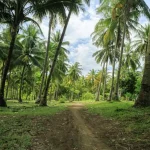
Most tour itineraries skip this one, which is reason enough to visit. Located on the eastern coast, Burung Mandi has the same granite formations but far fewer visitors. The road to reach it improved significantly in 2025, making it accessible by motorbike or car without the bone-rattling detour it used to require. The water here has a slightly deeper blue tone than the western beaches, and the surrounding vegetation is denser — coconut palms lean over the sand in a way that feels genuinely untouched.
Pantai Tanjung Pendam
This is Tanjung Pandan’s town beach, meaning it’s free, easy to reach, and popular with locals in the evenings. It lacks the dramatic boulders of the other beaches, but it’s a good place to watch the sunset and pick up grilled seafood from the food stalls that set up along the promenade after 5pm. The smell of grilled fish and the sound of families settling in for the evening give it a relaxed, lived-in character that the tourist beaches don’t have.
The Island-Hopping Circuit
The small islands scattered just off Belitung’s northwest coast are a separate experience from the main island’s beaches — and for many visitors, they’re the highlight of the trip. The standard island-hopping circuit covers four or five islands in a half-day by wooden speedboat, and the route typically includes:
- Pulau Lengkuas — home to a Dutch colonial lighthouse built in 1882, still operational, and climbable for views across the surrounding islets
- Pulau Pasir — a sandbar that appears only at low tide, completely flat and surrounded by clear water on all sides
- Pulau Babi — dense with vegetation and ringed by smaller granite clusters, good for snorkelling in the rock channels
- Pulau Kepayang — has a small eco-resort and a freshwater spring; you can stop here for lunch
Boats depart from Tanjung Kelayang pier from around 8am. The going rate in 2026 for a private boat holding up to eight people is around IDR 700,000–900,000 for the half-day circuit. Shared boats are available for solo travellers at roughly IDR 150,000–200,000 per person, but the departure depends on filling the seats, which can mean waiting.
Where to Eat Near the Beaches
Belitung’s food scene is rooted in Chinese-Malay cooking, a reflection of the island’s history as a tin-mining hub that drew large waves of Hakka Chinese migrants. The most important dish to eat here is mie Belitung — a thick yellow noodle served in a lightly spiced broth with prawns, tofu, potato, and a boiled egg, topped with crispy shallots. It’s earthy and satisfying in a way that lighter broths aren’t, and every local has a strong opinion about which warung makes it best.
For mie Belitung, head to Mie Atep on Jalan Sriwijaya in Tanjung Pandan — it’s been operating since the 1960s and remains the benchmark. Expect a queue by 8am on weekends. A bowl costs around IDR 35,000–45,000.
Near the beaches, food options thin out quickly. Around Tanjung Tinggi, a cluster of warungs operates during peak hours selling grilled corn, cold coconut, and basic rice dishes. For fresh seafood, the evening stalls along Pantai Tanjung Pendam are your best option — point at what’s displayed on ice, agree on a price, and they’ll grill it in front of you. A meal of grilled fish, rice, and sambal typically runs IDR 50,000–80,000 per person.
One dish worth hunting down specifically: gangan, a sour-spicy fish soup made with local spices and young pineapple or mangosteen. It has an unusual sweet-sour depth that you won’t find elsewhere in Indonesia, and the warmth of the broth against the island’s sea breeze in the evening is the kind of detail that sticks with you long after you’ve left.
Day Trip or Overnight?
Belitung is a small island — about 4,800 square kilometres — but the beaches are spread out, and public transport between them is essentially nonexistent. A day trip from Jakarta or Bali is theoretically possible given the short flight time, but it’s a poor use of your money and energy. You’ll spend most of the day in transit and rush through the beaches in between.

A minimum of two nights allows you to do the western beach circuit on day one (Tanjung Tinggi, Tanjung Kelayang, island-hopping) and the eastern coast plus town exploration on day two. Three nights is more comfortable and lets you slow down, catch a sunset properly, and explore some of the inland tin-mining heritage sites if that interests you.
There’s no reason to stay longer than four nights unless you specifically want to spend extended time on one of the guesthouses on Pulau Kepayang or you’re combining the trip with nearby Bangka Island.
Getting to Belitung in 2026
H.A.S. Hanandjoeddin International Airport in Tanjung Pandan handles direct flights from Jakarta (Soekarno-Hatta) with Garuda Indonesia, Citilink, and Batik Air — flight time is around 50–55 minutes. As of early 2026, Citilink operates the most frequent schedule with up to four daily departures from Jakarta, which has helped keep fares competitive.
A direct route from Bali was launched in late 2024 by Citilink and is now operating year-round, with around three weekly departures. This has made Belitung considerably more accessible for travellers already in Bali who don’t want to backtrack through Jakarta.
There is no practical overland or ferry route from Java or Bali that makes sense for most travellers — flying is the only reasonable option.
Getting Around the Island
The most efficient way to get around Belitung is to rent a motorbike in Tanjung Pandan if you’re comfortable riding one. Daily rates run around IDR 80,000–120,000, and the roads between the main beaches are now well-paved following a 2024–2025 road upgrade program on the island’s western corridor. A car with driver can be arranged through your accommodation for approximately IDR 500,000–700,000 per day and is the better option for families or groups.
Ride-hailing apps (Gojek and Grab) operate in Tanjung Pandan town but coverage drops sharply once you head toward the beaches. Don’t rely on them for beach transport.
Some hotels and guesthouses near Tanjung Tinggi offer free or low-cost shuttle runs into town once or twice a day — ask when you check in.
2026 Budget Reality
Belitung sits in an interesting middle ground — it’s not a budget backpacker destination, but it’s also not as expensive as Bali’s upmarket southern coast.
- Budget (IDR 350,000–700,000/day): Guesthouses near Tanjung Pandan, shared island-hopping boats, warung meals, motorbike rental. Manageable but requires advance planning on boat bookings.
- Mid-range (IDR 700,000–1,500,000/day): A beach-area hotel with breakfast, private boat rental split with other travellers, sit-down restaurant meals, car with driver for a half-day. This is the most comfortable tier for most visitors.
- Comfortable (IDR 1,500,000–3,000,000+/day): Boutique resorts near Tanjung Kelayang (several new properties opened in 2025), private boat for the full day, seafood dinner at a proper restaurant. The new Arumdalu Private Resort has set a higher ceiling for what’s available on the island.

Domestic flights from Jakarta typically range from IDR 500,000–1,200,000 one way depending on how far in advance you book. July, August, and the Christmas–New Year window push both flights and accommodation prices noticeably higher.
Frequently Asked Questions
When is the best time to visit Belitung?
April through October is the dry season and generally the best time to visit. The water is calmest and clearest between May and August. November through March brings rain and rougher seas that can cancel island-hopping trips. December and January are peak domestic holiday season, so crowds and prices both rise despite the weather risk.
Do I need to book a tour, or can I visit Belitung independently?
Independent travel is straightforward in 2026. Rent a motorbike or hire a car with driver from Tanjung Pandan, book your island-hopping boat directly at Tanjung Kelayang pier, and use the warung network for food. A tour operator adds convenience but is not necessary unless you want a guided experience of the tin-mining sites or bird-watching areas.
Is Belitung suitable for families with young children?
Yes — the calm, shallow water at most beaches makes it one of Indonesia’s safest coastal destinations for children. The absence of significant surf and the warm water temperature (around 28–30°C year-round) are big advantages. The island-hopping boats are basic wooden vessels, so bring life jackets for small children and confirm the boat captain has safety equipment before departing.
Are there ATMs and card payment options on the island?
ATMs are available in Tanjung Pandan town and at the airport. Most beach-area warungs and smaller guesthouses are cash-only. Mid-range and upmarket hotels accept cards. Bring enough cash before heading to the beaches, as the nearest ATM to Tanjung Tinggi is around 15 kilometres away in the town of Sijuk.
How does Belitung compare to the Gili Islands or the Banda Sea for beaches?
Belitung’s appeal is visual and geological — the granite boulder scenery is genuinely unique in Indonesia and Southeast Asia. The snorkelling and diving are limited compared to the Gilis or Banda. Choose Belitung for the scenery, the quiet, and the local food culture. Choose the Gilis or Banda if underwater experience is your priority.
📷 Featured image by Yusuf Muttaqin on Unsplash.