On this page
- Why Wae Rebo Stops Travelers in Their Tracks
- Understanding the Trek In
- The Mbaru Niang: What These Houses Actually Are
- Spending the Night in the Village
- What You Eat at Wae Rebo
- The Welcome Ceremony and Village Life
- Getting to the Trailhead at Denge
- Day Trip vs Overnight: The Honest Comparison
- What to Pack for the Trek and Overnight
- Best Time to Visit Wae Rebo
- Practical Tips and 2026 Updates
- Full Cost Breakdown: Budget to Comfortable
- Frequently Asked Questions
💰 Click here to see Indonesia Budget Breakdown
💰 Prices updated: September, 2026. Budget figures are estimates — always verify before travel.
Exchange Rate: $1 USD = Rp17,928.47
Daily Budget (per person)
Shoestring: Rp358,569 – Rp896,424 ($20.00 – $50.00)
Mid-range: Rp1,254,993 – Rp2,689,271 ($70.00 – $150.00)
Comfortable: Rp2,689,271 – Rp4,482,118 ($150.00 – $250.00)
Accommodation (per night)
Hostel/guesthouse: Rp71,714 – Rp179,285 ($4.00 – $10.00)
Mid-range hotel: Rp448,212 – Rp896,424 ($25.00 – $50.00)
Food (per meal)
Budget meal: Rp26,893.00 ($1.50)
Mid-range meal: Rp143,428.00 ($8.00)
Upscale meal: Rp537,854.00 ($30.00)
Transport
Single metro/bus trip: Rp3,500.00 ($0.20)
Monthly transport pass: Rp200,000.00 ($11.16)
Why Wae Rebo Stops Travelers in Their Tracks
Most people visiting Flores in 2026 are here for Komodo and the pink beaches. Wae Rebo sits quietly in the opposite direction — a village of cone-shaped houses perched at 1,200 metres above sea level, hidden inside a crater-like valley in the Manggarai highlands. Getting there requires a full day of travel from Labuan Bajo, a two-hour drive from Ruteng, and then a steep two-hour mountain trek with no shortcuts. Many travelers look at that itinerary and skip it. The ones who go almost never say they regret it. In a region that has been rapidly modernised since new airport expansions and cruise infrastructure arrived in 2024–2025, Wae Rebo remains genuinely unchanged — not as a performance, but because the Manggarai people who live there chose to protect it that way.
Understanding the Trek In
The trek to Wae Rebo starts at the small village of Denge. From the trailhead, it’s approximately 9 kilometres through primary rainforest, climbing steadily to the village at 1,200 metres. Most fit adults complete the ascent in around two hours. The descent on the way back takes about 90 minutes.
The trail is well-marked and guides are mandatory — you cannot enter the village without one, and they are assigned at the Denge community post. The path itself is a mix of compacted earth, tree roots, and stone steps cut by the villagers. In the wet season, it becomes slippery and muddy in patches. You cross several small wooden bridges over forest streams, and in the final 30 minutes the canopy opens enough to show the valley walls rising around you on all sides.
The forest is dense and genuinely beautiful. You’ll hear it before you see much of it — the layered sound of insects, birds, and running water. By the time the first mbaru niang rooftop appears above the treeline, the effort already feels justified.
Fitness level: moderate. If you walk regularly, you’ll manage it. Trekking poles help significantly on the descent. There’s a small shelter at the halfway point where guides typically stop for water.
The Mbaru Niang: What These Houses Actually Are
Wae Rebo has seven mbaru niang — tall, conical houses with thatched roofs that sweep almost to the ground. The largest, called Niang Gendang (the drum house), is the ceremonial centre and the oldest of the group. Each house is built entirely from local materials: ironwood posts, bamboo, sugar palm fibre for thatching. No nails. The structures are lashed and interlocked using traditional joinery passed down through generations of Manggarai craftsmen.

Inside, each mbaru niang has five levels. The ground floor is where families sleep and cook and live. The four levels above function as storage — for food, heirlooms, and ceremonial objects. The interior is dark and smoky from cooking fires, and the smell of woodsmoke is embedded in every surface. Your eyes take a moment to adjust when you step in from the daylight outside.
The houses are arranged in a precise circular layout around a central ceremonial stone. This layout is not aesthetic — it reflects Manggarai cosmology, where the community is oriented collectively toward a shared centre rather than outward-facing toward individual plots. It’s one of the most striking things about the village: you feel immediately that the architecture is doing something, not just standing there.
Wae Rebo won the UNESCO Asia-Pacific Award for Cultural Heritage Conservation in 2012, and the village has been carefully maintained since. In 2026, you will not see any concrete or corrugated iron roofing inside the main cluster — this is deliberate and protected.
Spending the Night in the Village
Overnight stays are the default at Wae Rebo — the journey is long enough that most visitors stay at least one night. Guests sleep inside one of the mbaru niang on thin mattresses on the floor, wrapped in blankets provided by the village. There are around 30–40 sleeping spots in the guest houses, and they fill up on busy nights, so registering in advance through a Labuan Bajo tour operator or directly via the Wae Rebo community contact is strongly recommended in 2026, especially June through August.
There are no private rooms, no Wi-Fi, no electricity beyond a few solar-powered lights. The bathrooms are basic outdoor facilities with cold water. This is not glamping. At night, the temperature drops to around 14–16°C, and the silence outside the village — no traffic, no generators, no background noise — is so complete that it takes some people a while to sleep.
In the early morning, mist fills the valley completely. If you wake before 6:00 AM and step outside, you’ll see nothing but cloud below and the cone rooftops of the other mbaru niang emerging through it. It’s the kind of scene that makes you understand why people make the trip.
What You Eat at Wae Rebo
Meals are communal and included in the overnight package. Breakfast and dinner are served inside the guest mbaru niang at long shared tables. The food is simple Manggarai highland cooking: steamed white rice, boiled forest vegetables, occasionally chicken or salted fish, and a thin vegetable soup. There’s no menu, no choices, and no spice beyond what the kitchen uses — which is usually mild by Indonesian standards.
Coffee is the highlight. Wae Rebo sits inside a coffee-growing region, and the village produces its own arabica. In the morning, a pot of black coffee arrives at the table still smelling of the grounds — strong, slightly earthy, the kind that clears your head in a way that no café in Labuan Bajo quite manages. It’s grown on the slopes around the village and roasted simply. If you’re a coffee drinker, this alone will be memorable.
There is no restaurant, no warung, no option to buy snacks inside the village. Bring anything you specifically need — energy bars, medications, anything with dietary requirements — from Labuan Bajo or Ruteng. The village cannot accommodate special diets reliably, so communicate any serious restrictions when booking.
The Welcome Ceremony and Village Life
Every group arriving at Wae Rebo is met with a welcome ceremony called the penti niang — a ritual greeting at the central stone where the guide or village elder speaks in Manggarai and the visitors are formally welcomed and asked their intentions. There’s an offering of betel nut. It’s not a tourist performance; the ceremony is genuinely the way guests have been received here for generations, and the seriousness with which the village conducts it sets the tone for the entire visit.
Outside of ceremony times, village life continues around you. Women weave traditional Manggarai cloth — dark-coloured ikat with geometric patterns — in front of the houses. Children return from school in the afternoon, since Wae Rebo has its own small primary school inside the village. Older men tend to gather at the central stone in the late afternoon. None of this is staged. You are a guest in a working community, not a museum exhibit.
Photography is generally welcomed, but ask before pointing a camera directly at individuals, especially during any ceremonial activity.

Getting to the Trailhead at Denge
Denge village is the starting point of the trek, and getting there from Labuan Bajo is a half-day journey on its own.
- Labuan Bajo → Ruteng: Around 140 kilometres by road, taking 3.5–4.5 hours depending on conditions. Options include renting a private car with driver (the most practical choice), or taking a public bus from Labuan Bajo terminal in the early morning. The Trans-Flores Highway remains the primary route — it was resurfaced in sections between 2024 and 2025, but parts of the mountain road near Ruteng are still slow-going.
- Ruteng → Denge: Another 52 kilometres taking roughly 2–2.5 hours. This stretch involves narrow mountain roads that are not suitable for large vehicles. A local ojek (motorcycle taxi) or chartered car is the standard option. Public transport to Denge exists but is infrequent — typically one bemo departure in the early morning.
Total travel time from Labuan Bajo to the trailhead: around 6–7 hours. Most tours that include Wae Rebo plan a night in Ruteng to break this journey. Ruteng has improved its accommodation options since 2025 with several new mid-range guesthouses opening near the town centre, making an overnight there genuinely comfortable rather than just a stopover necessity.
There is no public transport directly from Labuan Bajo to Denge in a single connection. If you’re not on a packaged tour, the most efficient self-guided option is to hire a private car and driver from Labuan Bajo for a two-to-three day Wae Rebo circuit.
Day Trip vs Overnight: The Honest Comparison
Technically, a day trip is possible if you leave Denge at first light and return by late afternoon. In practice, it’s a bad idea for most travelers.
The math: two hours up, time in the village, two hours down, then a two-plus hour drive back to Ruteng or further to Labuan Bajo. That leaves you perhaps 90 minutes at the village, rushing through the experience that the trek was built around. You miss the morning mist, the evening quiet, the communal meals, and any real sense of what life in the village looks, sounds, and feels like.
The overnight stay is what Wae Rebo is actually about. The trek is just how you get there. If your schedule genuinely cannot accommodate an overnight — you have a flight out of Labuan Bajo the next day, for instance — then consider whether the journey is worth it at all rather than compressing it into a day rush.

That said, day trippers are not turned away. If you register at Denge and pay the entry donation, you can hike up, spend a few hours, and return. It’s just a significantly lesser version of the experience.
What to Pack for the Trek and Overnight
- Clothing: Lightweight layers for the trek, plus a warm fleece or jacket for cold nights. Rain jacket is essential in the wet season and useful year-round.
- Footwear: Trail shoes or hiking boots with grip. Not sandals. The roots and mud on the descent will make you grateful for ankle support.
- Water: Carry at least 1.5 litres from Denge. The village provides boiled drinking water, but you want your own supply for the trail.
- Cash: The village operates entirely on cash. There are no card readers, no QRIS payments, no ATMs near Denge. Bring enough IDR for your donation fee, guide tip, and any woven textiles you want to purchase.
- Torch/headlamp: The village has minimal lighting after dark. A headlamp is genuinely useful.
- Power bank: No charging facilities in the village. Fully charge everything before you leave Labuan Bajo or Ruteng.
- Snacks: Energy bars, nuts, anything you want beyond the communal meals provided.
- Medications and personal items: There is no pharmacy near Denge. Bring what you need.
Best Time to Visit Wae Rebo
Flores has a clear wet and dry season. The dry season runs roughly May through October, with June, July, and August being the driest and most reliable months. The trail is in its best condition during this window, the views from the village are clearest, and the morning mist scenes are most dramatic because the air is cooler and drier.
The wet season (November through April) brings rain that makes the trail genuinely slippery and the journey from Labuan Bajo to Denge more uncertain due to road conditions in the highlands. The village is still open and people still go — it’s wetter and more challenging, but also significantly less crowded.
2026 crowd reality: July and August are now noticeably busier than they were pre-2024. Increased domestic tourism from Bali and Jakarta, plus growing interest from South Korean and European visitors following several prominent travel features, has pushed demand. The 60-person overnight cap means these months require advance booking of at least two to three weeks. Shoulder months — May, June, and September — offer a better balance of weather and availability.
There are no significant festivals at Wae Rebo that are publicly timed for visitors to plan around, but the village holds its own agricultural ceremonies in the wet season that overnight guests may witness if timing aligns.
Practical Tips and 2026 Updates
Entry donation: As of 2026, the village requires a contribution of IDR 450,000 per person for overnight stays, which covers the welcome ceremony, accommodation, and meals. Day visitors pay IDR 150,000. These figures are set by the village cooperative and are non-negotiable — they fund the village’s maintenance and conservation programs directly.
Guide fee: Guides are mandatory and are assigned at Denge. The standard guide fee is IDR 250,000–350,000 per group for the trek, not per person. Tip your guide — IDR 50,000–100,000 per person is appropriate for an overnight trip.
Drones: Prohibited. The no-drone policy has been strictly enforced from the trailhead since 2023. Guides will ask you to store drones at Denge before beginning the trek. Violations result in removal from the village.
Plastic: The village has a carry-in, carry-out policy for plastic waste. Do not leave packaging in the village.
Phone signal: There is no reliable signal at the village itself. The trailhead at Denge has intermittent Telkomsel coverage. Inform someone of your itinerary before you head in.
Language: Village residents speak Manggarai as their first language, Indonesian as their second. English is limited. Your guide will translate. Basic Indonesian courtesy phrases go a long way.
Full Cost Breakdown: Budget to Comfortable
All prices in IDR, reflecting 2026 figures for the full Wae Rebo journey from Labuan Bajo.
Budget Tier
- Labuan Bajo → Ruteng by public bus: IDR 80,000–100,000 per person
- Ruteng → Denge by shared transport or ojek: IDR 50,000–80,000 per person
- Overnight in Ruteng (budget guesthouse): IDR 150,000–250,000 per night
- Village overnight donation: IDR 450,000 per person
- Guide fee (shared across group): IDR 250,000–350,000 total
- Meals at the village: included in donation
- Estimated total per person (budget, 3 days): IDR 1,100,000–1,400,000
Mid-Range Tier
- Private car hire Labuan Bajo → Ruteng → Denge (2-day driver charter): IDR 1,500,000–2,000,000 total for car
- Overnight in Ruteng (mid-range hotel): IDR 350,000–600,000 per night
- Village overnight donation: IDR 450,000 per person
- Guide fee: IDR 300,000–350,000
- Estimated total per person (mid-range, 3 days, 2 sharing car): IDR 2,200,000–3,000,000
Comfortable/Packaged Tier
- All-inclusive Wae Rebo tour from Labuan Bajo (private transport, guide, accommodation in Ruteng, village fees): IDR 4,500,000–7,000,000 per person depending on group size and operator
- These packages typically include a Ruteng-area addition such as the Cancar Spider Web Rice Fields or Ruteng Pu’u traditional village
Frequently Asked Questions
How long does the trek to Wae Rebo take?
Around two hours up and 90 minutes down for most adults. There is a rest stop at the halfway point. Trekking poles help on the descent.
Is Wae Rebo worth the effort from Labuan Bajo?
For travelers with at least three full days to spare, yes — consistently. The combination of the highland setting, the intact traditional architecture, and the genuine community welcome makes it one of the most distinctive experiences in eastern Indonesia. It is not worth rushing as a day trip.
Can you visit Wae Rebo without a guide?
No. Guides are mandatory and assigned at Denge before you reach the trailhead. This is enforced by the village as part of its conservation framework.
What is the entry fee for Wae Rebo in 2026?
IDR 450,000 per person for overnight stays (covering accommodation, meals, and the welcome ceremony) and IDR 150,000 for day visitors. The guide fee of IDR 250,000–350,000 is charged separately per group.
When should you avoid visiting Wae Rebo?
January and February are the wettest months in the Flores highlands. The trail becomes genuinely slippery, and the mountain road to Denge can be disrupted by landslides after heavy rain. The village remains open, but conditions are significantly harder. If you visit in the wet season, allow extra time and expect mud.
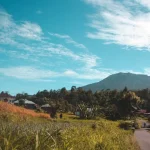
📷 Featured image by Naufal Diwana on Unsplash.