On this page
- Where Grab Actually Works in Indonesia (and Where It Doesn’t)
- Gojek vs Grab: Which App Should You Have on Your Phone?
- How to Set Up and Use Grab or Gojek as a Foreign Traveler
- Payment Options Inside the Apps (Cash, E-Wallets, Cards)
- Real Pricing: What Rides Actually Cost in 2026
- The Bali Problem: Ride-Hailing Friction You Need to Know About
- When Grab Isn’t Available: Your Backup Transport Options
- Getting Around Beyond Ride-Hailing: Trains, Ferries, and Flights
- 2026 Budget Reality: Full Transport Cost Breakdown
- Common Mistakes Travelers Make with Ride-Hailing in Indonesia
- Frequently Asked Questions
Travelers arriving in Indonesia in 2026 often assume Grab works the same way here as it does in Singapore or Malaysia — pull out your phone, tap a destination, done. The reality is more complicated. Indonesia is vast, politically fragmented at the local level, and home to deeply entrenched transport interests that don’t always welcome app-based competitors. Before you land, you need to know exactly where Grab functions smoothly, where it runs into resistance, and what to use when it simply isn’t an option.
Where Grab Actually Works in Indonesia (and Where It Doesn’t)
Grab is operational across most of Indonesia’s major cities and popular tourist destinations. In 2026, you can reliably use it in Jakarta, Bandung, Surabaya, Yogyakarta, Semarang, Medan, Makassar, Bali (Denpasar, Kuta, Seminyak), Lombok (Mataram, Senggigi), Batam, and Palembang — as well as most other provincial capitals and larger towns.
The service does not reliably reach remote rural areas, very small towns, or isolated islands. If you’re heading to a village in the highlands of Papua, a small fishing port in Sulawesi, or the outer Maluku islands, don’t count on Grab being there. The app may technically load, but driver availability drops to near zero outside urban catchment areas.
There’s also a geographic quirk inside cities worth knowing: wait times in less-populated zones on the edges of cities can stretch to 15–20 minutes even in cities where Grab is technically available. Always check driver availability before committing to a plan that depends on quick pickup.
In short: for Java, Bali, and major Sumatra and Sulawesi cities, Grab is a reliable daily tool. Everywhere else, treat it as a useful backup rather than your primary transport strategy.
Gojek vs Grab: Which App Should You Have on Your Phone?
Both apps are genuine competitors and cover similar ground, but they’re not identical — and the right answer for most travelers is: download both.

Gojek is the Indonesian-born platform and holds stronger driver networks in many second-tier cities and in areas where driver loyalty runs deep. Its services include GoCar (private car), GoRide (motorcycle taxi), GoFood (food delivery), GoSend (package delivery), and GoMart (grocery delivery). GoRide is often faster and cheaper for solo travelers cutting through congested traffic.
Grab entered Indonesia from Southeast Asia and has a strong presence across major tourist corridors, particularly in Bali and Jakarta. Its equivalent services are GrabCar, GrabBike, GrabFood, GrabMart, and GrabExpress. Grab’s interface tends to feel slightly more familiar to travelers arriving from Singapore, Malaysia, or Thailand.
The practical difference on the ground? Open both apps at the same time when you need a ride and book whichever shows a closer driver or a lower fare. During surge pricing, the two apps rarely surge simultaneously, so toggling between them can save you real money. Gojek uses GoPay as its primary e-wallet; Grab uses OVO. These are separate systems, so a top-up on one doesn’t transfer to the other.
How to Set Up and Use Grab or Gojek as a Foreign Traveler
Both apps are available on Google Play Store and Apple App Store. Download them before you arrive — airport Wi-Fi in Indonesia can be slow during peak arrival hours, and the last thing you want is to be standing at baggage claim downloading apps while your ride window closes.
Registration requires a phone number. An Indonesian SIM card makes this straightforward and is strongly recommended. International numbers from many countries do work for registration, but SMS verification can sometimes fail or delay when roaming. If you’re picking up a local SIM at the airport (Telkomsel and Indosat Ooredoo both have counters at Soekarno-Hatta in Jakarta and Ngurah Rai in Bali), register your Grab or Gojek account using that number.

Once registered, the step-by-step process is the same for both apps:
- Open the app and allow location services. The app will detect your pickup point automatically.
- Select your service type — Car for a private vehicle, Bike for a motorcycle taxi.
- Type your destination. The app calculates the fare estimate before you confirm.
- Choose your payment method (cash, linked e-wallet, or card).
- Confirm the booking and wait for a driver to accept.
- Check the driver’s name, photo, vehicle make, and license plate in the app before getting in.
- Pay as agreed when you arrive.
One step most travelers skip: always verify the plate number on the physical vehicle matches what the app shows. Ride-hailing scams involving impersonators are rare but do exist, and this thirty-second check eliminates the risk entirely.
Payment Options Inside the Apps (Cash, E-Wallets, Cards)
Cash is always accepted by drivers on both platforms, but exact change is appreciated. Drivers carry limited float, and handing over IDR 100,000 for a IDR 15,000 ride will earn you a pained look and a delay while they scramble for change. Keep small bills — IDR 5,000, IDR 10,000, and IDR 20,000 — in your pocket for ride payments.
The e-wallet option is increasingly the preferred method, especially in major cities. Gojek uses GoPay; Grab uses OVO. Both can be topped up via bank transfer, at Alfamart or Indomaret minimarkets, or using a debit or credit card linked in the app. The top-up process at a minimarket is easy: tell the cashier the e-wallet name and your phone number, hand over cash, done. Minimum top-ups are typically IDR 20,000.

Visa and Mastercard debit and credit cards can be linked directly to both apps for payment. This works reliably in 2026, though occasional foreign card declines still happen — usually triggered by your home bank’s fraud detection. Notify your bank before travel, or keep a cash backup for the first ride.
Since 2024, the number of drivers in Jakarta, Surabaya, and Bali who prefer cashless payment has increased noticeably. Some drivers in central Jakarta will actually message you after booking to confirm you’re not paying cash — not to refuse the ride, but because they genuinely run short on change during busy shifts. Going cashless is faster, safer, and often unlocks promotional discounts that cash users miss.
DANA and ShopeePay are also widely used mobile wallets in Indonesia, though neither is directly integrated into the main Grab or Gojek payment flows as primary options. The universal QRIS QR code system, however, is expanding — and some drivers now accept QRIS scans alongside the standard in-app payment methods.
Real Pricing: What Rides Actually Cost in 2026
Prices are dynamic on both platforms, shifting with distance, time of day, traffic conditions, and demand. These are realistic 2026 benchmarks for typical journeys:
- GrabBike / GoRide (motorcycle taxi), 3–5 km in Jakarta: IDR 12,000 – IDR 25,000
- GrabCar / GoCar (private car), 5–10 km in Jakarta: IDR 25,000 – IDR 60,000
- GrabCar from Jakarta city center to Soekarno-Hatta Airport (CGK): IDR 150,000 – IDR 250,000, depending on traffic and car type
- GrabBike in Yogyakarta, short hop 2–4 km: IDR 10,000 – IDR 18,000
- GrabCar in Bali, Kuta to Seminyak (approximately 4 km): IDR 20,000 – IDR 40,000 (when pickup is possible — see the next section)

Wait times in urban areas typically run 2–10 minutes. During morning rush hour in Jakarta — say, 7:30–9:00am — expect surge pricing of 1.3x to 1.8x the base rate. The same applies during heavy rain, which sends demand spiking city-wide within minutes. If you can wait out a downpour under shelter for 20 minutes, you’ll often see prices drop back to normal.
The Bali Problem: Ride-Hailing Friction You Need to Know About
Bali deserves its own section because the situation there is unlike anywhere else in Indonesia. Local taxi cooperatives and traditional ojek groups in parts of Bali — particularly Canggu, sections of Ubud, and some beach areas around Seminyak — have long-standing territorial arrangements that result in active resistance to Grab and Gojek pickups.
This isn’t a government ban. It’s a local social and economic pressure system. In some zones, drivers who accept Gojek or Grab rides in restricted areas can face confrontation from local transport operators. As a result, many drivers will ask you to walk a short distance to a nearby street or a less visible pickup point before accepting the booking. This is not the driver being unhelpful — it’s them protecting themselves from a difficult situation.
The smell of clove cigarettes drifting from a line of traditional ojek drivers waiting near a Canggu rice paddy path, eyeing your phone as you open Gojek, tells you everything about the tension still playing out in 2026 between the old transport economy and the new one.
Practical strategies for Bali:
- Book your ride from inside your accommodation, hotel lobby, or a restaurant — not on the street outside.
- Set your pickup point a block or two away from the main road if the driver messages you asking to move.
- For longer journeys (Ubud to the airport, Seminyak to Uluwatu), a pre-arranged private driver (sewa mobil) often makes more logistical sense anyway, and local guesthouses can connect you with trusted drivers charging IDR 300,000 – IDR 600,000 for a half-day charter.
- Metered Blue Bird taxis are a legitimate, reliable alternative in Bali and have no pickup restrictions.

When Grab Isn’t Available: Your Backup Transport Options
Traditional ojek (motorcycle taxis negotiated in person) remain the most common backup across Indonesia, especially in smaller towns. The absence of an app means fares require negotiation before you get on. A reasonable rule of thumb in 2026: IDR 5,000–10,000 per kilometre for a traditional ojek is fair in most provincial towns. Always agree before you move.
Becak (cycle rickshaws) survive mainly in Yogyakarta, Solo, and parts of Jakarta’s old Kota Tua district. They’re unhurried, good for short sightseeing stretches, and culturally interesting — the creak of the pedals and the driver’s quiet commentary on the passing street are something a car ride can’t replicate. Prices must be negotiated; IDR 20,000–50,000 for a short pleasure ride is typical.
Bajaj (three-wheeled auto-rickshaws) are still rolling through Jakarta’s older districts and narrow gang streets where four-wheeled vehicles struggle. Prices are negotiable. Their numbers are declining as electric bajaj slowly replace the old orange gas-powered models, but they remain useful for specific urban navigation scenarios.
Blue Bird taxis are reliable across Jakarta, Bali, and several other major cities. They use meters, their drivers are trained, and the company has its own app (MyBlueBird) for advance booking. A metered Blue Bird ride avoids all the surge pricing complications of Grab or Gojek during peak hours.
Getting Around Beyond Ride-Hailing: Trains, Ferries, and Flights
For movement between cities and islands, ride-hailing is only the first and last mile. Here’s what connects the rest of Indonesia in 2026:

Trains on Java
KAI (Kereta Api Indonesia) operates an extensive intercity train network across Java. Book via the KAI Access app or at www.kai.id. Executive class is comfortable and air-conditioned — the Jakarta to Yogyakarta executive fare runs IDR 300,000–600,000, and Jakarta to Surabaya runs IDR 400,000–800,000 depending on timing and demand. The high-speed Whoosh train (KCJB) between Jakarta’s Halim station and Bandung is a genuine game-changer, cutting the journey to under an hour for IDR 150,000–350,000.
Jakarta Urban Transit
Jakarta’s MRT runs north-south from Lebak Bulus to Bundaran HI, with fares from IDR 3,000 to IDR 15,000. LRT Jabodebek connects Dukuh Atas to Cibubur and Bekasi Timur, starting at IDR 5,000. Trans-Jakarta BRT buses run a flat IDR 3,500 regardless of distance. All require an e-money card (Flazz, TapCash, Brizzi, or e-Money Mandiri) or QR code via the MRT Jakarta app — cash is not accepted on any of these systems.
Ferries and Fast Boats
PELNI operates the inter-island ferry network reaching ports across the archipelago, from Java to Papua. Economy class (dormitory-style) fares for a multi-day journey can run IDR 500,000–1,500,000. Book at www.pelni.co.id or at port offices.
Fast boats between Bali, Lombok, and the Gili Islands run frequently and are the standard tourist route. The one-way fare from Bali to Gili Trawangan runs IDR 350,000–600,000 depending on the operator. Operators include BlueWater Express, Gili Getaway, and Eka Jaya. Always book with established operators — safety standards have tightened since 2024, with authorities removing some smaller non-compliant operators from regular routes.
Domestic Flights
For crossing between major islands, domestic flights are often the only realistic option. Lion Air and Citilink lead on low-cost routes; Garuda Indonesia and Batik Air offer full-service options with baggage included. Jakarta to Bali economy on a low-cost carrier runs IDR 700,000–1,500,000 one-way. Book via Traveloka, Tiket.com, or airline websites directly. Low-cost carriers increasingly sell basic fares without checked baggage, so factor in IDR 150,000–300,000 for a 15–20 kg luggage add-on if needed.

2026 Budget Reality: Full Transport Cost Breakdown
These are honest, current figures for planning your Indonesia transport budget:
Ride-Hailing Daily Use
- Budget traveler (GoRide/GrabBike for most trips): IDR 30,000–80,000 per day
- Mid-range traveler (GoCar/GrabCar mixed use): IDR 80,000–200,000 per day
- Comfortable traveler (GrabCar, minimal waiting, airport transfers included): IDR 200,000–500,000 per day
Intercity Train (Java)
- Budget (Economy class): IDR 50,000–150,000 per journey
- Mid-range (Business class): IDR 150,000–300,000 per journey
- Comfortable (Executive class): IDR 300,000–800,000 per journey
Domestic Flights
- Budget (Lion Air / Citilink, no checked bag): IDR 700,000–1,200,000 one-way
- Mid-range (Batik Air, with baggage): IDR 1,200,000–1,800,000 one-way
- Comfortable (Garuda Indonesia economy, full service): IDR 1,500,000–2,500,000+ one-way
Fast Boats (Bali Region)
- Budget (basic operator, standard boat): IDR 350,000–450,000 one-way
- Mid-range / Comfortable (established operator, modern vessel): IDR 450,000–600,000 one-way
Jakarta Public Transit (per ride)
- MRT: IDR 3,000–15,000
- LRT Jabodebek: IDR 5,000–25,000
- Trans-Jakarta BRT: IDR 3,500 flat
- KRL Commuter: IDR 3,000 for first 25 km
Common Mistakes Travelers Make with Ride-Hailing in Indonesia
These are the errors that cost people time, money, or goodwill with drivers:
- Canceling after a driver has already traveled to you. Both apps allow cancellation, but doing it once a driver is close is genuinely costly for them. If you need to cancel, do it within the first 60 seconds of booking.
- Assuming the app price is always cheaper than negotiating. For very short distances under 1–2 km, a traditional ojek negotiated at IDR 5,000–10,000 can actually beat the app minimum fare plus waiting time.
- Not topping up your e-wallet before heading to a remote area. If you’re leaving a major city for somewhere with limited connectivity, make sure your GoPay or OVO has sufficient balance. You may not be able to top up easily once outside urban areas.
- Booking a GrabBike for luggage-heavy travel. Motorcycle taxis are for people, not suitcases. A large backpack plus a rollaboard on a GoRide is a safety problem and most drivers will decline or struggle. Book a car for airport runs.
- Ignoring the license plate check. Every ride on both apps shows the driver’s name, photo, vehicle model, and plate number. Verify all four before getting in. This takes fifteen seconds and removes any ambiguity.
- Expecting Grab/Gojek to work at all airports without checking pickup points first. Some airports have designated ride-hailing pickup zones that are different from the main taxi rank. Soekarno-Hatta in Jakarta has a specific Grab/Gojek pickup area — if you walk to the wrong exit, you’ll add unnecessary walking and confusion to an already long journey.

Frequently Asked Questions
Is Grab available in Bali?
Yes, Grab and Gojek both operate in Bali. However, local transport operators in some areas like Canggu and parts of Ubud create friction around ride-hailing pickups. Drivers often ask you to move to a nearby street for pickup. The apps work — the social environment around them in certain Bali zones requires flexibility from the traveler.
Do I need an Indonesian SIM card to use Grab in Indonesia?
Not strictly, but it makes registration much easier. Many international phone numbers do work for SMS verification in the Grab and Gojek apps. That said, an Indonesian SIM card from Telkomsel or Indosat Ooredoo — available at both Soekarno-Hatta and Ngurah Rai airports — is strongly recommended for overall connectivity during your trip, not just for ride-hailing.
Which is better in Indonesia — Grab or Gojek?
Neither is universally better. Gojek has stronger driver networks in many Indonesian cities outside the tourist trail. Grab is well-established on major tourist routes. The practical answer: download both, check prices and driver availability on each for every trip, and book whichever gives you a closer driver or a lower fare at that moment.

Can I pay for Grab with a foreign credit card in Indonesia?
Yes, Visa and Mastercard can be linked to both Grab and Gojek for payment. Foreign cards occasionally face declines triggered by home-bank fraud detection, so notify your bank before travel. Keeping some IDR cash as a backup for the first few rides is practical until you confirm your card works in the app.
What should I use for transport in areas where Grab and Gojek don’t operate?
Traditional ojek (negotiate the fare before you ride), metered Blue Bird taxis where available, local minibuses called angkot, and chartered private vehicles (sewa mobil) are your main options. In very remote areas, becak, local boat transport, and simply walking become the realistic choices. Always ask your accommodation what locals actually use.
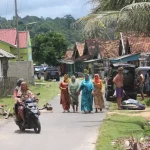
📷 Featured image by Mourizal Zativa on Unsplash.