On this page
- When Everything Goes Sideways
- Medical Emergencies: Getting Help Fast
- Theft, Loss, and Police Situations
- Transport Breakdowns and Getting Stranded
- Natural Disasters and Evacuation
- Communication Failures: When You Have No Tech
- Money Problems: Cards, Scams, and Running Dry
- 2026 Budget Reality: What Emergencies Actually Cost
- Pronunciation and Grammar Shortcuts That Actually Work
- Frequently Asked Questions
When Everything Goes Sideways
Indonesia in 2026 is easier to navigate than ever — the Jakarta MRT has expanded, domestic flights connect smaller islands that were previously unreachable, and translation apps have gotten genuinely useful. But technology fails at the worst moments. Your phone battery hits zero during a volcanic tremor on a remote Flores road. Your bag disappears on a crowded Surabaya bus. A motorbike clip sends you onto the hot tarmac of a Balinese back street. When these moments arrive, a handful of Indonesian Phrases spoken with confidence can be the difference between getting real help and standing in panicked silence while people around you struggle to understand what you need. This guide is built for those exact moments — not tourist pleasantries, but the urgent, practical language of emergencies.
Medical Emergencies: Getting Help Fast
Indonesia’s emergency number is 119 for ambulance services nationwide, though response times vary enormously between central Jakarta and a rural village in Sulawesi. In many regional areas, the fastest route to a hospital is a private car or ojek (motorcycle taxi). Knowing how to communicate your situation out loud matters more here than anywhere else.
Core medical phrases
- Tolong! Saya butuh bantuan! — “Help! I need help!” (TOH-long! SA-ya BOO-too BAN-too-an)
- Panggil ambulans! — “Call an ambulance!” (PANG-gil am-BOO-lans)
- Saya sakit. — “I am sick.” (SA-ya SA-kit)
- Saya terluka. — “I am injured.” (SA-ya ter-LOO-ka)
- Di mana rumah sakit? — “Where is the hospital?” (dee MA-na ROO-mah SA-kit)
- Tolong bawa saya ke rumah sakit. — “Please take me to the hospital.” (TOH-long BA-wa SA-ya ke ROO-mah SA-kit)
- Saya alergi terhadap… — “I am allergic to…” (SA-ya ah-LER-gi ter-HA-dap)
- Saya butuh dokter. — “I need a doctor.” (SA-ya BOO-too DOK-ter)
- Ini darurat. — “This is an emergency.” (EE-nee da-ROO-rat)
Point to the part of your body that hurts — Indonesian speakers will understand the combination of gesture and the word sakit (pain/sick) immediately. If you are having chest pain, say dada saya sakit (my chest hurts). For a head injury: kepala saya sakit. For stomach: perut saya sakit.
The word pusing (POO-sing) means dizzy — important if you are dealing with heat stroke, which is genuinely common for visitors during the dry season. Saying saya pusing dan mual (I am dizzy and nauseous) gives anyone nearby a clear picture.
Theft, Loss, and Police Situations
Bag snatching on motorbikes remains a real risk in major cities, and phone theft in crowded markets happens quickly. Losing your passport is a different kind of emergency — slow-burning but serious. Knowing how to report a problem to the police (polisi — po-LEE-see) and ask for the right document is essential.
Reporting theft or loss
- Saya dirampok. — “I was robbed.” (SA-ya dee-RAM-bok)
- Tas saya dicuri. — “My bag was stolen.” (tas SA-ya dee-CHOO-ree)
- Paspor saya hilang. — “My passport is lost.” (PAS-por SA-ya HEE-lang)
- HP saya dicuri. — “My phone was stolen.” (ha-PE SA-ya dee-CHOO-ree)
- Tolong panggil polisi. — “Please call the police.” (TOH-long PANG-gil po-LEE-see)
- Di mana kantor polisi? — “Where is the police station?” (dee MA-na KAN-tor po-LEE-see)
- Saya perlu surat kehilangan. — “I need a loss report letter.” (SA-ya PER-loo SOO-rat ke-hee-LANG-an)
That last phrase is critical. A surat kehilangan is the official police report letter you need to replace a passport at your embassy, make an insurance claim, or explain a missing airline ticket. Without it, embassies will slow down considerably. Ask for it by name and Indonesian police officers at any station will know exactly what you mean.
The national police emergency number is 110. Tourist police (polisi pariwisata) operate in Bali, Yogyakarta, and Lombok — they typically speak more English and are used to dealing with foreign visitors.
Transport Breakdowns and Getting Stranded
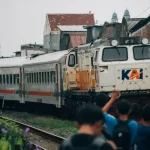
A rented scooter sputtering to a halt on a mountain road in Java, a boat that cannot leave a small island because weather has turned, a missed last bus in a provincial town — Indonesia’s geography guarantees these situations happen. The humidity alone can feel like a physical weight when you are stuck roadside in the middle of the day, sweat soaking through your shirt while you try to communicate with a passing driver who has stopped out of genuine kindness.
Transport emergency phrases
- Motor saya rusak. — “My motorbike is broken.” (MOH-tor SA-ya ROO-sak)
- Mobil saya mogok. — “My car has broken down.” (mo-BIL SA-ya MOH-gok)
- Saya tersesat. — “I am lost.” (SA-ya ter-SEH-sat)
- Saya ketinggalan bus/feri. — “I missed the bus/ferry.” (SA-ya ke-ting-GAL-an bus/FEH-ree)
- Di mana bengkel terdekat? — “Where is the nearest mechanic?” (dee MA-na BENG-kel ter-DE-kat)
- Bisa tolong dorong? — “Can you help push?” (BEE-sa TOH-long doh-RONG)
- Saya butuh tumpangan. — “I need a ride.” (SA-ya BOO-too toom-PANG-an)
- Ada kecelakaan. — “There has been an accident.” (AH-da ke-che-la-KA-an)
The word terdekat (nearest) is one of the most useful words you can memorize. Attach it to almost any noun: SPBU terdekat (nearest petrol station), warung terdekat (nearest small food stall), masjid terdekat (nearest mosque — mosques often serve as community gathering points in rural areas and locals there will almost always help a foreigner in distress).
Natural Disasters and Evacuation

Indonesia sits on the Pacific Ring of Fire. In 2026, the country still experiences regular seismic activity, and both Mount Merapi in Java and Sinabung in Sumatra remain monitored. Bali’s Mount Agung has had periodic elevated activity. This is not meant to frighten — millions of people live and travel here safely every year — but visitors need to know what to say and understand when they hear evacuation instructions.
Key evacuation and disaster phrases
- Gempa bumi! — “Earthquake!” (GEM-pa BOO-mee)
- Tsunami! — Pronounced the same, tsu-NA-mee
- Gunung berapi meletus! — “The volcano is erupting!” (GOO-noong be-RA-pee me-LE-toos)
- Evakuasi sekarang! — “Evacuate now!” (eh-va-koo-A-see se-KA-rang)
- Lari ke tempat tinggi! — “Run to high ground!” (LA-ree ke TEM-pat TING-gee)
- Di mana titik kumpul? — “Where is the assembly point?” (dee MA-na TEE-tik KOOM-pool)
- Saya terjebak. — “I am trapped.” (SA-ya ter-JE-bak)
- Ada orang terluka di sini. — “There is an injured person here.” (AH-da OH-rang ter-LOO-ka dee SEE-nee)
Indonesia’s national disaster management agency BNPB operates an emergency line at 117. Many tourist areas in Bali and near active volcanoes now have multilingual evacuation signage as of 2025, but verbal communication during a fast-moving situation still depends on spoken language.
Communication Failures: When You Have No Tech
Apps fail. Batteries die. SIM cards stop working in areas with no coverage — which still covers significant parts of Kalimantan, Papua, and Nusa Tenggara. The traveller who can ask for help without a screen in their hand is always in a stronger position than one who cannot.
Phrases for finding help without a phone
- Boleh saya pinjam HP Anda? — “May I borrow your phone?” (BOH-leh SA-ya PIN-jam ha-PE AN-da)
- HP saya mati. — “My phone is dead.” (ha-PE SA-ya MA-tee)
- Boleh saya isi daya di sini? — “May I charge my phone here?” (BOH-leh SA-ya EE-see DA-ya dee SEE-nee)
- Ada internet di sini? — “Is there internet here?” (AH-da IN-ter-net dee SEE-nee)
- Tolong tuliskan alamatnya. — “Please write down the address.” (TOH-long too-LIS-kan a-la-MAT-nya)
- Saya perlu menelepon kedutaan. — “I need to call the embassy.” (SA-ya PER-loo me-ne-LE-pon ke-doo-TA-an)
- Di mana wartel? — “Where is a public telephone?” (dee MA-na WAR-tel)

Wartel (public telephone kiosks) are rare now in cities but still exist in smaller towns — it is worth knowing the word. More practically, walking into any alfamart or indomaret (both present even in small provincial towns across Indonesia in 2026) and asking boleh saya isi daya? will almost always get a positive response. These convenience stores have become informal lifelines for travellers in distress.
Money Problems: Cards, Scams, and Running Dry
With Indonesia’s tax and digital finance regulations updating in 2025, foreign cards that previously worked seamlessly sometimes face new friction at ATMs outside major tourist corridors. Knowing how to communicate a money emergency — and ask the right questions — saves hours of stress.
Money emergency phrases
- Kartu saya tidak bisa dipakai. — “My card is not working.” (KAR-too SA-ya tee-DAK BEE-sa dee-PA-kai)
- Di mana ATM terdekat? — “Where is the nearest ATM?” (dee MA-na AH-teh-em ter-DE-kat)
- Bisa tukar uang di sini? — “Can I exchange money here?” (BEE-sa TOO-kar OO-ang dee SEE-nee)
- Saya kehabisan uang. — “I have run out of money.” (SA-ya ke-ha-BEE-san OO-ang)
- Ini penipuan. — “This is a scam/fraud.” (EE-nee pe-nee-POO-an)
- Harga yang benar berapa? — “What is the correct price?” (HAR-ga yang be-NAR be-RA-pa)
- Saya tidak setuju dengan harga ini. — “I do not agree with this price.” (SA-ya tee-DAK se-TOO-joo den-GAN HAR-ga EE-nee)
The word penipuan (scam/fraud) spoken aloud in a public space has a noticeable social effect — Indonesians take community reputation seriously, and naming a situation publicly often resolves it faster than argument. Use it calmly, not aggressively.
2026 Budget Reality: What Emergencies Actually Cost
Emergency costs in Indonesia vary dramatically by location and situation. These are realistic 2026 figures based on current conditions.
Medical
- Budget: Government hospital (puskesmas) emergency consultation — Rp 50,000–150,000
- Mid-range: Private clinic emergency visit — Rp 300,000–700,000
- Comfortable: International hospital (SOS Medika, Siloam, BIMC in Bali) — Rp 1,500,000–5,000,000+ depending on treatment
- Ambulance: Private ambulance in Jakarta or Bali — Rp 500,000–1,500,000 per trip
Transport emergencies
- Motorbike repair (roadside bengkel): Rp 30,000–200,000 for most common issues
- Emergency ojek to town: Rp 50,000–300,000 depending on distance
- Replacement domestic flight (last-minute): Rp 800,000–3,500,000
Documents and communications
- New local SIM card (Telkomsel or XL): Rp 15,000–50,000 including starter data
- Emergency passport photos: Rp 20,000–50,000 at most photo shops
- Police report letter (surat kehilangan): Free at police station, though small informal “fees” sometimes occur — you are not obliged to pay them
Pronunciation and Grammar Shortcuts That Actually Work
Indonesian grammar is forgiving in emergencies. There are no verb conjugations, no gendered nouns, no tense changes. The word order is flexible enough that even a broken sentence communicates meaning. A few principles will help your emergency phrases land correctly even under stress.
The shortcuts
- Stress the second-to-last syllable in most words — this rule covers about 80% of Indonesian vocabulary and will make you sound comprehensible even if nothing else is right.
- Tolong (TOH-long) at the start of any sentence immediately signals urgency and a request for help. You can attach it to almost anything: tolong dokter, tolong polisi, tolong air (please, water).
- Tidak (tee-DAK) means no/not. Put it before any word to negate it: tidak bisa (cannot), tidak mengerti (don’t understand), tidak ada uang (no money).
- Bisa (BEE-sa) means “can” or “is it possible.” Combined with a noun and a gesture, it communicates requests without a full sentence: bisa rumah sakit? (can we go to the hospital?) works perfectly well.
- Speak slowly and clearly — Indonesians are accustomed to hearing their language spoken imperfectly by people from hundreds of different ethnic groups with different accents. A foreigner speaking slowly and directly is easier to understand than a foreigner rushing through half-memorized phrases.
- Write it down — if you cannot be understood verbally, show your phone screen or a piece of paper with the written Indonesian word. Written Bahasa Indonesia is phonetic and highly consistent, so many Indonesians who struggle with your spoken pronunciation will immediately recognise the written word.
One more thing: the phrase saya tidak mengerti (I don’t understand — SA-ya tee-DAK meng-ER-tee) combined with a helpless gesture almost universally prompts Indonesians to slow down, simplify, or find someone nearby who speaks English. Indonesian culture prizes hospitality and community care — gotong royong, the spirit of mutual assistance, is a genuinely lived value, not a tourism slogan. Strangers will go out of their way to help you if they understand you are in genuine trouble.
Frequently Asked Questions
What is the main emergency number in Indonesia?
Indonesia has several emergency numbers: 119 for ambulance services, 110 for police, 113 for fire, and 117 for BNPB (national disaster management). In practice, calling 112 — the universal emergency number — routes your call to the appropriate service and works across all Indonesian mobile networks in 2026.
Will Indonesians understand me if my pronunciation is bad?
Almost certainly yes, especially in emergencies. Indonesian is phonetically consistent and locals are experienced hearing the language spoken with many different accents. Speaking slowly, using gestures, and showing written words on your phone screen all help. The word tolong (help/please) is universally understood and enough to get immediate attention in most situations.
Do I need a police report letter for travel insurance claims in Indonesia?
Yes — most travel insurers require an official police report (surat kehilangan) for theft or loss claims. Get this from the nearest police station immediately after an incident. The document is issued free of charge, though the process can take one to two hours. Tourist police stations in Bali and Yogyakarta are generally faster and more experienced with this process for foreign visitors.
Is it safe to use Indonesian phrases during a heated dispute or scam situation?
Yes, and it is often more effective than using English. Calmly naming what is happening — saying ini penipuan (this is a scam) or harga yang benar berapa? (what is the correct price?) — signals that you are not an easy target and that you understand the situation. Keep your tone steady rather than angry. Escalation rarely helps in Indonesian public settings.
What should I do if I cannot communicate at all and need help urgently?
Walk into the nearest Alfamart, Indomaret, or hotel lobby — these locations almost always have staff with at least basic English and access to a phone. Show the universal distress gesture of hands raised and say tolong, darurat (help, emergency). In 2026, Google Translate’s offline mode also works reasonably well for Indonesian if you have downloaded the language pack in advance.
📷 Featured image by Eyestetix Studio on Unsplash.