On this page
In 2026, Indonesia’s specialty coffee scene gets a lot of attention — third-wave cafés in Jakarta and Bali now charge upward of IDR 80,000 for a single pour-over. That’s fine. But most travelers leave Indonesia without ever sitting down at a warung kopi, the neighborhood coffee shop that has been at the center of Indonesian daily life for generations. This guide fixes that. Whether you’re in a Javanese town, a Sulawesi fishing village, or a Sumatran hill city, knowing how a warung kopi works will open doors that no specialty café ever will.
What a Warung Kopi Actually Is (and Isn’t)
The word warung means a small, informal shop or stall. A warung kopi — often shortened to warkop — is specifically a coffee shop, though calling it a “coffee shop” in the Western sense is misleading. There’s no pour-over equipment. No barista in an apron explaining origin notes. Most warung kopi are small, open-fronted rooms with plastic chairs, a handful of tables, a glass display case of snacks, and a gas burner in the corner where someone — usually the owner or a family member — brews your order by hand.
Some warkop occupy permanent buildings. Others are just a tarpaulin stretched over a cart on the roadside. Either way, the function is the same: a place where people gather, drink coffee or tea, eat simple food, and talk. The physical space is secondary to what happens inside it.
It’s not a café. It’s not a restaurant. The warung kopi sits somewhere between your local pub and your grandmother’s kitchen — informal, familiar, and governed by its own quiet customs.
The Unwritten Rules: How to Behave Like a Regular
Warung kopi culture is built on ease, not formality. That said, a few unwritten rules apply, and understanding them matters more than speaking perfect Indonesian.
Sit First, Order Second
There is no queue, no number system, and no one waiting to seat you. You walk in, choose a table — or share one — and someone will come to you. If the place is busy and no one comes immediately, that’s normal. You can catch someone’s eye and say “Mas” (for a young man) or “Mbak” (for a young woman) to get attention without being rude about it.
You Can Stay as Long as You Like
This is not a place that will rush you out after twenty minutes. Regulars sit for hours. You can nurse one glass of coffee through an entire morning conversation. No one will bring you the bill until you ask for it. When you’re ready to leave, say “Minta bon” (the bill, please) or simply “Berapa?” (how much?).

Sharing Tables Is Normal
If the warung kopi is full, strangers share tables without any social awkwardness. A nod is sufficient. You don’t need to introduce yourself, though many Indonesians will happily start a conversation — especially if they spot a foreign traveler. That conversation is one of the best things that can happen to you in Indonesia.
Keep Your Voice and Manner Calm
Warkop atmosphere is relaxed and low-volume. Loud behavior, pointing at things, or speaking aggressively — even jokingly — reads badly. Indonesians place high value on maintaining a calm, pleasant face in public. Match that energy.
What to Order — Coffee, Tea, and Beyond
The menu at a warung kopi is usually spoken, not written. Even when there’s a chalk board or laminated sheet, the real offerings depend on what’s available that day. Here’s what you’re likely to encounter.
Kopi Tubruk
This is the foundational Indonesian coffee experience. Ground coffee — often coarse, often robusta — is poured directly into a glass with hot water and sugar. The grounds settle to the bottom. You wait a minute or two, then drink slowly, stopping before the last centimeter of gritty sludge. The result is strong, slightly bitter, and sweetened unless you specify otherwise. To order without sugar: “Kopi tubruk tanpa gula.”
Kopi Susu
Coffee with sweetened condensed milk, poured in before the hot water or coffee. The condensed milk sits at the bottom in a thick amber layer before you stir it. It’s sweeter and creamier than kopi tubruk, and it’s the most popular warung kopi order across most of Indonesia.
Teh Manis and Teh Tawar
Not a coffee drinker? Teh manis (sweet tea) is everywhere and costs even less than coffee. Teh tawar is unsweetened tea. Both are brewed strong and served in a glass. In many warung kopi, a small glass of teh tawar arrives automatically as a complimentary welcome drink.

Snacks and Light Food
The glass display case near the counter usually holds gorengan — deep-fried snacks like tempe goreng, bakwan (vegetable fritters), and pisang goreng (fried banana). Point at what you want. Some warkop also serve simple rice dishes like nasi goreng or instant noodles. The food is never the main event, but it’s always honest and filling.
The Social Role of the Warung Kopi in Indonesian Life
To understand why the warung kopi matters, you need to understand gotong royong — the Indonesian principle of communal cooperation and mutual support that underpins social life across the archipelago. The warkop is where gotong royong plays out in everyday form: neighbors check on each other, local problems get discussed and solved, small business deals happen over a glass of kopi susu, and young men gather after Friday prayers to talk about the week.
In smaller cities and towns, the warung kopi is also an informal information hub. The owner often knows everything happening in the neighborhood — who is moving, where the road is blocked, which government office is closed today. Asking the warkop owner a practical question is almost always more reliable than Google Maps in 2026.
For Indonesian men in particular — though women’s presence in warkop has grown significantly in recent years — the warung kopi replaces what a pub or bar might do in other cultures. It’s social without being alcohol-driven (most warkop serve no alcohol at all), available from early morning through late night, and cheap enough that nobody is excluded by cost.
As a traveler, sitting at a warung kopi signals something important: you’re not just passing through. Even if you can’t speak much Indonesian, the act of choosing a plastic chair at a local warkop over an air-conditioned café communicates a kind of respect that Indonesians notice and appreciate.
Regional Differences Across the Islands
The warung kopi concept exists across all of Indonesia, but the experience shifts significantly depending on where you are.
Aceh
Aceh, at the northern tip of Sumatra, arguably has Indonesia’s most serious coffee culture. The kopi here — often Gayo arabica from the highlands — is brewed strong and served in small glasses. Acehnese warkop tend to be larger, busier, and more male-dominated than elsewhere, with television screens and heated conversation. Kopi saring (filtered coffee poured through a cloth sock) is the local specialty.

Java
Across Java, warung kopi range from tiny roadside stalls to brightly lit neighborhood hangouts open until midnight. Kopi tubruk dominates, and sweet snacks like roti bakar (grilled bread) are common companions. In Yogyakarta, warkop near the kraton (royal palace) area have a slower, more contemplative pace — you might sit next to a becak driver and a university lecturer at the same table.
Bali
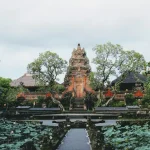
Balinese warkop exist — they’re just harder to find amid the tourist infrastructure. Look for them in residential banjar (neighborhood compounds) rather than main streets. The atmosphere here reflects Balinese Hindu culture: quieter, often with small offerings nearby, and sometimes fragrant with incense smoke drifting in from a nearby temple on the warm morning air.
Sulawesi and Eastern Indonesia
In Makassar (South Sulawesi) and Manado (North Sulawesi), warkop culture is vibrant and fast. Toraja arabica coffee — smooth, slightly earthy, with a clean finish — often appears here. Eastern Indonesia warkop can feel more frontier: simpler setups, fewer snack options, but the same fundamental warmth.
2026 Budget Reality: What You’ll Actually Pay
The warung kopi remains one of the cheapest social experiences in Indonesia. Prices have risen modestly since 2024 due to global coffee commodity prices, but a warkop visit is still extraordinarily affordable by any international standard.
- Budget (roadside stall or small neighborhood warkop): Kopi tubruk or teh manis IDR 3,000–7,000 per glass. A snack like pisang goreng IDR 2,000–4,000 each. A full morning sitting — two coffees and a snack — under IDR 20,000.
- Mid-range (established local warkop with food menu): Kopi susu IDR 8,000–15,000. A plate of nasi goreng IDR 15,000–25,000. Expect to spend IDR 30,000–50,000 for breakfast and two drinks.
- Comfortable (slightly larger warkop in city centers, possibly with AC): Drinks IDR 15,000–25,000. Light food IDR 20,000–35,000. Total IDR 50,000–80,000 — still well below any specialty café.
Note: Tipping is not expected or practiced at warung kopi. Rounding up your payment slightly — leaving IDR 2,000–5,000 change — is occasionally done and always appreciated, but never obligatory.
Frequently Asked Questions
Can women visit warung kopi alone in Indonesia?
Yes, though the experience varies by region. In Java, Bali, and most urban areas, women — including solo foreign women — are welcome without issue. In parts of Aceh and more conservative regions, warkop skew heavily male. Reading the room when you arrive is always the right approach. A friendly smile and calm manner resolve most uncertainty.
Do I need to speak Indonesian to order at a warung kopi?

Not really. Pointing at what others are drinking, holding up fingers for quantity, and knowing kopi (coffee), teh (tea), manis (sweet), and berapa (how much) will get you through any warkop interaction. Most owners are experienced at reading what travelers want, and the patience level is high.
Is the coffee at warung kopi safe to drink for travelers with sensitive stomachs?
The hot water used for brewing kills pathogens, so the coffee itself is generally safe. Be cautious with iced drinks — kopi es or es teh — if you’re early in your Indonesia trip and still adjusting. The ice at smaller warkop may come from tap water. Stick to hot drinks for your first few days if your stomach is sensitive.
What time do warung kopi open and close?
Most neighborhood warkop open between 5:30am and 7am, catering to the pre-work crowd. Some close by mid-afternoon; others run until 11pm or later. In university towns and cities, late-night warkop are common gathering points for students. There’s no universal schedule — look for the light on and chairs out as your signal.
How is a warung kopi different from the new specialty coffee shops appearing across Indonesia?
Specialty cafés in 2026 Indonesia focus on single-origin beans, precise brewing methods, and ambiance. A warung kopi prioritizes community, affordability, and daily ritual over cup quality. Both are valid. The warkop predates the specialty trend by decades and will long outlast it — it serves a social function that no artisan café can replace.
📷 Featured image by Ammar Andiko on Unsplash.