💰 Click here to see Indonesia Budget Breakdown
💰 Prices updated: September, 2026. Budget figures are estimates — always verify before travel.
Exchange Rate: $1 USD = Rp17,928.47
Daily Budget (per person)
Shoestring: Rp358,569 – Rp896,424 ($20.00 – $50.00)
Mid-range: Rp1,254,993 – Rp2,689,271 ($70.00 – $150.00)
Comfortable: Rp2,689,271 – Rp4,482,118 ($150.00 – $250.00)
Accommodation (per night)
Hostel/guesthouse: Rp71,714 – Rp179,285 ($4.00 – $10.00)
Mid-range hotel: Rp448,212 – Rp896,424 ($25.00 – $50.00)
Food (per meal)
Budget meal: Rp26,893.00 ($1.50)
Mid-range meal: Rp143,428.00 ($8.00)
Upscale meal: Rp537,854.00 ($30.00)
Transport
Single metro/bus trip: Rp3,500.00 ($0.20)
Monthly transport pass: Rp200,000.00 ($11.16)
What Makes Ubud Different From the Rest of Bali
In 2026, Bali‘s southern coast — Seminyak, Canggu, Kuta — is more saturated than ever. Prices have climbed, traffic on Jalan Sunset Road can swallow an entire afternoon, and the beach clubs have multiplied to the point of parody. Ubud sits 25 kilometres north and feels like a different island entirely. That’s exactly why it keeps pulling people back.
This is Bali’s cultural and spiritual centre, and that’s not marketing language — it’s geography and history. The Ubud royal family has patronised the arts for centuries. Painters, woodcarvers, and dancers concentrated here long before any guidebook called it charming. The result is a town where a melasti procession can spill across the main road on a Tuesday morning, gamelan rehearsals drift out of temple courtyards at dusk, and incense smoke hangs in the humid jungle air like it has nowhere better to be.
The spiritual texture is real and immediate. Rice terraces step down from the town’s edges. Priests in white and yellow deliver morning offerings before the shops open. Ubud doesn’t perform its identity for tourists — it maintains it despite them. That tension is part of what makes the place worth understanding properly.
The Sacred Geography: Ubud’s Key Areas and Streets
Ubud is not one street or one neighbourhood — it’s a loose cluster of villages that have grown into each other over decades. Where you stay determines what your daily life looks and feels like.
Jalan Raya Ubud (The Main Road)
This is the commercial spine. The Ubud Market and Ubud Palace face each other here at the central crossroads. It gets congested by mid-morning and stays that way until well after sunset. Good for orientation and food, less good for sleeping. Accommodation directly on Jalan Raya Ubud will have noise at almost any hour.

Monkey Forest Road (Jalan Wenara Wana)
Running south from the central market toward the Sacred Monkey Forest Sanctuary, this street is dense with restaurants, yoga studios, and guesthouses. It’s walkable and social — probably the best base if you want convenience and don’t mind being in the middle of things. The forest itself, home to over 1,000 long-tailed macaques, sits at the southern end. The macaques are bold and will take anything not secured — sunglasses, water bottles, phone cases. The admission in 2026 is Rp 80,000 for adults.
Hanoman Street (Jalan Hanoman)
Running parallel to Monkey Forest Road one block east, Hanoman is quieter, more residential in character, and has some of the better mid-range warungs. It connects to the rice terrace walks heading toward Pengosekan to the south.
Campuhan Ridge Walk
Head northwest from the centre and you hit the Campuhan River confluence. The ridge walk above it — a narrow grass path between two river valleys — is Ubud’s best free experience. Two kilometres of elevated walking through jungle and terraced gardens with almost no vehicles. Go before 7 AM to beat the crowd and the heat. After 9 AM it becomes a procession. At dawn, with mist sitting in the river valleys below and roosters sounding off across the ridge, it’s the kind of walk that explains why people cancel their return flights.
Penestanan and Sayan
These two villages on Ubud’s western edge attract longer-stay visitors and digital nomads. Sayan in particular, perched above the Ayung River gorge, has some of Bali’s most dramatic villa settings. It’s 10–15 minutes by scooter from central Ubud, quieter, and noticeably cooler at night.

Cultural Life in Real Time
Ubud’s cultural calendar isn’t a tourist product bolted onto the town — it’s rooted in the Balinese ceremonial calendar, which means events happen whether visitors show up or not.
Traditional Dance Performances
Every evening across Ubud, multiple venues host Kecak, Legong, and Barong dance performances. The Ubud Palace (Puri Saren Agung) stages Legong most nights from around 7:30 PM — watching the dancers perform in the palace’s open courtyard, lit by flickering torchlight, with stone carvings looming behind the stage, is genuinely different from a hotel showroom performance. Tickets at the gate run Rp 100,000–Rp 150,000 depending on the night.
The Kecak Fire Dance at Pura Dalem Taman Kaja near Monkey Forest is worth catching specifically for its setting — a temple courtyard surrounded by frangipani trees, the hundred-voiced kecak chorus building in waves of overlapping rhythm while a fire dancer crosses hot coals. The sound alone — that layered, percussive human chanting with no instruments — is unlike anything else in Indonesian performance culture.
Painting, Woodcarving, and the Villages Around Ubud
Ubud sits at the centre of a constellation of craft villages, each specialising in a different art form:
- Mas (8 km south): woodcarving capital of Bali, with generations of family workshops lining the main road
- Celuk (further south): silver and gold jewellery, though increasingly touristy with fixed-price shops targeting day tours
- Batuan (south): traditional Balinese painting in the dark, highly detailed style developed in the 1930s
- Tegallalang (north, 9 km): the famous rice terrace photographs come from here — the terraces are real and beautiful, though the entrance has a suggested “donation” of Rp 15,000–Rp 50,000 depending on where you park
In Ubud itself, the Museum Puri Lukisan on Jalan Raya Ubud houses a serious collection of Balinese art spanning the 20th century — it’s a far better use of an hour than many of the commercial galleries nearby, and admission is Rp 100,000.
Yoga and Healing Culture
Ubud has more yoga studios per square kilometre than almost anywhere in Southeast Asia. Yoga Barn near the southern end of Jalan Hanoman remains the most established, with a full daily schedule and a campus-like setting in a rice terrace garden. Drop-in classes run Rp 160,000–Rp 200,000. Dozens of smaller studios on surrounding streets offer similar pricing. The healing and wellness scene — traditional Balinese massage, sound healing, Reiki, plant-based medicine ceremonies — has expanded considerably since 2024, with many practitioners now operating out of dedicated wellness compounds in the Penestanan and Nyuh Kuning areas.
Eating Your Way Through Ubud
Ubud’s food scene splits clearly between tourist-facing restaurants and the local warung network that feeds the town’s own residents. Both are worth knowing.
Local Warungs Worth Knowing
Warung Ibu Oka on Jalan Suweta, opposite the palace, has been Ubud’s most famous babi guling (suckling pig) address for decades. The meat is slow-roasted over coconut husks, the crackling shatters like glass, and the accompanying lawar salad — raw vegetables and minced pork with fresh spices — is bracingly bitter against the fatty richness of the pork. Get there by 11 AM; it sells out. Lunch for two costs around Rp 100,000–Rp 150,000.
Warung Babi Guling Pak Dobiel near the Ubud Market is a lower-profile alternative with shorter queues and very similar quality for slightly less money.
For everyday eating, the warung row on Jalan Dewi Sita and the southern stretch of Hanoman Street serves Balinese, Javanese, and Indonesian standards — nasi campur, mie goreng, gado-gado — at Rp 25,000–Rp 40,000 a plate.
The Morning Market
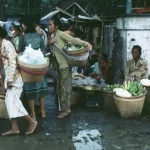
The Ubud Traditional Market (Pasar Ubud) on Jalan Raya Ubud operates in two shifts. Before 6 AM it’s a genuine local market — Balinese women selling vegetables, fruit, temple offerings, and fresh spices. The smell of frangipani and clove hits before you even enter. After 7–8 AM it transitions into a tourist souvenir market. If you want to see how Ubud actually provisions itself, set your alarm.
Cafés and Plant-Based Eating
Ubud has been a centre of plant-based and health-conscious eating since long before it was fashionable, and the options in 2026 are stronger than ever. Moksa in Sayan serves garden-to-table vegan food from its own permaculture grounds — a quiet setting, strong flavours, and the kind of food that actually tastes like the effort behind it. Locavore NXT, the casual offshoot of Ubud’s globally recognised fine dining restaurant Locavore, offers Indonesian-inspired small plates at accessible prices on Jalan Dewi Sita.
Ubud After Dark
Ubud is not a nightlife destination and doesn’t pretend to be. There are no beach clubs, no megaclubs, and the town enforces a relative quiet after 11 PM. What it does have after dark is specific and good if you match expectations to reality.
The cultural performances run until 9–9:30 PM at most venues. After that, the action concentrates on Jalan Dewi Sita and the Monkey Forest Road restaurant strip, where tables stay full until around 10–10:30 PM. Several bars on Monkey Forest Road — including the long-running CP Lounge and Laughing Buddha Bar — stay open until midnight or later and draw a mix of expats, travellers, and Balinese young people.
One genuine nighttime experience: if you’re in Ubud during a full moon, walk to any of the local temples in the late evening. Balinese Hindu ceremonies frequently coincide with the lunar calendar, and a temple compound alive with offerings, gamelan, and candlelight at 9 PM is something no performance venue replicates.
2026 Budget Reality
Ubud’s prices have risen meaningfully since 2023, partly driven by the post-pandemic tourism surge and partly by the Indonesian government’s 2024 move to charge foreign visitors a tourism levy. Factor these into your planning.
Accommodation
- Budget (guesthouses, basic homestays): Rp 200,000–Rp 400,000 per night. Fan rooms, cold water, simple breakfast. Many are clean and well-located in the central Monkey Forest Road area.
- Mid-range (small hotels, boutique guesthouses with pools): Rp 500,000–Rp 1,200,000 per night. This bracket has expanded significantly in 2025–2026, with good options along Hanoman and in Penestanan.
- Comfortable (private villas, resort-style properties with jungle or rice terrace views): Rp 1,500,000–Rp 5,000,000+ per night. Properties in Sayan and above the Ayung River gorge occupy this tier.
Food and Drink
- Local warung meal: Rp 25,000–Rp 60,000
- Mid-range restaurant meal: Rp 80,000–Rp 200,000 per person
- Café lunch with specialty coffee: Rp 100,000–Rp 180,000
- Bintang beer at a bar: Rp 40,000–Rp 70,000
- Babi guling set at Ibu Oka: Rp 65,000–Rp 85,000 per person
Activities
- Sacred Monkey Forest entry: Rp 80,000
- Traditional dance performance: Rp 100,000–Rp 150,000
- Museum Puri Lukisan: Rp 100,000
- Yoga drop-in class: Rp 150,000–Rp 200,000
- Traditional Balinese massage (90 minutes): Rp 150,000–Rp 300,000
- Cooking class (half day): Rp 350,000–Rp 600,000
Transport
- Scooter rental per day: Rp 70,000–Rp 100,000 (manual), Rp 100,000–Rp 130,000 (automatic)
- Gojek or Grab ride within central Ubud: Rp 15,000–Rp 30,000
- Private driver for a full-day tour: Rp 400,000–Rp 600,000
A realistic daily budget for a solo traveller staying mid-range, eating a mix of warungs and cafés, and doing one paid activity is Rp 500,000–Rp 900,000 per day, excluding accommodation.
Getting To and Around Ubud in 2026
From Ngurah Rai International Airport
Ubud is approximately 35–40 kilometres north of Bali’s airport. There is no direct public bus or rail link — the Bali BRT (Trans Sarbagita) does not extend to Ubud, and despite ongoing infrastructure discussions, no fixed rail connection was operational as of early 2026. Your options are:
- Pre-booked airport transfer: the most reliable option at Rp 150,000–Rp 250,000 for a car. Book through your accommodation or a verified transport app before you land.
- Grab or Gojek: available from the official rideshare pickup zone outside the airport. Prices to Ubud run Rp 120,000–Rp 180,000 depending on traffic and surge pricing.
- Metered taxi (Blue Bird): available at the official taxi rank. Comparable prices to rideshare, more predictable but slightly slower to source during peak hours.
Travel time is 45 minutes to 1.5 hours depending entirely on traffic. The stretch through Batubulan and Sukawati on the main road north can be brutal in the afternoon. If you’re arriving between 3–6 PM, budget the longer end.
Getting Around Ubud
Central Ubud is walkable — the core area between the market, Monkey Forest Road, and Jalan Dewi Sita is comfortably covered on foot. For anything beyond that radius, a scooter is the most practical and common solution. Rental shops are everywhere; your accommodation can usually recommend one within walking distance.
Gojek and Grab operate in Ubud but with a quirk: local drivers have historically resisted app-based rideshare in tourist areas, enforcing unofficial “no pickup” zones near the main market. In 2026 this situation has improved but not fully resolved — apps work more consistently in the residential neighbourhoods than on the central tourist strip. If an app driver cancels repeatedly from your location, walk two blocks off the main road and try again.
For day trips to Tegallalang, the craft villages, or Mount Batur, a private driver hired for the day remains the clearest and most cost-effective option for two or more people. Drivers gather near the market and on Monkey Forest Road, but booking through your accommodation avoids the negotiation entirely.
Frequently Asked Questions
How many days should I spend in Ubud?
Three to four days is the practical minimum to cover the main cultural sites, do the Campuhan Ridge walk, catch an evening performance, and visit at least one nearby craft village. Many visitors who plan two days end up extending. A week is not excessive if you’re combining wellness activities, day trips to Mount Batur, or slower-paced exploration of the surrounding villages.
Is Ubud safe for solo female travellers?
Yes, Ubud has a well-established reputation as one of the safer places in Indonesia for solo travel of any kind. The town is well-lit in the centre, has a large international community, and sees consistent tourist traffic. Standard precautions apply — secure your valuables, don’t walk unlit lanes alone very late at night, and be aware of your belongings at the monkey forest. Petty theft exists but violent crime is rare.
Do I need a scooter to enjoy Ubud?
Not necessarily, but it opens the experience considerably. Central Ubud is walkable, and Gojek or Grab can handle most within-town transport. However, reaching Tegallalang rice terraces, the craft villages south of town, or the quieter western neighbourhoods like Sayan without your own transport means relying on arranged drivers or rideshare. If you’re comfortable on two wheels, renting a scooter for at least part of your stay is worth it — just carry your international driving licence.
What’s the best time of year to visit Ubud?
The dry season from May through September is the most popular and most comfortable, with lower humidity and reliable sunshine. July and August are peak tourist months — Ubud is noticeably more crowded and prices rise. April, May, and early June offer a strong combination of dry weather and lower crowds. Rainy season (November–March) brings daily afternoon downpours, lush green terraces, and significantly cheaper accommodation rates — many experienced Ubud visitors prefer it for exactly those reasons.
Has Ubud changed much since 2024?
The core character remains intact, but a few things have shifted. Indonesia’s foreign tourism levy — introduced in 2024 — is now firmly in place and factored into most accommodation pricing. The wellness and co-working sector has expanded noticeably in the Penestanan and Sayan areas. Traffic congestion on the approach roads from the south has worsened with increased visitor numbers, making scooter navigation more necessary than ever for anyone staying longer than a few days.
Explore more
The Ultimate Bali Bucket List: 20 Must-Do Experiences for Your First Trip
The Ultimate Bali Itinerary: 7, 10, & 14-Day Guides for Your Dream Trip
The Ultimate Bali Food Guide: Where to Eat & Drink Now
📷 Featured image by Corey Serravite on Unsplash.