On this page
- What Ramadan Actually Looks Like Across Indonesia
- How Daily Life Shifts During the Fasting Month
- Eating and Drinking in Public: The Real Rules for Visitors
- Mosque Visits and Religious Sites During Ramadan
- Iftar: Joining the Breaking of the Fast as a Guest
- Transport, Crowds, and the Mudik Migration
- 2026 Budget Reality: Ramadan Pricing and What Changes
- Frequently Asked Questions
What Ramadan Actually Looks Like Across Indonesia
Ramadan 2026 falls approximately between late February and late March — the exact dates shift annually based on the lunar calendar, confirmed by the Indonesian government’s moon-sighting announcement. If you are planning to travel during this window and you have been searching for honest advice, you have probably found a lot of vague reassurances online. The truth is more nuanced: Ramadan in Indonesia is neither a travel obstacle nor a non-event. It reshapes daily life in ways that genuinely affect your trip, and the experience varies enormously depending on where you are in the archipelago.
Indonesia is home to the world’s largest Muslim population — around 240 million people as of 2026. But Indonesia is not a monolithic Islamic state. It is a secular republic with extraordinary religious diversity. This means Ramadan in Bali (predominantly Hindu) looks almost nothing like Ramadan in Aceh (which operates under regional Sharia law) or in Jakarta (a sprawling metropolitan mix of everything). Understanding this geographic variation is the foundation of traveling well during the fasting month.
In cities like Yogyakarta, Surabaya, Makassar, and Padang, the fasting month brings a visible shift in the city’s rhythm. Streets that normally bustle with food vendors from dawn go quieter in the mornings. Mosques fill not just for the five daily prayers but for the special nightly Tarawih prayers that only happen during Ramadan. The air in a neighborhood mosque after sunset carries the low hum of hundreds of voices reciting together — a sound that has no equivalent outside this month.
In Bali, life continues largely as normal. Restaurants, warungs, and convenience stores stay open throughout the day. Hindu ceremonies proceed on their usual calendar. Non-Muslim communities across Java, Kalimantan, Papua, and Sulawesi similarly maintain their own rhythms. The key is knowing which environment you are in before you assume anything.
How Daily Life Shifts During the Fasting Month
During Ramadan, observant Muslims fast from the pre-dawn meal (suhoor, before the Fajr prayer around 4:00–4:30 AM) until sunset (iftar, around 6:00–6:15 PM in most Indonesian cities). This restructures the entire day for a huge portion of the population.
Government offices, banks, and many businesses shift their working hours. In 2026, Indonesian government offices operate shorter hours during Ramadan — typically 07:30 to 15:00 instead of the standard 08:00 to 16:00. This affects everything from visa processing at immigration offices to national park permit desks. Build extra time into any administrative task you need to handle.
Restaurants in predominantly Muslim areas often close during the day or operate with reduced menus. This is not a legal requirement in most of Indonesia (Aceh is the significant exception), but social pressure and practical business reality mean many local warungs simply do not open until late afternoon. In the hours before iftar — particularly from 3:00 PM onward — these same warungs explode into activity, selling takjil (small iftar snacks like kolak, dates, es cendol, and fried snacks) to people breaking their fast.
Supermarkets, malls, and convenience stores like Indomaret and Alfamart remain open as usual throughout the day. Finding food and water as a non-fasting visitor in most Indonesian cities is genuinely not difficult — it just requires knowing where to look and how to do it without being thoughtless about it.
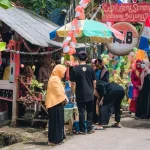
Nightlife extends significantly. Because people sleep after Tarawih prayers and eat suhoor before dawn, the social pattern inverts somewhat. Streets are often busier between 9:00 PM and midnight during Ramadan than they are during regular months. Night markets and bazaars dedicated to Ramadan (pasar Ramadan) appear in neighborhoods across Java, Sumatra, and Sulawesi, selling food, clothing, and household goods in a festive atmosphere.

Eating and Drinking in Public: The Real Rules for Visitors
This is where most travel advice either over-dramatizes or under-explains. Here is the honest breakdown.
In Aceh province, consuming food or drink in public during fasting hours is a legal violation that applies to everyone — including non-Muslims and tourists. Aceh operates under a regional Sharia-based legal framework, and the Wilayatul Hisbah (religious police) do enforce public eating rules. If you are visiting Aceh during Ramadan, eat and drink inside your accommodation or in designated private areas.
Everywhere else in Indonesia, there is no national law prohibiting non-Muslims from eating or drinking in public during Ramadan. However, there is a significant social dimension. Eating openly in front of fasting people — particularly in smaller towns, villages, or conservative neighborhoods — is considered inconsiderate. Not illegal. Not punishable. But genuinely rude in a way that will be noticed and remembered.
The practical approach most long-term expats and experienced travelers use is simple: eat inside restaurants, warungs with curtained fronts (many drape cloth over their entrances specifically to allow discreet dining during Ramadan), or your accommodation. Avoid eating while walking through crowded markets or sitting on a roadside eating directly in front of people who are fasting. This is not about fear — it is about basic consideration for the people around you.
Drinking water while walking in the midday heat is generally understood, especially for obvious foreigners in tourist areas. Nobody is going to confront you for sipping from a water bottle in Jakarta. But sitting at a café terrace with a big meal and a beer directly in front of a mosque at noon during Friday prayers is a different matter entirely.

Alcohol availability also changes during Ramadan. Many restaurants and hotels that normally serve alcohol reduce service or stop selling it entirely during the fasting month, particularly in Java and Sumatra. This is voluntary, not legally mandated at the national level, but it is widespread. Budget for this if alcohol is part of your travel.
Mosque Visits and Religious Sites During Ramadan
Mosques across Indonesia are more active during Ramadan than at any other time of year. Beyond the five daily prayers, Tarawih prayers happen every evening after Isya (the night prayer, around 7:30–8:00 PM). Some mosques also host Tahajjud prayers in the final third of the night. During the last ten days of Ramadan, many mosques run continuous religious activities as the community seeks Laylatul Qadr (the Night of Power).
As a visitor wanting to observe or enter a mosque during Ramadan, the standard rules apply — and then some. Women must cover their hair and wear loose, non-form-fitting clothing that covers the arms and legs. Men should wear trousers, not shorts, and avoid sleeveless shirts. Everyone removes shoes before entering. These are year-round requirements, but Ramadan is not the time to test the limits of these norms.
Some larger tourist-friendly mosques like Masjid Istiqlal in Jakarta do welcome respectful non-Muslim visitors during the day, outside of prayer times. However, Ramadan brings enormous crowds, and the atmosphere during prayer times is genuinely intense — hundreds or thousands of worshippers in sincere devotion. If you do visit, move quietly, do not take photos of people praying without clear permission, and never walk directly in front of someone mid-prayer.

Photography at Ramadan events outside mosques — the night markets, the pre-dawn suhoor gatherings, the communal iftar setups — is generally accepted if done respectfully. Ask before photographing individuals, particularly women. A smile and a gesture toward your camera is usually enough. The word boleh foto? (“may I take a photo?”) goes a long way.
Iftar: Joining the Breaking of the Fast as a Guest
Iftar — the meal that breaks the fast at sunset — is one of the warmest social experiences Ramadan offers to visitors who approach it with genuine respect. Indonesians are deeply hospitable people, and during Ramadan this quality intensifies. Being invited to share iftar with a family or community group is not uncommon for travelers who are staying in local guesthouses or have made connections through work, study, or simply good conversations.
If you are invited, accept. There is no better way to understand Indonesian Muslim culture than sitting around a table as the Maghrib call to prayer sounds — that rising, melodic call drifting through the evening air — and watching a family begin with a date, a prayer, and then the gradual relaxation of a day’s discipline. The table typically fills with soup, rice, fried snacks, sweet drinks like es buah or kolak, and whatever the family’s regional specialty might be.
Practical etiquette for iftar as a guest: arrive before sunset so you are seated and ready when the breaking moment comes. Do not begin eating before your hosts — wait for them to start after the Maghrib prayer. Eat with your right hand if eating by hand, as the left hand is considered unclean in Islamic tradition. Complimenting the food sincerely is always welcome. The phrase enak sekali (“this is very delicious”) will earn genuine smiles.
Many hotels, particularly mid-range and upper properties in Java and Sumatra, host communal iftar buffets during Ramadan. These are open to all guests regardless of religion and represent a straightforward way to experience the iftar tradition in a comfortable setting. Prices for these buffets typically range from IDR 150,000 to IDR 450,000 per person depending on the property.
Some cities host massive public iftar setups. In Yogyakarta, the area around Alun-Alun Utara (the northern square) sees communal iftar gatherings. In Makassar, the waterfront fills. These public iftars are inclusive by nature — strangers share food, and foreign visitors who sit respectfully alongside the crowd are generally welcomed without fuss.
Transport, Crowds, and the Mudik Migration
Mudik is the single biggest logistical event in Indonesia’s calendar, and if your travel dates overlap with it, you need to plan around it rather than through it.
Mudik refers to the mass homecoming migration that happens in the final days of Ramadan as Indonesians travel from cities back to their home villages to celebrate Lebaran (Eid al-Fitr) with family. In 2026, the government estimates over 190 million individual journeys will occur during the mudik period — a figure that reflects the scale of internal migration in this country of 280 million people.
The peak mudik period runs from roughly four days before Eid until two or three days after. During this window, trains out of Jakarta, Surabaya, and Bandung sell out weeks in advance. Intercity buses are packed. The Trans-Java toll road, which now runs continuously from Anyer in the west to Banyuwangi in the east following its 2024 completion, becomes one of the longest traffic jams in the world — stretching hundreds of kilometres during peak days. Domestic flights during mudik are fully booked and prices spike dramatically.
The government manages mudik traffic through a system of contraflow lanes on toll roads, ferry scheduling at Merak-Bakauheni (the Java-Sumatra crossing), and free mudik bus and train programs for lower-income workers. Despite these measures, delays of many hours are normal.
For travelers, the strategy is binary: either leave the big cities at least five days before Eid, or stay put and enjoy the unusually quiet streets that Jakarta and other major cities offer once the mudik exodus is complete. Jakarta during Lebaran is genuinely strange — a city of 10 million that feels temporarily emptied, with light traffic and closed businesses.
If you need to travel between islands during this period, book transport at least six to eight weeks in advance. The KAI (national rail) and Garuda Indonesia booking systems open seats several months out. Budget carriers like Lion Air and Citilink fill up fast but release some seats closer to departure at elevated prices.
2026 Budget Reality: Ramadan Pricing and What Changes
Ramadan does interesting things to prices across different categories. Understanding these shifts helps you budget accurately rather than being surprised.
Accommodation
- Budget (guesthouses, homestays): IDR 150,000–350,000 per night — largely unchanged from regular months
- Mid-range (two to three-star hotels): IDR 400,000–900,000 per night — prices stable outside mudik peak
- Comfortable (four-star and above): IDR 1,000,000–3,000,000+ per night — some properties offer Ramadan packages that include iftar buffets, which adds value
- During mudik peak (3–4 days around Eid): Expect 40–80% price increases across all tiers in destination cities. Book and pay in advance.
Food
- Takjil snacks at pasar Ramadan: IDR 3,000–15,000 per item — exceptional value
- Warung meals (where available): IDR 20,000–45,000 — no change from regular prices
- Hotel iftar buffets: IDR 150,000–450,000 per person
- Restaurant meals in tourist areas: IDR 60,000–200,000 — largely stable, though some premium spots increase prices slightly for Ramadan set menus
Transport
- Domestic flights (non-peak Ramadan): IDR 400,000–1,200,000 for short-haul routes — comparable to regular months
- Domestic flights during mudik peak: IDR 1,500,000–4,000,000+ for the same routes — a significant premium
- Train tickets (Java intercity, booked in advance): IDR 100,000–500,000 — book eight weeks ahead or risk sold out
- Online ojek (Gojek/Grab motorcycle taxi): IDR 15,000–50,000 for city trips — unchanged, though surge pricing applies during iftar rush hour
One genuine budget advantage of Ramadan: the pasar Ramadan food markets offer extraordinary eating at low prices. Spending IDR 50,000–80,000 on an assortment of takjil at sunset is one of the most affordable and culturally rich meals you can have anywhere in Indonesia.
Frequently Asked Questions
Do I have to fast during Ramadan as a tourist in Indonesia?
No. Non-Muslims are not expected or required to fast anywhere in Indonesia except under specific local Sharia regulations in Aceh. The expectation for visitors is simple discretion — avoid eating openly in front of fasting people in conservative areas. Most Indonesians understand that foreign visitors follow different practices and are not offended by this.
Will I struggle to find food during the day in Ramadan?
In major cities and tourist areas, no. Malls, convenience stores, and many restaurants remain open. In smaller towns and villages, options are genuinely reduced during the day. The practical solution is to stock up in the morning, eat inside your accommodation, and then take full advantage of the abundant food available from late afternoon at iftar markets.
Is it safe to visit Indonesia during Ramadan?
Yes, completely. Ramadan does not increase security risks. In fact, the fasting month typically reduces alcohol-fueled incidents. The main practical risks are logistical — transport disruptions during mudik, businesses unexpectedly closed, and the physical challenge of traveling in heat without easy access to food or water. Preparation eliminates most of these issues.
Can I visit Bali during Ramadan without any restrictions?
Bali is predominantly Hindu and operates largely outside Ramadan observance. Restaurants, bars, and beach clubs remain fully open. The only visible Ramadan impact in Bali is that some Muslim staff may be fasting and some Muslim-owned businesses may adjust hours. Tourists in Bali during Ramadan will notice very little difference from other months.
What should I wear during Ramadan in Indonesia?
In Muslim-majority areas, dress more conservatively than you might outside Ramadan. Cover shoulders and knees in towns, villages, and cities. This applies to both men and women. In beach resort areas like the Gili Islands or Lombok’s tourist zones, standard beach attire is fine at the beach itself. The rule of thumb: the further you are from a tourist bubble, the more conservative your clothing choices should be.
📷 Featured image by Prateek Saxena on Unsplash.