On this page
- Jakarta at Night: Still Southeast Asia’s Most Underrated Party City
- Where Jakarta’s Nightlife Actually Lives
- Rooftop Bars Worth the Dress Code
- Underground and Craft Beer Bars
- Jakarta’s Club Scene: What’s Changed in 2026
- Live Music Venues Across the City
- The Night Market and Street Food Scene After Dark
- 2026 Budget Reality: What a Night Out Costs
- Practical Notes: Getting In, Getting Around, Staying Safe
- Frequently Asked Questions
💰 Click here to see Indonesia Budget Breakdown
💰 Prices updated: September, 2026. Budget figures are estimates — always verify before travel.
Exchange Rate: $1 USD = Rp17,928.47
Daily Budget (per person)
Shoestring: Rp358,569 – Rp896,424 ($20.00 – $50.00)
Mid-range: Rp1,254,993 – Rp2,689,271 ($70.00 – $150.00)
Comfortable: Rp2,689,271 – Rp4,482,118 ($150.00 – $250.00)
Accommodation (per night)
Hostel/guesthouse: Rp71,714 – Rp179,285 ($4.00 – $10.00)
Mid-range hotel: Rp448,212 – Rp896,424 ($25.00 – $50.00)
Food (per meal)
Budget meal: Rp26,893.00 ($1.50)
Mid-range meal: Rp143,428.00 ($8.00)
Upscale meal: Rp537,854.00 ($30.00)
Transport
Single metro/bus trip: Rp3,500.00 ($0.20)
Monthly transport pass: Rp200,000.00 ($11.16)
Jakarta at Night: Still Southeast Asia’s Most Underrated Party City
Jakarta gets dismissed a lot. Bad traffic, no beaches, too chaotic. But anyone who has actually spent a Saturday night moving between Kemang, SCBD, and Kota Tua knows the truth: this city has one of the most layered, genuinely exciting nightlife scenes in the region. The problem in 2026 is not the options — it’s knowing which venues survived the post-pandemic venue shuffle, which new spots have replaced the old institutions, and how to get between them without spending your entire drink budget on a taxi. This guide cuts through all of that.
Where Jakarta’s Nightlife Actually Lives
Jakarta is enormous — officially home to around 10.6 million people in the city proper — and nightlife is not spread evenly. Knowing the zones before you go is the difference between a great night and spending three hours in a TransJakarta jam going nowhere useful.
SCBD (Sudirman Central Business District)
The financial district pulls double duty as Jakarta’s premium nightlife corridor. The Pacific Place and Sudirman areas are dense with rooftop bars, hotel lounges, and high-end clubs. Dress codes are enforced seriously here. Expect polished crowds, international DJs on weekends, and cocktail prices to match.
Kemang, South Jakarta
Kemang is the expat and creative industry heartland. The streets around Jalan Kemang Raya and Jalan Kemang Timur are lined with independent bars, reggae joints, live music venues, and late-night warungs that feed you at 3am. The vibe is looser and less formal than SCBD. Kemang rewards wandering.
Menteng and Cikini
Central Jakarta’s old neighbourhood has developed a strong craft beer and indie bar identity over the last few years. Smaller venues, local crowds, and considerably cheaper drinks. This is where younger Jakartans go when they want something that doesn’t feel like a hotel lobby.
Kota Tua (Old Town)

The old port district has transformed dramatically since 2023. The revitalisation project that completed in late 2024 added pedestrian zones, restored colonial buildings, and created space for pop-up bars and weekend night markets along Jalan Fatahillah. It’s more atmospheric than polished, which is exactly why it works.
Pantai Indah Kapuk (PIK) and PIK 2
The northern coastal strip — particularly PIK 2, which expanded significantly through 2024–2025 — now hosts a cluster of beach clubs, open-air bars, and waterfront dining that gives Jakarta something approaching a coastal nightlife scene. It takes 45–60 minutes from central Jakarta but draws big weekend crowds.
Rooftop Bars Worth the Dress Code
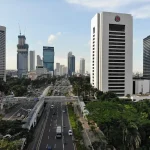
Jakarta’s skyline at night is genuinely spectacular — towers lit up, the haze giving everything a warm amber glow that you either find romantic or dystopian depending on your mood. Rooftop bars are the best way to experience it, and the city has some exceptional ones.
SKYE Bar & Restaurant sits on the 56th floor of the BCA Tower in SCBD and remains one of the most visually impressive perches in the city. The outdoor terrace faces south over the business district. Cocktails run from around IDR 150,000 to IDR 250,000, and you’ll feel the warm night air carrying the faint bass of music from the floors below while the city sprawls endlessly in every direction.
Henshin at The Westin Jakarta delivers a Japanese-influenced experience at height — the combination of clean design, precise cocktails, and unobstructed views makes it consistently one of the most recommended spots for first-time visitors. Reservation is strongly advised on Friday and Saturday nights.
Luna Rooftop Bar at Hotel Indonesia Kempinski sits at a slightly lower elevation but directly overlooks the Selamat Datang monument and the roundabout — one of Jakarta’s most iconic views. The history embedded in that location gives it a weight the glass-tower bars lack.
Underground and Craft Beer Bars
Not every great night in Jakarta involves a dress code and a view. The city’s independent bar scene has matured significantly, and the craft beer movement that started gaining traction around 2019 has settled into something real and sustainable.
Prost Kemang is the most established of the German-style beer halls and has been pulling consistent crowds for years. Long wooden tables, cold draft beer, and a volume level that encourages shouting across the table — the kind of place where you go for two drinks and leave four hours later.
Bottoms Up in Menteng has become a genuine hub for the local craft beer community. Their rotating taps feature Indonesian microbreweries alongside regional imports. The interior is tight and unpretentious — exposed brick, mismatched stools, a chalkboard tap list — and the crowd is a mix of local creatives, off-duty expats, and anyone who found it through word of mouth.
Bawah Tanah (which translates directly to Underground) operates in a repurposed warehouse space in the Cikini area and functions as bar, gallery, and occasional event venue. It’s the kind of place that doesn’t advertise its location too loudly and changes its programming week to week. Check their Instagram before going — hours and events shift.
Cork & Screw at Pacific Place has been Jakarta’s most reliable wine bar for years. It doesn’t feel underground in the physical sense, but the depth of their list and the lack of pretension in the service puts it in a different category from the hotel bar circuit.

Jakarta’s Club Scene: What’s Changed in 2026
The Jakarta club scene has gone through genuine restructuring. Several long-running venues that defined the 2010s — Stadium, Dragonfly — are now memory and renovation site. What replaced them is a different shape: smaller capacity, higher production value, more specific in their music identity.
Immigrant in SCBD has established itself as the city’s most credible electronic music venue. Resident DJs are serious about their craft — deep house, techno, and minimal dominate the programming. The sound system was upgraded in late 2024. Cover charges typically run IDR 150,000–250,000 on weekends, often including a drink.
BATS at The Shangri-La continues to attract top regional and international talent for one-off events. The production budget is visible — lighting rigs, fog, proper crowd barriers — and the mix of hotel security with professional event management makes it one of the smoother large-venue experiences in the city.
X2 (CrossTwo) Jakarta operates the model that defines Jakarta’s upper tier: table service culture, bottle minimums, and a sound policy that favors commercial EDM and hip-hop. It’s not for everyone, but if you’re in a group and happy to pre-book a table, the experience is polished and professionally run.
One shift worth flagging from 2025 onward: Jakarta’s entertainment venues are now required to close by 2am on weekdays and 3am on weekends, following revised regional entertainment ordinances passed by the DKI Jakarta government. This is stricter than what many long-term visitors remember. After-hours options exist but move around — local contacts and Telegram groups are the current information layer for that scene.
Live Music Venues Across the City
Jakarta has always had a strong live music culture, shaped by the size of its middle class and the deep popularity of original Indonesian bands alongside international acts passing through on regional tours.

Rossi Musik in Fatmawati is a functioning music shop by day and the heartbeat of Jakarta’s indie and alternative scene by night. The stage is small, the PA is good, and the crowd knows the words to the support acts. Local bands like Reality Club and Feast built their early audience in rooms exactly like this one.
Hard Rock Cafe Jakarta in the Sarinah complex (reopened following the building’s 2023 renovation) remains the most reliable venue for international tribute acts, cover bands, and occasional direct bookings. Predictable in the best way — if you want live rock and don’t want to navigate the indie circuit.
Jaya Pub in Menteng is one of the oldest continuously operating live music bars in Jakarta and carries that history with it. The jazz nights on Thursdays have been running in some form since the 1990s. The sound is warm, the ceiling is low, and the air smells faintly of decades of cigarette smoke absorbed into the walls — this is a place with texture.
JIExpo Kemayoran handles Jakarta’s large-format concerts and international touring acts. BTS sold out the venue in a previous era; 2025–2026 has seen a return of major international bookings after a quiet period. Check the JIExpo calendar when planning a trip if live events are a priority — some of the biggest nights in the city happen here.
De Tjolomadoe is technically outside Jakarta in Surakarta, but worth mentioning in a 2026 context: the popularity of its concert series in the restored colonial sugar factory has influenced how Jakarta promoters are thinking about non-traditional venue spaces. Several warehouse and heritage-building concert events have launched in Jakarta since 2024 as a direct response.
The Night Market and Street Food Scene After Dark
At some point in any Jakarta night — usually around midnight — you need to eat something cheap, good, and ideally outside. The street food scene that runs parallel to the bar circuit is as much a part of the nightlife as the venues themselves.

Pecenongan Street in Central Jakarta is the most famous late-night food strip and earns its reputation. The soto betawi here — Jakarta’s rich, coconut-milk beef soup — is ladled out from huge pots into bowls that arrive steaming and fragrant with fried shallots and sliced tomato. The street runs loud and bright until 3am or later on weekends.
Jalan Sabang (officially Jalan Agus Salim) remains a reliable corridor for late-night satay, martabak, and nasi goreng. The satay here arrives from the grill glossy with caramelised soy and served with compressed rice cakes and a peanut sauce that has a slow heat to it — the kind of food that makes a great end to a night spent moving between bars.
Blok M Square area in South Jakarta comes alive after 11pm with food carts and open-air warungs filling the streets around the bus terminal. It’s louder and more chaotic than Pecenongan but the prices are lower and the atmosphere is unfiltered Jakarta.
The Kota Tua night market, active on Friday and Saturday nights since the 2024 revitalisation, now runs along the eastern edge of Fatahillah Square. Food stalls, live acoustic performances, and the backdrop of lit-up colonial architecture make it one of the most pleasant outdoor night experiences in the city.
2026 Budget Reality: What a Night Out Costs
Jakarta nightlife spans an enormous price range. Here’s what you should actually expect to spend in 2026, based on current venue pricing and the 11% VAT now applied to entertainment services following the nationwide tax adjustment that came into effect January 2025.
Budget Night (Street food + local bar)

- Street food dinner at Pecenongan or Jalan Sabang: IDR 30,000–60,000
- Beer at a local bar in Menteng or Kemang (non-hotel): IDR 45,000–75,000 per bottle
- Entry to a small live music venue: IDR 50,000–100,000
- TransJakarta and/or Gojek transport: IDR 20,000–60,000
- Realistic total: IDR 200,000–400,000 per person
Mid-Range Night (Rooftop bar + mid-tier club)
- Cocktails at a rooftop bar (2–3 drinks): IDR 300,000–500,000
- Club entry with one included drink: IDR 150,000–250,000
- Late-night food: IDR 50,000–100,000
- Grab car transport: IDR 80,000–150,000
- Realistic total: IDR 600,000–1,000,000 per person
Comfortable Night (Premium venues, table service)
- Table minimum at a premium SCBD club: IDR 1,500,000–3,000,000 (shared across a group)
- Hotel bar cocktails: IDR 180,000–350,000 each
- Dinner at a rooftop restaurant: IDR 300,000–700,000 per person
- Private car or Blue Bird taxi: IDR 150,000–300,000
- Realistic total: IDR 2,000,000–5,000,000 per person depending on group size and table split
Note: The entertainment tax adjustment in January 2025 raised the tax on nightclub and karaoke services specifically to 40–75% (set at the regional level by DKI Jakarta), which caused a visible price increase at the high end of the market. Budget and mid-range venues were less affected. Prices listed above reflect the post-adjustment reality.
Practical Notes: Getting In, Getting Around, Staying Safe
Transport After Midnight
TransJakarta runs reduced services after midnight but does not stop completely — the Koridor 1 route (Blok M to Kota) and several cross-town routes run until around 2am. For anything later, Gojek and Grab remain the practical standard. Blue Bird taxis are available but less common late at night in some areas. The MRT South-North line, extended to Fatmawati in 2024, is useful for getting into the centre in the early evening but shuts down around 11:30pm.
Dress Codes
Premium SCBD venues will turn away guests in sandals, shorts, or sportswear. This is enforced, not suggested. Smart casual is the minimum — dark jeans and a clean shirt gets you through most doors. Some clubs have a specific no-singlet policy even for men in hot weather. If you’re unsure, check the venue’s Instagram or call ahead.

Alcohol and Licensing
Indonesia’s relationship with alcohol licensing is complex and has seen periodic enforcement crackdowns. In Jakarta, licensed venues serving alcohol in entertainment districts operate legally and consistently. Buying from unlicensed sources — particularly unlabelled spirits at very cheap prices — carries genuine health risks and has been linked to methanol poisoning cases in other parts of Indonesia. Stick to licensed bars and recognisable products.
Personal Safety
Jakarta is a large city and petty theft exists, particularly phone snatching from rideshare pickup areas late at night. Keep your phone in a pocket rather than your hand when waiting for a car outside a club. Most premium venues have professional security and internal safety is generally not an issue. Be aware of your surroundings during transport between venues rather than inside them.
Frequently Asked Questions
What is the best area for nightlife in Jakarta?
SCBD is the densest concentration of premium clubs and rooftop bars. Kemang suits those wanting a more relaxed, eclectic mix of bars and live music. Menteng and Cikini offer the best craft beer and independent bar options. For a single-area night, SCBD gives you the most within walking distance, but Kemang has more character.
What time do clubs close in Jakarta in 2026?
Licensed clubs close at 2am on weekdays and 3am on weekends under 2025 entertainment ordinance updates. Some hotel venues operate under slightly different licensing arrangements. After-hours events exist but are informal — not found through official channels.
Is Jakarta nightlife expensive compared to Bali?
At the premium end, Jakarta is comparable to or slightly more expensive than Seminyak in Bali, particularly since the 2025 entertainment tax adjustment. However, Jakarta’s budget and mid-range bar scene is significantly cheaper than Bali’s tourist-priced venues. A local bar night in Menteng costs roughly half what the same experience would cost in Canggu in 2026.

Do Jakarta clubs require reservations?
Walk-in entry is possible at most venues, but weekend nights at SCBD premium clubs frequently have queues of 30–60 minutes without a reservation. Table bookings — which typically carry a minimum spend — guarantee entry and seating. For international DJ nights or special events, advance ticket purchase is essential as venues sell to capacity.
Is it safe to go out at night in Jakarta?
Nightlife areas like SCBD and Kemang are well-lit, regularly policed, and generally safe. The main risks are petty theft during rideshare pickups and the universal caution around unlicensed alcohol. Travelling with a group, using app-based transport rather than anonymous taxis, and staying in the main entertainment precincts significantly reduces any risk.
Explore more
Is Jakarta Worth Visiting? Uncovering the City’s Best Experiences
Things to Do in Jakarta: Uncover the City’s Hidden Gems
Where to Stay in Jakarta: A Guide to the City’s Best Neighborhoods
📷 Featured image by Han Lahandoe on Unsplash.