On this page
- North Sumatra in 2026: Still Wild, Now Easier to Reach
- Where to Base Yourself: City Quarters and Highland Staging Points
- The Unmissable: What North Sumatra Actually Delivers
- Where and What to Eat: Medan and Beyond
- Getting Around North Sumatra
- Day Trips Worth the Journey
- After Dark: Evenings in North Sumatra
- Shopping: What to Buy and Where to Find It
- Where to Stay: Accommodation by Zone and Budget
- When to Go: Weather, Seasons, and Timing
- Practical Tips for 2026
- 2026 Budget Reality: What North Sumatra Costs
- Frequently Asked Questions
💰 Click here to see Indonesia Budget Breakdown
💰 Prices updated: September, 2026. Budget figures are estimates — always verify before travel.
Exchange Rate: $1 USD = Rp17,928.47
Daily Budget (per person)
Shoestring: Rp358,569 – Rp896,424 ($20.00 – $50.00)
Mid-range: Rp1,254,993 – Rp2,689,271 ($70.00 – $150.00)
Comfortable: Rp2,689,271 – Rp4,482,118 ($150.00 – $250.00)
Accommodation (per night)
Hostel/guesthouse: Rp71,714 – Rp179,285 ($4.00 – $10.00)
Mid-range hotel: Rp448,212 – Rp896,424 ($25.00 – $50.00)
Food (per meal)
Budget meal: Rp26,893.00 ($1.50)
Mid-range meal: Rp143,428.00 ($8.00)
Upscale meal: Rp537,854.00 ($30.00)
Transport
Single metro/bus trip: Rp3,500.00 ($0.20)
Monthly transport pass: Rp200,000.00 ($11.16)
North Sumatra in 2026: Still Wild, Now Easier to Reach
If you’ve been putting off North Sumatra because it seemed too complicated — too remote, too rough around the edges — 2026 is the year that excuse runs out. The Trans-Sumatra Toll Road extension now connects Medan to Tebing Tinggi significantly faster, cutting the drive toward Parapat and Lake Toba by nearly 45 minutes. Kualanamu International Airport added new domestic routes from Balikpapan and Makassar this year, making North Sumatra reachable from more of the archipelago without routing through Jakarta. What hasn’t changed: the jungle is still cathedral-thick, the lake is still one of the most dramatic places on earth, and the food in Medan is still genuinely among the best in Southeast Asia. That’s the deal here.
Where to Base Yourself: City Quarters and Highland Staging Points
North Sumatra isn’t a single destination — it’s a region that rewards moving around. Your base depends entirely on what you’re chasing.
Medan
Indonesia’s fourth-largest city is where almost every traveler lands first. The Maimoon Palace area and the old Kesawan district have the most character — Dutch colonial shophouses sitting beside Chinese temples and mosques within a few hundred metres of each other. For lodging with easy access to both the airport and the food scene, the Polonia and Petisah areas are the practical choices. Medan is loud, congested, and smells of grilled meat and two-stroke exhaust — it’s an acquired taste, but the food alone justifies a two-night stay.
Bukit Lawang
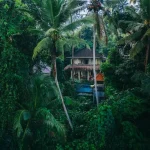
This small riverside village on the eastern edge of Gunung Leuser National Park is the orangutan trekking hub. It has one main road, a handful of guesthouses built on stilts over the Bohorok River, and the kind of jungle closeness that makes you fall asleep to frog noise. It suits backpackers and wildlife travelers who want to move slowly.
Berastagi (Brastagi)
The Karo Highlands town of Berastagi sits at around 1,300 metres elevation, which means cool mornings, strawberry farms, and two active volcanoes visible from the market square. It’s a genuine working highland town — not a tourist construct — and it works well as either a day trip from Medan or a one-night stop en route to Lake Toba.
Parapat and Samosir Island
Parapat is the lakeside transit town where ferries cross to Samosir Island. Most travelers pass through Parapat quickly and base themselves on Samosir instead, in the villages of Tuk Tuk or Ambarita, where the pace drops to almost nothing and the view across Toba stretches farther than you’d think was possible for an inland lake.
The Unmissable: What North Sumatra Actually Delivers
Lake Toba and Samosir Island
Lake Toba is a supervolcano caldera filled with water — 100 kilometres long, 30 kilometres wide, and 505 metres deep. Samosir Island, sitting in the middle, is roughly the size of Singapore. The scale doesn’t fully register until you’re out on the water and the surrounding mountains disappear into cloud. Rent a motorbike on Samosir and spend a day circling the island — you’ll pass rice paddies, ancient Batak stone tombs, traditional rumah adat houses with their distinctive boat-shaped roofs, and views that keep stopping you mid-ride.
Gunung Leuser National Park and Bukit Lawang
Seeing wild Sumatran orangutans in Bukit Lawang is not a zoo experience. You hire a licensed guide, wade a shallow river crossing, and push into dense primary forest where the humidity hits like a warm wet towel. The guides know the trees, know the orangutans by face, and will spot a mother with an infant thirty metres up before you’ve noticed anything at all. Gibbon calls bounce through the canopy overhead. It’s one of the few places in the world where this is still possible, and the Leuser ecosystem is under constant conservation pressure — visiting with a licensed operator directly funds park protection.
Sipiso-Piso Waterfall
On the northern tip of Lake Toba, Sipiso-Piso drops roughly 120 metres into the lake below. The viewpoint is spectacular; the descent to the base is steep, slippery, and absolutely worth it. Get there before 9am to avoid tour groups.
Nias Island
Nias is a separate journey — a flight or ferry from Medan — but rewards serious travelers with UNESCO-listed stone-jumping traditions in the village of Bawömataluo, some of the oldest surf breaks in Indonesian history at Sorake Beach, and an indigenous culture that maintained near-total isolation until the twentieth century. It is not a quick day trip, but it belongs in any genuine North Sumatra itinerary that spans more than a week.
Where and What to Eat: Medan and Beyond
Medan’s food scene runs deep, and it runs late. The city has a strong Minangkabau, Batak, Chinese, and Malay culinary overlap that produces combinations you won’t find anywhere else in Indonesia.
Jalan Semarang and the Chinese Food Quarter
This is where to eat after dark. The street fills with plastic tables, the smoke from charcoal grills hangs in the air, and vendors serve bihun bebek (rice vermicelli with duck), kwetiau goreng, and grilled corn with chili butter from carts that have been in the same spot for decades. The noise, the heat, the clatter of woks — it’s a full sensory experience.
Pasar Petisah Night Section
The night section of Petisah Market is less tourist-known than Semarang Street but arguably more rewarding for variety. You’ll find soto Medan (a richer, coconut-milk version of the national soup), grilled fish with sambal terasi, and fresh durian sold by weight from piles stacked on tarps. The smell alone announces you’re close.
Tip Top Restaurant
A Medan institution since 1934, Tip Top on Jalan Ahmad Yani is the city’s most famous Dutch-colonial era café. It serves Indonesian and Western dishes, but people come for the ice cream and the atmosphere — ceiling fans, marble floors, and the feeling that the room hasn’t changed much in eighty years. Lunch here costs around IDR 70,000–120,000 per person.
Berastagi Market
The fruit and vegetable market in Berastagi is the place to buy passion fruit, marquisa, strawberries grown on the volcanic slopes, and terong Belanda (tamarillo). It’s also where locals eat breakfast — look for women selling nasi gurih wrapped in banana leaf from baskets at the market entrance.
Coffee Stops
North Sumatra grows some of Indonesia’s most internationally respected coffee — Mandailing and Lintong varieties are exported worldwide. In Medan, the old-school kedai kopi (coffee shops) in the Kesawan district serve it the traditional way: drip-brewed, strong, and often with sweetened condensed milk on the side. Warung Kopi Apek on Jalan Mesjid is one of the oldest still operating.
Getting Around North Sumatra
From Kualanamu Airport to Medan City
The Railink airport train runs every 30 minutes from Kualanamu to Medan’s Kota station, takes about 40 minutes, and costs IDR 40,000 per person — it’s the most reliable option and avoids the notorious airport taxi overcharge. Grab also operates from the airport in 2026 with a designated pickup zone outside the arrivals hall. Expect IDR 80,000–130,000 to central Medan by Grab depending on traffic.
Within Medan
Gojek and Grab dominate. Angkot (shared minivans) still run fixed routes for IDR 5,000–6,000 per trip but the routes require local knowledge. Walking is viable in the Kesawan and Maimoon area but Medan’s traffic and heat make it impractical for longer distances.
Medan to the Highlands and Toba
The DAMRI bus now runs a direct route from Medan to Parapat (the Toba gateway) using the extended toll road, taking roughly 4 hours. It departs from the Amplas terminal. Shared minivans (called angkutan) to Berastagi leave from Padang Bulan terminal and take about 2 hours for IDR 25,000–35,000. For Bukit Lawang, shared vehicles from Pinang Baris terminal run until mid-afternoon for IDR 30,000–40,000 and take about 3 hours depending on road conditions.
On Samosir Island
Motorbike rental in Tuk Tuk runs IDR 80,000–120,000 per day. It’s the only sensible way to explore the island independently. Roads are mostly paved now, with a few rough sections on the western side.
Day Trips Worth the Journey
Bukit Lawang (from Medan — full day or overnight)
Three hours each way makes a true day trip exhausting. A single overnight stay is far better. Two-hour jungle treks start at IDR 300,000–450,000 per person with a licensed guide. The Bohorok River tubing back to the village after a trek is an optional IDR 50,000 extra.
Berastagi and Volcano Views (from Medan — full day)
Gunung Sibayak is the easier of the two active volcanoes here — a 3–4 hour round-trip hike with sulfuric vents at the crater. Gunung Sinabung is visible from town but remains in a restricted zone due to ongoing volcanic activity. The Berastagi fruit market and a stop at Dokan Village for traditional Karo architecture rounds out the day.
Tangkahan (from Medan — full day or overnight)
Tangkahan is a conservation village inside the Leuser buffer zone where you can join mahouts bathing rescued elephants in jungle rivers. The drive is about 3.5 hours from Medan. It’s less visited than Bukit Lawang and the experience is quieter and more intimate.
Sipiso-Piso Waterfall and Tongging Village (from Berastagi or Parapat — half day)
About 1.5 hours from Berastagi, Sipiso-Piso is a natural stopover on the Toba route. Tongging village at the base of the waterfall trail has a small warung where you can eat fried noodles and drink teh botol while drying off from the descent.
Nias Island (2–3 day minimum from Medan)
Fly from Kualanamu to Binaka Airport in Gunung Sitoli (about 55 minutes, IDR 450,000–750,000 one way depending on airline and booking timing). Bawömataluo village and the southern surf beaches at Lagundri require at least a full day each. Ferries from Sibolga are cheaper but take 8–12 hours — adventurous, but the 2026 ferry upgrades have improved seating conditions.
After Dark: Evenings in North Sumatra
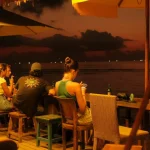
Medan’s nightlife is centered around the Hermes Place Polonia mall area and Jalan Gatot Subroto, where rooftop bars overlook the city grid. Sky Garden at Hermes Place is the most established rooftop option — cold Bintang, city lights, open until midnight. Jalan Semarang at night doubles as both food street and social scene, with families, couples, and groups of students sharing tables until past 11pm.
For live music, the Batak cultural performance tradition is strongest on Samosir Island. In Tuk Tuk, a handful of guesthouses host gondang music sessions — traditional Batak ensemble performances with brass instruments and call-and-response singing — particularly on weekends. The sound carries across the lake in the still evening air and is genuinely arresting if you haven’t heard it before.
Medan also has several live jazz and acoustic music venues along Jalan Dr. Mansyur near the university district, frequented by local students and young professionals. Entrance is usually free; drinks start around IDR 35,000.
Night markets (pasar malam) rotate through different Medan neighborhoods on different nights — ask your guesthouse host which one is closest on any given evening. The largest permanent night market runs nightly near Lapangan Merdeka.
Shopping: What to Buy and Where to Find It
Ulos Textiles
Ulos is the sacred handwoven textile of Batak culture, traditionally used in ceremonies and given as gifts at births, weddings, and funerals. Quality hand-woven ulos from Samosir or the Tarutung weaving villages starts around IDR 250,000 for smaller pieces and can reach IDR 2,000,000 or more for large ceremonial cloths. On Samosir’s Tuk Tuk strip, several family-run workshops let you watch the loom work before you buy.
Pasar Rame and Central Market, Medan
Pasar Rame in Medan’s city center is the main traditional market for everyday goods, local spices, and household items. The surrounding streets have batik sellers, souvenir shops, and stalls selling Batak wood carvings — tunggal panaluan ceremonial staffs, miniature rumah adat models, and singa masks. Budget IDR 100,000–300,000 for decent carved wood pieces.
Berastagi Produce and Souvenir Strip
The main road through Berastagi has souvenir stalls selling volcanic stone ornaments, dried marquisa fruit, and Karo-style embroidered bags. The produce market is where locals shop — prices are low and the passion fruit, which is grown right on the surrounding slopes, is exceptionally good.
Sun Plaza and Hermes Place, Medan
For branded goods, electronics, and air-conditioned shopping, Sun Plaza on Jalan KH Zainul Arifin and Hermes Place in Polonia are the main malls. Both have supermarkets on the lower floors that stock local coffee, packaged rendang paste, and Sumatra-grown chocolate — useful for edible souvenirs that travel well.
Where to Stay: Accommodation by Zone and Budget
Medan
- Budget (IDR 150,000–350,000/night): Guesthouses and budget hotels around Jalan Sisingamangaraja and Jalan SM Raja. Basic rooms, functional bathrooms, fan or AC.
- Mid-range (IDR 400,000–900,000/night): The Kesawan Square area and Polonia district have solid three-star business hotels. Breakfast usually included.
- Comfortable (IDR 1,000,000–2,500,000+/night): JW Marriott Medan and Aryaduta Medan sit at the top of the market. Both are genuinely well-run international standard hotels with pools.
Samosir Island (Tuk Tuk)
- Budget (IDR 120,000–280,000/night): Bamboo guesthouses with lake views and cold-water showers — there are dozens of these along the Tuk Tuk peninsula. Basic but atmospheric.
- Mid-range (IDR 350,000–700,000/night): Carolina’s Resort and Tabo Cottages are well-established properties with hot water, proper beds, and restaurant facilities.
- Comfortable (IDR 800,000–1,500,000/night): Parhiba Resort has the best lake-facing rooms with private terraces on Samosir.
Bukit Lawang
- Budget to mid-range (IDR 100,000–400,000/night): Almost everything here is budget or low-mid-range. Ecolodge Bukit Lawang and Green Hill have the best jungle-river positioning. Electricity can be intermittent; confirm with your guesthouse.
Berastagi
- Budget (IDR 150,000–300,000/night): Losmen and family guesthouses near the market.
- Mid-range (IDR 400,000–800,000/night): Sinabung Hills Hotel is the best-positioned property with volcano views from the upper floors.
When to Go: Weather, Seasons, and Timing
North Sumatra sits close to the equator and doesn’t have a rigid wet-dry binary the way Bali does. That said, the drier months from May to September generally give clearer skies for lake and volcano views, better jungle trekking conditions (less mud, fewer leeches), and calmer lake crossings to Samosir.
The October to March period sees heavier rainfall, particularly in the highlands and around Bukit Lawang. Jungle treks still happen — the forest is beautiful in the rain — but trails get slippery and river levels rise. Bukit Lawang flooded seriously in the past and guides will advise on conditions.
Festivals worth timing around: The Lake Toba Festival (usually June) brings Batak music, traditional boat racing on the lake, and cultural dance performances to Parapat and Samosir. Exact 2026 dates should be confirmed with the North Sumatra Tourism Office closer to travel time. The Pesta Danau Toba is the largest cultural event in the region and significantly increases accommodation demand on Samosir — book at least six weeks ahead if you plan to attend.
Practical Tips for 2026
- Cash is still king outside Medan. ATMs exist in Berastagi and Parapat, but Bukit Lawang and Samosir (outside Tuk Tuk) have limited ATM access. Withdraw enough in Medan before heading into the highlands or jungle.
- SIM cards: Telkomsel has the strongest rural coverage in North Sumatra. Buy a tourist SIM at the Kualanamu Airport arrivals hall (IDR 50,000–80,000 for a starter package with 10–15GB data). Jungles and mid-lake have dead spots regardless of carrier.
- Language: Medan has reasonable English in tourist areas and mid-range hotels. In villages, Bahasa Indonesia is essential. The Batak languages (Toba, Karo, Simalungun) are spoken at home — a few words of Bahasa Indonesia go a long way in building goodwill.
- Safety: North Sumatra is generally safe for travelers. Petty theft in Medan is the main concern — use Grab/Gojek rather than flagging unofficial taxis at night. At Bukit Lawang, only use licensed guides registered with the Leuser park authority.
- Jungle trekking prep: Leech socks are genuinely useful from October to April. Long lightweight trousers, insect repellent with DEET, and a dry bag for your phone are the minimum kit. Guides supply basic snacks; bring your own water.
- Drinking water: Tap water is not safe to drink anywhere in the region. Buy sealed bottled water or use a SteriPen. Most guesthouses provide a starter bottle.
- Tipping: Not culturally mandatory but widely appreciated. IDR 20,000–50,000 for a restaurant meal, IDR 50,000–100,000 per guide for a half-day trek is appropriate.
2026 Budget Reality: What North Sumatra Costs
North Sumatra is one of Indonesia’s better-value regions for independent travel. Costs have risen moderately since 2024 in line with Indonesian inflation, but it remains significantly cheaper than Bali or the Gili Islands.
- Budget traveler (IDR 250,000–450,000/day): Dorm or basic guesthouse bed, warung meals three times daily, local transport by shared minivan, entrance fees. This is tight but workable if you move slowly and eat local.
- Mid-range traveler (IDR 500,000–1,000,000/day): Private guesthouse room with hot water, a mix of warung and restaurant meals, Grab in Medan, one guided activity per day (jungle trek, volcano hike). Comfortable without excess.
- Comfortable traveler (IDR 1,200,000–2,500,000+/day): Three-star and above hotels, meals at mid-range restaurants, private car hire for day trips, guided overnight jungle treks, flights rather than buses between destinations. This bracket gives you flexibility and significant comfort gains in a region where road travel can be tiring.
Specific benchmark costs in 2026:
- Warung meal: IDR 20,000–45,000
- Mid-range restaurant meal: IDR 60,000–130,000
- Bukit Lawang guided trek (half day): IDR 300,000–450,000
- Samosir motorbike rental (per day): IDR 80,000–120,000
- Ferry Parapat to Samosir: IDR 20,000–25,000
- Railink Kualanamu to Medan Kota: IDR 40,000
- Sipiso-Piso entrance fee: IDR 15,000
- Bukit Lawang guesthouse (per night, basic): IDR 120,000–250,000
Frequently Asked Questions
How many days do I need for North Sumatra?
A minimum of seven days covers Medan (two nights), Bukit Lawang (one to two nights), and Lake Toba/Samosir (three nights). Ten to fourteen days adds Berastagi, Tangkahan, or Nias Island. Rushing North Sumatra under five days means skipping most of what makes it worth visiting.
Is it safe to trek in Gunung Leuser National Park?
Yes, with a licensed guide registered through the park authority. Solo trekking is not permitted and is genuinely dangerous — both from wildlife and disorientation in dense primary forest. Guides can be arranged through guesthouses in Bukit Lawang. Verify their license before departing.
Can I visit Lake Toba without going to Samosir Island?
Technically yes — Parapat on the lakeside has views — but you’ll miss the experience entirely. Samosir is where the Batak cultural atmosphere, the lake swimming, the motorbike rides through rice paddies, and the real sense of scale happen. The ferry crossing takes 30–45 minutes and costs around IDR 20,000.
What’s the best way to get from Medan to Lake Toba in 2026?
The DAMRI bus from Amplas terminal to Parapat is the most affordable option at around IDR 70,000–90,000 and takes approximately four hours using the extended toll road. Private car hire from Medan costs IDR 500,000–700,000 for the vehicle and allows stops at Sipiso-Piso or Berastagi en route. This is the most flexible option for groups of three or more.
When is the worst time to visit Bukit Lawang for orangutan trekking?
Trekking is possible year-round, but the October to January rainy season makes trails significantly muddier and river crossings less predictable. Orangutan sightings are not guaranteed in any season — these are wild animals in vast forest — but guides report higher ground-level activity in the drier months from April to September.
📷 Featured image by Kylli Kittus on Unsplash.