On this page
- Makassar After Dark in 2026: What’s Changed
- The Fort Rotterdam Area & Waterfront Strip
- Jalan Penghibur & the Losari Beach Promenade
- Rooftop Bars & Sky Lounges
- Live Music Venues & Local Sounds
- Night Markets & Street Food After Dark
- The Club Scene: Where to Dance
- 2026 Budget Reality: What a Night Out Costs
- Getting Around Makassar at Night
- Frequently Asked Questions
💰 Click here to see Indonesia Budget Breakdown
💰 Prices updated: September, 2026. Budget figures are estimates — always verify before travel.
Exchange Rate: $1 USD = Rp17,928.47
Daily Budget (per person)
Shoestring: Rp358,569 – Rp896,424 ($20.00 – $50.00)
Mid-range: Rp1,254,993 – Rp2,689,271 ($70.00 – $150.00)
Comfortable: Rp2,689,271 – Rp4,482,118 ($150.00 – $250.00)
Accommodation (per night)
Hostel/guesthouse: Rp71,714 – Rp179,285 ($4.00 – $10.00)
Mid-range hotel: Rp448,212 – Rp896,424 ($25.00 – $50.00)
Food (per meal)
Budget meal: Rp26,893.00 ($1.50)
Mid-range meal: Rp143,428.00 ($8.00)
Upscale meal: Rp537,854.00 ($30.00)
Transport
Single metro/bus trip: Rp3,500.00 ($0.20)
Monthly transport pass: Rp200,000.00 ($11.16)
Makassar After Dark in 2026: What’s Changed
Makassar has always been underestimated. Most visitors fly through Sultan Hasanuddin Airport on their way to the Togean Islands or Tana Toraja, spend one night eating coto Makassar, and leave. That’s a mistake. The city of 1.8 million on the southwestern tip of Sulawesi has quietly built one of eastern Indonesia’s most energetic after-dark scenes — and since 2024, two things have accelerated that: the completion of the Makassar New Port expansion bringing a new class of international visitors, and a wave of younger local investors opening concept bars that genuinely rival what you’d find in Bali’s Seminyak. The one real frustration in 2026 is that English-language information is still scarce and often outdated. This guide fixes that.
The Fort Rotterdam Area & Waterfront Strip
The area surrounding Benteng Rotterdam (Fort Rotterdam) in the city’s northwest is no longer just a daytime heritage stop. In the last two years, a cluster of bars and casual restaurants has filled the shophouses and converted warehouses along Jalan Ujung Pandang and the adjacent coastal road, creating a compact strip that works best between 7 PM and midnight.
Benteng Social occupies a two-storey colonial-era building about 200 metres from the fort’s main gate. The ground floor is an open-air terrace; the upper floor has low rattan seating and rotating local art exhibitions. They pour a short but serious cocktail list built around local ingredients — expect a tamarind sour using asam Makassar and a tuak-based infusion that tastes surprisingly refined. The crowd skews toward Makassar’s young creative class: graphic designers, architects, people who have studied in Jakarta or abroad and come home.
Kota Lama Bar, tucked into a renovated Dutch warehouse two blocks north, is darker and more serious about its spirits. The shelves hold a solid selection of Japanese whiskies alongside Indonesian craft arak from Bali and Flores. Live acoustic sets happen on Thursday nights. The sticky warmth of the Makassar evening and the low hum of conversation in Bugis and Indonesian gives the place a specific texture that is hard to find anywhere else in the archipelago.
Jalan Penghibur & the Losari Beach Promenade
Jalan Penghibur is the spine of Makassar’s social life after dark. Running parallel to Losari Beach — the famous seafront promenade locals call the “longest table in the world” — this street and its immediate side streets hold the densest concentration of bars, seafood restaurants, and casual cafés in the city. The scene here is louder, messier, and more democratic than the waterfront strip: families eating pisang epe (grilled banana with cheese and chocolate) at plastic tables sit twenty metres from a bar playing house music.
Sunset & Sons on Jalan Penghibur proper is the kind of place that fills up whether you plan it or not. The open-front design pulls in the sea breeze and the last light over Makassar Bay around 6:30 PM. Cold Bintang, local Palu-brewed craft beer called Sulawesi Pale Ale (a 2024 arrival that has gained a loyal following), and a seafood skewer menu that comes out fast. You can smell the charcoal and shrimp paste from the door.
Pantai Bar, a few doors down, takes a slightly more lounge-forward approach — cushioned outdoor seating, dimmer lighting, and a DJ playing Afrobeats-meets-local pop from 9 PM onward on weekends. This is where Makassar’s young professional crowd lands on Friday nights.

The promenade itself is worth walking at 8 PM regardless of where you end up. Street vendors line the waterfront selling es pisang ijo (green banana ice) and sop konro (spare rib soup), and the lights of the city reflect off the bay in a way that justifies the walk even if you never sit down anywhere.
Rooftop Bars & Sky Lounges
Makassar’s building boom of 2022–2025 left the city with a handful of new mid-rise hotels, and their rooftops have become legitimately good places to drink. The views across Makassar Bay toward the Spermonde Archipelago islands on a clear night are the kind of thing you take photos of even when you are not a photo-taking person.
Altitude Sky Lounge at the Aryaduta Makassar (Jalan Somba Opu) is the most established. Expect well-made mocktails and cocktails, a dress code that means no flip-flops, and a crowd that is roughly half expats and business travellers, half local upper-middle class. Cocktails start around IDR 120,000. The view northwest over the bay at night, with fishing boats dotting the dark water, is the clearest reason to come.
Puncak Rooftop Bar on top of the Swiss-Belhotel on Jalan Jenderal Sudirman is the newer entrant (opened mid-2025) and skews younger. The design is more casual — wooden deck furniture, string lights, a menu that mixes Indonesian bar snacks with Western small plates. Sulawesi Pale Ale on tap here too. On weekend nights, the resident DJ starts at 9 PM and the energy shifts noticeably.
A practical note: Makassar sits close to the equator and even after sunset the temperature hovers around 28–30°C most of the year. Rooftop bars catch whatever breeze comes off the bay. Bring a light layer only if you’re sensitive to air conditioning in the indoor sections.
Live Music Venues & Local Sounds

Makassar has a music culture that most outsiders never encounter. The city produces a disproportionate number of musicians relative to its size — a legacy of strong school band culture and the influence of Bugis folk music (kecapi suling, the bamboo flute and string tradition) filtering into contemporary genres. The live scene in 2026 is small but consistent.
Gudang Seni on Jalan Veteran Selatan is the anchor of the indie music scene. It functions as a café and event space that hosts original music nights on Fridays and Saturdays. The layout is a converted storage space — exposed brick, bare bulbs, a small raised stage at one end. Acts range from acoustic folk with Bugis lyrical influences to post-rock bands doing something that sounds like early Explosions in the Sky filtered through tropical heat. Tickets for ticketed shows are typically IDR 50,000–75,000 at the door. Walk-in on non-event nights is free with a minimum purchase.
Jazz Corner Makassar near Jalan Boulevard is exactly what it sounds like — a narrow room with a bar along one wall, a jazz trio or quartet most nights from 8:30 PM, and a menu that leans toward Western comfort food. It draws an older crowd (30s–50s) and is one of the quieter options if you want conversation alongside your drink. Indonesian jazz musicians here are often genuinely excellent players, and the intimacy of the space makes it feel like a private session.
Night Markets & Street Food After Dark
Not all of Makassar’s nightlife involves a bar stool. The city’s night market culture is a legitimate alternative for evenings — and for many locals, the primary one.
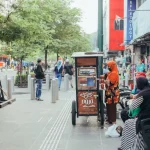
Pasar Malam Somba Opu runs along and around the famous gold jewellery street (Jalan Somba Opu) from around 6 PM and winds down near midnight. Beyond gold shops, the evening market spills onto the pavement with vendors selling grilled corn, martabak (thick stuffed pancakes, both sweet and savoury), pisang epe, and cold drinks from polystyrene boxes. The energy here is entirely local and entirely welcoming — bring enough Indonesian to say berapa harganya (how much?) and you’ll get along fine.

Pasar Malam CPI (Centre Point of Indonesia) is the newer, more organised version. The CPI waterfront development south of Losari was expanded in 2024–2025 and now hosts a permanent night market layout with fixed stalls, better lighting, and a wider food range. You can find fresh grilled fish (ikan bakar) with sambal dabu-dabu — the Manado-style raw chilli salsa that has become standard in Makassar — alongside coto Makassar served until midnight by vendors who have been doing this for decades. The broth is deep and slightly earthy from offal and toasted spices, served with ketupat rice cakes and a smear of sambal tauco.
Street food here is also where the night unfolds most naturally. Pull up a plastic stool, order a glass of es teh manis (sweet iced tea, IDR 5,000–8,000), and watch Makassar go about its evening.
The Club Scene: Where to Dance
Makassar is not Bali. There are no mega-clubs with international DJs and three-hour queues. What exists is more honest: a handful of functioning clubs with local and regional DJs, mixed crowds of local youth and regional visitors, and a straightforward door culture.
Club Imperial in the Makassar Town Square (MaToS) mall complex on Jalan Metro Tanjung Bunga is the largest and most mainstream. Friday and Saturday nights fill the floor from around 11 PM with a mix of EDM, hip-hop, and the current Indonesian pop-electronic hybrids that dominate streaming charts nationally. Cover charge varies: IDR 100,000–150,000 on weekends, often including one drink. Dress code is enforced — no singlets or sandals for men.

X.O Club on Jalan AP Pettarani caters to a slightly older crowd (mid-20s to mid-30s) and books regional DJs from Makassar and Surabaya more often than national acts. The sound system is better than you’d expect for the size of the room. This is where you go if you want to actually dance rather than stand around a table.
OXIDE Makassar, which opened in early 2026 in the Tanjung Bunga area, is the newest entrant and the most ambitious — a purpose-built club with a proper stage, VIP section, and a booker who has already pulled acts from Jakarta’s circuit. Watch this one; it’s the most likely to become the city’s dominant venue.
2026 Budget Reality: What a Night Out Costs
Makassar is significantly cheaper than Bali or Jakarta for a night out, and the quality-to-price ratio at mid-range venues is genuinely strong.
- Budget night (street food + beer at a warung): IDR 80,000–150,000 per person — es teh manis, ikan bakar, pisang epe, and a couple of cold Bintangs from a small shop near Losari.
- Mid-range night (bar + cocktails): IDR 250,000–500,000 per person — two to three cocktails at somewhere like Benteng Social or Sunset & Sons, possibly a shared plate or snacks.
- Comfortable night (rooftop + club): IDR 600,000–1,200,000 per person — drinks at Altitude Sky Lounge followed by Club Imperial with a VIP table arrangement. This tier is where imported spirits and bottle service come in.
A standard Bintang (620ml) at a licensed bar runs IDR 60,000–80,000. Locally made Sulawesi Pale Ale craft cans are typically IDR 55,000–70,000. Cocktails at mid-range venues: IDR 95,000–145,000. Entry to clubs on weekends: IDR 100,000–200,000. Grab or Gojek rides across most nightlife zones: IDR 25,000–60,000.
Getting Around Makassar at Night
Makassar does not have a metro or LRT — the Sulawesi rail network discussions that circulated in 2024 have not progressed to construction in this city. Getting around at night means ride-hailing apps or taxis.

Grab and Gojek both operate reliably in Makassar in 2026. Signal can be slightly patchy in the older parts of the waterfront near Fort Rotterdam late at night, so flag your pickup point in advance or walk one block toward a main road. Surge pricing applies on Friday and Saturday nights between 11 PM and 1 AM — expect fares 20–40% higher than standard during those windows.
Blue Bird taxis remain available and use meters honestly. They’re a useful backup when app-based rides show a 15-minute wait. You can flag them on Jalan Penghibur most evenings without a wait.
Safety in Makassar’s main nightlife zones is generally fine for the same common-sense reasons that apply anywhere: stay on main streets late at night, don’t leave drinks unattended in crowded clubs, and keep your phone in a front pocket rather than back pocket in night markets. The city has a reputation among some Indonesian travellers for being rough, but the specific nightlife zones described in this article are well-trafficked and have visible security presence at most venues.
Frequently Asked Questions
Is Makassar a good destination for nightlife compared to Bali?
Makassar is smaller and quieter than Bali’s Kuta or Seminyak, but it offers an authentic local scene without tourist markup. If you want mega-clubs and beach parties, go to Bali. If you want interesting bars, live local music, great street food after midnight, and a crowd that is almost entirely Indonesian, Makassar delivers that better than most eastern Indonesian cities.
What time do bars and clubs open and close in Makassar?
Most bars open around 5–7 PM. Bars near Fort Rotterdam typically close by 11 PM under 2025 licensing rules. Venues on Jalan Penghibur run until around 1–2 AM. Clubs like Club Imperial and X.O Club don’t fill up until 11 PM and stay open until 3 AM on weekends.

Is alcohol freely available in Makassar?
Makassar has a predominantly Muslim population and some areas have stricter social norms around alcohol. However, licensed bars, hotel lounges, and clubs serve alcohol without issue. Minimart alcohol sales have faced tighter restrictions since 2025. Stick to licensed venues and you will find plenty of options throughout the nightlife zones described in this guide.
What is the dress code at Makassar’s clubs and rooftop bars?
Rooftop bars like Altitude Sky Lounge require smart casual — no flip-flops or singlets. Clubs enforce a similar standard for men specifically: closed shoes, collared shirt or clean t-shirt. Women’s dress codes are more relaxed. Coming overdressed is never an issue; coming in beachwear or construction sandals will get you turned away at the door.
How do I get from the nightlife areas back to my hotel safely?
Grab and Gojek are the reliable standard. Book your ride from inside the venue or just outside the door rather than walking a distance first. Blue Bird taxis are a solid backup on major streets. Avoid unlicensed ojek (motorcycle taxis) offering rides outside clubs at 1–2 AM — stick with app-based services where the driver is tracked and rated.
Explore more
Your Ultimate Tana Toraja Travel Guide: Things to Do & See in Sulawesi
Where to Eat in Makassar: Your Ultimate Culinary Guide
The Ultimate Sulawesi Itinerary: Tana Toraja, Bunaken & Beyond
📷 Featured image by Muhammad Abdul Aziz Alghiffari on Unsplash.