On this page
- Why Booking a Komodo Liveaboard in 2026 Is Harder Than It Looks
- The Three Types of Liveaboard Boats
- Route Options: What You Actually See
- What Life on Board Actually Looks Like
- The Dive Sites: What Makes Komodo Worth the Trip
- Above-Water Highlights: More Than Just Diving
- How to Actually Choose the Right Boat
- 2026 Budget Breakdown: What This Trip Actually Costs
- Booking Strategy and 2026 Permit Changes
- Getting to Labuan Bajo
- Practical Tips Before You Board
- Best Time to Visit Komodo
- Frequently Asked Questions
💰 Click here to see Indonesia Budget Breakdown
💰 Prices updated: September, 2026. Budget figures are estimates — always verify before travel.
Exchange Rate: $1 USD = Rp17,928.47
Daily Budget (per person)
Shoestring: Rp358,569 – Rp896,424 ($20.00 – $50.00)
Mid-range: Rp1,254,993 – Rp2,689,271 ($70.00 – $150.00)
Comfortable: Rp2,689,271 – Rp4,482,118 ($150.00 – $250.00)
Accommodation (per night)
Hostel/guesthouse: Rp71,714 – Rp179,285 ($4.00 – $10.00)
Mid-range hotel: Rp448,212 – Rp896,424 ($25.00 – $50.00)
Food (per meal)
Budget meal: Rp26,893.00 ($1.50)
Mid-range meal: Rp143,428.00 ($8.00)
Upscale meal: Rp537,854.00 ($30.00)
Transport
Single metro/bus trip: Rp3,500.00 ($0.20)
Monthly transport pass: Rp200,000.00 ($11.16)
Why Booking a Komodo Liveaboard in 2026 Is Harder Than It Looks
The Komodo National Park has never been more popular — and that’s exactly the problem. Since Indonesia tightened its permit system in late 2024 and introduced new zoning rules that took full effect in 2026, the number of boats allowed to operate overnight in certain areas has been capped. Operators are selling out months in advance, pricing has shifted significantly across all tiers, and a flood of new “budget liveaboard” listings on booking platforms has made it genuinely difficult to tell a well-run boat from a floating disaster. This guide cuts through all of that. Whether you’re a diver who wants Castle Rock at dawn or a family that just wants to see dragons and swim at Pink Beach, here’s how to find the right boat for your specific version of this trip.
The Three Types of Liveaboard Boats
Before you even look at prices, you need to understand what kind of vessel you’re actually choosing. The boat type determines almost everything: your sleep quality, your comfort between dives, how your food tastes, and whether you spend the night gently rocking or gripping your mattress.
Traditional Phinisi Schooner
The phinisi is the classic Komodo liveaboard. These are traditional Indonesian wooden sailing vessels, originally built by the Bugis people of Sulawesi. On a phinisi, you’ll sleep in a wooden cabin below deck, eat family-style meals on the main deck as the sun goes down over the islands, and fall asleep to the creak of timber and the sound of waves slapping the hull. The good phinisi boats are genuinely beautiful — hand-carved wood, teak decks, open-air dining areas strung with lights at night. The budget ones smell of mildew and diesel and the showers drain onto your feet. The difference is entirely in the operator. Phinisi boats suit travellers who want atmosphere and character over air-conditioned comfort.

Modern Motor Yacht
These are fibreglass or steel-hulled motor vessels built specifically for liveaboard diving. They’re faster, more stable in choppy water, and usually come with better dive equipment, proper nitrox facilities, and cabins with en-suite bathrooms. You lose some of the romantic wooden-boat aesthetic, but you gain a lot of comfort — especially important if you’re doing three or four dives a day and need to actually recover between them. Mid-range and luxury options in this category have expanded significantly in 2026, with several new vessels launching out of Labuan Bajo since 2024.
Speed Boat Day-Trip Hybrid
Not a true liveaboard, but worth mentioning because many operators sell these as if they are. These are fast boats that depart Labuan Bajo each morning and return each evening. You don’t sleep on the boat. They’re cheaper, and they’re fine for snorkelling, Padar hikes, and dragon spotting — but for diving, especially at sites like Castle Rock or Crystal Rock, you’re burning an hour or more of travel time each way. If scuba diving is your main reason for coming to Komodo, a true overnight liveaboard is a different experience entirely.
Route Options: What You Actually See
Most Komodo liveaboards run one of two standard route structures. Understanding the difference will help you avoid the common mistake of booking a short trip and realising midway through that the best sites were cut from the itinerary.

3 Days / 2 Nights (Standard Loop)
This is the most common format, and it works well if you have limited time. A typical route departs Labuan Bajo in the late afternoon on day one, heads south or east depending on the operator, and covers roughly 4–6 dive or snorkel sites across three days. You’ll usually hit Manta Point, one of the Komodo Island dragon trekking stops, Pink Beach, and one or two dive sites like Batu Bolong. What often gets cut on the short trip: Castle Rock, Crystal Rock, and the northern sites around Gili Lawa Darat — which many experienced divers consider the best of the entire park.
4 Days / 3 Nights (Extended Loop)
The extra day makes a serious difference. This format allows the boat to head north through the Rinca Strait and include the full suite of top dive sites without rushing. You get early morning dives at Castle Rock when the currents are manageable and the fish life is at its most concentrated, a proper sunset from Padar Island’s ridge (not just the lower viewpoint), and usually a second visit to Manta Point to improve your chances of a sighting. If you dive, this is the format to book.
7-Day Komodo to Sumbawa (or Reverse)
A smaller number of operators run longer expeditions that exit Komodo National Park entirely and continue east toward Sumbawa, Moyo Island, or Satonda. These are expedition-style trips for serious divers. The sites outside the park are less documented, less crowded, and genuinely wild. Expect to pay premium prices and accept that itineraries are heavily weather-dependent.
What Life on Board Actually Looks Like
The liveaboard experience sounds dreamy in brochures. The reality is great, but it helps to know what you’re actually signing up for before you board.

On a mid-range phinisi with 12–16 passengers, your day looks roughly like this: you’re woken before dawn for the first dive or sunrise hike, back on board for breakfast by 8am — usually eggs, toast, fruit, and Indonesian porridge. A second dive or snorkel session follows mid-morning, then lunch on deck, then a rest period during the hottest part of the afternoon, then a late afternoon dive, then dinner. By 9pm, most people are asleep. It’s a routine that sounds mundane but feels surprisingly satisfying after a few days.
Meals on a good phinisi are one of the genuine highlights — fresh fish bought from local fishing boats, grilled right on deck as the last light fades from the water, with a sharp sambal on the side and cold drinks from the cooler. The smell of charcoal and the sound of the crew laughing in the galley below is something you don’t forget quickly.
Cabin quality varies enormously. Budget boats have narrow twin bunks with thin mattresses and shared cold-water bathrooms. Luxury vessels have queen beds with proper linen, en-suite hot showers, and climate control. Know which you’re getting before you pay.
The Dive Sites: What Makes Komodo Worth the Trip
Komodo is consistently ranked among the top five dive destinations in the world, and the sites justify that reputation. Here’s what you’re actually diving.
Batu Bolong
A submerged pinnacle rising from deep water near Komodo Island. The currents here are strong and unpredictable, which is exactly why the fish life is extraordinary — napoleon wrasse, bumphead parrotfish, schooling fusiliers, reef sharks, and often mantas passing through. The dive is typically done as a drift, and your guide’s briefing matters. Not suitable for beginner divers without strong current experience.
Castle Rock
The site most divers leave Komodo talking about. A seamount in the northern part of the park where multiple current systems converge. The schools of fish here — especially the massive aggregations of trevally, barracuda, and grey reef sharks — are the kind of thing that makes experienced divers go quiet. Best dived early morning on an incoming current. Only accessible on the 4-day or longer routes.

Crystal Rock
Close to Castle Rock and often paired with it on the same day. Slightly shallower and more sheltered, which makes it a good warm-up before Castle Rock’s intensity. Excellent hard coral coverage, lots of macro life if you slow down and look, and regular manta and eagle ray sightings.
Manta Point (Karang Makassar)
A cleaning station off the southwest coast of Komodo Island where reef manta rays gather. In peak season (roughly July through October), it’s common to see 10–20 mantas circling the shallow cleaning station. Snorkellers can access this too — you don’t need to dive. The park now strictly enforces a minimum distance rule and prohibits touching or chasing the rays.
Above-Water Highlights: More Than Just Diving
A lot of people who book Komodo liveaboards aren’t divers. The above-water experiences are genuinely excellent and shouldn’t be treated as afterthoughts.
Komodo Dragon Trekking
Both Komodo Island and Rinca Island have ranger-guided dragon treks. Rinca is closer to Labuan Bajo and typically visited on shorter itineraries. Komodo Island’s dragons tend to be larger and the landscape is more dramatic. You walk in a small group with a ranger who carries a forked stick — not as a weapon, but as a barrier if a dragon approaches too fast. The animals are genuinely enormous, move with an unsettling stillness, and the dry savannah landscape they live in looks almost prehistoric in the midday heat.

Padar Island Hike
The viewpoint at the top of Padar Island’s main ridge is one of the most photographed landscapes in Indonesia — three bays visible simultaneously, each with differently coloured sand. The hike takes 30–45 minutes up a marked path. Go at sunrise for cool temperatures and soft light, or late afternoon for golden hour colours. Bring water. The midday heat on this exposed hillside is brutal.
Pink Beach (Pantai Merah)
One of a handful of genuinely pink-sand beaches in the world, coloured by fragments of red coral mixed into the white sand. The snorkelling directly off the beach is excellent — shallow, clear water with healthy reef right at the shore. Good for all ages and swimming abilities.
Kanawa Island
A small, quiet island sometimes included in longer itineraries. The reef around Kanawa is in good condition, the island has virtually no infrastructure, and it’s one of the few places in the park where you can genuinely sit in silence. Some operators use it as an afternoon stop between more active sites.
How to Actually Choose the Right Boat
This is where most people go wrong. They either overspend on a luxury boat when they’d have been happy on mid-range, or they cheap out and spend three days miserable on a boat that smells like diesel with a guide who barely speaks English.
Ask yourself these questions before booking:
- Are you a certified diver, and what’s your experience level? Beginner divers and non-divers don’t need a dive-spec boat with nitrox. A good mid-range phinisi is perfect.
- How important is sleep quality to you? If you sleep badly, budget boats will ruin your trip. Spend more on the cabin.
- What’s your group composition? Couples and solo travellers do fine on shared boats. Families with young children should look at private charter options.
- Do you want atmosphere or comfort? Phinisi for atmosphere. Motor yacht for comfort. Some newer phinisi build both in, but you pay for it.
- What’s your non-negotiable itinerary? If Castle Rock is why you’re coming, confirm in writing that it’s on the route before you pay.

Always check that the operator holds valid 2026 SIMAKSI permits, has a licensed divemaster (not just a guide) if you’re diving, carries functional safety equipment including oxygen kits on the dive deck, and has verifiable reviews from the past 12 months on platforms like Tripadvisor or dedicated dive travel sites.
2026 Budget Breakdown: What This Trip Actually Costs
Prices below reflect the 2026 market including the updated Komodo National Park conservation fee structure, which increased again in early 2026. All prices are per person based on double occupancy unless noted.
Budget Tier
- Boat type: Basic phinisi, shared cabins, shared bathrooms
- 3D2N trip cost: Rp 3,500,000 – Rp 5,000,000 per person
- Includes: Meals, park entry, basic snorkel gear
- Diving: Usually extra, Rp 200,000 – Rp 350,000 per dive
- What you give up: Air conditioning, private bathrooms, experienced English-speaking guides
Mid-Range Tier
- Boat type: Well-maintained phinisi or basic motor vessel, semi-private cabins
- 3D2N trip cost: Rp 6,000,000 – Rp 10,000,000 per person
- 4D3N trip cost: Rp 9,000,000 – Rp 14,000,000 per person
- Includes: All meals, park fees, snorkel gear, English-speaking guide
- Diving: Rp 250,000 – Rp 400,000 per dive, or included in some packages
Comfortable / Luxury Tier
- Boat type: Premium phinisi or purpose-built dive yacht, en-suite cabins, AC throughout
- 3D2N trip cost: Rp 14,000,000 – Rp 25,000,000 per person
- 4D3N trip cost: Rp 20,000,000 – Rp 38,000,000 per person
- Includes: All diving, all meals, premium equipment, nitrox, professional dive guides
- Private charter (whole boat): Rp 80,000,000 – Rp 200,000,000+ per trip depending on vessel
The 2026 Komodo National Park conservation contribution is now Rp 1,000,000 per person per visit (up from the 2023 rate of Rp 3,750,000 per year that caused controversy). Most reputable operators include this in their quoted price, but always confirm.

Booking Strategy and 2026 Permit Changes
The new zoning system introduced by the Balai Taman Nasional Komodo (BTNK) in 2025 and fully enforced in 2026 divides the park into three operational zones. Zone A covers the most sensitive areas (including the dragon nesting grounds) and has strict daily visitor caps. Zone B includes the main dive sites with permit-controlled access. Zone C is the open buffer zone where day boats operate freely.
What this means for liveaboard travellers: the best sites (Batu Bolong, Castle Rock, Manta Point) are all Zone B. The number of boats allowed to dive these sites simultaneously is now capped, and time slots are allocated through the permit system. Operators who book early in the season secure the better time slots. If you book a budget operator two weeks before your trip in peak season, there’s a real chance they won’t have a Zone B permit window for your preferred sites.
When to book: For July–September travel, book by March at the latest. For shoulder season (May–June, October–November), 6–8 weeks ahead is usually sufficient. December–February (wet season) has availability right up to departure.
Book directly with the operator or through a verified dive travel agency. Third-party OTAs that aggregate liveaboards don’t always update permit status in real time.
Getting to Labuan Bajo
Labuan Bajo’s Komodo International Airport (LBJ) now handles direct flights from Jakarta (Soekarno-Hatta), Bali (Ngurah Rai), Makassar, and Surabaya. In 2025, Citilink added a second daily frequency from Bali, which has meaningfully reduced ticket prices during shoulder season. Flight time from Bali is approximately 1 hour 20 minutes. From Jakarta, around 2 hours.
The airport is approximately 2 kilometres from the harbour, and the journey takes less than 10 minutes by taxi or Grab. Your liveaboard operator will typically specify a boarding time and meeting point at the harbour — usually a specific pier or dock, since the main harbour has expanded its liveaboard departure zones since 2024.

If you’re arriving a day early (recommended), Labuan Bajo town has a solid selection of hotels, restaurants along the main harbour strip, and dive shops where you can rent or service equipment before boarding. The town has grown noticeably since 2022 — the waterfront road now has proper pavements, several decent coffee shops, and a small night market near the central harbour that runs every evening.
Practical Tips Before You Board
Seasickness
The Flores Sea is not always calm. Crossing between islands, especially in the afternoon when thermal winds pick up, can be rough. If you’ve ever been seasick on a boat, take this seriously. Bring antihistamine-based tablets (Dramamine or local equivalent) and take them the night before and morning of departure. Ginger sweets help. The middle of the boat at deck level is the most stable point if you feel it coming on.
Dive Certification Requirements
Many Komodo sites are not suitable for Open Water beginners due to strong currents. Advanced Open Water certification is recommended for most liveaboard diving. Castle Rock and Batu Bolong specifically require Advanced certification from most operators. Non-certified snorkellers are welcome on every trip — the snorkelling at sites like Pink Beach, Crystal Rock, and Manta Point is world-class without going underwater.
What to Pack
- Reef-safe sunscreen (mandatory in Komodo National Park since 2024)
- Motion sickness medication
- Dry bag for cameras and documents
- Lightweight long-sleeve rash guard (sun protection on deck and in water)
- Cash in IDR — most boats don’t accept cards for onboard extras
- Personal medications — the nearest pharmacy is back in Labuan Bajo
- Power bank — charging points on budget boats are limited

Safety
Komodo’s currents are among the strongest in Indonesia. Always dive with the operator’s divemaster, follow the briefing on entry and exit points, and carry a surface marker buoy (SMB) on every dive. Reputable operators will provide these — if your boat doesn’t carry SMBs for every diver, that’s a red flag. The nearest hyperbaric chamber in 2026 is in Bali, approximately 1.5 hours by fast plane from Labuan Bajo.
Best Time to Visit Komodo
Komodo has two distinct seasons, and they suit different types of travellers.
Dry Season: April to November
The peak travel window. Calmer seas, better visibility for diving (often 20–30 metres), reliable manta ray sightings from July through October, and comfortable temperatures (28–32°C). July and August are peak season — boats are full, prices are at their highest, and the park is busy. If you want the best diving without the peak crowds, May–June and October–November are the sweet spots.
Wet Season: December to March
Rougher seas and more rain, but not all bad. Prices drop noticeably, boats have space, and the underwater visibility is still decent (15–20 metres on a good day). Manta sightings are less predictable. The landscape looks greener after rain. Some itineraries are modified due to weather. Not recommended for anyone prone to seasickness.
Water temperature stays consistent year-round at 26–29°C in the shallower sites, though thermoclines at depth can drop to 22°C in upwelling zones — relevant if you’re diving multiple times a day.
Frequently Asked Questions
Do I need to be a certified diver to do a Komodo liveaboard?
No. Many liveaboard passengers are non-divers or snorkellers only. Manta Point, Pink Beach, and Crystal Rock all offer outstanding snorkelling without scuba gear. Some boats offer discover scuba dives for non-certified guests at selected calm sites. If you plan to dive at Castle Rock or Batu Bolong, Advanced Open Water certification is required by most operators.

How far in advance should I book a Komodo liveaboard?
Peak season boats (July–September) sell out fast — book by March. Shoulder season trips need around 6–8 weeks lead time, and wet season departures are often bookable within two weeks of travel. See the Booking Strategy section above for how Zone B permit availability affects your options.
What’s the difference between Komodo Island and Rinca Island for dragon trekking?
Rinca is closer to Labuan Bajo (about 1.5 hours by boat) and visited more often on shorter itineraries. Komodo Island is larger, the dragons tend to be bigger, and the landscape is more dramatic — but it requires a longer transit. Both islands have ranger-guided treks. Most 4-day liveaboards include both; 3-day trips usually include one.
Is the Komodo National Park conservation fee included in liveaboard prices?
Usually yes for reputable operators, but always confirm before booking. The 2026 fee is Rp 1,000,000 per person per park visit. Some budget operators quote prices exclusive of this fee to appear cheaper, then collect it as a surcharge on the boat. Ask specifically whether the SIMAKSI permit and conservation contribution are included in the quoted rate.
How rough are the seas in Komodo, and should I worry about seasickness?
It varies significantly by season and time of day. In the dry season, morning crossings are usually calm. Afternoon wind can create choppy conditions, especially in open water between islands. The Flores Sea is not as rough as, say, crossing to the Banda Islands, but it’s not a lake either. Anyone with a history of motion sickness should bring medication. Phinisi boats with their deep wooden hulls tend to roll more than flat-bottomed motor vessels.
Explore more
Padar Island Hike Guide: Best Views & How to Get There
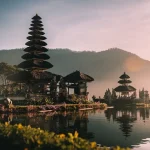
📷 Featured image by Ammar Andiko on Unsplash.