On this page
- Belitung Before the Crowds Figure It Out
- What Belitung Actually Is
- The Granite Rocks and Beaches
- The Food Scene: Where to Eat in Belitung
- Getting to Belitung in 2026
- Getting Around the Island
- Day Trip or Overnight?
- 2026 Budget Reality
- What’s Changing: Is the “Next Bali” Label Fair?
- Frequently Asked Questions
💰 Click here to see Indonesia Budget Breakdown
💰 Prices updated: September, 2026. Budget figures are estimates — always verify before travel.
Exchange Rate: $1 USD = Rp17,928.47
Daily Budget (per person)
Shoestring: Rp358,569 – Rp896,424 ($20.00 – $50.00)
Mid-range: Rp1,254,993 – Rp2,689,271 ($70.00 – $150.00)
Comfortable: Rp2,689,271 – Rp4,482,118 ($150.00 – $250.00)
Accommodation (per night)
Hostel/guesthouse: Rp71,714 – Rp179,285 ($4.00 – $10.00)
Mid-range hotel: Rp448,212 – Rp896,424 ($25.00 – $50.00)
Food (per meal)
Budget meal: Rp26,893.00 ($1.50)
Mid-range meal: Rp143,428.00 ($8.00)
Upscale meal: Rp537,854.00 ($30.00)
Transport
Single metro/bus trip: Rp3,500.00 ($0.20)
Monthly transport pass: Rp200,000.00 ($11.16)
Belitung Before the Crowds Figure It Out
By mid-2026, Bali’s southern coast is dealing with a tourism saturation problem that has been building for years — Kuta and Seminyak choked with traffic, beach clubs competing for every square metre of sand, and accommodation prices that no longer match the experience. Travellers who have been to Bali three times are now asking where else to go. Belitung keeps coming up, and for good reason. But it is not Bali, it does not want to be, and understanding that distinction is the first thing you need to know before booking a flight.
What Belitung Actually Is
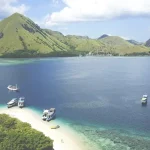
Belitung is an island off the east coast of Sumatra, sitting in the Java Sea and belonging administratively to the Bangka Belitung province. It is roughly 4,800 square kilometres — manageable, not overwhelming. The interior is a patchwork of old tin mining land, rubber plantations, and secondary jungle, while the coastline is defined by something genuinely rare: enormous smooth granite boulders rising from turquoise-to-emerald water, framing beaches that look almost artificially perfect.
The island earned its international literary fame from Andrea Hirata’s novel Laskar Pelangi (Rainbow Troops), set in Belitung’s tin-mining era. The story was adapted into one of Indonesia’s highest-grossing films, and a dedicated museum in Gantong village still draws Indonesian visitors who grew up with the story. That cultural thread — the mining past, the Malay-influenced local identity, the modest fishing villages — gives Belitung a grounded character that beach-hopping alone cannot explain.
Tanjung Pandan is the main town and the island’s commercial hub. It is functional rather than charming: good warungs, a morning market worth waking up for, and the logistics base you will return to each evening. The real draw is always outside town.
The Granite Rocks and Beaches
The geological signature of Belitung is its granite formations. These are not the kind of rocks you step around carefully — some are the size of small houses, stacked against each other by some ancient tectonic patience, rising directly from shallow water. The colour of the sea around them shifts depending on the time of day: silver-blue at dawn, a deep jade green by midday, and something closer to hammered copper in the late afternoon light.
Tanjung Kelayang is the main jumping-off point for island-hopping, and the beach itself is solid — white sand, calm water, the kind of place you can swim without anxiety. From here, boats take visitors to the surrounding small islands.

Pulau Lengkuas is the one most people photograph: a Dutch colonial lighthouse from 1882 standing on a tiny island completely ringed by granite boulders. Climbing the lighthouse takes about ten minutes and earns you a view of the archipelago that no drone shot fully captures. The water at the base of the rocks is clear enough to see individual fish from above.
Tanjung Tinggi — filmed as a location in Laskar Pelangi — is where the boulders are largest and most dramatic. Arrive before 9am and you may have an hour with minimal company. By late morning, tour groups from Tanjung Pandan arrive in convoy.
Pantai Burung Mandi on the east coast is quieter and less visited, worth the longer drive for anyone spending more than two nights on the island.
The Food Scene: Where to Eat in Belitung
Belitung’s signature dish is gangan — a yellow fish soup built on turmeric, galangal, lemongrass, and pineapple chunks, giving it a sourness that cuts through the richness of whatever freshly caught fish goes in that day. Eaten with white rice from a clay pot, it is warming without being heavy, and the broth has a particular depth that comes from using whole fish rather than fillets. The pineapple sourness is the detail that surprises most visitors on the first spoonful.
For gangan and other local Malay-influenced dishes, Rumah Makan Timpo Duluk in Tanjung Pandan is the most-recommended local option — an older-style restaurant with wooden decor referencing the mining era, consistent quality, and portions sized for actual hunger. Budget around IDR 60,000–90,000 per person for a full meal with rice and a drink.
The morning market (pasar pagi) on Jalan Sriwijaya runs from around 5am to 9am and is where you find mie belitung — a local noodle dish with shrimp, tofu, and a thick potato-based sauce, served cold or at room temperature. It is unusual by Indonesian noodle standards and worth trying specifically here rather than at tourist-facing restaurants where the version is often softened for outside palates.

Seafood warungs along the beachfront at Tanjung Kelayang serve grilled fish by weight in the evenings. Prices are reasonable but check the per-kilogram rate before ordering — it varies significantly between stalls.
Getting to Belitung in 2026
H. AS Hanandjoeddin Airport in Tanjung Pandan receives direct flights from Jakarta (Soekarno-Hatta) with Citilink, Lion Air, and Garuda Indonesia. Flight time is approximately one hour. As of 2026, Batik Air has also resumed its Belitung route after a scheduling gap, adding more frequency on the Jakarta corridor.
From Bali, there is no direct flight — you will transit through Jakarta or, on some schedules, Pangkalpinang on Bangka Island. Realistically, Bali-to-Belitung is a half-day journey when connections are smooth. Build in buffer time; Pangkalpinang connections in particular can be tight.
There is no passenger ferry service that makes practical sense for most travellers. The sea crossing from the Sumatra mainland is long and conditions in the Java Sea can be rough outside of the April–October dry season window.
Domestic flight prices on the Jakarta–Belitung route in 2026 range from IDR 500,000 to IDR 1,400,000 one-way depending on the airline and how far in advance you book. Indonesian national holidays and school break periods push prices to the upper end and sell out weeks in advance.
Getting Around the Island
Belitung has no ride-hailing apps with meaningful coverage outside Tanjung Pandan’s immediate centre, and public transport to beach areas is essentially non-existent. The practical solution is a day-hire car with driver, which most guesthouses and hotels can arrange for IDR 350,000–500,000 for a full day (roughly 8–10 hours). This is not a luxury — it is the functional baseline for seeing the island properly.
Motorbike rental is available in Tanjung Pandan for around IDR 80,000–120,000 per day and suits confident riders who want flexibility. Roads are generally flat and in reasonable condition, though some tracks to quieter beaches are unpaved.
Island-hopping boat trips to Pulau Lengkuas and surrounding islets depart from Tanjung Kelayang. In 2026, the standard shared boat rate is IDR 150,000–200,000 per person for a half-day trip to the main islands, including a snorkelling stop. Private boat hire runs IDR 500,000–700,000 for the same itinerary with more schedule control.
Day Trip or Overnight?
A day trip from Jakarta is technically possible given the one-hour flight time, but it wastes the experience. You would spend four to five hours in transit for three or four hours on the island — and Belitung’s particular quality comes from the early mornings and late afternoons when the light on the granite is at its best and the day-tripper crowds have not arrived or have already left.

Two nights is the minimum that makes sense. Three nights is comfortable for most travellers: one day for the western beaches and island-hopping, one day for the eastern coast and Laskar Pelangi sites, and half a day for Tanjung Pandan’s market and town. Four nights starts to feel like you have genuinely settled in, which is when Belitung’s unhurried pace becomes something you notice rather than just read about.
For visitors coming from Bali, factor in the transit time through Jakarta both ways. A four-night Belitung trip from Bali realistically means five or six days of travel block.
2026 Budget Reality
Budget (IDR 300,000–600,000 per person per day)
- Guesthouses (penginapan) in Tanjung Pandan: IDR 150,000–250,000 per night
- Meals at warungs and the morning market: IDR 20,000–50,000 per meal
- Motorbike rental for transport: IDR 80,000–120,000 per day
- Shared island-hopping boat: IDR 150,000–200,000 per person
Mid-Range (IDR 700,000–1,500,000 per person per day)
- Three-star hotels or boutique guesthouses: IDR 400,000–700,000 per night
- Mix of warungs and sit-down restaurants: IDR 75,000–150,000 per meal
- Shared car hire split between two people: IDR 175,000–250,000 per person per day
- Private island-hopping boat split between two: IDR 250,000–350,000 per person
Comfortable (IDR 1,800,000–3,500,000 per person per day)
- Boutique beach resorts (Tanjung Kelayang area): IDR 1,200,000–2,500,000 per night
- Restaurant meals with seafood by weight: IDR 200,000–400,000 per meal
- Private car hire with driver (solo or couple): IDR 400,000–500,000 per day
- Private boat with customised island itinerary: IDR 700,000+ per trip
By comparison, equivalent mid-range accommodation in Seminyak, Bali in 2026 runs IDR 900,000–1,800,000 per night. Belitung offers a meaningfully lower cost of travel for a beach experience that, in terms of water clarity and uncrowded space, frequently outperforms southern Bali.
What’s Changing: Is the “Next Bali” Label Fair?
The Indonesian government has officially designated Belitung as one of its priority “10 New Balis” since 2019, and investment in the Tanjung Kelayang Special Economic Zone has continued into 2026 — road upgrades, a slowly expanding resort footprint, and a marina development that has been discussed longer than it has been built. Progress is real but measured.
What Belitung is not in 2026: it has no significant nightlife, no beach clubs with international DJs, no dense strip of restaurants serving avocado toast, and no infrastructure for mass tourism. The airport cannot handle wide-body aircraft. There is one ATM brand that works reliably for international cards in Tanjung Pandan; carry adequate cash.

The “Next Bali” framing sets up the wrong expectation. Belitung is not on a path to becoming a second Bali — the geography is different, the scale is different, and local character has a stronger hold here than it did on Bali in the equivalent early-development window. What Belitung actually offers in 2026 is something rarer than another beach party island: genuinely uncrowded coastline with spectacular scenery, an intact local food culture, and the kind of quiet that most of Southeast Asia’s beach destinations stopped offering a decade ago.
Whether that changes in five years depends on infrastructure decisions being made now. The honest answer to “should you visit now” is yes — specifically because “now” and “after the resort zone fully opens” will be distinctly different experiences.
Frequently Asked Questions
When is the best time to visit Belitung?
April through October is the dry season and the best window for beach visits and island-hopping. The sea is calm, visibility for snorkelling is at its best, and boat trips run reliably. November through March brings the northwest monsoon — rain is frequent, sea conditions can make island-hopping uncomfortable or impossible, and some operators close for the season.
Do I need a visa to visit Belitung as a foreign tourist?
Belitung follows standard Indonesian visa rules. As of 2026, citizens of most countries can enter Indonesia visa-free for 30 days under the updated Free Visa policy, or purchase a Visa on Arrival at major entry points. Check your specific nationality against Indonesia’s current immigration list before travelling, as the approved country list has been updated several times since 2024.
Is Belitung suitable for families with children?
Yes — the shallow, calm waters around the granite islands are well-suited for children who can swim, and the pace of the island is relaxed enough for mixed-age groups. The island-hopping boat trips are the main activity, and most of the snorkelling spots are in sheltered, shallow areas. There are no theme parks or dedicated children’s attractions, so it suits families comfortable with nature-based itineraries.
Can I combine Belitung with Bangka Island in one trip?
Technically yes — Bangka is the neighbouring island in the same province, accessible by short flight or ferry from Belitung. However, combining both meaningfully requires at least five to six days total. Bangka has its own beaches and the historically significant town of Pangkalpinang, but most travellers find that three nights in Belitung alone already fills a satisfying itinerary without adding another island.
How good is internet connectivity in Belitung for remote workers?
In Tanjung Pandan town, 4G coverage from Telkomsel is solid and most guesthouses and hotels offer working Wi-Fi. At beach areas and on the smaller islands, connectivity drops to patchy or non-existent. Belitung is workable as a short-term remote work base if you are staying in town, but it is not yet set up for the kind of reliable connectivity that established digital nomad hubs in Bali or Yogyakarta offer in 2026.
📷 Featured image by Pan Species on Unsplash.