On this page
- What Makes East Java Different From the Rest of Indonesia’s Volcano Circuit
- Mount Bromo: How to Do It Right in 2026
- Ijen Crater: The Blue Flame, the Sulfur Miners, and What to Expect
- Beyond the Craters: East Java’s Other Natural Highlights
- East Java’s Food Scene: What and Where to Eat
- Getting to East Java in 2026
- Getting Around Between Bromo, Ijen, and Beyond
- Day Trip or Overnight? Planning the Right Amount of Time
- 2026 Budget Reality: What East Java Actually Costs
- Practical Tips Before You Go
- Frequently Asked Questions
💰 Click here to see Indonesia Budget Breakdown
💰 Prices updated: September, 2026. Budget figures are estimates — always verify before travel.
Exchange Rate: $1 USD = Rp17,928.47
Daily Budget (per person)
Shoestring: Rp358,569 – Rp896,424 ($20.00 – $50.00)
Mid-range: Rp1,254,993 – Rp2,689,271 ($70.00 – $150.00)
Comfortable: Rp2,689,271 – Rp4,482,118 ($150.00 – $250.00)
Accommodation (per night)
Hostel/guesthouse: Rp71,714 – Rp179,285 ($4.00 – $10.00)
Mid-range hotel: Rp448,212 – Rp896,424 ($25.00 – $50.00)
Food (per meal)
Budget meal: Rp26,893.00 ($1.50)
Mid-range meal: Rp143,428.00 ($8.00)
Upscale meal: Rp537,854.00 ($30.00)
Transport
Single metro/bus trip: Rp3,500.00 ($0.20)
Monthly transport pass: Rp200,000.00 ($11.16)
East Java is having a moment in 2026 — and not just because of the viral blue flame footage that floods social media every dry season. The bigger story is that the region has finally built the infrastructure to handle serious independent travelers without the chaos that plagued it in previous years. New shuttle services, updated permit systems for both Bromo and Ijen, and improved road access mean this circuit is genuinely doable without an expensive tour package. That said, getting it wrong — wrong timing, wrong season, wrong starting point — still costs you the whole experience. This guide cuts through the noise.
What Makes East Java Different From the Rest of Indonesia’s Volcano Circuit
Indonesia has dozens of active volcanoes, but East Java’s cluster hits differently. Within roughly 200 kilometres, you have two of the world’s most dramatic volcanic landscapes sitting at opposite ends of the province — Mount Bromo in the Tengger Massif near Probolinggo, and Kawah Ijen near Banyuwangi on the eastern tip of Java. Neither is just a cone you climb and descend. Both are entire environments: ancient calderas, alien-looking sand seas, sulfuric crater lakes, and communities that have lived alongside these geological extremes for centuries.
What separates East Java from, say, the volcanic belt around Yogyakarta is cultural depth. The Tenggerese people who live inside the Tengger caldera are one of the few Hindu communities remaining in Java after the Majapahit era. Their annual Yadnya Kasada festival — where offerings are thrown into Bromo’s crater — is not a tourist performance. It’s a genuine living ceremony with roots going back hundreds of years. That human layer gives East Java’s volcano circuit a weight that purely geological destinations lack.
The landscapes also contrast sharply. Bromo is all pale grey ash, rolling fog, and the surreal flatness of the Tengger Sand Sea at dawn. Ijen is dense jungle, sulfurous turquoise acid lake, and — if you go at night — ghostly blue flames that look photoshopped but are absolutely real. Doing both in one trip covers two completely different visual and emotional registers.

Mount Bromo: How to Do It Right in 2026
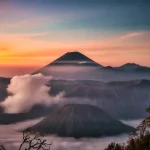
The classic Bromo sunrise from Penanjakan viewpoint (2,770 metres) remains the headline act, but the experience has been restructured since 2025. The Bromo Tengger Semeru National Park now requires all visitors to book entry slots online through the official BTNBS portal at least 24 hours in advance. Weekend slots for the Penanjakan viewpoint fill within hours of opening — check on Thursday evenings for Saturday slots. The entrance fee for foreign visitors sits at Rp 320,000 per person on weekdays and Rp 420,000 on weekends and public holidays as of early 2026.
The logistics work like this: most visitors stay in Cemoro Lawang village, perched right on the caldera rim. At around 3:00 to 3:30 AM, jeeps depart for Penanjakan. The standard 4×4 jeep seats four to six people and costs Rp 500,000 to Rp 700,000 total (not per person) for the sunrise tour, which includes Penanjakan, the Sand Sea crossing, and the crater rim walk. After sunrise, you descend to the Sand Sea and walk or ride a horse (Rp 150,000 to Rp 200,000) across to the base of Bromo’s cone. The 252-step staircase to the crater rim takes about 20 minutes. Standing at the top, peering into the churning, smoking crater while warm sulfurous air rises past your face, is the kind of moment that erases every early alarm and cold jeep ride from memory.
Two things people consistently underestimate: the cold and the dust. At 3:00 AM, Cemoro Lawang sits around 5–8°C. Bring a proper jacket, not just a hoodie. The Sand Sea kicks up fine grey volcanic dust that coats everything — cover your camera bag, wear a buff or face mask, and accept that your clothes will need washing afterward.
Ijen Crater: The Blue Flame, the Sulfur Miners, and What to Expect
Kawah Ijen is a 200-metre-wide turquoise acid lake sitting inside a caldera on the border of Banyuwangi and Bondowoso regencies. The lake’s pH hovers around 0.5 — roughly the acidity of battery acid — which gives it that extraordinary colour. The blue flame phenomenon happens at the lake’s edge, where sulfuric gases combust on contact with air, creating electric-blue fire that’s visible only in darkness. To see it, you need to start the hike by 1:00 AM at the latest.
The hike to the crater rim is 3 kilometres with a 627-metre elevation gain from the Paltuding trailhead. It takes 1.5 to 2 hours depending on your fitness level. The final descent into the crater bowl to reach the blue flames adds another 30–45 minutes and involves loose volcanic rock — proper trekking shoes are non-negotiable. A gas mask is mandatory for anyone going into the crater (rental available at the trailhead for Rp 30,000–Rp 50,000, though bringing your own is better). Even with a mask, the sulfur burns your eyes and throat on days when the wind shifts.
The sulfur miners deserve more than a passing mention. Around 200 men still carry baskets loaded with up to 90 kilograms of solid sulfur — harvested by hand from the crater’s vents — up and out of the caldera twice a day. They earn roughly Rp 80,000–Rp 120,000 per load, depending on weight. Watching a miner emerge from the blue-flame smoke at 2:00 AM, his bamboo baskets glowing faintly, is one of the most viscerally humbling things you can witness in Indonesia. Treat them with respect, ask before photographing, and if you want to support directly, the Ijen mining cooperative accepts small donations.

Entry fees at Ijen in 2026 are Rp 150,000 for weekdays and Rp 225,000 on weekends for foreign visitors. Online booking through the Ijen official management system (launched mid-2025) is now required on weekends. Weekday visits remain walk-in, but expect company — Ijen’s popularity has not slowed down.
Beyond the Craters: East Java’s Other Natural Highlights
Most visitors tunnel-vision on Bromo and Ijen and miss the rest of the province entirely. That’s a real shame, because East Java has natural variety that rivals anywhere in the archipelago.
- Mount Semeru: At 3,676 metres, Semeru is the highest peak in Java. Climbing it requires a multi-day permit through the national park authority and at least two days of solid hiking. It’s a serious mountaineering objective, not a casual add-on — but for experienced trekkers, the Ranu Kumbolo crater lake camp alone justifies the effort.
- Baluran National Park: Often called “Africa in Java” for its savanna grasslands and wildlife. Baluran sits on East Java’s northern coast near Banyuwangi and is genuinely easy to combine with an Ijen trip. The banteng (wild cattle), deer, and peacocks roaming the Bekol Savanna make for extraordinary wildlife viewing, especially in the dry season (May to October).
- Alas Purwo National Park: A dense coastal jungle at the southeastern tip of Java, famous for surfing (G-Land is one of Indonesia’s legendary surf breaks) and spiritual significance — it’s considered the oldest land on Java in Javanese cosmology. Deer, hornbills, and green sea turtles nesting on the beaches make it a legitimate wildlife destination.
- Madakaripura Waterfall: A 200-metre tall waterfall hidden inside a narrow canyon near Probolinggo, just a short detour from the Bromo access road. The canyon walls are mossy and dripping, the sound of the water is overwhelming, and you will get completely soaked. Go prepared for it.

East Java’s Food Scene: What and Where to Eat
East Javanese food is bolder and spicier than Central Java’s cuisine — less sweet, more raw chilli heat, with a strong influence from the Madurese community. The province produces some of Indonesia’s most distinctive street food, and you don’t need to go to a restaurant to find it.
Rawon is the dish to eat in East Java. This jet-black beef soup gets its colour from keluak nut, which gives it a deep, slightly earthy, almost smoky richness that you won’t find anywhere else. The best versions come from Surabaya — Warung Rawon Pak Pangat near Jalan Kembang Jepun in the old Chinese quarter serves bowls that have been refined over decades. It arrives with crunchy bean sprouts, salted egg, and sambal that you add to your own heat preference. The steam rising from the dark broth carries a smell that immediately tells you this is something different.
Rujak Cingur is East Java’s signature salad — a mix of vegetables, tofu, tempeh, rice cake, and boiled cow’s nose (cingur) in a thick, pungent shrimp paste and peanut sauce. It’s an acquired taste for many foreigners but a must-try in Surabaya. Street carts around Pasar Genteng sell it for Rp 20,000–Rp 35,000.
Sate Madura deserves its own mention. Madurese-style satay — thin chicken or goat skewers with a thick sweet soy and peanut glaze, grilled over coconut charcoal — is available across East Java and always better at a roadside cart than in a restaurant. Look for the smoke.

In Banyuwangi (the base town for Ijen), the local specialty is Nasi Tempong: steamed rice, mixed vegetables, fried tofu and tempeh, and a ferociously spicy raw sambal that the town is genuinely proud of. Most warungs near the Banyuwangi town square serve it for Rp 15,000–Rp 25,000.
Getting to East Java in 2026
The main entry points depend on which end of the circuit you start from.
By air: Surabaya’s Juanda International Airport (SUB) is the primary gateway, with direct flights from Jakarta (1 hour 15 minutes), Bali (45 minutes), and Singapore. Banyuwangi Airport (BWX) now handles daily direct flights from Bali (35 minutes) and Jakarta via Batik Air and Citilink as of 2026 — this is a game-changer for Ijen-first itineraries that used to require a long overland journey from Surabaya.
By train: The Trans-Java train network connects Jakarta and Surabaya with multiple daily departures (travel time: 8–9 hours on the faster Argo Bromo Anggrek service). From Surabaya, the Probowangi train connects to Probolinggo (for Bromo access) and continues to Banyuwangi Baru station, making a fully train-based East Java circuit possible without ever renting a car. Book tickets on the KAI Access app — popular routes sell out 30 days in advance.
By bus: Budget travelers use the Surabaya–Probolinggo bus (Rp 30,000–Rp 50,000, around 2.5 hours) from Purabaya terminal. From Probolinggo, shared minibuses (angkot) and private shuttles continue to Cemoro Lawang for Bromo. Cross-province buses also run Surabaya to Banyuwangi overnight (Rp 80,000–Rp 150,000).
Getting Around Between Bromo, Ijen, and Beyond
The Bromo–Ijen combination requires crossing from the Tengger region (west) to Banyuwangi (east) — about 4–5 hours by road under normal conditions. In 2026, two practical options exist for independent travelers.
Shuttle services: Several private operators run direct shuttles between Cemoro Lawang (Bromo) and the Ijen trailhead at Paltuding, typically departing after the sunrise tour (around 8:00–9:00 AM) and arriving in the afternoon. Cost: Rp 200,000–Rp 350,000 per person. Book through your Cemoro Lawang guesthouse or the Pesan Tiket Bromo–Ijen shuttle network. This is the most straightforward option for non-drivers.

Self-drive: Renting a motorcycle in Probolinggo or Surabaya and riding east is popular with experienced riders. The road through Bondowoso to the Ijen plateau is in significantly better shape than it was five years ago, though the final stretch to Paltuding climbs steeply and requires confident riding. Car rental with a driver (Rp 700,000–Rp 1,200,000 per day including fuel) is available from most guesthouses and Surabaya rental agencies.
Day Trip or Overnight? Planning the Right Amount of Time
Neither Bromo nor Ijen works as a day trip from Surabaya or Bali unless you’re willing to sacrifice the experience that makes them worth visiting. Both require early morning starts (2:00–3:30 AM) that are only practical if you’re sleeping within 30–60 minutes of the trailhead.
The minimum sensible itinerary is 4 nights/5 days for both sites: one night in Cemoro Lawang for Bromo, transfer day, two nights in Banyuwangi for Ijen (one acclimatisation evening, one night hike). Add a sixth night if you want to include Baluran or Madakaripura. A week gives you comfortable pacing with a Surabaya food stop.
If you’re based in Bali and genuinely only have one day to spare, Ijen from Banyuwangi is technically possible as an overnight return via the 35-minute BWX–DPS flight — fly in evening, night hike, fly back next afternoon. It’s rushed, but it works. Bromo from Bali in a day is not realistic without sacrificing the sunrise, which defeats the point.
2026 Budget Reality: What East Java Actually Costs
East Java is one of the more affordable volcano circuits in Southeast Asia, even with the updated permit fees.

- Budget (backpacker): Rp 300,000–Rp 500,000 per day. Dormitory beds in Cemoro Lawang run Rp 100,000–Rp 150,000. Share jeep costs with other travelers. Eat at local warungs (Rp 15,000–Rp 30,000 per meal). This is achievable but requires flexibility on transport and timing.
- Mid-range (independent traveler): Rp 600,000–Rp 1,200,000 per day. Private guesthouse rooms in Cemoro Lawang or Banyuwangi (Rp 250,000–Rp 450,000 per night), private jeep or shuttle, sit-down meals and occasional restaurant dinners.
- Comfortable (planned traveler): Rp 1,500,000–Rp 2,500,000 per day. Bromo’s better hotels (Lava View Lodge or Jiwa Jawa Resort) start at Rp 700,000–Rp 1,200,000 per night. Private driver for the full circuit, restaurant meals, and comfortable accommodation in Banyuwangi.
Key costs to budget separately: Bromo national park entry (Rp 320,000–Rp 420,000), Ijen entry (Rp 150,000–Rp 225,000), jeep rental for Bromo sunrise (Rp 500,000–Rp 700,000 total per jeep), Bromo–Ijen shuttle (Rp 200,000–Rp 350,000 per person).
Practical Tips Before You Go
Best season: April to October is dry season — clear skies, reliable blue flames at Ijen, and dust on the Sand Sea. November to March brings fog and rain that can shut down Penanjakan viewpoint visibility entirely. Wet season visits are possible but unpredictable. July and August are peak crowd months; May, June, and September offer the best balance of good weather and manageable crowds.
Health and altitude: Bromo’s Cemoro Lawang sits at 2,200 metres and Ijen’s crater rim at 2,386 metres. Neither requires altitude acclimatisation for healthy adults, but exertion at these heights feels harder than expected if you’ve been at sea level. Stay hydrated, sleep enough before the hike, and don’t push through chest pain.
Connectivity: Telkomsel has the strongest signal coverage across East Java’s highland areas. Cemoro Lawang has usable 4G on Telkomsel but almost nothing on other carriers. The Ijen trailhead at Paltuding has minimal signal from any provider. Download offline maps (Maps.me or Google offline) before you leave.

Cash: Bring sufficient rupiah from Surabaya or Probolinggo. ATMs in Cemoro Lawang are unreliable and often empty. Banyuwangi city has multiple working ATMs. Most guesthouses and jeep operators do not accept cards.
Environmental responsibility: The Tengger caldera is a protected area — do not take sand, rocks, or volcanic material as souvenirs. Ijen’s acid lake has suffered from visitor crowding; stay on marked paths in the crater. Neither site has adequate waste facilities, so carry out what you carry in.
Frequently Asked Questions
Is the Ijen blue flame visible year-round?
The blue flames burn continuously, but visibility depends entirely on clear, dark conditions. They’re most vivid on moonless nights between May and October when dry-season skies are clear. During wet season, cloud cover and rain frequently obscure them. Strong winds can also shift sulfur smoke directly over the viewing area, forcing early departure from the crater floor.
Can I visit both Bromo and Ijen on the same trip without a tour?
Yes, and it’s straightforward in 2026. Shuttle services now run directly between Cemoro Lawang and the Ijen trailhead. Book online through your guesthouse or the shuttle network in advance. Independent travelers combine both sites comfortably in five to six days using trains, public buses, and shuttles without needing a packaged tour or private car.
Do I need a guide for Mount Bromo or Ijen?
Bromo does not require a guide — the route from the Sand Sea to the crater rim is well-marked and heavily trafficked. Ijen’s night hike is also doable independently, but many solo travelers hire a local guide (Rp 100,000–Rp 200,000) for the crater descent, which is genuinely useful in darkness on loose rock. Guides at Paltuding are available on-site without pre-booking.

How physically demanding is the Ijen crater hike?
Moderate to challenging, depending on fitness level. The 3-kilometre climb to the rim gains 627 metres in elevation and takes 1.5–2 hours at a steady pace. The descent into the crater bowl adds significant difficulty on loose volcanic rock in darkness. Most reasonably fit adults manage it without technical skill, but anyone with knee problems should consider skipping the crater descent.
What is the best base town for exploring East Java’s volcanoes?
For Bromo, stay in Cemoro Lawang — it sits directly on the caldera rim and eliminates the pre-dawn jeep journey from Probolinggo. For Ijen, Banyuwangi city is the practical base, with Bondowoso as a quieter alternative closer to the trailhead. Surabaya works as a starting and ending hub but is too far from either crater to use as a nightly base.
📷 Featured image by Anggit Rizkianto on Unsplash.