On this page
- Understanding the Rupiah: Notes, Coins and Where to Exchange Money
- Cash vs Digital in 2026: How to Split Your Money
- QRIS Explained: How Paying by QR Code Works
- Setting Up an E-Wallet as a Tourist, Step by Step
- Cards and ATMs: What Works and What Costs
- When Cash Is Still Essential
- Tipping in Indonesia
- 2026 Budget Reality: What Things Cost
- Common Money Mistakes to Avoid
- Frequently Asked Questions
💰 Click here to see Indonesia Budget Breakdown
💰 Prices updated: November, 2026. Budget figures are estimates — always verify before travel.
Exchange Rate: $1 USD = Rp18,130.00
Daily Budget (per person)
Shoestring: Rp543,900 – Rp906,500 ($30.00 – $50.00)
Mid-range: Rp1,269,100 – Rp2,719,500 ($70.00 – $150.00)
Comfortable: Rp2,719,500 – Rp4,532,500 ($150.00 – $250.00)
Accommodation (per night)
Hostel/guesthouse: Rp36,260 – Rp362,600 ($2.00 – $20.00)
Mid-range hotel: Rp199,430 – Rp1,323,490 ($11.00 – $73.00)
Food (per meal)
Budget meal: Rp45,325.00 ($2.50)
Mid-range meal: Rp181,300.00 ($10.00)
Upscale meal: Rp1,813,000.00 ($100.00)
Transport
Single metro/bus trip: Rp3,500.00 ($0.19)
Monthly transport pass: Rp400,000.00 ($22.06)
You land in Indonesia, and within an hour you are holding notes with lots of zeros, watching locals pay for coffee by scanning a QR code, and wondering whether your home bank card will work at the next warung. In 2026 the money picture here is a mix of old and new. Digital payments are growing fast in cities, but cash still rules the markets and villages. This guide shows you how to handle both without losing money to bad exchange rates or surprise fees.
Understanding the Rupiah: Notes, Coins and Where to Exchange Money
Indonesia’s currency is the Indonesian Rupiah (IDR), written as Rp. Banknotes come in Rp 1,000, Rp 2,000, Rp 5,000, Rp 10,000, Rp 20,000, Rp 50,000 and Rp 100,000. The Rp 50,000 and Rp 100,000 notes are the ones you will use most for bigger payments. The smaller notes matter just as much, because they pay for street food, parking and small vendors.
Coins exist in Rp 100, Rp 200, Rp 500 and Rp 1,000. You will not use them often, but you may get a few back as change.
Exchange rates move every day, so check a reputable source before you travel. When you need to change cash, use an official money changer or a bank. Names to look for include PT Central Kuta, BMC and Dirgahayu Valuta Prima. Avoid unofficial street vendors, who may offer poor rates or run scams. Major currencies such as USD, AUD, EUR, GBP, SGD and MYR are widely accepted for exchange.
Cash vs Digital in 2026: How to Split Your Money
Indonesia is moving quickly towards a cashless society, especially in urban areas. Even so, cash remains essential in rural regions, traditional markets and small shops. The best plan for 2026 is a balanced one. Carry enough cash for daily small spending, and use digital payments where they are easy.
A practical split for most visitors looks like this:
- Cash: street food, markets, local transport, tips, rural areas.
- E-wallet or QRIS: cafes, shops, supermarkets, ride-hailing, many restaurants.
- Cards: international hotels, upscale restaurants, malls and some tourist attractions.
QRIS Explained: How Paying by QR Code Works
QRIS (Quick Response Code Indonesian Standard) is the national QR payment standard set by Bank Indonesia. One universal QR code works with any participating bank or e-wallet app. A shop owner does not need five different codes on the counter.
Using it is simple:
- Open your payment app and choose “scan” or “QRIS”.
- Scan the merchant’s code.
- Enter the amount.
- Confirm the payment.

In 2026, QRIS is accepted almost everywhere in the cities: modern retail stores, supermarkets, pharmacies, major restaurants, cafes and ride-hailing services like Gojek and Grab. It is also spreading to smaller shops, street food warung and traditional markets. Consumers generally pay no fee. Merchants pay a Merchant Discount Rate to the acquiring bank or e-wallet, typically around 0.7% for regular transactions.
Two Ways Tourists Can Use QRIS
The first and most practical way is through an Indonesian e-wallet. You top it up with cash at a convenience store, then scan QRIS codes with it. The next section covers the setup.
The second way is cross-border QR payment. Since 2024, Bank Indonesia has been expanding these links. Tourists from several ASEAN countries, such as Singapore, Malaysia, Thailand, the Philippines and Vietnam, are expected to be able to scan QRIS with their home country’s participating banking or payment app. Other key markets such as Australia, China and India may follow. Which countries are fully live for direct tourist use can change, so ask your home bank or payment provider before you fly. Do not rely on it until you have confirmed it works.
For official information on QRIS, see Bank Indonesia at www.bi.go.id.
Setting Up an E-Wallet as a Tourist, Step by Step
Four e-wallets dominate daily life:
- GoPay: linked to Gojek for rides, food delivery and logistics. Widely accepted via QRIS. Website: www.gopay.co.id
- OVO: linked to Grab for rides and food delivery. Also widely accepted via QRIS. Website: www.ovo.id
- DANA: a standalone wallet with a strong merchant network and many online services. Website: www.dana.id
- ShopeePay: linked to the Shopee shopping app and accepted at many physical merchants via QRIS. Website: shopee.co.id/shopeepay
Here is how to get started:
- Download the app. Get your chosen wallet from Google Play Store or Apple App Store.
- Get an Indonesian SIM card. Registration needs a valid Indonesian number, and a foreign SIM will not work for it. Buy a SIM from Telkomsel, XL Axiata or Indosat Ooredoo Hutchison at the airport or an official outlet. SIM registration needs your passport and your phone’s IMEI number.
- Register and verify. Basic payment features have limits of up to Rp 2,000,000 per transaction and Rp 20,000,000 per month. To raise limits or enable cash-out, you will likely need to upload a passport photo and a selfie. Verification usually takes 1 to 3 business days, so do it early in your trip.
- Top up. Go to an Alfamart or Indomaret, tell the cashier which wallet you want to top up, give your registered phone number and pay in cash. Expect a small admin fee, projected at Rp 2,000 to Rp 5,000 in 2026.

Bank transfer top-ups need an Indonesian bank account, so they are not practical for most visitors. Topping up with a foreign credit or debit card inside the app is generally not supported, or it comes with high fees.
Cards and ATMs: What Works and What Costs
Visa and Mastercard are widely accepted at international hotels, upscale restaurants, major supermarkets, shopping malls and some tourist attractions. American Express is less common. Cards work poorly at small local shops, traditional markets, street food stalls and independent guesthouses, so always carry a backup.
Contactless (NFC) card payments have become more common in modern venues since 2024, but chip-and-PIN is still the main method.
Using ATMs
ATMs are plentiful in cities and tourist areas like Bali, Jakarta and Yogyakarta, and scarce in remote regions. Look for the big networks: BCA, Mandiri, BRI and BNI. They are generally reliable, and they do not charge a direct fee for international card withdrawals. Some smaller or independent ATMs might.
Your own bank is the bigger cost. Expect a foreign transaction fee, typically 1% to 3% of the amount, and possibly a flat ATM fee.
- Per-transaction limits: usually Rp 1,250,000 at some ATMs, such as smaller BCA machines, and Rp 2,500,000 at others, such as larger BCA, Mandiri, BRI and BNI machines.
- Daily limits: set by your home bank, often between Rp 10,000,000 and Rp 20,000,000 or more.
- Currency choice: if the ATM or card machine offers to charge you in your home currency (Dynamic Currency Conversion), decline. Always pick IDR for a better rate from your bank.
- Security: use ATMs inside bank branches, malls or busy, well-lit areas to lower the risk of skimming.
When Cash Is Still Essential
Picture a pasar tradisional at 6 a.m.: the smell of fried shallots and clove cigarettes, vendors calling out prices, and wet floors between stalls of chillies and tropical fruit. Nobody here wants your card. Cash is the only language that works.

You will need it for:
- Rural areas: outside major cities and tourist hubs, cash is often the only option.
- Traditional markets: vendors deal exclusively in cash.
- Small warung and street stalls: some accept QRIS, but many prefer cash or take nothing else. A plate of nasi goreng or smoky grilled satay from a roadside cart at sunset is usually a cash purchase.
- Local transport: angkot (minibuses), becak (pedicabs) and ojek not booked through Gojek or Grab.
- Small purchases: for items under Rp 10,000 to Rp 20,000, cash is generally preferred.
- Tips: cash is easier and more direct.
Keep a stack of small notes: Rp 2,000, Rp 5,000, Rp 10,000 and Rp 20,000. Small vendors often cannot break a Rp 100,000 note, especially early in the morning.
Tipping in Indonesia
Tipping is not mandatory and not deeply rooted in Indonesian culture, but it is always appreciated for good service. These are practical 2026 guidelines:
- Restaurants: many mid-range and high-end places add a service charge (typically 5% to 10%) plus government tax (10% to 11%). If service is already included, you do not need to tip more. You can round up or leave a little for exceptional service. If it is not included, 5% to 10% or rounding up is kind.
- Hotel porters: Rp 10,000 to Rp 20,000 per bag.
- Housekeeping: Rp 20,000 to Rp 50,000 per night, left daily or at the end of your stay.
- Gojek and Grab drivers: tip directly in the app after the ride.
- Private or tour drivers: Rp 50,000 to Rp 100,000 per day, depending on service and duration.
- Tour guides: Rp 50,000 to Rp 100,000 per person for half-day tours, and Rp 100,000 to Rp 200,000 per person per day for full-day or multi-day tours.
- Spa and massage: Rp 20,000 to Rp 50,000 for an hour-long treatment.
2026 Budget Reality: What Things Cost
These are estimates for 2026. Prices vary with your location and travel style, and tourist hotspots like Bali cost more than smaller towns.
Accommodation (per night)
- Budget: hostel dorm bed Rp 100,000 to Rp 250,000; guesthouse or homestay Rp 150,000 to Rp 400,000.
- Mid-range: hotel Rp 400,000 to Rp 1,500,000.
- Comfortable: luxury hotel or resort from Rp 1,500,000 and up.
Food (per meal)
- Budget: local warung or street food Rp 15,000 to Rp 50,000.
- Mid-range: local cuisine restaurant Rp 50,000 to Rp 150,000; Western or international restaurant Rp 75,000 to Rp 250,000.
- Comfortable: fine dining from Rp 300,000.

Transport
- Gojek or Grab motorcycle: Rp 10,000 to Rp 30,000 for trips up to 5 km.
- Gojek or Grab car: Rp 25,000 to Rp 100,000 for trips up to 10 km. Prices swing with demand and distance.
- KAI economy class: Rp 25,000 to Rp 150,000 for shorter and medium distances.
- KAI executive class: Rp 150,000 to Rp 500,000 or more for long routes such as Jakarta to Yogyakarta. Book at kai.id.
- Jakarta MRT and LRT: Rp 5,000 to Rp 15,000 per trip.
- Local bus or angkot: Rp 4,000 to Rp 10,000, usually cash only.
Activities
- Temple and attraction entry: Rp 20,000 to Rp 150,000, with foreigner prices often higher.
- Snorkelling trip: Rp 200,000 to Rp 500,000.
- Scuba diving: Rp 700,000 to Rp 1,500,000 per dive.
- Volcano trekking tour: Rp 500,000 to Rp 1,500,000.
Mobile data
A tourist SIM from Telkomsel, XL Axiata or Indosat Ooredoo Hutchison with about 25 to 50 GB for 30 days costs Rp 100,000 to Rp 250,000. Registration with passport and IMEI is mandatory.
Common Money Mistakes to Avoid
- Using street money changers. Stick to banks or official names like PT Central Kuta, BMC and Dirgahayu Valuta Prima.
- Accepting your home currency at the ATM or card terminal. Say no to Dynamic Currency Conversion and choose IDR.
- Arriving with only large notes. A Rp 100,000 note is hard to break at a small warung or an angkot.
- Relying on one payment method. Cards fail at markets, and e-wallets fail in remote villages. Carry cash plus at least one digital option.
- Waiting too long to verify your e-wallet. The 1 to 3 business day wait can catch you out.
- Using isolated ATMs. Pick machines inside banks or malls to reduce skimming risk.
- Double-tipping. Check your restaurant bill first. If a service charge is already on it, you do not need to add more.
- Assuming your cross-border app works. Test it with your home bank before you leave.
Frequently Asked Questions
Can tourists use QRIS in Indonesia?
Yes. Most tourists use an Indonesian e-wallet like GoPay, OVO, DANA or ShopeePay, topped up with cash, to scan QRIS codes. Visitors from some countries may also scan using their home banking app through cross-border links. Check with your bank before travelling, because supported countries can change.
Do I need cash in Indonesia in 2026?
Yes. Cities and tourist areas accept more digital payments each year, but traditional markets, small warung, rural areas, angkot, becak and regular ojek mostly need cash. Carry small notes of Rp 2,000 to Rp 20,000 for everyday purchases, tips and places that cannot break big bills.

Which ATMs are best for foreign cards in Indonesia?
Use ATMs from BCA, Mandiri, BRI and BNI. They are generally reliable and usually charge no direct fee for international cards. Limits are often Rp 1,250,000 or Rp 2,500,000 per transaction. Your home bank may add a 1% to 3% foreign fee, so check your plan.
Is tipping expected in Indonesia?
Tipping is not mandatory, but it is appreciated. Many restaurants already add a service charge of 5% to 10%, so extra tipping is optional there. For porters, drivers, guides and spa staff, small cash tips are welcome. Examples include Rp 10,000 to Rp 20,000 per bag for hotel porters.
How do I top up an e-wallet without an Indonesian bank account?
Go to an Alfamart or Indomaret, tell the cashier which e-wallet you use, give your registered phone number and pay cash. A small admin fee of about Rp 2,000 to Rp 5,000 may apply. Foreign card top-ups inside the apps are generally unsupported or costly.
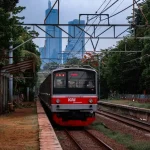
📷 Featured image by Abdul Ridwan on Unsplash.