On this page
- Why West Java’s Mountain Towns Keep Filling Up Every Weekend
- Bandung: What the City Actually Feels Like in 2026
- Bogor: The Rain City That Rewards Slow Travel
- The Mountains Between: Puncak, Tangkuban Perahu, and Papandayan
- West Java’s Highland Food Scene
- Getting There: Trains, Toll Roads, and 2026 Updates
- Getting Around Both Cities and Into the Hills
- Day Trip or Overnight? How to Structure Your Visit
- 2026 Budget Reality: What It Costs to Do This Properly
- Practical Tips That Actually Matter Here
- Frequently Asked Questions
💰 Click here to see Indonesia Budget Breakdown
💰 Prices updated: September, 2026. Budget figures are estimates — always verify before travel.
Exchange Rate: $1 USD = Rp17,928.47
Daily Budget (per person)
Shoestring: Rp358,569 – Rp896,424 ($20.00 – $50.00)
Mid-range: Rp1,254,993 – Rp2,689,271 ($70.00 – $150.00)
Comfortable: Rp2,689,271 – Rp4,482,118 ($150.00 – $250.00)
Accommodation (per night)
Hostel/guesthouse: Rp71,714 – Rp179,285 ($4.00 – $10.00)
Mid-range hotel: Rp448,212 – Rp896,424 ($25.00 – $50.00)
Food (per meal)
Budget meal: Rp26,893.00 ($1.50)
Mid-range meal: Rp143,428.00 ($8.00)
Upscale meal: Rp537,854.00 ($30.00)
Transport
Single metro/bus trip: Rp3,500.00 ($0.20)
Monthly transport pass: Rp200,000.00 ($11.16)
Why West Java’s Mountain Towns Keep Filling Up Every Weekend
Jakarta’s heat index hit uncomfortable new highs in early 2026, and the city’s 30-million-plus population has fully figured out the escape routes. Every Friday afternoon, the Cipularang toll road turns into a slow crawl, trains to Bandung sell out by Tuesday, and guesthouses around Bogor’s Puncak area book up before most people even start planning. If you’re coming from outside Indonesia and wondering why West Java’s mountain towns feel so alive, that’s the reason — they serve as Jakarta’s collective pressure valve. The good news is that with the right timing and a clearer plan, both Bandung and Bogor still deliver something genuinely refreshing: cool air, green hills, serious food, and a pace that doesn’t feel rushed.
Bandung: What the City Actually Feels Like in 2026
Bandung sits at roughly 768 metres above sea level, which means temperatures hover between 18°C and 24°C for most of the year — a full 8 to 10 degrees cooler than Jakarta on a typical day. That temperature gap is something you feel the moment you step outside Bandung’s Kiaracondong or Hall Station: the air carries a lightness that’s hard to describe but immediately noticeable, especially if you’ve just come from the coast.
The city has a split personality that makes it interesting. The old Dutch colonial quarter around Asia Afrika Street gives you wide boulevards, art deco facades, and the grand Savoy Homann Hotel, which has been operating since 1939 and still draws visitors for its architecture alone. Then there’s the modern Bandung — the factory outlet strips along Jalan Riau (now rebranded as Jalan LL RE Martadinata), the Dago area packed with independent cafés and vintage clothing markets, and Braga Street, which hosts a night market every weekend that brings out local families and tourists in equal numbers.
In 2026, the Bandung city government expanded its Bandros (Bandung Tour Bus) route network to include the northern Lembang area, which makes accessing the cooler highland zones around the city significantly easier without renting a car. The Bandros runs on a fixed schedule from Balai Kota and costs IDR 20,000 per person for a standard city loop.
Bogor: The Rain City That Rewards Slow Travel
Bogor has a reputation — it rains almost every afternoon, reliably, sometimes dramatically. The city averages around 3,500mm of rainfall per year, which is why the British colonial-era Bogor Botanical Gardens (Kebun Raya Bogor) look the way they do: 87 hectares of absurdly lush greenery, ancient trees, lily ponds, and over 15,000 plant species catalogued across the grounds. The gardens were founded in 1817 and still function as an active research institution under BRIN (the National Research and Innovation Agency) in 2026.
Walking through Kebun Raya in the morning — before the afternoon rain arrives — is one of those experiences that stays with you. The canopy overhead filters the light into something soft and green, the air smells of wet soil and flowers you can’t quite identify, and the birdsong is loud enough that the city outside the walls genuinely disappears. Entry in 2026 costs IDR 35,000 for domestic visitors and IDR 75,000 for international tourists, paid via the national ticketing app PeduliLindungi 2.0.
Beyond the gardens, Bogor’s old market district around Pasar Bogor and Suryakencana Street (Chinatown) rewards wandering on foot. Suryakencana is particularly good in the early morning when hawker stalls set up along the street and the smell of frying onions and fresh kue mixes with the cool morning air.
The Mountains Between: Puncak, Tangkuban Perahu, and Papandayan
Between Bogor and Bandung sits the Puncak Pass area, and north of Bandung you’ll find two volcanic highlights that are genuinely worth the detour.
Puncak Pass (at about 1,500m) is the scenic highland stretch of the road between Bogor and Cianjur. Tea plantations roll across the hillsides, and roadside stalls sell hot tea, corn on the cob, and strawberries grown in the highlands. It’s scenic rather than adventurous, but the views on a clear morning — which means arriving before 10am — are excellent. Note that the Puncak area gets extremely congested on Saturday afternoons; the local government operates an odd-even traffic system on weekends that applies to vehicles with non-Bogor plates.
Tangkuban Perahu, about 30 kilometres north of Bandung, is an active stratovolcano with a crater you can walk to the rim of. The sulphur vents are genuinely active — the gas has a sharp, metallic bite that hits the back of your throat when the wind shifts — and the landscape around the crater looks convincingly otherworldly. Entry in 2026 is IDR 200,000 for foreign visitors and IDR 30,000 for Indonesians. Go before 9am for the fewest crowds and the clearest views.
Papandayan volcano in Garut Regency (about 60 kilometres southeast of Bandung) is a harder trip but the most rewarding. The crater complex is enormous, the dead forest zone (Hutan Mati) inside is visually striking, and the trek to the summit ridge takes about four to five hours. Garut itself is worth an overnight stay — it’s quieter than Bandung and has its own strong food culture.
West Java’s Highland Food Scene
West Java’s Sundanese cuisine is distinct from Javanese food, and the mountain towns are where you eat it best.
In Bandung, the most honest Sundanese meal is at Warung Nasi Ampera (multiple branches, the Buah Batu branch is the most consistent), where you point at whatever is in the glass case — fried tempeh, sayur asem, pesmol fish, lalab with sambal — and eat for under IDR 40,000. For something more atmospheric, the garden restaurants along Jalan Sersan Bajuri in Lembang serve Sundanese food in open-air settings with valley views. Saung Angklung Udjo nearby combines dinner with a traditional angklung music performance on selected evenings.
In Bogor, Suryakencana Street in the morning is your best move. Look for Soto Kuning, a rich yellow broth soup with beef offal and rice cakes that’s specific to Bogor — you won’t find it quite like this anywhere else. The version at Soto Kuning Haji Yusup near the market has been running since the 1970s and costs about IDR 35,000 per bowl. For an afternoon snack, Bogor’s talas (taro) products are a local specialty — taro layer cake from Sangkuriang bakery on Jalan Pajajaran is what most locals bring home as pasalaran (souvenirs).
Getting There: Trains, Toll Roads, and 2026 Updates
The fastest and most reliable way from Jakarta to Bandung remains the Argo Parahyangan train, which departs from Gambir Station and takes about three hours to Bandung Hall Station. In 2026, KAI (Indonesian Railways) added two additional departure slots on Friday and Sunday afternoons to handle weekend demand. Tickets range from IDR 150,000 (economy) to IDR 350,000 (executive) and must be booked through the KAI Access app — walk-up tickets at the station are essentially impossible to get on weekends.
For Bogor, the commuter rail (KRL Commuterline) from Jatinegara, Manggarai, or Bogor Line stations is the smartest choice — it takes about 60 to 90 minutes depending on your Jakarta starting point, costs IDR 5,000 flat fare, and runs very frequently. No booking required, just tap your e-money card.
If you’re driving, the Cipularang toll road to Bandung has been expanded to three lanes in each direction as of late 2025, which has reduced the worst of the gridlock outside peak hours. Budget about 2.5 hours off-peak and 4 to 5 hours on Friday evenings. The Trans-Java toll network update in 2025 also means a continuous toll route now connects Bogor to Bandung via Sukabumi and Cianjur (the Bocimi-Cisumdawu corridor) — it’s a longer route in distance but offers a less congested alternative to Cipularang on busy weekends.
Getting Around Both Cities and Into the Hills
Within Bandung, Gojek and Grab both work reliably. For the northern highland areas (Lembang, Tangkuban Perahu, Floating Market), the Bandros bus is the cheapest option, but renting a car with driver for a full day (typically IDR 400,000–600,000 including fuel) gives you much more flexibility. Most hotels can arrange this.
In Bogor, the angkot (local minibuses) cover most of the city for IDR 5,000–7,000 per trip and are how most locals move around, though routes can be confusing for first-timers. Grab works well in central Bogor. For Puncak Pass, join-the-group minivan trips depart from Baranangsiang bus terminal — about IDR 25,000 to Cisarua.
Day Trip or Overnight? How to Structure Your Visit
Bogor as a day trip from Jakarta works well. The KRL gets you there fast, Kebun Raya and the Suryakencana food strip can fill a comfortable morning, and you’re back in Jakarta before the afternoon rain settles in. If you want to include Puncak Pass, stay overnight — the drive back from Puncak to Bogor on Sunday afternoon is notoriously slow.
Bandung genuinely needs two nights to feel unhurried. One day for the city (Braga, Dago, factory outlets if that’s your interest), one day for a volcanic or highland excursion. A popular three-day structure that works well in 2026:
- Day 1: Arrive Bandung by train, afternoon in Dago/Braga area, dinner at a Sundanese garden restaurant
- Day 2: Tangkuban Perahu early morning, return via Lembang for strawberry farms and tea stops, evening at Braga Night Market
- Day 3: Morning at Asia Afrika colonial district, train back to Jakarta
If you have five days, add a Bogor overnight at the start or end — the two cities form a natural pair and are connected by the Bogor–Bandung road via Puncak.
2026 Budget Reality: What It Costs to Do This Properly
These are realistic per-person daily costs in 2026, excluding transport to the destination:
- Budget: IDR 250,000–400,000/day — dorm beds or budget guesthouses (IDR 100,000–150,000), warung meals (IDR 25,000–45,000 each), KRL and angkot transport
- Mid-range: IDR 600,000–900,000/day — clean hotel with breakfast (IDR 350,000–500,000), proper sit-down meals, occasional Grab rides, one paid attraction
- Comfortable: IDR 1,200,000–2,000,000/day — boutique hotel in Dago or Bogor hills (IDR 700,000–1,200,000), restaurant meals, private car day rental for mountain access
Train tickets (Jakarta–Bandung executive, return): IDR 700,000. KRL to Bogor (return): IDR 10,000. Tangkuban Perahu entry (foreign visitor): IDR 200,000. Kebun Raya Bogor entry (foreign visitor): IDR 75,000.
Practical Tips That Actually Matter Here
- Book trains on Tuesday for the weekend. KAI releases seats 30 days ahead, but weekend trains to Bandung are genuinely sold out by mid-week. Set a reminder.
- Pack a light rain jacket even in dry season. Both Bogor and the Puncak highlands get afternoon showers almost year-round. Mornings are usually clear.
- The 2026 Bandung local tourism tax applies to hotels above IDR 300,000/night. It’s 10% and is usually included in the quoted rate, but confirm when booking.
- Altitude acclimatisation is a minor but real thing. If you’ve come directly from Jakarta’s sea-level heat, you may feel slightly breathless on the first evening in Bandung. It passes within a few hours.
- Carry physical cash (IDR) for markets and warung. QRIS payments are now widely accepted in Bandung’s shops and mid-range restaurants, but smaller food stalls around Bogor’s market area still run cash-only.
Frequently Asked Questions
Is Bandung or Bogor better for a first-time visitor from Jakarta?
Bogor is easier as a first trip — the KRL commuter train makes it almost effortless, and Kebun Raya Botanical Gardens gives you a clear, rewarding focus. Bandung requires a bit more planning (train booking, deciding where to stay) but offers more variety over multiple days, especially if you want highland scenery and volcanic excursions.
What is the best time of year to visit West Java’s mountain towns?
June through September (dry season) gives you the clearest skies for volcano views and the least rain overall. However, Bogor and Puncak receive rain year-round regardless, so don’t plan those around weather windows. Weekdays in any month are dramatically quieter than weekends in both cities.
How cold does it get in Bandung at night?
City Bandung rarely drops below 16°C at night. The highland areas north of the city — Lembang, around Tangkuban Perahu — can hit 12°C to 14°C after dark, especially in June and July. A light fleece or jacket is enough. You don’t need heavy cold-weather gear.
Can I visit Tangkuban Perahu independently without a tour?
Yes. From Bandung, take a Grab or angkot to Lembang, then a local ojek (motorcycle taxi) to the crater entrance for about IDR 30,000–50,000. Entry is paid at the gate. The main crater (Kawah Ratu) is accessible on foot within 10 minutes of the car park. No guide is required, though guides offer context and are available at the gate for IDR 100,000–150,000.
Is the Puncak area safe to drive through on weekends?
The road itself is safe, but traffic management is the real issue. The odd-even plate system operates on weekends, and one-way traffic rules are enforced on the Puncak Pass road at peak times (typically Saturday 6am–9pm and Sunday 6am–5pm, but check the Dishub Bogor social media accounts for the current 2026 schedule before your trip).
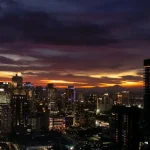
📷 Featured image by sutirta budiman on Unsplash.