On this page
- Which Airport and Which Terminal You Land At
- Airport Rail Link and Skytrain: The Traffic-Proof Option
- Damri Buses and Transjakarta: The Budget Routes
- Gojek and Grab: Ride-Hailing from Soekarno-Hatta
- Metered Taxis and Fixed-Fare Counters
- Private Drivers and Pre-Booked Transfers
- Which Transfer Suits Which Neighbourhood
- Traffic, Weather and Timing Your Arrival
- What to Sort Out Before You Leave the Terminal
- Going the Other Way: City to Airport
- 2026 Transfer Budget Breakdown
- Safety and Scam Awareness
- Frequently Asked Questions
💰 Click here to see Indonesia Budget Breakdown
💰 Prices updated: November, 2026. Budget figures are estimates — always verify before travel.
Exchange Rate: $1 USD = Rp18,130.00
Daily Budget (per person)
Shoestring: Rp543,900 – Rp906,500 ($30.00 – $50.00)
Mid-range: Rp1,269,100 – Rp2,719,500 ($70.00 – $150.00)
Comfortable: Rp2,719,500 – Rp4,532,500 ($150.00 – $250.00)
Accommodation (per night)
Hostel/guesthouse: Rp36,260 – Rp362,600 ($2.00 – $20.00)
Mid-range hotel: Rp199,430 – Rp1,323,490 ($11.00 – $73.00)
Food (per meal)
Budget meal: Rp45,325.00 ($2.50)
Mid-range meal: Rp181,300.00 ($10.00)
Upscale meal: Rp1,813,000.00 ($100.00)
Transport
Single metro/bus trip: Rp3,500.00 ($0.19)
Monthly transport pass: Rp400,000.00 ($22.06)
You land at Soekarno-Hatta after a long flight, and the city you are heading for is 25 to 40 kilometres away. That gap can take 45 minutes or three hours, depending on the hour, the rain and the transport you pick. In 2026 Jakarta has more options than ever, including a rail link, an automated Skytrain, ride-hailing pickup zones and Damri buses to many corners of the city. Choosing between them still confuses many first-time visitors. This guide explains each option, what it really costs in rupiah, and which one fits where you are sleeping.
Which Airport and Which Terminal You Land At
Most visitors arrive at Soekarno-Hatta International Airport (CGK), which sits in Tangerang, Banten, west of the capital. It has three terminals. Terminal 1 handles mainly domestic budget flights, Terminal 2 handles domestic and some international flights, and Terminal 3 is the newest and the biggest. Airlines move between terminals from time to time, so check your airline’s confirmation email rather than trusting an old blog post, including this one.
The terminals are linked by the free Skytrain, an automated people mover that runs on an elevated track. It also connects to the airport railway station, so you can switch terminals without stepping outside into the heat. Allow about 15 to 25 minutes if you need to change terminals, mostly because of walking and waiting.
Halim Perdanakusuma (HLP) in East Jakarta has handled a limited number of commercial flights since late 2023. It matters because it is near the LRT Jabodebek and the Whoosh high-speed train station to Bandung. If your ticket says Halim, your best transfer options are completely different from the ones below. The LRT, Grab, Gojek and regular taxis are all easy from there, and the trip into South or Central Jakarta is often shorter than from Soekarno-Hatta.
Airport Rail Link and Skytrain: The Traffic-Proof Option
The Airport Rail Link (Kereta Bandara) is the most predictable way into the city. Trains run from Soekarno-Hatta station, reached by Skytrain, to BNI City station near Sudirman and Dukuh Atas. The ride takes roughly 50 to 60 minutes, and the fare is about Rp 70,000. Tickets can be bought at the station counters or through the KAI Access app, which also shows live schedules.
The train is air-conditioned and has luggage racks. Because it runs on its own tracks, rain and rush hour do not delay it the way they delay cars. If your hotel is in Sudirman, Thamrin, Menteng or SCBD, this is usually the best choice.

The real advantage is Dukuh Atas, the integrated transport hub next to the BNI City station. From there you can switch to the Jakarta MRT, the KRL Commuter Line, Transjakarta buses or the LRT Jabodebek, all within a short walk. The MRT currently runs from Lebak Bulus to Bundaran HI. The northern extension towards Kota is still under construction in 2026, so don’t plan a direct MRT trip to Kota Tua yet.
There are downsides. Services leave at set intervals rather than on demand, so a delayed flight can mean a longer wait. You will also need to get from BNI City to your hotel, which is easy with a Grab or a short walk if you booked in the Sudirman area, but harder with two large suitcases.
Damri Buses and Transjakarta: The Budget Routes
Damri is the national bus operator, and its airport buses are cheap, comfortable and well established. They leave from marked bays outside each terminal to destinations including Gambir station, Blok M, Kampung Rambutan, Bekasi, Depok, Bogor and Serpong. Fares in 2026 are roughly Rp 40,000 to Rp 75,000, depending on the route. You can pay at the counter or onboard by card or e-money, and buses depart when they fill or on a timetable.
The Gambir route is useful if you are catching a long-distance train to Bandung or Yogyakarta. The Blok M route works well for South Jakarta, as Blok M has its own MRT station and plenty of taxis. Damri buses use toll roads, so they are not immune to traffic, and journey times in rush hour can double.
Transjakarta also serves the airport through feeder routes that connect to its main corridors, and the base fare on most routes is Rp 3,500. It is the cheapest option by far, but it demands patience and a bit of planning. Use Google Maps or the Transjakarta app, and tap in with a bank e-money card or the JakLingko card. This suits light packers on a tight budget and is not ideal at 17:30 with a 23 kg suitcase.
Gojek and Grab: Ride-Hailing from Soekarno-Hatta
Ride-hailing is the most popular choice among visitors because it is simple. You see the price before you book, pay by card or cash, and track your car on a map. Both Grab and Gojek have designated pickup zones at each terminal. Follow the airport signs for “Online Taxi” or “Ride-Hailing”, because drivers cannot stop at the arrival kerb.

A typical car fare, including toll fees and the airport pickup fee, is Rp 200,000 to Rp 320,000 to Sudirman, Thamrin and Menteng. South Jakarta (Kemang, Kebayoran Baru, Blok M) is more like Rp 280,000 to Rp 400,000. Pantai Indah Kapuk, which is much closer to the airport, is about Rp 120,000 to Rp 200,000. Prices rise in rain and at peak times because of surge pricing.
Check your phone before you land, because the terminal Wi-Fi can be slow or patchy. Set up your account, add a payment method and get a local SIM or eSIM first if you can. Tourists often find that foreign credit cards fail in the app, so keep enough cash for the ride. Some drivers will message you to ask where you are, and a few lines of simple English or the in-app translation button usually solves it.
Metered Taxis and Fixed-Fare Counters
Blue Bird taxis, recognisable by their light blue colour, remain the safest metered taxis in Jakarta. Official queues form at taxi stands outside each terminal, and staff will point you to the next car. Insist on the meter, and expect to pay roughly Rp 220,000 to Rp 350,000 to Central Jakarta once toll fees and the airport surcharge are included. Drivers often pay the toll fee with an e-toll card and add it to your fare, so ask for a receipt.
Fixed-fare desks inside the arrival halls sell tickets at set prices to a list of districts. These cost more than the meter, often Rp 350,000 to Rp 500,000 for premium cars. They suit travellers who want to know the exact price before getting in, or families who need a larger vehicle.
Private Drivers and Pre-Booked Transfers
If you arrive late at night, travel with young children or have a lot of luggage, a pre-booked car with a driver is the least stressful option. A driver waits in the arrivals hall with your name on a sign, helps with bags and takes you directly to your hotel. A transfer to Central Jakarta typically costs Rp 400,000 to Rp 650,000 in 2026, and larger vans cost more.
Many hotels in Jakarta will arrange this for you. Ask for the price in rupiah, ask whether tolls and parking are included, and confirm the pickup point. A day charter with a driver, usually around Rp 800,000 to Rp 1,000,000 for 10 hours, is also worth considering if your first day includes meetings or sightseeing across several districts.
Which Transfer Suits Which Neighbourhood
Where you sleep should decide how you travel, because Jakarta is huge and traffic patterns differ by district.
- Sudirman, Thamrin, SCBD and Menteng: Take the Airport Rail Link to BNI City, then walk, use MRT or take a short Grab. This is the fastest and most reliable option in the business and shopping core.
- Kemang, Kebayoran Baru and Blok M: Grab or Gojek is easiest. Alternatively, take Damri to Blok M if you have little luggage, or the train to BNI City and then the MRT south.
- Kota Tua and North Jakarta: A car or taxi is the most direct because the MRT does not reach there yet. The route often goes through the toll road along the coast.
- Pantai Indah Kapuk, Kelapa Gading and Tangerang: Pantai Indah Kapuk is the closest to the airport, so a short car ride is the best choice. Kelapa Gading is a long way east, so a car with a driver is best.
- Bogor, Depok, Bekasi and Serpong: Damri’s direct buses are good value. Take a car with a driver for late-night arrivals.
Traffic, Weather and Timing Your Arrival
Jakarta traffic is heaviest from about 06:30 to 09:30 and 16:00 to 20:00 on weekdays, with Friday evenings the worst. Public holidays and the start and end of long weekends can also cause long jams on the airport toll road. At a quiet time, such as 11:00 on a Tuesday or after 21:30, the same trip can take 40 minutes by car. At peak hours, it can take over two hours.
The wet season runs from roughly November to March, and heavy afternoon downpours can flood low sections of road and slow the toll roads to a crawl. In the dry season, from about May to September, the problem is heat and humidity, usually 30 to 33 degrees, so a train with air conditioning feels especially good after a long flight.

Time your arrival if you can. A morning or midday landing is far easier than an evening one. If you are stuck with a rush-hour landing, allow extra time for immigration, bag collection and the journey, and don’t schedule a dinner or meeting for the same evening.
What to Sort Out Before You Leave the Terminal
Most visitors need to do three things after landing: complete the arrival paperwork, get connected and get some cash.
Indonesia now uses a digital arrival card through the All Indonesia platform, and foreign visitors are expected to complete it online before travelling. The e-VOA costs Rp 500,000 for eligible nationalities and can be bought online in advance, which saves time at the airport. Check the current rules on the official immigration website before your flight, as requirements change.
For connectivity, Telkomsel, XL and Indosat all sell tourist SIM cards or eSIMs in the arrivals halls and online. Expect to pay roughly Rp 100,000 to Rp 200,000 for a data-heavy tourist package. Bring your passport, because registration is required. For cash, ATMs in the arrival hall dispense rupiah, but the withdrawal limit can be low, so check your bank’s fees. QRIS is widely accepted in the city, but you will still need cash for small warung and some drivers.
If you are hungry, resist the airport prices. Terminal food courts serve Padang rice, noodle dishes and fried chicken, and they are fine if you are tired, but a better first meal is in the city. A good late-night option is Jalan Sabang in Menteng, where grilled satay sizzles over charcoal and the smoke drifts down the street, and where bowls of bakmi and cups of sweet iced tea are served until late. If you land early in the morning, look for a warung selling nasi uduk, coconut rice with fried tempeh and sambal, served on a banana-leaf-lined plate for under Rp 25,000.
Going the Other Way: City to Airport
The journey back to the airport needs more planning than the journey in, because a missed flight costs far more than an expensive taxi. For an international flight, aim to be at the terminal about three hours before departure, and two hours for a domestic flight. In rush hour, leave extra time on top of that.
The Airport Rail Link departs from BNI City, and it is the best option if your flight is during rush hour. Check the first and last train times on the KAI Access app, because early-morning flights may leave before the first service. Grab and Gojek can be harder to get at 04:00, so pre-booking a driver or asking your hotel to arrange a taxi the night before is safer.

Know your terminal before you leave the hotel. Dropping off at the wrong terminal can cost you 20 to 30 minutes, even with the Skytrain. Also check that your driver knows the departure level, since many cars drive up the ramp to the upper departures area, which is quicker than the arrivals level.
2026 Transfer Budget Breakdown
These are typical one-way prices for one traveller from Soekarno-Hatta to Central Jakarta in 2026. Toll fees and surcharges are included where relevant.
- Budget (Rp 3,500 to Rp 75,000): Transjakarta feeder buses at Rp 3,500, or a Damri bus at roughly Rp 40,000 to Rp 75,000. The Skytrain between terminals is free. Expect longer travel times and a transfer or two.
- Mid-range (Rp 70,000 to Rp 350,000): The Airport Rail Link at about Rp 70,000, a Blue Bird taxi at Rp 220,000 to Rp 350,000, or a Grab or Gojek car at Rp 200,000 to Rp 320,000. This is the sweet spot for most visitors.
- Comfortable (Rp 400,000 to Rp 700,000): A pre-booked private car with a driver, a premium taxi from the fixed-fare counter, or a larger van for families. A same-day charter with a driver is roughly Rp 800,000 to Rp 1,000,000.
If two or more people travel together, a Grab or Blue Bird taxi is often cheaper per person than two train tickets plus a short ride at the other end. For solo travellers, the train usually wins on price and speed.
Safety and Scam Awareness
Airport transfers in Jakarta are generally safe, but a few habits help.
- Use only official taxi stands, ride-hailing apps, the airport rail or Damri. Politely ignore people who approach you in the arrivals hall.
- Check the licence plate and driver’s name in the app before getting into a ride-hailing car.
- Insist on the meter in a taxi, or agree the price before you go and confirm whether tolls are included.
- Keep your phone and wallet out of sight on the train and bus, especially in crowded carriages.
- Ask for a receipt for toll and parking fees, and keep small notes for them.
- Learn a few Indonesian phrases: terima kasih (thank you), berapa harganya? (how much?) and pakai argo, ya (use the meter, please). Drivers appreciate the effort.

Tipping is not required, but rounding up the fare by Rp 10,000 to Rp 20,000 is appreciated, especially if the driver helps with heavy bags. Use bottled or filtered water, since tap water in Jakarta is not safe to drink.
Frequently Asked Questions
How far is Soekarno-Hatta Airport from central Jakarta?
Soekarno-Hatta is roughly 25 to 40 kilometres from Central Jakarta, depending on your destination. The trip takes about 45 minutes off-peak by car and 50 to 60 minutes by train. During weekday rush hours, a car journey can take two to three hours, so allow extra time.
What is the cheapest way to get from Jakarta Airport to the city?
The cheapest option is Transjakarta, with a base fare of Rp 3,500 on most routes. Damri buses are the next cheapest at roughly Rp 40,000 to Rp 75,000. Both can be slow and may involve transfers, so they suit travellers with light luggage and plenty of time.
Is the Jakarta Airport Rail Link worth it?
Yes, especially if you are staying near Sudirman, Thamrin or Menteng. It costs about Rp 70,000, takes roughly an hour and avoids traffic completely. It ends at BNI City station, which connects to the MRT, KRL and Transjakarta, though you may need a short Grab at the other end.
Is Grab or Gojek better at Jakarta Airport?
Both work well and prices are usually similar, so check each app and take the cheaper or faster pickup. Use the designated ride-hailing zones at the terminal. Prices rise in rain and at rush hour, and foreign cards sometimes fail, so keep some rupiah in cash as a backup.
Which terminal will my flight arrive at?
Soekarno-Hatta has three terminals, and airlines sometimes change their assignments. Terminal 3 handles many international and Garuda flights, while Terminals 1 and 2 serve other domestic and international carriers. Always check your airline’s confirmation email or the airport’s flight information before travelling, and use the free Skytrain to move between terminals.
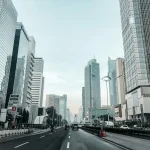
📷 Featured image by Pradamas Gifarry on Unsplash.