On this page
- Choosing the Right Airline for Your Route
- How to Book Step by Step
- Paying for Your Ticket
- Baggage Rules and Fees
- Airport Day: Timing, Check-in and Security
- Getting To and From CGK and DPS
- What Has Changed Since 2024
- 2026 Budget Reality
- Connecting Your Flight to Trains, Boats and Local Rides
- Common Mistakes to Avoid
- Frequently Asked Questions
You find a flight from Jakarta to Bali that looks like a bargain. Then the baggage fee, seat fee and meal add-on arrive at checkout, and you still have to reach the airport through Jakarta traffic. Domestic flying in Indonesia is the fastest way to cross the Archipelago, but it rewards people who understand how fares are built. This guide covers the airlines, the booking steps, the airport routine and the real costs for 2026. Fees and fares below are estimates based on recent trends, so confirm exact figures on the airline or booking platform before you pay.
Choosing the Right Airline for Your Route
Five airlines cover most domestic routes. They differ mainly in what the ticket price includes, so compare the total cost rather than the headline fare.
- Garuda Indonesia (garuda-indonesia.com) is the national flag carrier and a full-service airline. It is known for reliability, comfort and service, and it usually flies from major airports. Expect roughly 20-30kg checked baggage and 7kg cabin baggage, depending on class.
- Citilink (citilink.co.id) is Garuda’s low-cost subsidiary. Meals and baggage are often extra. Checked baggage is often 10-15kg, with 7kg in the cabin, but it varies by fare type.
- Lion Air (lionair.co.id) is Indonesia’s largest private low-cost carrier, with an extensive domestic network and competitive pricing. It typically offers 10-15kg checked baggage and 7kg cabin baggage, but baggage is often sold as an add-on or in fare bundles.
- Batik Air (batikair.com) is the full-service airline of the Lion Air Group. It aims for a premium feel at competitive prices, often with in-flight entertainment and meals. Expect about 20kg checked baggage and 7kg cabin baggage.
- Super Air Jet (superairjet.com) is another Lion Air Group low-cost carrier. It targets younger travellers with low fares and efficient service, and often includes 20kg checked baggage and 7kg cabin baggage.
How to Book Step by Step
Using an online travel agency
Online travel agencies (OTAs) are the easiest way to compare airlines side by side. Popular options are Traveloka (traveloka.com), Tiket.com (tiket.com), Agoda (agoda.com) and Skyscanner (skyscanner.com). The process is similar on all of them:
- Open the app or website.
- Choose “Flights”, then “Domestic”.
- Enter your departure and arrival airports, for example CGK for Jakarta or DPS for Denpasar, plus dates and passenger numbers.
- Search, then compare prices, flight times and airlines. Check what baggage each low-cost fare includes.
- Select your flight.
- Enter passenger details: full name exactly as on your ID, date of birth and contact information.
- Add extras such as baggage, seats or meals if you want them.
- Pay, then wait for the e-ticket by email.

Booking directly with the airline
Going straight to the airline’s website can bring better deals or special promotions. You also get direct customer service if your plans change. The steps are shorter:
- Go to the official site, for example garuda-indonesia.com.
- Select “Book Flight” or a similar button.
- Enter origin, destination, dates and passengers.
- Choose your fare class and flight.
- Fill in passenger details.
- Add extras if needed.
- Pay and receive your e-ticket.
Paying for Your Ticket
Payment options are wider than most visitors expect, and the choice affects how smooth checkout feels.
- Credit and debit cards: Visa and Mastercard are widely accepted. American Express is less common.
- Bank transfers: Many Indonesian banks, including BCA, Mandiri, BRI and BNI, are supported. This is handy if you already have a local account.
- E-wallets: GoPay, OVO and Dana are increasingly accepted on OTAs and some airline sites. Most need an Indonesian phone number to set up, so they suit longer stays more than short trips.
- Instalment plans: Some OTAs and airlines offer instalments with specific credit cards. This matters mainly for families booking several seats at once.
For a short visit, a foreign Visa or Mastercard is usually the simplest choice.
Baggage Rules and Fees
Baggage is where a cheap ticket becomes an expensive one. The checked allowance depends on the airline and fare class, so check the exact figure on your booking rather than assuming.
Overweight baggage can cost a lot. The estimate for domestic routes is IDR 20,000 to 50,000 per kilogram. A 5kg overage on a low-cost carrier can therefore cost IDR 100,000 to 250,000 at the counter. Buying extra baggage online in advance is normally cheaper than paying at the airport, though exact 2026 prices should be confirmed with your airline.

Cabin baggage is generally limited to 7kg and specific dimensions, for example 56 x 36 x 23 cm. One personal item, such as a laptop bag or small handbag, is usually allowed on top of that. Staff at some airports weigh cabin bags at the gate, so pack your heaviest items in the checked bag.
Airport Day: Timing, Check-in and Security
Arrive at least 1.5 to 2 hours before a domestic departure. During peak seasons and holidays, allow up to 3 hours. The extra time covers check-in, baggage drop and security queues.
- ID: Carry the ID you used when booking. Foreigners need their passport. The name must match the ticket.
- Online check-in: Most airlines open it 24 to 48 hours before departure through their website or app. This is the best way to save time.
- Kiosk check-in: Many major airports have self-service kiosks for printing boarding passes.
- Counter check-in: Use it for baggage drop or if you cannot check in online. Counters usually close 45 to 60 minutes before departure, so do not cut it fine.
- Security: Expect to remove electronics from your bag and carry liquids under 100ml per container. You may sometimes be asked to take off your shoes.
Getting To and From CGK and DPS
Soekarno-Hatta (CGK), Jakarta
- Railink airport train: Connects CGK to BNI City (Sudirman), Duri and Manggarai stations. The fare is estimated at IDR 70,000 to 100,000, and the trip takes about 50 to 60 minutes. Confirm the 2026 fare before you travel.
- DAMRI airport bus: Runs to various points in Jakarta and nearby areas. The estimated fare is IDR 50,000 to 75,000.
- Gojek and Grab: Both are available. The estimate to Central Jakarta is IDR 150,000 to 300,000, depending on distance and traffic.
Jakarta traffic is severe. If you have a flight to catch, the train gives the most predictable journey time.
Ngurah Rai (DPS), Denpasar, Bali
- Regulated airport taxis: Fares are fixed by zone. Kuta is about IDR 100,000 to 150,000, and Ubud about IDR 300,000 to 400,000.
- Gojek and Grab: Available for pick-up from designated zones outside the main terminal, so follow the in-app instructions instead of waiting at the arrivals door.
What Has Changed Since 2024
Several shifts are expected to affect how you fly in 2026. Some are still unconfirmed, so treat them as things to check.
- Carbon surcharges: Some airlines, especially Garuda Indonesia, may have introduced or increased them, estimated at IDR 10,000 to 25,000 per flight segment.
- Baggage policies: There may be a push for more standard allowances across low-cost carriers, or clearer differences between fare types. That could reduce what basic fares include.
- Digital boarding passes: Airlines rely more on app-based passes. Printing a physical pass is becoming less common and may cost a small fee at some low-cost carriers.
- New routes: Expect continued expansion to emerging tourist destinations and regional hubs, and the return of some routes suspended during the pandemic. Super Air Jet may have expanded its network significantly.
- Biometric check-in: CGK and DPS may have expanded biometric check-in or boarding gates for faster processing.

2026 Budget Reality
Ticket prices change by route, season and booking date, so there is no single fare to quote. What you can plan for are the costs around the ticket. These are estimates for 2026.
Budget
- DAMRI bus from CGK: IDR 50,000 to 75,000
- Low-cost carrier with no baggage bundle: pack cabin-only to avoid overweight fees
- Becak for a short local hop: IDR 10,000 to 30,000
Mid-range
- Railink train from CGK: IDR 70,000 to 100,000
- Regulated airport taxi from DPS to Kuta: IDR 100,000 to 150,000
- Overweight baggage allowance of a few kilograms: IDR 20,000 to 50,000 per kg
Comfortable
- Gojek or Grab car from CGK to Central Jakarta: IDR 150,000 to 300,000
- Airport taxi from DPS to Ubud: IDR 300,000 to 400,000
- Full-service flight with baggage and meals included, such as Garuda Indonesia or Batik Air
Connecting Your Flight to Trains, Boats and Local Rides
Flights rarely cover your whole journey, and each connection has its own booking method.
- Jakarta urban transport: MRT Jakarta runs from Lebak Bulus Grab to Bundaran HI, with estimated 2026 fares from IDR 3,000 up to IDR 14,000 to 16,000 for the full line. LRT Jakarta is about IDR 5,000 to 6,000. Trans-Jakarta is cashless only, at an estimated flat IDR 3,500. KRL commuter trains reach Bogor, Depok, Tangerang, Bekasi and Rangkasbitung, with a maximum fare typically IDR 5,000 to 7,000. Payment on these systems uses e-money cards such as Flazz, TapCash, Brizzi and BNI TapCash, or JakLingko.
- KAI trains on Java: Book through the KAI Access app, booking.kai.id, Traveloka, Tiket.com, or Indomaret and Alfamart minimarts. Estimated Executive fares are IDR 150,000 to 300,000 for Jakarta to Bandung and IDR 250,000 to 500,000 for Jakarta to Yogyakarta. Book early around holidays.
- Gojek and Grab: Pick a service, enter pick-up and drop-off, confirm the upfront fare, then book. Check that the driver’s photo and vehicle match the app. For a GoRide or GrabBike motorcycle ride, always wear the helmet provided.
- PELNI ferries: For remote islands, book at pelni.co.id, through the PELNI app, at port offices or via travel agents. Jakarta to Makassar in economy is estimated at IDR 300,000 to 600,000. Cabins should be booked well ahead.
- Bali-Lombok-Gili fast boats: Operators include Gili Getaway, Eka Jaya and Blue Water Express. Book through operator sites, Traveloka, Tiket.com, GiliTickets.com or local agents. One-way tickets are estimated at IDR 250,000 to 500,000. Choose reputable operators, and expect life jackets to be mandatory.
- Becak and bajaj: Negotiate before you start. A short becak ride is IDR 10,000 to 30,000, and a typical bajaj ride is IDR 15,000 to 50,000.

Common Mistakes to Avoid
- Comparing only the base fare. A low-cost ticket without baggage can cost more than a full-service one once you add a bag, a meal and a seat.
- Typing a nickname instead of your passport name. Names must match your ID. Fixing errors later can be slow.
- Arriving late. Counters often close 45 to 60 minutes before departure. Jakarta traffic can ruin a tight schedule.
- Skipping online check-in. It saves time and is widely available 24 to 48 hours before departure.
- Packing liquids over 100ml in hand luggage. They will be taken at security.
- Booking during a major holiday at the last minute. Eid al-Fitr, Christmas and New Year bring high prices and limited seats on every mode of transport.
- Assuming an e-wallet will work for you. If you have no Indonesian number, rely on a card instead.
- Forgetting cash. E-money and e-wallets are essential in cities, but cash still helps for small transactions and traditional transport.
Frequently Asked Questions
Which airline is best for domestic flights in Indonesia?
It depends on your priorities. Garuda Indonesia and Batik Air are full-service and usually include baggage and meals. Citilink, Lion Air and Super Air Jet are low-cost options with lower base fares. Compare the total price, including baggage, before deciding.
How early should I arrive for a domestic flight in Indonesia?
Arrive at least 1.5 to 2 hours before departure. During peak seasons and holidays, allow up to 3 hours. Check-in counters usually close 45 to 60 minutes before the flight, so late arrival can mean a missed flight even if the gate is still open.
Can I pay for domestic flights with an e-wallet?
Yes, in many cases. GoPay, OVO and Dana are increasingly accepted on online travel agencies and some airline websites. Visa and Mastercard are also widely accepted, and many Indonesian banks, including BCA, Mandiri, BRI and BNI, are supported for transfers.
How much does overweight baggage cost on domestic flights?
The estimate for domestic routes is IDR 20,000 to 50,000 per kilogram, though exact 2026 fees should be confirmed with your airline. Buying extra baggage online before you travel is usually cheaper than paying at the airport counter.
What is the best way to get from Soekarno-Hatta Airport to central Jakarta?
The Railink airport train is the most predictable, taking about 50 to 60 minutes at an estimated IDR 70,000 to 100,000. DAMRI buses cost about IDR 50,000 to 75,000. Gojek or Grab cost an estimated IDR 150,000 to 300,000, depending on traffic.
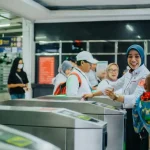
📷 Featured image by Qeis Ismail on Unsplash.