On this page
- What It Actually Costs to Live in Bali in 2026
- Accommodation Costs in Bali
- Visa Costs and Immigration Logistics
- Food and Groceries Budget
- Transport and Getting Around
- Health Insurance and Medical Costs
- Tax Obligations for Long-Stay Nomads
- 2026 Budget Reality: Monthly Cost Breakdown by Lifestyle Tier
- Frequently Asked Questions
What It Actually Costs to Live in Bali in 2026
Bali‘s reputation as a cheap paradise has always been slightly misleading — and in 2026, the gap between what people expect and what they actually spend has never been wider. A flood of remote workers since 2022 pushed rents in Canggu and Seminyak to levels that shocked even long-term expats. At the same time, there are still genuine bargains if you know where to look and what to avoid. This guide is built for people seriously planning a 1–12 month stay, not a two-week holiday with a laptop. Every figure here reflects 2026 market conditions.
Accommodation Costs in Bali
Accommodation is your biggest monthly expense and the one with the widest range. What you pay depends almost entirely on location, lease length, and how much of the expat infrastructure you want around you.
The most affordable option is a basic kost (a furnished room in a local boarding house), which runs between Rp 1,500,000 and Rp 3,500,000 per month in areas like Denpasar, Ubud’s outer streets, or Sanur’s local side. You get a bed, fan or basic AC, a shared or private bathroom, and not much else. It’s functional. It works for nomads on a tight budget who spend their days out working.
A mid-range furnished studio or one-bedroom apartment — with reliable hot water, decent Wi-Fi already installed, and a small kitchen — costs between Rp 5,000,000 and Rp 10,000,000 per month depending on location. Ubud and Sanur offer better value at this tier than Canggu or Seminyak, where the same money buys noticeably less space.
A comfortable private villa with a pool, full kitchen, and fast fibre internet sits between Rp 12,000,000 and Rp 25,000,000 per month on a minimum three-month contract. Solo nomads sometimes split these with one or two others, which makes this tier very accessible. In 2026, more landlords are requiring a three-month minimum rather than monthly rolling agreements, so factor that into your planning.
One important shift in 2026: Bali’s regional government introduced stricter enforcement of short-term villa rental regulations, meaning many properties that previously operated month-to-month without formal licensing now require a proper rental contract. This is actually better for tenants — it gives you legal standing — but it has pushed some informal cheap options out of the market.
Visa Costs and Immigration Logistics
Most digital nomads enter Bali on the B211A Social/Cultural Visa, which is still the most practical option in 2026 for people who aren’t employed by an Indonesian company. Here’s how the numbers break down.
The B211A is issued for 60 days and can be extended twice, each time for 30 days, giving you a maximum of 180 days in one stay. The visa itself costs approximately Rp 1,500,000 to Rp 2,000,000 when applied through a visa agent (which most people do, to avoid the paperwork complexity). Each 30-day extension at the immigration office costs around Rp 500,000, plus an agent fee of Rp 300,000 to Rp 500,000 if you use one.
Total visa cost for a full 180-day stay: roughly Rp 3,000,000 to Rp 4,500,000, depending on whether you handle extensions yourself or use an agent.
If you plan to stay longer than 180 days or want to work with Indonesian clients, the KITAS (Kartu Izin Tinggal Terbatas) is the formal limited-stay permit. In 2026, this process runs through the Directorate General of Immigration and requires a sponsoring entity — either an Indonesian company or a registered sponsor service. Processing takes four to eight weeks and costs between Rp 8,000,000 and Rp 15,000,000 including agent fees. It’s not the right move for most short-term nomads, but for anyone planning a full year or more, it’s worth the investment for the legal clarity it provides.
Visa-on-arrival is still available at Ngurah Rai Airport for 30 days (extendable once to 60 days), costing USD 35 (approximately Rp 560,000 at 2026 exchange rates). This works for short testing trips but is not cost-effective for stays beyond two months.
Food and Groceries Budget
Food in Bali can be almost free or surprisingly expensive, depending almost entirely on one choice: where you eat.
A full meal at a local warung — rice, a protein like ayam goreng (fried chicken) or tempe, vegetables, and a glass of iced tea — costs between Rp 20,000 and Rp 40,000. The food is often extraordinary. The smoky char of grilled chicken with a smear of sambal matah, eaten on a plastic stool with the smell of incense from a nearby temple gate drifting past — this is daily life for locals and for budget-conscious nomads who seek it out.
At a mid-range restaurant aimed at tourists and expats, a meal runs Rp 75,000 to Rp 150,000. Western breakfasts (avocado toast, smoothie bowls) at popular spots can hit Rp 120,000 to Rp 200,000 per meal on their own.
For groceries, Tiara Dewata, Pepito, and Bintang Supermarket cover local and imported products. A weekly grocery shop for one person eating a mix of local and imported products runs Rp 350,000 to Rp 700,000 per week. Imported items (good cheese, foreign cereals, wine) are expensive — a reasonable bottle of imported wine costs Rp 200,000 to Rp 350,000.
Realistic monthly food budgets:
- Budget (mostly warungs, cooking at home): Rp 1,500,000 to Rp 2,500,000
- Mid-range (mix of local and expat dining): Rp 3,000,000 to Rp 5,000,000
- Comfortable (eating out regularly, quality restaurants): Rp 6,000,000 to Rp 10,000,000+
Transport and Getting Around
Bali has no public transport system worth relying on. Your two real options are a scooter or ride-hailing apps.
Renting a scooter long-term costs between Rp 500,000 and Rp 800,000 per month for a standard 110–125cc Honda Beat or Yamaha Mio. Monthly rates are significantly cheaper than daily rentals (which run Rp 60,000 to Rp 100,000 per day). Fuel costs are low — a full tank (about 4 litres) costs around Rp 40,000 to Rp 50,000 and lasts several days of normal riding.
An international driving licence endorsed for motorbikes is required to legally ride in Bali. Enforcement increased in 2026, and police checkpoints have become more common around tourist areas. Riding without a valid licence risks a fine of Rp 250,000 to Rp 500,000 at the checkpoint, or worse, problems with your insurance if you’re in an accident.
Grab and Gojek remain the dominant ride-hailing apps in 2026. A typical 5-kilometre trip costs Rp 20,000 to Rp 40,000. For nomads who don’t want to deal with traffic stress or parking, using apps exclusively adds roughly Rp 800,000 to Rp 1,500,000 per month to the transport budget for moderate use.
A monthly transport budget estimate:
- Scooter rental + fuel: Rp 600,000 to Rp 900,000
- Ride apps only: Rp 800,000 to Rp 1,500,000
- Mixed (scooter + occasional car hire for day trips): Rp 900,000 to Rp 1,500,000
Health Insurance and Medical Costs
Indonesia’s public healthcare system — BPJS Kesehatan — is available to foreigners with a KITAS, but its facilities and processes are not suited to most digital nomads. Waiting times at public clinics are long, English is rarely spoken, and specialist care quality varies widely. Private health insurance is essential, not optional.
For most digital nomads on the B211A visa, a private international health insurance policy covering Southeast Asia costs between USD 80 and USD 200 per month (approximately Rp 1,280,000 to Rp 3,200,000) depending on your age, coverage limits, and deductible. Policies from providers like SafetyWing, Cigna Global, and AXA are commonly used in 2026. SafetyWing’s Nomad Insurance remains the budget entry point, but its coverage limits are lower — check the fine print carefully before relying on it for serious illness.
For day-to-day medical care, private clinics in Bali (such as BIMC, Kasih Ibu, or Siloam) provide solid care for expats and nomads. A standard GP consultation costs Rp 300,000 to Rp 600,000. A dental check and clean runs Rp 250,000 to Rp 500,000 at a good private dentist. Emergency care costs can climb fast — another reason insurance isn’t negotiable.
Tax Obligations for Long-Stay Nomads
This is the section most people skip and then regret. If you stay in Indonesia for 183 days or more in a 12-month period, you are considered a tax resident under Indonesian law, and your global income becomes potentially subject to Indonesian tax. This rule did not change in 2026, but enforcement conversation has intensified as Indonesia’s Directorate General of Taxes continues modernising its systems.
As a non-tax resident (under 183 days), income sourced from outside Indonesia is generally not taxed in Indonesia. You are taxed on any Indonesia-sourced income at a flat rate of 20%.
As a tax resident (183 days or more), you are taxed on your worldwide income on a progressive scale:
- Up to Rp 60,000,000 per year: 5%
- Rp 60,000,000 to Rp 250,000,000: 15%
- Rp 250,000,000 to Rp 500,000,000: 25%
- Rp 500,000,000 to Rp 5,000,000,000: 30%
- Above Rp 5,000,000,000: 35%
If you cross the 183-day threshold, you are legally required to register for an NPWP (Nomor Pokok Wajib Pajak) — Indonesia’s tax identification number. NPWP registration is done through the Directorate General of Taxes website or at a local tax office. The process is free and takes one to five business days. Having a KITAS simplifies registration but is not strictly required for a foreigner to register.
In practice, many nomads on the B211A visa stay under 180 days and manage their tax obligations in their home country. If your situation is complicated — multiple income streams, long stays, or business ties to Indonesia — a local tax consultant is worth the cost. Fees for a basic consultation run Rp 500,000 to Rp 1,500,000 per session.
2026 Budget Reality: Monthly Cost Breakdown by Lifestyle Tier
Here is what an honest, all-in monthly budget looks like in Bali in 2026, across three lifestyle tiers. These figures assume you are on the B211A visa, working remotely for non-Indonesian clients, and covering your own costs without a company stipend.
Budget Nomad
Kost or shared room, eating mostly at warungs, scooter rental, basic insurance, minimal entertainment.
- Accommodation: Rp 2,000,000
- Food: Rp 2,000,000
- Transport: Rp 650,000
- Health insurance: Rp 1,280,000 (approx. USD 80)
- Utilities / SIM / internet top-up: Rp 300,000
- Visa (amortised monthly): Rp 600,000
- Total: approximately Rp 6,800,000 per month (approx. USD 425)
Mid-Range Nomad
Furnished one-bedroom apartment, mix of local and expat dining, scooter plus occasional Grab, solid insurance coverage.
- Accommodation: Rp 7,000,000
- Food: Rp 4,000,000
- Transport: Rp 1,000,000
- Health insurance: Rp 2,000,000 (approx. USD 125)
- Utilities / SIM / streaming: Rp 500,000
- Visa (amortised monthly): Rp 700,000
- Activities / entertainment: Rp 1,000,000
- Total: approximately Rp 16,200,000 per month (approx. USD 1,010)
Comfortable Nomad
Private villa with pool, eating well, car hire for day trips, comprehensive international insurance, gym membership, regular activities.
- Accommodation: Rp 18,000,000
- Food: Rp 7,000,000
- Transport: Rp 2,000,000
- Health insurance: Rp 3,200,000 (approx. USD 200)
- Utilities / SIM / subscriptions: Rp 800,000
- Visa (amortised monthly): Rp 700,000
- Activities / gym / entertainment: Rp 2,500,000
- Total: approximately Rp 34,200,000 per month (approx. USD 2,135)
These figures do not include flights, one-off purchases like a local SIM card setup, or emergency costs. Build a buffer of at least Rp 5,000,000 for unexpected expenses — a medical visit, a scooter repair, or an extension delay that requires a short border run.
Frequently Asked Questions
Is Bali still affordable for digital nomads in 2026?
Yes, but it depends heavily on your lifestyle choices. Budget nomads can live well on USD 425 per month. Mid-range nomads spend around USD 1,000. The days of ultra-cheap Bali are largely gone in popular areas, but value still exists if you step away from the main expat corridors and eat where locals eat.
Can I legally work remotely from Bali on a B211A visa?
The B211A Social/Cultural Visa allows you to stay in Indonesia and work remotely for foreign clients. It does not permit you to work for Indonesian companies or conduct business with Indonesian clients. Indonesian immigration has not explicitly introduced a formal digital nomad visa as of 2026, so the B211A remains the standard practical option.
Do I need to pay Indonesian tax if I work remotely from Bali?
If you stay fewer than 183 days in a 12-month period, you are generally not considered a tax resident and income from foreign clients is not taxed in Indonesia. Beyond 183 days, you become a tax resident and your worldwide income is subject to Indonesian progressive income tax. Consult a local tax professional if your stay approaches that threshold.
What is the cheapest area in Bali to rent accommodation?
Denpasar, the outskirts of Ubud, and northern Singaraja offer the lowest rental costs. Areas like Canggu, Seminyak, and Kuta carry significant expat premiums. If you’re on a tight budget and have a scooter, living 10–15 kilometres outside the main tourist zones saves Rp 2,000,000 to Rp 5,000,000 per month on rent alone.
Is health insurance mandatory for digital nomads in Bali?
There is no legal requirement for B211A visa holders to hold private health insurance, but it is effectively non-negotiable from a practical standpoint. Indonesian public healthcare is not accessible to B211A holders in a meaningful way, and private clinic costs can escalate quickly. International private insurance starting from around USD 80 per month provides the coverage needed for a safe stay.
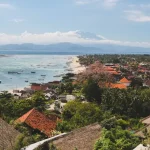
📷 Featured image by Mahaztra Yedhi Syaelendra on Unsplash.