On this page
- Why Cash Still Rules Beyond the Tourist Hubs
- Step-by-Step: Building Your Cash Plan
- Money Changers Outside Bali
- Credit and Debit Cards: A Backup, Not a Plan
- QRIS: Indonesia’s Universal QR Code
- E-wallets for Travelers: GoPay, OVO, DANA and ShopeePay
- What Has Changed Since 2024
- 2026 Budget Reality: What Money Handling Costs You
- Tipping Customs in Remote Indonesia
- Paying for Trains and Rides
- Common Money Mistakes in Remote Indonesia
- Frequently Asked Questions
💰 Click here to see Indonesia Budget Breakdown
💰 Prices updated: November, 2026. Budget figures are estimates — always verify before travel.
Exchange Rate: $1 USD = Rp18,130.00
Daily Budget (per person)
Shoestring: Rp543,900 – Rp906,500 ($30.00 – $50.00)
Mid-range: Rp1,269,100 – Rp2,719,500 ($70.00 – $150.00)
Comfortable: Rp2,719,500 – Rp4,532,500 ($150.00 – $250.00)
Accommodation (per night)
Hostel/guesthouse: Rp36,260 – Rp362,600 ($2.00 – $20.00)
Mid-range hotel: Rp199,430 – Rp1,323,490 ($11.00 – $73.00)
Food (per meal)
Budget meal: Rp45,325.00 ($2.50)
Mid-range meal: Rp181,300.00 ($10.00)
Upscale meal: Rp1,813,000.00 ($100.00)
Transport
Single metro/bus trip: Rp3,500.00 ($0.19)
Monthly transport pass: Rp400,000.00 ($22.06)
You land in a small town in eastern Indonesia, the homestay owner smiles and says “cash only,” and the nearest ATM is a two-hour ride away. In 2026 this still catches travelers off guard. They arrive from Bali, where phones and cards work almost everywhere, and expect the same on the next island. Digital payments are growing fast across the archipelago, but cash is still what keeps remote Indonesia running. This guide shows you how to carry, withdraw and spend money once you leave the tourist hubs.
Why Cash Still Rules Beyond the Tourist Hubs
Indonesian Rupiah (IDR) in physical notes is essential in remote areas. Small local businesses, traditional markets (pasar tradisional), street food vendors (kaki lima), local transport such as ojek and angkot, and many homestays and guesthouses outside major towns take cash only.
Picture a pasar at 6 a.m.: clove cigarette smoke, the hiss of banana fritters hitting hot oil, and a seller counting small notes from a waist pouch. Nobody there is going to ask for your card. A 100,000 note for a 7,000 breakfast will often get a tired sigh, because sellers rarely have that much change so early in the day.
Plan your trip around this fact. Digital tools are a bonus in remote areas, and cash is your foundation.
Step-by-Step: Building Your Cash Plan
ATMs are widely available in provincial capitals and larger towns. In truly remote villages they become scarce, unreliable or missing altogether. Here is how to approach it in order.
- Choose the right ATMs. Look for major Indonesian banks: BCA, Bank Mandiri, BRI and BNI. These are generally the most reliable machines you will find.
- Withdraw in big cities first. Cities like Makassar, Medan and Surabaya are good places to take out larger amounts. This keeps your number of transactions, and therefore your fees, low.
- Know the fee structure. A local debit card used at the same bank’s ATM generally has no fee. At a different bank, expect IDR 7,500 to IDR 10,000 per transaction. Foreign Visa and Mastercard cards face two layers: your home bank’s foreign transaction fee and possible ATM fee, plus a local ATM fee that can run from IDR 25,000 to IDR 50,000 per transaction. Exact amounts differ by bank, so read the ATM screen before you confirm.
- Understand the limits. Most ATMs dispense IDR 50,000 or IDR 100,000 notes. A standard debit card typically has a maximum per transaction of IDR 2,500,000 (in IDR 50,000 notes) or IDR 1,250,000 (in IDR 20,000 notes). Daily limits for local high-tier debit cards are generally IDR 10,000,000 to IDR 15,000,000. International cards are often lower, for example IDR 3,000,000 to IDR 5,000,000 per day. Check your own card’s limit with your bank before you travel.
- Break your notes. Carry a mix of denominations, especially IDR 5,000, 10,000, 20,000 and 50,000. Buy something small at a minimarket early on to turn big notes into change.
- Take extra for the final leg. Before you head to an isolated destination, withdraw enough for the whole stay plus a cushion. Once you are there, assume there is no second chance.

Money Changers Outside Bali
Money changers are less common outside major tourist areas and provincial capitals, and their rates can be less competitive than in Bali or Jakarta. Do not count on finding a good one in a small town.
Use only reputable, licensed money changers, which are usually inside banks or dedicated exchange offices. Avoid unofficial street vendors. The simplest approach is to exchange enough foreign currency into IDR when you arrive at an international airport or in a major city centre, and then move on with your rupiah in hand.
Credit and Debit Cards: A Backup, Not a Plan
Cards help, but do not rely on them alone once you leave the main towns.
Where they work
- Major international hotels, upscale restaurants, larger supermarkets and some modern tour operators in provincial capitals and larger towns accept Visa and Mastercard.
- American Express and Discover are rarely accepted.
- In truly remote areas, small warungs, local markets and local transport, card acceptance is virtually non-existent.
Surcharges and security
Despite Bank Indonesia regulations, many places add a 2 to 3 percent surcharge on card payments to cover their fees. It is technically not allowed, but it is common. Ask before you tap, and offer cash if the surcharge annoys you.
Chip-and-PIN is standard. Keep your card in sight at all times and watch for skimming devices on ATMs. Tell your bank your travel plans so your card is not blocked halfway through the trip. Carry the card for larger costs or emergencies, and lean on cash and digital payments for everything else.

QRIS: Indonesia’s Universal QR Code
QRIS (Quick Response Code Indonesian Standard) is the national QR payment system launched by Bank Indonesia. One QRIS code can be scanned by any participating banking app or e-wallet, so merchants display a single code instead of many.
You will find it widely in urban and semi-urban areas, on small shops, warungs, cafes and even some traditional market stalls. It is spreading fast, but it is still uncommon in very remote villages.
How to pay with QRIS
- Install a supported Indonesian mobile banking app or an e-wallet (GoPay, OVO, DANA, ShopeePay) and top it up.
- Look for the QRIS logo at the merchant’s counter.
- Open your app and choose “Scan QRIS” or “Pay”.
- Scan the merchant’s code.
- Enter the amount if it is not already filled in, then confirm.
- Show the confirmation screen to the seller.
For you, QRIS is generally free. Merchants pay a small Merchant Discount Rate (MDR) to their payment provider, typically 0.7 percent for most businesses and 0.4 percent for micro-businesses (UMKM). That low cost is a big reason tiny stalls are now putting up a code.
E-wallets for Travelers: GoPay, OVO, DANA and ShopeePay
E-wallets are part of daily life in Indonesia and are often the first choice for locals. They are also how you pay for ride-hailing and food delivery.
- GoPay: built into Gojek for rides, food delivery and logistics, and very widely accepted. Website: www.gojek.com
- OVO: linked with Grab (rides and food delivery) and Tokopedia, with a strong merchant network. Website: www.ovo.id
- DANA: a standalone wallet for transfers, bill payments and merchant payments. Website: www.dana.id
- ShopeePay: tied to Shopee, with growing acceptance in physical shops. Website: www.shopee.co.id/shopeepay
Registering as a foreigner
You almost always need a local Indonesian phone number to register and verify. Buy a local SIM (for example Telkomsel, XL Axiata or Indosat Ooredoo Hutchison) when you arrive. To unlock full features and higher limits, such as GoPay Plus or OVO Premier, you must verify your ID. Locals use a KTP and foreigners use a passport. The passport process can still be fiddly and sometimes needs help, though it has improved. Set it up in a city with good signal, not in a village.
Topping up
- Convenience stores: the easiest option. At Alfamart or Indomaret, say “Top-up GoPay” (or your wallet), give your phone number and pay cash. The minimum is usually IDR 10,000 or IDR 20,000, with a service fee of about IDR 2,000 to IDR 5,000.
- Bank transfer: needs an Indonesian bank account or an international transfer, which may carry fees.
- Gojek or Grab drivers: some will top you up for cash. This is unofficial and less reliable than a store.

Once funded, you can pay for Gojek and Grab rides, scan QRIS codes, buy train tickets through the KAI Access app and pay bills. Transfers between users of the same wallet are typically free.
What Has Changed Since 2024
A few shifts matter for travelers in 2026.
- Cross-border QRIS: QRIS now works with several ASEAN countries, including Thailand, Malaysia, Singapore and the Philippines. Visitors from those countries can scan Indonesian QRIS codes with their home banking apps, which is a real convenience for regional travelers. Confirm with your own bank that your app supports it.
- QRIS Tuntun: this initiative aims to help small merchants take payments without a smartphone, using basic terminals. For you, the effect is mostly wider acceptance at tiny shops rather than a new feature to learn.
- Wallet interoperability: direct transfers between different e-wallets, such as GoPay to OVO, are becoming more common and easier, with some low-cost or free options. Do not count on it while traveling; check the app first.
- Easier access for foreigners: wallets still need a local SIM, but passport verification has been simplified to give tourists smoother onboarding.
2026 Budget Reality: What Money Handling Costs You
Here is what the “friction” costs look like, using the ranges above. They are small per transaction but add up on a long trip.
Fees you will pay
- Local ATM fee, different bank: IDR 7,500 to IDR 10,000 per withdrawal.
- Local ATM fee on international cards: IDR 25,000 to IDR 50,000 per withdrawal, plus your home bank’s charges.
- Card surcharge at some merchants: 2 to 3 percent.
- E-wallet top-up at a convenience store: IDR 2,000 to IDR 5,000.
Tipping Customs in Remote Indonesia
Tipping is appreciated but not mandatory. Many mid-range and upscale places add a service charge of 5 to 10 percent and government tax of 11 percent automatically, so check your bill before adding more.
- Restaurants: with a service charge, no extra tip is needed. For great service, round up or leave IDR 10,000 to IDR 20,000. At local warungs, nobody expects a tip.
- Hotels: IDR 10,000 to IDR 20,000 per bag for porters. Housekeeping tips are not common, but IDR 20,000 to IDR 50,000 for a few nights is appreciated.
- Guides: IDR 50,000 to IDR 150,000 per day per group for full-day or multi-day trips, depending on quality and length.
- Drivers: IDR 30,000 to IDR 100,000 per day on private hires, especially when they go the extra mile.
- Gojek and Grab: both apps offer in-app tipping after the ride, typically IDR 5,000, 10,000, 15,000 or 20,000.

Tip in cash when service was excellent and you feel comfortable doing it. Hand it over with a smile and a simple “terima kasih.”
Paying for Trains and Rides
Your bigger transport costs are easier to pay digitally, especially on Java.
KAI trains
Book through the KAI Access app (Google Play Store and Apple App Store), the official website www.kai.id, authorized travel agents, or Alfamart and Indomaret. In the app or on the website you can pay with Visa or Mastercard, GoPay, OVO, DANA, ShopeePay or bank transfer via virtual accounts. At minimarkets you pay cash at the counter. The app is the smoothest option.
Gojek and Grab
Cash is always an option. GoPay works inside Gojek and OVO inside Grab, and both often bring discounts that make rides and food cheaper. You can link a credit or debit card too, but wallets are more common because of those incentives. Link the matching wallet for each app. Keep in mind that availability of these services drops quickly once you leave larger towns.
Common Money Mistakes in Remote Indonesia
- Relying on one payment method. Carry cash, a card and a funded wallet, in that order of importance.
- Arriving with only large notes. Sellers in small villages often cannot change IDR 100,000.
- Making many small withdrawals. Each one triggers fees, especially on international cards.
- Waiting until a remote town to look for an ATM. Withdraw in a major city or provincial capital first.
- Using unofficial money changers. Stick to banks and licensed exchange offices.
- Skipping the SIM. Without a local number, e-wallet registration usually fails.
- Not telling your bank. A blocked card is a big problem when cash is your only other option.
- Ignoring bill details. Check whether service charge and tax are already included before you tip.
Frequently Asked Questions
Do I need cash in remote Indonesia in 2026?
Yes. Small businesses, traditional markets, street vendors, local transport and many homestays outside major towns work on cash only. QRIS and e-wallets are growing, but they are still uncommon in very remote villages. Carry enough Indonesian Rupiah for your whole stay, in a mix of small and medium notes.

Which ATMs are best for foreign cards?
Look for machines from major Indonesian banks such as BCA, Bank Mandiri, BRI and BNI, which are generally the most reliable. International cards may face a local fee of about IDR 25,000 to IDR 50,000 per withdrawal, plus your home bank’s fees, so take out larger amounts less often.
Can tourists use GoPay, OVO, DANA or ShopeePay?
Yes, but you usually need a local SIM card to register and verify your account. Passport verification unlocks full features and higher limits, and the process has become easier. You can top up with cash at Alfamart or Indomaret, usually with a fee of IDR 2,000 to IDR 5,000.
Is tipping expected in Indonesia?
Tipping is appreciated but not required. Many mid-range and upscale places already add a 5 to 10 percent service charge and 11 percent tax. At local warungs, no tip is expected. Guides and drivers appreciate IDR 50,000 to IDR 150,000 and IDR 30,000 to IDR 100,000 per day respectively.
Do shops charge extra for card payments?
Many do. Despite Bank Indonesia regulations, merchants often add a 2 to 3 percent surcharge to cover their fees, even though it is technically not allowed. Ask before paying. In remote areas, most small warungs and markets simply do not accept cards at all, so keep cash ready.
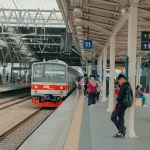
📷 Featured image by Devi Puspita Amartha Yahya on Unsplash.