On this page
- Why Lombok’s Beaches Feel Different
- Best Coastal Bases: Where to Stay for Your Kind of Beach
- The Best Beaches in Lombok
- Where to Eat by the Sea
- Getting Around Between Beaches
- Day Trips From the Beach
- Nightlife and Evening Entertainment
- Shopping Near the Coast
- Where to Stay by Budget
- Best Time to Visit
- Practical Tips for Lombok’s Beaches
- 2026 Budget Breakdown
- Frequently Asked Questions
💰 Click here to see Indonesia Budget Breakdown
💰 Prices updated: September, 2026. Budget figures are estimates — always verify before travel.
Exchange Rate: $1 USD = Rp17,928.47
Daily Budget (per person)
Shoestring: Rp358,569 – Rp896,424 ($20.00 – $50.00)
Mid-range: Rp1,254,993 – Rp2,689,271 ($70.00 – $150.00)
Comfortable: Rp2,689,271 – Rp4,482,118 ($150.00 – $250.00)
Accommodation (per night)
Hostel/guesthouse: Rp71,714 – Rp179,285 ($4.00 – $10.00)
Mid-range hotel: Rp448,212 – Rp896,424 ($25.00 – $50.00)
Food (per meal)
Budget meal: Rp26,893.00 ($1.50)
Mid-range meal: Rp143,428.00 ($8.00)
Upscale meal: Rp537,854.00 ($30.00)
Transport
Single metro/bus trip: Rp3,500.00 ($0.20)
Monthly transport pass: Rp200,000.00 ($11.16)
Many travelers in 2026 arrive in Lombok expecting “Bali without the crowds” and then waste days on the wrong stretch of coast. The island has more than 100 beaches, and they vary a lot: some have powder sand and gentle water, others have sharp reef and heavy surf, and a few can only be reached by a bumpy dirt track. This guide sorts them by what you actually want to do, so you spend your time on the sand and not in a taxi.
Why Lombok’s Beaches Feel Different
Lombok sits just east of Bali across the Lombok Strait, but the mood changes the moment you leave the airport. The island is mostly Sasak and Muslim, so the soundtrack is the call to prayer drifting over rice fields and fishing boats instead of cover bands. The south coast has pale hills that turn gold in the dry season and drop straight into turquoise bays. The northwest has calmer water and views of Mount Rinjani, which rises to 3,726 metres behind the coast.
The biggest change since 2024 is the Mandalika development around Kuta. The Mandalika Circuit, new roads and more flights into Lombok International Airport (LOP) have made the south easier to reach. The famous beaches are busier on weekends, but you can still find an empty bay in ten minutes. Direct flights from Southeast Asian hubs have also grown, so many visitors now skip Bali entirely. Remember to complete the online All Indonesia arrival form before you fly.
Best Coastal Bases: Where to Stay for Your Kind of Beach
Kuta Lombok and the South Coast
This is the main base for beach lovers and surfers. The town itself is a small grid of homestays, cafés and surf shops, and within 20 minutes by scooter you can reach about ten different beaches. It suits backpackers, surfers, couples and anyone who wants a new beach every day.
Selong Belanak
About 30 minutes west of Kuta, this wide, calm bay is the best base for families and slow travelers. There is little to do except swim, learn to surf and watch buffalo wander along the sand. The accommodation is quieter and often more upscale.
Senggigi and the Northwest Coast
Senggigi was Lombok’s original resort strip and has softened with age. Batu Bolong, Mangsit and Malimbu are better for sunsets than for swimming, with Bali’s Mount Agung sometimes visible on clear evenings. It is easy to reach from the Bangsal harbour and good for travelers who want restaurants and a bit of nightlife.

Sekotong
The far southwest has small islands, quiet coves and the legendary Desert Point wave. Facilities are sparse, so it suits divers, serious surfers and people who want silence.
North Lombok and the Gilis
Sire, Tanjung and the three Gili islands (Trawangan, Meno, Air) have white sand, clear water and easy snorkelling. Gili T is lively, Gili Air is relaxed, and Gili Meno is the quietest.
The Best Beaches in Lombok
Secluded Coves
Mawun is a tight crescent of pale sand with turquoise water and green headlands on both sides. It is about 12 km from Kuta, and on weekday mornings you may share it with a handful of people and a few goats. Mawi is just beyond, with a surf break that draws experienced riders and a calm corner for swimming at low tide. Semeti and Are Guling are quieter again. The roads there are rough, so go slowly on a scooter.
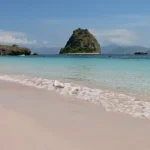
The star of the east is Pink Beach (Tangsi) in Jerowaru. Crushed red coral gives the sand a pale rose colour, and the water is clear enough to snorkel straight off the shore. It is a long drive from the south, but the colour is real and the crowd is small.
Family-Friendly and Swimmable Bays
Selong Belanak is the easiest beach on the island. The sand is soft, the waves are small and rolling, and local instructors hire out longboards for beginners. Tanjung Aan has two bays divided by a rocky point: one has shallow, gentle water, the other has a small hill with a sunrise or sunset view over the entire coast. Both are developed, with sunbeds and warung close to the sand. Seger Beach, just next door, is where the annual Bau Nyale festival takes place.
If you want clear water and easy snorkelling, take the boat to Gili Nanggu or Gili Kedis off Sekotong, where tiny islands have soft sand and bright reef a few metres offshore.
Surfer Paradises
Lombok’s surf is the main reason many travelers come, and the south coast offers breaks for every level.
- Selong Belanak: Gentle, long rolling waves for beginners and longboarders.
- Gerupuk: A bay of several breaks (Inside, Outside, Don-Don, Kothong) reached by small outrigger boats. It suits intermediate surfers and has the best variety near Kuta.
- Mawi: A powerful right-hander for confident surfers, best at mid to high tide with a south swell.
- Ekas Bay: A cluster of left and right breaks in the southeast, with few crowds.
- Desert Point (Bangko-Bangko): A world-famous left-hand barrel for experts only. It is hard to reach, has simple facilities and works best from May to September.

Where to Eat by the Sea
The best meals on Lombok’s coast are cheap, simple and often cooked a few metres from the water. Expect a plastic chair, a ceiling fan and a plate that costs less than a coffee in Bali.
- Selong Belanak beach warung: Open-air stalls along the sand serve grilled fish, fried rice and fresh coconuts. Sit at the table nearest the water and order the catch of the day.
- Gerupuk fishing village: After your surf session, walk the village lanes to small warung selling seafood noodles and grilled snapper. You can often see the boats unloading as you eat.
- Kuta Lombok’s main strip: Along Jalan Pariwisata you will find everything from backpacker cafés with smoothie bowls to Sasak warung selling rice with spicy vegetables and chicken. Prices rise a little at night.
- Tanjung Luar fish market (East Lombok): A working fish market and harbour where fishermen sell the morning catch. Go early, expect strong smells and photograph politely.
- Gili Trawangan night market: Near the harbour, stalls grill fish, squid and satay over charcoal each evening, with the smoky sweetness drifting over the whole waterfront.
- Pantai Loang Baloq (Mataram): A local favourite at sunset, with street food, corn on the cob and families on mats watching the sky turn orange.
- Senggigi Art Market area: A mix of small restaurants and warung for a quick lunch between beach stops.
Alcohol is available in tourist areas such as Kuta, Senggigi and Gili T, but many local warung do not serve it.
Getting Around Between Beaches
Lombok is bigger than it looks, and its beaches are spread out. Public transport barely reaches the best ones, so you will need your own wheels or a driver.
- Scooter rental: The most popular choice around Kuta, at roughly 70,000–100,000 IDR per day. Roads are mostly good, but the tracks to coves such as Semeti and Are Guling can be sandy and steep. Ride only if you are confident and carry a valid licence.
- Car with driver: Around 600,000–900,000 IDR per day, ideal for a long loop to Pink Beach, Ekas or Sekotong.
- Ride apps: Gojek and Grab work in and around Mataram, but coverage thins out near Kuta and the remote coast. Do not rely on them to get home from a quiet bay.
- Angkot and bemo: Local minibuses run between towns such as Praya and Mataram, but they are slow and rarely stop at beaches.
- Airport transfers: From Lombok International Airport to Kuta is about 30–40 minutes and costs roughly 250,000–350,000 IDR with a private driver. Senggigi is farther, at around 1.5–2 hours. Damri buses run to Mataram at a much lower price.
- Boats: Small boats to the Gilis leave from Bangsal harbour for a few tens of thousands of rupiah. Fast boats from Bali land at Lembar, Bangsal or the Gilis directly.
Day Trips From the Beach
- Pink Beach and Southeast Lombok (full day): Drive from Kuta for about 2 to 2.5 hours each way. Add a boat trip to the nearby islets if the sea is calm, and carry cash because the area has few ATMs.
- Sekotong islands (full day): Head to Tawun or Lembar harbour, then take a hired boat to Gili Nanggu, Gili Sudak and Gili Kedis. Allow 5 to 7 hours for swimming and snorkelling.
- Gili Islands (half to full day): From Senggigi it is about 1 hour to Bangsal, then a short boat ride. You can snorkel with turtles off Gili Meno or Gili Air.
- Tanjung Ringgit (half day): A remote cape in the southeast with dramatic cliffs. The road is rough, so go with a local driver and expect a very quiet coast.
- Tetebatu and the rice terraces (full day): If you need a break from sand, drive inland for green valleys, small waterfalls and cooler air.
Nightlife and Evening Entertainment
Lombok’s nights are mellow. In Kuta, a handful of bars along the main road host live acoustic sets, reggae nights and surf-film evenings, and most places wind down by midnight. A few beach bars near Tanjung Aan put out bean bags and play chill music under the stars.
Senggigi has a small strip of bars and live-music venues, mainly playing cover bands for expats and Indonesian tourists. Gili Trawangan is the island’s real party hub, with beach clubs, DJ nights and bar crawls most evenings. If you prefer quiet, Gili Air has candlelit lounges with sunset cocktails.
For something different, join a local night market or watch fishermen lighting their lamps on Gerupuk Bay.
Shopping Near the Coast
Shopping in Lombok is about craft, not malls. The most famous products come from villages inland and are sold in small stalls near the beach.
- Sukarara (weaving village): A short drive from Kuta, famous for songket cloth woven on traditional looms. Prices vary with the complexity of the pattern.
- Banyumulek (pottery village): Clay pots and decorative pieces in earthy colours, a great souvenir if you can pack them carefully.
- Pearls in Sekarbela (Mataram): Lombok is known for South Sea pearls. Buy only from established shops and ask about authenticity.
- Kuta Lombok boutiques: Surf shops sell boards, rash vests, wax and sun hats. Prices are fair, and used boards are often available.
- Senggigi Art Market: Sarongs, carvings and shell jewellery. Bargain politely and start at around half the first price.
Where to Stay by Budget
Budget
Surf hostels and family homestays in Kuta, Gerupuk and Selong Belanak charge roughly 150,000–350,000 IDR per night, often including breakfast and a fan or simple air-conditioning. They are friendly, social and easy for meeting other travelers.
Mid-Range
Boutique guesthouses and small bungalow resorts near Kuta, Selong Belanak and Senggigi cost about 500,000–1,200,000 IDR per night. Expect air-conditioning, a pool and a hearty breakfast. Many are a short walk from the beach.
Luxury
Beachfront resorts around Mandalika, Selong Belanak and the northwest coast range from about 2,000,000 to 6,000,000 IDR or more per night. They offer private pools, spas and sea views. Book early for July, August and holiday weekends.
Best Time to Visit
The dry season from May to September is the most dependable for beaches. Days are sunny at about 28–31°C, the sea is clear and south-coast swell is best for surfing. July and August are peak months, with higher prices and more crowds. April, May, September and October are shoulder months with fewer people and lower rates.
The wet season from November to March brings afternoon downpours, rougher seas and cloudier water. Green hills and empty beaches are the reward, and surf at some breaks remains good. Check ferry schedules, because rough weather can delay crossings.
Two events are worth timing your trip around. Bau Nyale takes place on the beaches near Kuta in February or March, dated by the Sasak lunar calendar, when locals gather before dawn to collect sea worms in a ritual tied to a princess legend. The Mandalika Circuit also hosts major motorsport events, which fill hotels and raise prices, so check the calendar before booking. Ramadan in 2026 runs roughly from mid-February to mid-March, when daytime warung may close, some venues limit alcohol sales and the pace slows.
Practical Tips for Lombok’s Beaches
- Safety: Many beaches have no lifeguards. Rip currents are real at open south-coast beaches, so ask locals where it is safe to swim and avoid swimming alone when waves are large.
- Reef and sun: Surf breaks have sharp coral, so wear reef boots and clean cuts quickly. The equatorial sun is strong, so use reef-safe sunscreen and a hat.
- Dress and respect: Swimwear is fine at the beach, but cover shoulders and knees in villages and near mosques.
- Money: ATMs are limited outside Kuta, Senggigi and Mataram. Carry cash for warung, parking (usually 5,000–10,000 IDR) and boat captains.
- Tipping: Not required, but 10,000–20,000 IDR for a good driver or surf guide is appreciated. Some restaurants add service charge.
- Language: Bahasa Indonesia works everywhere. Locals speak Sasak among themselves, and “terima kasih” (thank you) always gets a smile.
- SIM cards: Telkomsel has the strongest coverage on remote coasts. An eSIM or physical SIM costs a few tens of thousands of rupiah for several gigabytes.
- Water: Do not drink from the tap. Refill from large bottles at your accommodation to cut plastic.
- Midday: The sun is harshest between 11 a.m. and 2 p.m., and some small warung close for Friday prayers. Plan lunch in the shade.
2026 Budget Breakdown
Costs are lower than Bali, particularly for food and local transport. These are typical daily figures per person, not including flights.
Budget (about 300,000–500,000 IDR per day)
- Homestay or hostel: 150,000–300,000 IDR
- Warung meals: 20,000–40,000 IDR each
- Scooter rental: 70,000–100,000 IDR
- Beach parking and small extras: 10,000–30,000 IDR
Mid-Range (about 800,000–1,500,000 IDR per day)
- Boutique room with pool: 500,000–1,000,000 IDR
- Café and seafood dinners: 60,000–200,000 IDR
- Surf lesson: roughly 350,000–500,000 IDR
- Boat trip or half-day driver: 300,000–600,000 IDR
Comfortable (about 2,500,000–5,000,000+ IDR per day)
- Beachfront villa or resort: 2,000,000–4,000,000+ IDR
- Fine dining and drinks: 400,000–800,000 IDR
- Private driver and day tours: 700,000–1,200,000 IDR
- Spa treatments and activities: 300,000–600,000 IDR
Frequently Asked Questions
What is the best beach in Lombok for swimming?
Selong Belanak is the top choice for swimming. Its wide bay has soft sand, shallow water and gentle waves, making it safe for families. Tanjung Aan’s calmer side is also good. For clear water and snorkelling, take a boat to Gili Nanggu or Gili Kedis.
Which Lombok beach has pink sand?
Pink Beach (Tangsi) in Jerowaru, East Lombok, has pink-tinted sand made from crushed red coral. It is about two to two and a half hours from Kuta, so plan a full day. The water is clear, and snorkelling is excellent just offshore.
Is Lombok good for surfing?
Yes. Lombok has breaks for all levels. Selong Belanak suits beginners, Gerupuk offers several waves for intermediates, and Mawi and Desert Point are for experienced surfers. The best swell usually arrives from May to September, when the south coast works most consistently.
How many days do you need to see Lombok’s best beaches?
Plan five to seven days. That gives you time for two or three days around Kuta and Selong Belanak, a day for Pink Beach or Sekotong, and a day or two in Senggigi or the Gilis. With only three days, stay in Kuta and focus on the south coast.
Is it safe to swim at Lombok beaches?
Many beaches are safe in calm conditions, but few have lifeguards. Rip currents can form on exposed south-coast beaches, especially during larger swells. Ask locals or your accommodation about current conditions, swim in protected bays such as Selong Belanak and avoid swimming alone in rough surf.
📷 Featured image by Reena Yadav on Unsplash.