On this page
- Registration Rules and IMEI: What You Need Before You Buy
- Where to Buy and Activate Your SIM or eSIM
- Telkomsel and by.U: Best Coverage, Easiest Digital Option
- Indosat IM3, XL Axiata and Smartfren Compared
- How to Install an eSIM Step by Step
- Physical SIM vs eSIM: Which Suits Your Trip
- 2026 Budget Reality: What You Will Pay
- Coverage From Bali to the Remote Islands
- WiFi in Cafes and Accommodation
- Why Mobile Data Matters for Gojek, Grab and KAI Access
- What Has Changed Since 2024
- Common Mistakes to Avoid
- Frequently Asked Questions
You land at Ngurah Rai with a dead-weight phone, a queue of tourists at the kiosk, and no clear idea which SIM is worth buying. In 2026 the choice is bigger than ever: physical SIMs, eSIMs from local operators, and plans that need a passport check before they work. This guide compares the main options so you can pick one in minutes and get online fast, whether you are staying in Bali or heading further out.
Registration Rules and IMEI: What You Need Before You Buy
Every SIM and eSIM in Indonesia, physical or digital, must be registered with a valid passport. The rule applies to residents and tourists equally. Bring your physical passport, because digital copies are generally not accepted at official outlets.
The second rule is about your phone, not your SIM. Every phone has an IMEI, a unique device number. If you bring a phone, tablet or other cellular device from abroad, you only need to register its IMEI with Indonesian Customs (Bea Cukai) if you plan to use it with a local SIM or eSIM for more than 90 days.
- Stays up to 90 days: Tourists generally do not need to register the IMEI. The local SIM or eSIM works normally.
- Stays over 90 days: Register at the airport customs desk or online at www.beacukai.go.id/register-imei.html before you leave the customs area. You receive a QR code to present. A tax may apply to devices valued over USD 500. After customs approval, go to an official operator store, such as Telkomsel GraPARI or an Indosat Ooredoo Store, to link your IMEI to your passport and a local number.
- If you skip it: After about 90 days of use with a local SIM or eSIM, your phone loses cellular access. It still works on Wi-Fi.
Where to Buy and Activate Your SIM or eSIM
You have four realistic routes, and each suits a different traveller.
Airports
Major international airports, including Denpasar, Jakarta and Surabaya, have official kiosks for Telkomsel, Indosat Ooredoo and XL Axiata. Staff help with registration and activation. It is convenient, but prices can be slightly higher and plan choices more limited than in city stores.
Official operator stores
These are GraPARI (Telkomsel), Indosat Ooredoo Store (IM3), XL Center (XL Axiata) and Smartfren Gallery. They offer the widest range of plans, reliable registration and proper customer support. For a physical SIM, this is the route I recommend.

Convenience stores
Indomaret and Alfamart often sell physical SIM cards. Activation and registration still need an official store or the operator’s self-registration app, which many tourists find tricky. eSIMs are generally not sold in these shops. They are better for topping up later.
Apps
Digital-first brands, namely by.U and Smartfren eSIM, handle purchase and activation entirely inside their mobile apps. No queue, no counter.
Telkomsel and by.U: Best Coverage, Easiest Digital Option
Telkomsel is widely regarded as having the most extensive and reliable network in Indonesia, including remote islands and rural areas. Expect excellent 4G and 5G in Java, Bali and major cities. Telkomsel runs two brands that matter to you.
Telkomsel main brand
Its “Tourist Prepaid” packages combine a large data allowance with some local calls and SMS. The 2026 estimate for the “Telkomsel Tourist Pass 2026” is Rp 100,000 to Rp 150,000 for 25GB to 40GB over 30 days. The data mixes national data, local data for regions such as Bali, and social media quotas.
Activation for the physical SIM happens in person at a GraPARI outlet with your passport. Telkomsel is increasingly offering eSIM to tourists, but the first registration and QR code may still need a GraPARI visit. Confirm this with the operator before you count on it. Manage your plan in the MyTelkomsel app. The website is www.telkomsel.com.
by.U, Telkomsel’s digital brand
by.U targets younger, tech-savvy users and is one of the easiest ways for a tourist to get an eSIM in Indonesia. Everything happens in the by.U app (Google Play Store and Apple App Store), and the website is www.byu.id. You build your own package: pick base data, then add “toppings” such as social media, streaming or calls.
- 10GB for Rp 40,000 (30 days)
- 25GB for Rp 80,000 (30 days)
- Topping: “Kuota Instagram & TikTok Tanpa Batas” (unlimited Instagram and TikTok) for Rp 20,000 (30 days)
A decent plan works out at roughly Rp 120,000 for 35GB plus unlimited social media for 30 days.
Indosat IM3, XL Axiata and Smartfren Compared
Indosat Ooredoo (IM3)
Coverage is strong in major cities, Java and Bali, with good 4G and 5G, but it can be less reliable than Telkomsel in very remote areas. The 2026 estimate for the “IM3 Tourist Starter Pack” is Rp 80,000 to Rp 120,000 for 20GB to 35GB over 30 days, often with quotas for certain apps or regions. The physical SIM needs in-store activation at an Indosat Ooredoo Store with your passport. IM3 has been expanding eSIM, and you might be able to buy one in store, though online purchase for tourists is less common. Confirm this on arrival. Use the myIM3 app, and see www.indosatooredoo.com or www.im3.id.

XL Axiata
XL is good in major cities and tourist hubs across Java, Bali and Sumatra, with competitive 4G and 5G speeds. The “XL Tourist Pass” is estimated at Rp 75,000 to Rp 110,000 for 18GB to 30GB over 30 days, often with a bonus for specific apps or night usage. The physical SIM needs in-store activation at an XL Center with your passport. XL offers eSIM to Indonesian residents, and direct tourist purchase is becoming more common, but you may still need to visit an XL Center. Manage your plan with myXL. The website is www.xl.co.id.
Smartfren
Smartfren runs on 4G LTE-Advanced and 5G only, with no 2G or 3G. Coverage is strong in urban areas and major tourist destinations but less extensive than Telkomsel in remote regions. It was one of the first Indonesian operators to adopt eSIM widely and promotes it to tourists. The “Smartfren Tourist eSIM” is estimated at Rp 60,000 to Rp 90,000 for 15GB to 25GB over 30 days, often with bonus data for new activations. Activation is fully digital through the MySmartfren app (Google Play Store and Apple App Store) or www.smartfren.com.
How to Install an eSIM Step by Step
Start with the basics: check that your phone supports eSIM. Most newer flagships from Apple, Samsung, Google and Huawei do. Then buy through an operator app (by.U, Smartfren) or an official store, receive your QR code or activation code, install the profile, and complete registration with your passport details.
by.U eSIM activation
- Download the “by.U” app while you are still on Wi-Fi.
- Open the app and select “Beli Kartu SIM” (Buy SIM Card).
- Choose the “eSIM” option.
- Select your data package: base data plus any toppings.
- Enter your name and email.
- Pay with an international credit card (Visa or Mastercard) or an e-wallet such as GoPay or OVO if you have one set up.
- After payment, the app shows a QR code or offers automatic eSIM profile installation.
- Go to Settings > Cellular/Mobile Data > Add eSIM, scan the QR code and follow the prompts.
- Complete registration in the app by uploading photos of your passport and a selfie. Verification typically takes 5 to 15 minutes.
- Once verified, your eSIM is active.

Smartfren eSIM activation
- Confirm your phone is eSIM compatible.
- Download the “MySmartfren” app or visit smartfren.com/eSIM.
- Select “Beli eSIM” (Buy eSIM).
- Choose your data package.
- Pay with an international credit card or a local e-wallet.
- You receive an email with a QR code, or an option to install the profile directly.
- Go to Settings > Cellular/Mobile Data > Add eSIM and scan the QR code.
- Complete registration in the app with your passport details and a selfie. This typically takes 5 to 10 minutes.
- Once verified, your Smartfren eSIM is active.
Physical SIM vs eSIM: Which Suits Your Trip
A physical SIM is the safe choice for older phones. It is widely sold at airports, easy to move to another phone, and a handy backup if eSIM activation fails. The downsides: you need a free SIM slot, the card can be lost or damaged, and registration usually means an in-person visit. Wait times at busy GraPARI outlets can run 20 to 60 minutes. You can also only use one physical SIM at a time.
An eSIM removes the counter altogether. There is no card to lose, you can store multiple profiles, activation with by.U and Smartfren can happen online within minutes of registration, and it cuts plastic waste. The trade-offs are real, though. You need a compatible phone, the setup is a little harder for people less comfortable with technology, and not every operator sells eSIM directly to tourists. If something goes wrong, you may need internet on another device to fix it.
My rule: if your phone supports eSIM and you are comfortable using apps, go with by.U or Smartfren. If your phone is older, or you want in-person help, buy a physical SIM from an official store.
2026 Budget Reality: What You Will Pay
These are the 2026 estimates for 30-day tourist plans. Prices have stayed relatively stable since 2024, with small changes in the data-to-price ratio.

- Budget: Smartfren Tourist eSIM, Rp 60,000 to Rp 90,000 for 15GB to 25GB. XL Tourist Pass, Rp 75,000 to Rp 110,000 for 18GB to 30GB.
- Mid-range: IM3 Tourist Starter Pack, Rp 80,000 to Rp 120,000 for 20GB to 35GB. by.U build-your-own plan, about Rp 120,000 for 35GB plus unlimited Instagram and TikTok.
- Comfortable: Telkomsel Tourist Pass 2026, Rp 100,000 to Rp 150,000 for 25GB to 40GB, on the network with the best reach.
If you are staying in Bali and Java only, the budget tier is usually enough. If you plan to travel to remote areas, pay more for Telkomsel or by.U, since the network matters more than the extra gigabytes. When you need more credit, top up at Indomaret or Alfamart, at ATMs, through online banking, or inside the operator app with a credit card or local e-wallet.
Coverage From Bali to the Remote Islands
Java and Bali have excellent 4G and increasingly 5G from all major operators, with Telkomsel leading. Major cities in Sumatra (Medan, Palembang), Sulawesi (Makassar) and Kalimantan (Balikpapan) are also well connected.
Beyond that, coverage becomes patchy. In less-visited parts of Sumatra and Kalimantan, and in Nusa Tenggara (Lombok, Flores, Sumba) and some coastal areas, towns are usually fine, but rural and mountainous areas can have weak or no signal. Telkomsel generally holds the lead there.
In remote islands, high mountain regions and eastern Indonesia, including Maluku and Papua outside main provincial capitals such as Jayapura, coverage is limited or absent. Telkomsel is often the only option. Plan for satellite phones, or hire local guides who know where the signal works.
WiFi in Cafes and Accommodation
Cafes, restaurants and eateries in cities and popular tourist areas, including Bali and Java, usually offer Wi-Fi. Quality ranges from basic to very good. Hotels, guesthouses, villas and hostels almost universally give guests free Wi-Fi, which is usually fine for browsing, messaging and streaming, though speeds can be inconsistent.
Reliable public Wi-Fi hotspots are rare outside specific venues, so do not rely on them as your only connection. A quiet warung with a slow connection at sunset is pleasant for a coffee, not for downloading a boarding pass. A local SIM or eSIM gives you dependable access for navigation, ride-hailing and emergencies.
Why Mobile Data Matters for Gojek, Grab and KAI Access
Gojek and Grab are indispensable. They cover cars, motorbikes, food delivery and package delivery, and need a reliable data connection to book rides and message drivers. Prices appear in IDR in the app.

For intercity rail on Java and parts of Sumatra, the main operator is KAI (Kereta Api Indonesia). The most convenient way to book is the “KAI Access” mobile app, which also needs an active internet connection. If you plan to move around, mobile data pays for itself quickly.
What Has Changed Since 2024
- More eSIM options: by.U and Smartfren in particular have made the tourist process more streamlined and digital.
- Clearer IMEI enforcement: The 90-day rule existed before 2024, but customs and operators now apply it more consistently. There are no new tourist exemptions. The online portal and customs desk process have been streamlined, but the core requirement is unchanged.
- Better tourist plans: Larger data allowances and quotas for apps such as TikTok, Instagram and WhatsApp are now common.
- Stable operators: No major operators have been discontinued or significantly rebranded.
- 5G growth: Rollout has continued in major cities and tourist areas.
Common Mistakes to Avoid
- Forgetting your passport: You cannot register without the physical document.
- Buying a SIM at a convenience store and expecting it to work: Registration still needs an official store or the operator app.
- Assuming every operator sells eSIMs to tourists online: Telkomsel main brand, IM3 and XL may still need an in-person visit. Choose by.U or Smartfren for a fully digital process.
- Downloading the app after you land: Do it on Wi-Fi first.
- Ignoring the 90-day IMEI rule: If you stay longer, register at customs or online, or your cellular access will be blocked.
- Relying on public Wi-Fi alone: It is inconsistent and rare outside specific venues.
- Choosing the cheapest plan for remote travel: Telkomsel coverage matters more than a few extra gigabytes.
- Throwing away receipts: Keep proof of purchase and registration.
Frequently Asked Questions
Do tourists need to register an eSIM in Indonesia?
Yes. Every SIM and eSIM in Indonesia must be registered with a valid passport, for residents and tourists alike. With by.U and Smartfren, you register inside the app by uploading passport details and a selfie. Verification usually takes about 5 to 15 minutes, depending on the provider.
Which eSIM is best for tourists in Bali?
by.U and Smartfren are the simplest, because everything happens inside the app. by.U runs on Telkomsel’s strong network and lets you build your own package. Smartfren is the cheapest, at an estimated Rp 60,000 to Rp 90,000, and works well in urban areas and major tourist destinations.

Do I need to register my phone’s IMEI?
Only if you use it with a local SIM or eSIM for more than 90 days. For stays up to 90 days, tourists generally do not need to. For longer stays, register at airport customs or at www.beacukai.go.id/register-imei.html, otherwise cellular access is blocked but Wi-Fi still works.
Can I buy an eSIM at Indomaret or Alfamart?
Generally no. Convenience stores often sell physical SIM cards, but registration still requires an official operator store or the operator’s app, which can be difficult for tourists. eSIMs are generally not sold there. Use the by.U or Smartfren app, or visit an official operator store.
Is mobile coverage good outside Bali and Java?
In major cities across Sumatra, Sulawesi and Kalimantan, yes. In Lombok, Flores, Sumba and rural areas it can be patchy, and in Maluku and Papua outside provincial capitals like Jayapura it is limited. Telkomsel generally leads in remote areas, so choose Telkomsel or by.U for those trips.
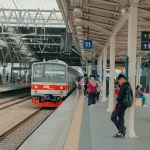
📷 Featured image by Abdul Ridwan on Unsplash.