On this page
- Why Kelimutu’s Colors Are Not a Trick of the Light
- Getting to Kelimutu in 2026
- The Pre-Dawn Climb: What Sunrise at Kelimutu Actually Feels Like
- The Three Lakes, One by One
- Moni Village: Where to Sleep and Eat
- What Else Is Inside Kelimutu National Park
- Day Trips Worth Making from Moni
- 2026 Budget Breakdown
- When to Visit Kelimutu
- Practical Tips for Kelimutu
- Frequently Asked Questions
💰 Click here to see Indonesia Budget Breakdown
💰 Prices updated: August, 2026. Budget figures are estimates — always verify before travel.
Exchange Rate: $1 USD = Rp17,720.00
Daily Budget (per person)
Shoestring: Rp389,840 – Rp1,151,800 ($22.00 – $65.00)
Mid-range: Rp886,000 – Rp1,772,000 ($50.00 – $100.00)
Comfortable: Rp4,430,000 – Rp8,860,000 ($250.00 – $500.00)
Accommodation (per night)
Hostel/guesthouse: Rp53,160 – Rp744,240 ($3.00 – $42.00)
Mid-range hotel: Rp460,720 – Rp1,772,000 ($26.00 – $100.00)
Food (per meal)
Budget meal: Rp30,000.00 ($1.69)
Mid-range meal: Rp105,000.00 ($5.93)
Upscale meal: Rp1,250,000.00 ($70.54)
Transport
Single metro/bus trip: Rp5,000.00 ($0.28)
Monthly transport pass: Rp886,000.00 ($50.00)
In 2026, Flores remains one of Indonesia’s least-overrun islands — but that is quietly changing. With new domestic flight connections through Komodo Airport and upgraded road infrastructure across the island’s spine, Kelimutu is receiving more visitors than ever before. That makes timing and preparation more important than they used to be. The lakes themselves are still jaw-dropping, still mysterious, and still unlike anything else in the archipelago. Here is everything you need to know to do them properly.
Why Kelimutu’s Colors Are Not a Trick of the Light
Mount Kelimutu sits at 1,639 metres above sea level in the central highlands of Flores, in East Nusa Tenggara province. Its summit holds three separate crater lakes sitting side by side — an arrangement that is geologically rare anywhere in the world. But what makes Kelimutu genuinely strange is that each lake can be a completely different color at any given time: deep turquoise, blood red, chocolate brown, black, pale green, or milky white. And the colors change, sometimes within weeks.
The cause is volcanic chemistry, not tourism myth. Each crater has its own hydrothermal system beneath it, releasing different concentrations of sulfuric acid, iron salts, and other dissolved minerals into the water. As gas emissions fluctuate — driven by seismic activity deep underground — the chemical balance in each lake shifts. Oxidation states change, and different compounds rise to dominate. The result is a visible color transformation at the surface. Geologists from Bandung Institute of Technology have been monitoring Kelimutu’s gas outputs since the 1990s, and their data confirms that the lake colors correlate directly with volcanic activity cycles, not seasons or weather.
As of early 2026, the western twin lakes (Tiwu Ko’o Fai Nuwa Muri and Tiwu Ata Polo) appear in shades of deep teal and dark brown respectively, while the eastern lake (Tiwu Ata Mbupu) has shifted to a ghostly pale green. These colors will almost certainly be different by the time you visit — which is exactly the point.
Getting to Kelimutu in 2026
The gateway city for Kelimutu is Ende, a port town on Flores’ southern coast. Getting there has become meaningfully easier since 2024. Garuda Indonesia and Wings Air both operate daily flights between Bali’s Ngurah Rai Airport and H. Hasan Aroeboesman Airport in Ende, with flight times around 90 minutes. TransNusa, the regional carrier headquartered in Kupang, added a Labuan Bajo–Ende route in late 2025, which matters if you are combining Kelimutu with a Komodo trip.

From Ende airport to Moni village — the small settlement at the base of Kelimutu — it is roughly 50 kilometres by road, taking between 90 minutes and two hours depending on conditions. The Trans-Flores Highway through this stretch was resurfaced in 2025, which has noticeably cut travel times compared to a few years ago. Your options for this leg:
- Charter a car from Ende: The most comfortable option. A driver with an air-conditioned vehicle costs around Rp 400,000–550,000 for the one-way trip to Moni. Most Ende guesthouses can arrange this the evening before.
- Public bus (damri or local minibus): Buses heading toward Maumere stop in Moni. Depart from the Ende bus terminal. Cost is Rp 40,000–60,000 per person, but schedules are irregular and the journey can stretch to three hours with stops.
- Organized tour from Labuan Bajo: Several Labuan Bajo operators offer multi-day Flores overland tours that include Kelimutu. These typically involve a domestic flight to Ende and a driver for the highland leg. Prices in 2026 run Rp 2,500,000–4,500,000 per person for two to three days, depending on accommodation tier.
There is no direct road from Labuan Bajo to Moni that makes sense as a day trip — it is roughly 500 kilometres across the island. Either fly, or budget two full travel days each way for an overland journey.
The Pre-Dawn Climb: What Sunrise at Kelimutu Actually Feels Like
The summit road inside Kelimutu National Park opens at 04:00. Almost every visitor who comes to the lake does so for sunrise, and the ritual has a specific rhythm that is worth understanding before you arrive.
From Moni, the park entrance is about 13 kilometres up a winding mountain road. Most guesthouses in Moni arrange transport to the summit for Rp 50,000–75,000 per person return, using small pickup trucks or motorcycles. The drive takes roughly 30–40 minutes in the dark, engine straining against the gradient, cool air flooding in from the surrounding forest. By 05:00, you should be at the main parking area near the summit.
From the parking area it is a short but steep walk — about 15 minutes — up stone steps to the primary viewpoint overlooking all three lakes. The air at 1,600 metres is genuinely cold before sunrise, often sitting at 10–14°C in the dry season and colder during July and August. Bring a proper jacket, not just a light layer.
As the sky lightens from black to deep blue to orange, the lake surfaces begin to reveal themselves. The moment the first direct light hits the water — usually around 06:15 depending on the season — the colors intensify in a way that photographs cannot fully capture. The sulfurous mist rising off the surfaces catches the light differently than still water does. It gives the lakes a slightly luminous, unsettled quality, like they are lit from below rather than above. Standing at the rim in that moment, smelling the faint volcanic tang in the cool air, listening to nothing except wind and the occasional murmur of other visitors — it earns its reputation.
The Three Lakes, One by One
The three craters are not identical experiences. Each has its own platform, its own character, and a slightly different vantage point.
Tiwu Ata Mbupu (Lake of Old People)
This is the westernmost and most isolated of the three lakes. Local Lio people believe this lake receives the souls of the elderly after death. It sits in its own separate crater, a short walk along the ridge from the twin lakes. The path can be muddy after rain. This lake tends toward cooler, quieter colors — pale green, blue-grey, sometimes milky white. The viewpoint here is less crowded, and the sense of solitude is stronger than at the main platform.
Tiwu Ko’o Fai Nuwa Muri (Lake of Young Men and Maidens)
The most photographed of the three, this lake receives the souls of the young, according to Lio belief. It occupies one half of the twin-crater system — two separate lakes sharing one crater wall between them. It has historically shown turquoise and green tones, though it has appeared vivid blue and even red in different periods. The main viewpoint platform sits directly above this lake and gives you a sight line across both twin lakes simultaneously.
Tiwu Ata Polo (Bewitched Lake)
Adjacent to Tiwu Ko’o Fai Nuwa Muri and separated only by a narrow volcanic ridge, this lake is associated with malevolent spirits in Lio tradition. It tends toward darker, more dramatic colors — deep red, dark brown, black. Standing at the rim looking down into water that is genuinely almost black, with gas bubbles occasionally breaking the surface, it is not difficult to understand how the local mythology developed around it.
Moni Village: Where to Sleep and Eat
Moni is a one-street village of maybe 800 people, draped along the road at the foot of Kelimutu. It exists almost entirely to serve Kelimutu visitors, which means guesthouses and small restaurants occupy most of the main strip. It is not a sophisticated place, but it is genuinely friendly and functional.
For food, the options are small family warungs serving standard Indonesian rice dishes — nasi campur with a rotating selection of vegetables, fried tempeh, and occasional fish. The cold highland air makes a bowl of bakso (meatball soup) at 07:00 after returning from the summit feel entirely reasonable. The warung directly opposite the Arwanty Hotel does solid nasi goreng and strong Flores robusta coffee from grounds that were roasted locally that week — you can smell it from the road.
A small morning market operates at the northern end of Moni village on most days, selling local produce, dried fish, and occasionally handwoven ikat textiles from surrounding villages. It is modest but worth a slow walk through.
What Else Is Inside Kelimutu National Park
The park covers 5,356 hectares of montane forest, and most visitors see only the crater area. If you have an afternoon free after the morning summit visit, the national park offers more than the lakes.
The forested slopes below the summit hold several walking trails that pass through cloud forest populated with tree ferns, moss-covered boulders, and bird species endemic to Flores — including the Flores monarch and the Flores crow. The park’s botanical garden, located near the main entrance gate, has labelled plantings of native Flores flora including various orchid species. Entry to the botanical garden is included in the park ticket.
A natural hot spring, Air Panas Kelimutu, sits about 3 kilometres from Moni village on the road toward the park entrance. It is basic — a few concrete pools fed by thermal water — but soaking in warm sulfurous water after a cold morning at the summit is a reasonable way to spend an hour. No entry fee, but a small donation to the local caretaker is customary.
Day Trips Worth Making from Moni
If you are staying two nights in Moni — which is sensible — a full day opens up for exploring the surrounding region.
Wolowaru Market
About 16 kilometres east of Moni, Wolowaru hosts one of the most authentic traditional markets in central Flores. Market days rotate on a five-day cycle; ask your guesthouse when the next one falls. Local women from surrounding villages arrive with hand-woven ikat textiles, fresh produce, and prepared foods. It is not a tourist market — prices are quoted in the local context and bargaining happens in the Lio language. Worth hiring a local guide to navigate it properly.
Jopu Village Weaving
About 6 kilometres from Moni, Jopu is a traditional Lio village where several families still practice hand-dyeing and back-strap loom weaving of ikat cloth using natural dyes made from local plants. You can watch the process and purchase directly from the weavers. Prices for a full ikat sarong start around Rp 500,000 for machine-assisted work and climb above Rp 3,000,000 for fully hand-dyed traditional pieces.
Ende Town
Ende is worth a half-day if you are passing through rather than skipping directly. The seafront promenade has been improved since 2024. The Bung Karno exile house — where Indonesia’s founding president lived under Dutch house arrest — is a modest but genuinely interesting museum open Tuesday through Sunday.
Detusoko Waterfall Area
Between Ende and Moni, the Detusoko district holds several accessible waterfalls including Murundao Falls. The road to the trailhead branches off the main Trans-Flores Highway. A local guide is recommended as the paths are not well marked. The walk through pine and eucalyptus forest to the falls takes about 45 minutes each way.
2026 Budget Breakdown
Kelimutu National Park entry fee in 2026 is Rp 150,000 per person for foreign visitors, Rp 15,000 for Indonesian nationals. The fee is paid at the gate and includes access to the botanical garden.
Budget Tier (under Rp 300,000 per day)
- Accommodation: Basic guesthouse rooms in Moni, Rp 100,000–180,000 per night (fan room, shared or private bathroom)
- Food: Warung meals, Rp 20,000–40,000 per dish
- Summit transport: Shared pickup truck, Rp 50,000–75,000 return
- Public bus Ende–Moni: Rp 40,000–60,000
Mid-Range Tier (Rp 300,000–800,000 per day)
- Accommodation: Guesthouses with private bathroom and hot water, Rp 250,000–450,000 per night
- Food: Slightly better restaurants, Rp 50,000–100,000 per meal
- Private charter from Ende: Rp 400,000–550,000 one way
- Guided park walks: Rp 150,000–250,000 for a half-day local guide
Comfortable Tier (Rp 800,000+ per day)
- Accommodation: The few lodge-style properties near Moni with hot water, better mattresses, and included breakfast, Rp 600,000–1,200,000 per night
- Private guided full-day tour from Ende including Kelimutu and surrounds: Rp 1,200,000–2,000,000
- Organized multi-day Flores tour from Labuan Bajo including flights: Rp 2,500,000–4,500,000 per person
When to Visit Kelimutu
Flores has two distinct seasons, and they matter for Kelimutu specifically because cloud cover at altitude can completely block the view of the lakes.
Dry season (May–October) is the clear choice. Mornings are reliably crisp and cloudless, which is what you need for sunrise. July and August are the most popular months — expect more visitors at the summit viewpoint, though “crowded” by Kelimutu standards still means a few dozen people, not hundreds.
Wet season (November–April) brings heavy rain and persistent cloud cover at elevation. You can still visit, but there is a real chance you will stand at the crater rim in thick mist and see nothing. December and January are the riskiest months. February and March occasionally offer clear mornings between rain systems.
The Pesta Danau Kelimutu — an annual cultural festival at the lake involving traditional Lio ceremonies, music, and weaving exhibitions — typically takes place in August. The exact date shifts each year; check with the Flores Tourism Office or Ende city government website for 2026 scheduling. It is a worthwhile reason to time your visit around, though accommodation in Moni books out quickly during the festival period.
Practical Tips for Kelimutu
Clothing and altitude: Bring a fleece or down jacket regardless of what time of year you visit. At 1,600 metres before dawn, 10–14°C is normal in dry season. The temperature rises quickly once the sun is up, so layer accordingly.
Photography: The main viewpoint faces roughly east, which means sunrise light falls directly on the twin lakes. Bring a wide-angle lens if you shoot with an interchangeable lens camera — the crater spread is wider than a standard lens comfortably captures. A tripod is useful for the pre-dawn shots but the stone steps are uneven, so a small flexible tripod is easier to manage than a full-size one.
Guides: A local guide is not required for the main crater walk, which is well signed. However, for trail walks into the national park forest, for navigating to outlying viewpoints, or for cultural context around the Lio traditions connected to the lakes, hiring a guide from Moni (Rp 150,000–250,000 for a half day) adds genuine value.
Phone signal: Telkomsel has the strongest coverage in the Moni and Kelimutu area. Other providers are unreliable. Purchase a Telkomsel SIM in Ende or at the airport if you do not already have one. At the summit itself, signal is present but intermittent.
Safety at the crater rim: The viewing platforms are railed and well maintained as of 2026. Do not attempt to descend into the craters — the volcanic gases at lower elevations are dangerous, and the crater walls are unstable. Park rangers enforce this boundary.
Water: Bring your own drinking water from Moni. There are small vendors at the parking area selling bottled water and instant noodles, but prices are higher than in the village and stock is not always reliable at 04:30 in the morning.
Frequently Asked Questions
How do you get to Kelimutu from Bali?
Fly from Bali’s Ngurah Rai Airport to Ende’s H. Hasan Aroeboesman Airport — daily flights with Garuda Indonesia and Wings Air, around 90 minutes. From Ende, charter a car or take a local bus to Moni village (50 km, 90–120 minutes). Total travel time from Bali, door to Moni, is roughly five to six hours.
Can you visit Kelimutu without a guide?
Yes, for the main crater walk. The path from the parking area to the summit viewpoint is clearly signed and straightforward. You do need to arrange transport from Moni to the park entrance. For off-trail walks in the national park forest or cultural context about local traditions, hiring a guide from Moni adds real value.
What colors are the Kelimutu lakes right now?
The lake colors change unpredictably, driven by volcanic gas activity beneath each crater. There is no way to guarantee what you will see. As of early 2026, the lakes are displaying teal, dark brown, and pale green tones. Check the Kelimutu National Park’s official Instagram for recent ranger-posted photos before you travel.
How many days do you need at Kelimutu?
Two nights in Moni is the practical minimum. The first night allows you to rest after the journey from Ende. Day two is the sunrise visit plus a day trip or park walk in the afternoon. A second sunrise attempt on day three is worth considering — light conditions and lake colors look different on different mornings, and the extra day covers you if cloud blocks the view on your first attempt.
Is Kelimutu worth the effort to reach?
For the type of traveler who values genuinely rare natural phenomena over convenience, yes — unequivocally. Three adjacent volcanic crater lakes in three different colors, in a remote highland setting with minimal crowds, is not something you can replicate anywhere else in Indonesia. The logistics are straightforward once you understand them; the experience is genuinely hard to forget.
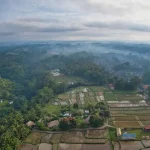
📷 Featured image by Ervan Sugiana on Unsplash.