On this page
- What Makes Tanjung Puting Different From Other Orangutan Destinations
- The Klotok Experience: Living on a Riverboat
- Camp Leakey and the Other Feeding Stations Explained
- When to Go: Seasons, Sightings, and 2026 Permit Changes
- Getting to Pangkalan Bun: Flights, Overland, and the Last Stretch to Kumai
- 2026 Budget Reality: What a Tanjung Puting Trip Actually Costs
- What to Eat and Where on the River
- Day Trip or Multi-Night Cruise?
- Practical Tips Before You Board
- Frequently Asked Questions
💰 Click here to see Indonesia Budget Breakdown
💰 Prices updated: August, 2026. Budget figures are estimates — always verify before travel.
Exchange Rate: $1 USD = Rp17,720.00
Daily Budget (per person)
Shoestring: Rp389,840 – Rp1,151,800 ($22.00 – $65.00)
Mid-range: Rp886,000 – Rp1,772,000 ($50.00 – $100.00)
Comfortable: Rp4,430,000 – Rp8,860,000 ($250.00 – $500.00)
Accommodation (per night)
Hostel/guesthouse: Rp53,160 – Rp744,240 ($3.00 – $42.00)
Mid-range hotel: Rp460,720 – Rp1,772,000 ($26.00 – $100.00)
Food (per meal)
Budget meal: Rp30,000.00 ($1.69)
Mid-range meal: Rp105,000.00 ($5.93)
Upscale meal: Rp1,250,000.00 ($70.54)
Transport
Single metro/bus trip: Rp5,000.00 ($0.28)
Monthly transport pass: Rp886,000.00 ($50.00)
Finding accurate, up-to-date information about Tanjung Puting in 2026 is harder than it should be. Many travel blogs still quote outdated permit fees, describe boat operators that no longer exist, or skip the practical details that actually determine whether your trip works. The permit system was revised again in late 2025, klotok prices have risen sharply since 2024, and the domestic flight situation into Pangkalan Bun has shifted. This guide cuts through the noise.
What Makes Tanjung Puting Different From Other Orangutan Destinations
Indonesia has several places where you can see wild Bornean orangutans — Bukit Lawang in Sumatra, Sepilok in Malaysian Borneo, Danum Valley. Tanjung Puting is not the only option, but it is genuinely different in one key way: the access point is a river. You do not drive to a forest edge and walk a trail. You live on a wooden riverboat called a klotok and cruise the Sekonyer River through the heart of the national park for two or three nights, watching the forest from the water.
The park itself covers about 415,000 hectares of lowland tropical rainforest, peat swamp forest, and mangrove in Central Kalimantan. It was established partly through the work of Dr. Biruté Mary Galdikas, who has studied orangutans here since 1971 — longer than any other primate researcher has worked with a single species. That history shows in how the park operates. Camp Leakey, her original research station, is still active. The orangutans here are habituated to human presence in a way that makes close-up sightings genuinely reliable, not guaranteed, but realistic.
The Klotok Experience: Living on a Riverboat
A klotok is a two-deck wooden river cruiser, typically around 12 to 15 metres long. You sleep on the upper deck on thin mattresses under a roof open to the river breeze. Nights on the Sekonyer River sound like this: frogs, water dripping, the occasional splash of something large in the dark, and the deep humidity of equatorial forest sitting over everything. It smells green and slightly damp in a way that city air never does.
Most klotoks carry two to eight passengers. You have a cook on board — meals are prepared fresh in the lower galley — a guide who knows the park’s feeding schedules and trails, and a captain who handles navigation. The boat doubles as your hotel, your transport, and your base for jungle walks. There is no Wi-Fi. Phone signal disappears within a few kilometres of Kumai port.
Klotok quality varies significantly. The cheaper boats have basic mattresses and rudimentary toilets. The better operators have proper bedding, screened sleeping areas, better food, and experienced English-speaking guides. This difference matters more than people expect, because your guide’s knowledge directly affects how much you understand about what you’re seeing.
Camp Leakey and the Other Feeding Stations Explained
There are three main feeding stations inside the national park, each at a different point along the river route. Understanding how they work helps you set realistic expectations.
- Tanjung Harapan — The first station most boats reach, about 2–3 hours from Kumai. Feeding happens at 15:00 daily. Orangutans here are semi-wild and accustomed to tourists. Good for first sightings, sometimes proboscis monkeys on the riverbanks nearby.
- Camp Pondok Tanggui — Smaller and quieter than Camp Leakey, with morning feedings around 09:00. Fewer tourist boats stop here, which means smaller crowds and sometimes better encounters.
- Camp Leakey — The most famous station, deepest in the park. Feeding at 14:00. The walk through the forest to reach the feeding platform takes about 20 minutes. This is where you are most likely to see large dominant males, mothers with infants, and the park’s most well-known individuals. The forest canopy here is dense enough that on overcast mornings, it is almost dark at ground level.
Beyond the feeding stations, your guide will watch for wild orangutans in the canopy along the river — nests visible in trees, movement in the branches, or the distinctive sound of a male’s long call carrying across the water. These unscheduled sightings are often the most memorable.
When to Go: Seasons, Sightings, and 2026 Permit Changes
Central Kalimantan has two seasons. The dry season runs roughly May through September. The wet season runs October through April. The dry season is more comfortable — trails are less muddy, river levels are lower, and you can see more of the forest floor. The wet season means higher water, which actually opens access to some areas that are unreachable in the dry, and the forest is extraordinarily lush. Orangutan sightings are possible year-round.
Avoid late July and August if you dislike crowds. This is peak European and Australian holiday season, and popular klotoks book out weeks in advance. May, June, and September are excellent months with manageable visitor numbers.
Regarding permits: as of 2026, all foreign visitors must obtain a national park entry permit, a SIMAKSI (research/visit permit), and a mandatory guide permit. The process was restructured in late 2025 and is now partially online through the Kementerian LHK (Ministry of Environment and Forestry) portal. In practice, most klotok operators handle all permit paperwork as part of the package — confirm this explicitly when booking. The combined fee for foreign visitors is currently around Rp 500,000–700,000 per person for a 3-day cruise, separate from the klotok cost.
Getting to Pangkalan Bun: Flights, Overland, and the Last Stretch to Kumai
The gateway city is Pangkalan Bun, capital of Kotawaringin Barat regency. The closest airport is Iskandar Airport (PKN), about 3 kilometres from the city centre.
In 2026, direct flights operate from Jakarta (Soekarno-Hatta) with Garuda Indonesia and Citilink, with flight times around 1.5 hours. There are also connections from Surabaya and Semarang. Ticket prices vary widely — budget Rp 800,000 to Rp 1,800,000 one way depending on how far in advance you book. Batik Air resumed Pangkalan Bun routes in mid-2025 after a hiatus, adding capacity that has helped stabilise fares slightly.
From Pangkalan Bun, the port of Kumai is about 20–25 kilometres away — roughly 30 minutes by car or ojek. Kumai is where all klotoks depart. Most operators will arrange airport pickup and transfer to the boat as part of the package. If you arrive the night before departure, budget accommodation in Pangkalan Bun runs Rp 250,000–400,000 per night for a clean guesthouse.
2026 Budget Reality: What a Tanjung Puting Trip Actually Costs
Costs here are per person based on two people sharing a klotok for a 3-night, 4-day cruise, which is the most common itinerary.
- Budget tier — Rp 3,500,000–4,500,000 per person. Basic klotok, shared facilities, simpler meals, guide with limited English. Gets the job done for sightings but the experience is rougher.
- Mid-range — Rp 5,000,000–7,500,000 per person. Comfortable sleeping arrangements, good cook, knowledgeable English-speaking guide, better boat condition. This is the sweet spot for most independent travellers.
- Comfortable — Rp 8,000,000–14,000,000 per person. Private klotok or premium shared boat, air-conditioned cabin option on some vessels, full-service guide, photographer-friendly scheduling, flexible itinerary.
These figures include the boat, guide, meals on board, and park permits. They do not include flights to Pangkalan Bun, transfers, or accommodation the night before departure. A solo traveller chartering a private klotok pays significantly more — expect to pay for a minimum of two passengers on most boats.
What to Eat and Where on the River
Meals on a klotok are cooked fresh by your boat’s cook, and they are one of the genuine pleasures of the trip. Breakfast typically means nasi goreng with a fried egg, strong sweet coffee, and fruit — papaya or banana bought at the Kumai market before departure. Lunch and dinner rotate through ikan bakar (grilled river fish), tempe goreng, sayur asem, and rice. The food is simple and honest. A piece of ikan bakar eaten on the upper deck of a riverboat while macaques watch you from the bank is a meal you will remember past what the food itself deserves.
There are no warungs or restaurants inside the national park. Everything is cooked on the boat. In Kumai itself, before or after your cruise, try the local seafood restaurants along the waterfront — kepiting saus padang (crab in Padang sauce) is the standout dish in this area. Budget Rp 80,000–150,000 per person for a full meal with drinks.
Day Trip or Multi-Night Cruise?
This question comes up constantly, and the answer is straightforward: a day trip from Pangkalan Bun to Tanjung Puting is possible, but it does not work well. Camp Leakey alone is a 4–5 hour boat ride from Kumai. A day trip gets you there and back with limited time at feeding stations, no opportunity to walk deeper trails, and no experience of the river at dawn or dusk — which is when wildlife activity peaks.
The minimum worthwhile itinerary is 2 nights and 3 days. This covers Tanjung Harapan and Camp Leakey with time to spare. Three nights and four days is the standard recommendation — it adds Camp Pondok Tanggui, a more relaxed pace, and real chances at seeing proboscis monkeys, hornbills, and wild orangutans beyond the feeding stations.
If you are genuinely short on time, a 2-night trip is better than a day trip. But if you have come all the way to Kalimantan, rushing this particular experience is a mistake most people regret.
Practical Tips Before You Board
- Clothing: Light, long-sleeved shirts and long trousers for jungle walks — leeches are present, especially in the wet season. Dark colours are fine; avoid anything bright that attracts insects.
- Mosquito protection: Bring DEET-based repellent. The boat’s mosquito nets help at night but the forest walks require personal protection.
- Cash: Bring all the cash you need before leaving Pangkalan Bun. There are no ATMs in Kumai that reliably accept foreign cards, and none inside the park.
- Charging: Better klotoks have a generator that runs for a few hours in the evening. Bring a power bank for daytime use.
- Camera: A camera with a telephoto lens (200mm minimum, 300mm preferred) makes a significant difference for canopy sightings. Phone cameras struggle in the low light of dense forest.
- Distances from orangutans: The park rules require a minimum 5-metre distance. Your guide should enforce this. Do not approach animals that approach you — back away calmly.
Frequently Asked Questions
Are orangutan sightings at Tanjung Puting guaranteed?
Nothing in wildlife travel is guaranteed, but sightings at the three feeding stations are highly reliable — animals do visit consistently. The stations are managed to encourage natural foraging, not circus feeding, so arrival times vary. A 3-night cruise visiting all three stations gives you multiple opportunities, and most visitors see orangutans on their very first stop.
Is Tanjung Puting safe for solo travellers?
Yes, including solo female travellers. The national park is well-managed and klotok crews are experienced hosting international visitors. The main practical issue is cost — solo travellers typically pay a single-supplement rate since klotoks have minimum pricing. Joining a small group through a Kumai operator is the easiest way to keep costs reasonable.
Do I need any vaccinations before visiting Kalimantan?
Hepatitis A, Typhoid, and standard routine vaccinations are recommended. Malaria prophylaxis is worth discussing with a travel doctor before your trip — risk in Central Kalimantan is low but not zero. Check current recommendations with your country’s travel health advisory before departure in 2026.
How do I book a klotok operator I can trust?
The most reliable approach in 2026 is to book directly with Kumai-based operators using WhatsApp, using recent TripAdvisor reviews as your shortlist. Ask for the guide’s name, their experience, and photos of the actual boat. Avoid any operator who cannot show you the boat you will specifically be travelling on.
Can I visit Tanjung Puting as part of a Borneo trip that includes Sabah or Sarawak?
Logistically yes, but the routing requires care. Pangkalan Bun is in Central Kalimantan, Indonesia — not connected by land to Malaysian Borneo. You will need to fly, typically via Jakarta or Kuala Lumpur. Budget at least an extra travel day each way. Many travellers combine Tanjung Puting with a week in Sabah for a comprehensive Borneo wildlife trip.
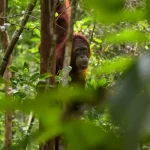
📷 Featured image by Aaron Madulara on Unsplash.