On this page
- Sembalun Valley: The Highland That Feeds the Island
- Sekotong Peninsula: Lombok’s Forgotten Southwest
- Tiu Teja Waterfall: The Canyon Few People Reach
- Rinjani’s Crater Rim Without the Summit Obsession
- Desa Sade and Sukarara: How to Visit Without the Script
- Belanting and East Lombok’s Raw Fishing Coast
- Gili Sulat and Gili Lawang: The Eastern Gilis
- Benang Stokel and Benang Kelambu: The Twin Waterfall Circuit
- Batu Layar and North Lombok’s Undiscovered Surf
- Budgeting for Off-Path Lombok in 2026
- Practical Tips for Getting It Right
- Frequently Asked Questions
💰 Click here to see Indonesia Budget Breakdown
💰 Prices updated: September, 2026. Budget figures are estimates — always verify before travel.
Exchange Rate: $1 USD = Rp17,928.47
Daily Budget (per person)
Shoestring: Rp358,569 – Rp896,424 ($20.00 – $50.00)
Mid-range: Rp1,254,993 – Rp2,689,271 ($70.00 – $150.00)
Comfortable: Rp2,689,271 – Rp4,482,118 ($150.00 – $250.00)
Accommodation (per night)
Hostel/guesthouse: Rp71,714 – Rp179,285 ($4.00 – $10.00)
Mid-range hotel: Rp448,212 – Rp896,424 ($25.00 – $50.00)
Food (per meal)
Budget meal: Rp26,893.00 ($1.50)
Mid-range meal: Rp143,428.00 ($8.00)
Upscale meal: Rp537,854.00 ($30.00)
Transport
Single metro/bus trip: Rp3,500.00 ($0.20)
Monthly transport pass: Rp200,000.00 ($11.16)
In 2026, Lombok has a split personality problem. The Mandalika Circuit area in the south is louder and more developed than ever — new hotels, MotoGP infrastructure, and package tourists on day trips to the Gilis. Meanwhile, roughly 80 percent of the island sits virtually untouched. The visitors who discover that other 80 percent tend to stay twice as long as planned. These are ten of those places — chosen because they are genuinely hard to find in English, genuinely worth the effort, and genuinely still quiet.
Sembalun Valley: The Highland That Feeds the Island
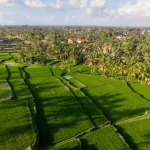
Most travelers pass through Sembalun at 2 a.m. en route to Rinjani’s summit and never look sideways. That’s a real loss. At 1,150 metres above sea level, the valley floor is a patchwork of garlic fields, strawberry plots, and small family farms — all backed by the absurdly dramatic wall of Rinjani’s eastern caldera rim. The air smells faintly of soil and wood smoke in the early morning, which is cooler than most visitors expect from Indonesia.
The village of Sembalun Lawang has a Thursday morning market where local farmers sell produce, dried spices, and hand-woven baskets. Come early — by 8 a.m. it’s wrapping up. From here, you can hire a local guide for a half-day walk through the rice terraces and tobacco gardens without any summit ambition at all. Guides charge around IDR 150,000–200,000 for three hours.
Accommodation in the valley is simple guesthouses and homestays, most running IDR 100,000–180,000 per night with breakfast. No infinity pools, no spa menus. Just cold mountain air and roosters at dawn.
Sekotong Peninsula: Lombok’s Forgotten Southwest
While tourists queue for boats to Gili Trawangan, the Sekotong Peninsula curves quietly along Lombok’s southwest coast with a string of islands that most travellers never learn exist. Gili Gede, Gili Asahan, Gili Layar, and half a dozen smaller ones are accessible by local wooden boat (perahu) from Sekotong Barat. You arrange the boat directly at the beach — no app, no ticket counter — and negotiate a price, typically IDR 100,000–150,000 per person for a return trip to the nearest island.
The snorkelling here is genuinely good. Coral coverage is healthier than around the main Gilis because fishing pressure is lower and tourist anchor damage is minimal. One morning in shallow water off Gili Asahan you might count parrotfish, moray eels, and blue-spotted stingrays before 9 a.m. There are a few small eco-resorts on Gili Gede, but most islands have zero permanent infrastructure — bring your own water and lunch.
The road to Sekotong from Mataram takes about 90 minutes on a scooter. It’s sealed the whole way and not difficult. Fuel up in Lembar before you go south — petrol stations thin out along the peninsula.
Tiu Teja Waterfall: The Canyon Few People Reach
Tiu Teja sits in the hills above Kayangan in North Lombok, and the approach is part of why it stays quiet. After parking near the trailhead, you walk about 45 minutes through rubber tree plantation and then scramble down into a narrow river canyon. The final section involves wading through shin-deep water for roughly 200 metres, stepping across smooth river stones, with canyon walls pressing close on both sides. Then the falls appear — a 35-metre drop into a green pool, framed by black basalt. The noise hits before you see it.
There is no formal ticketing system. Local community members collect a voluntary contribution of around IDR 20,000 per person at the start of the trail. Take water shoes or old sandals you don’t mind getting wet. The trail is not signposted in any meaningful way — ask for “air terjun Tiu Teja” in Kayangan village and someone will point you right.
Come before 10 a.m. to have the pool almost to yourself. By noon, the occasional local school group or Indonesian domestic tourist arrives, but it never gets crowded in the way that Sendang Gile waterfall near Senaru does.
Rinjani’s Crater Rim Without the Summit Obsession
Everyone knows Gunung Rinjani as a bucket-list summit at 3,726 metres. What fewer people know is that the crater rim and the lake views at around 2,600–2,900 metres are available on a two-day itinerary that skips the brutal pre-dawn summit push entirely. You still get the panoramic crater, the turquoise lake (Segara Anak), and the surreal experience of watching clouds form below your feet at sunrise. You just avoid the section that sends under-prepared tourists to Lombok’s public hospital.
The standard route from Sembalun Lawang to the rim takes 6–8 hours of uphill hiking on day one. Camp at the ridge. Sunrise from there is every bit as spectacular as photos suggest — the lake glows, Bali’s Agung appears on the western horizon, and the air carries the faint sulphurous warmth from the active vent below. Day two is downhill only.
Mandatory permits and guide fees apply. In 2026, the Rinjani Trek Management Board charges an entrance fee of IDR 150,000 on weekdays and IDR 225,000 on weekends. A licensed guide for this two-day rim route costs approximately IDR 500,000–700,000 per day, plus porter fees if you want one. Book through operators in Sembalun or Senaru — avoid booking from Kuta Lombok unless you verify the guide’s RTMB certification.
Desa Sade and Sukarara: How to Visit Without the Script
Both Sade (a traditional Sasak village near Rambitan) and Sukarara (the weaving village south of Praya) appear on package tour itineraries, but those tours last 25 minutes and involve a designated guide walking you through a short loop while women demonstrate weaving for photos. The experience feels managed because it is.
The difference when you arrive independently, early, and on foot: you see the actual rhythm of the day. In Sukarara before 8 a.m., older women are already at their backstrap looms under open pavilions, working on songket cloth that takes weeks to complete. The sound of the loom — a rhythmic wooden clacking — fills the narrow lanes. If you sit quietly and show genuine interest rather than rushing photos, conversations happen naturally.
In Sade, the traditional Sasak houses with their distinctive buffalo-dung-sealed floors are lived in — this is not a museum. About 150 people still call it home. Skip the souvenir shops at the entrance and walk to the back of the village where daily life is less performed. Bring small IDR notes for any purchases — IDR 50,000–100,000 for a hand-woven bracelet is fair; IDR 300,000 for a full sarong is reasonable for good quality work.
Belanting and East Lombok’s Raw Fishing Coast
The east coast road between Labuhan Lombok and Belanting is one of the least-travelled sealed roads on the island. There are no resorts here, no dive shops, no Instagram cafes. What you get instead: wooden fishing boats painted in jarring primary colours pulled up on black-sand beaches, children chasing plastic footballs on empty shoreline, and the smell of drying fish in the late afternoon sun.
Belanting itself is a small working harbour village. Fishermen leave before dawn and return mid-morning. If you arrive around 7–8 a.m., you’ll see the catch being sorted and sold directly from the boats — skipjack tuna, reef fish, squid. Bring cash and you can buy fish for almost nothing, though you’ll need somewhere to cook it.
The waters off east Lombok have strong currents and are not for casual swimming, but experienced freedivers and spearfishers have been quietly visiting this coast for years. There are no guesthouses in Belanting — the nearest basic accommodation is in Labuhan Lombok (IDR 100,000–150,000 per night). This coast rewards travellers who are content to observe and wander rather than consume experiences.
Gili Sulat and Gili Lawang: The Eastern Gilis
Fifteen kilometres north of Labuhan Lombok, two mangrove-fringed islands sit in a protected bay that sees almost no foreign tourists. Gili Sulat and Gili Lawang are the eastern alternatives to the Gili Trio, and the comparison ends there. Sulat has a large mangrove forest you can paddle through by dugout canoe. Lawang has a white sandbank on its southern tip that appears and disappears with the tide.
Local boatmen from the village of Jerowaru or from the coast near Labuhan Haji take visitors across. The crossing takes 20–30 minutes. Agree a price before boarding — IDR 200,000–300,000 return per boat is reasonable for a day trip. There are no shops, no warungs, and no facilities on either island. Pack everything you need.
Snorkelling around the eastern tip of Gili Sulat is excellent — the combination of mangrove run-off nutrients and open-water current creates a productive reef system. Hawksbill turtles are regularly seen here. The experience is completely different from the party atmosphere of Gili Trawangan: the water is quieter, the visibility sometimes less clear, but the marine life density is comparable and the solitude is absolute.
Benang Stokel and Benang Kelambu: The Twin Waterfall Circuit
In the forested hills of Central Lombok above Batukliang, two waterfalls sit close enough together to visit on a single half-day walk: Benang Stokel and Benang Kelambu. Stokel is the taller of the two — water fanning out over a curved cliff face into a shallow pool. Kelambu (which means “mosquito net” in Indonesian) earns its name because multiple thin streams fall simultaneously through dense jungle vegetation, creating a curtain of water you can walk behind.
The walk between the two takes about 20–30 minutes through secondary forest. The trail is damp and rooted — proper shoes, not flip-flops. Entry fees are collected at a small community post: IDR 10,000 per person per waterfall. Locals from Mataram and Praya visit on weekends, but the site is rarely visited by foreign travellers despite being genuinely spectacular.
The road up to the trailhead from Batukliang is partially unpaved and steep. A scooter handles it with care; a car manages it but barely. The best strategy is to hire a local ojek (motorbike taxi) from Batukliang for IDR 50,000–75,000 to take you up and wait.
Batu Layar and North Lombok’s Undiscovered Surf
Lombok’s surf reputation sits squarely in the south — Desert Point, Gerupuk, Mawi. All worthwhile, all increasingly known. But the north coast around Batu Layar and the stretch between Pemenang and Tanjung has reef breaks that work on the right north swell and see almost no surf traffic. Locals surf here. The occasional travelling surfer who asks the right questions finds it.
Batu Layar itself is a small headland north of Senggigi, named for a rock formation that juts from the sea. The reef on its northern side produces a consistent right-hander in the 1–2 metre range during the April-to-October dry season. The vibe in the lineup is relaxed — you might share the break with three or four local kids. There are no surf camps, no board rental shops, and no surf reports for this spot. You read the swell yourself or ask at one of the small warungs near the beach.
Further north, the coastline around Sire and Tanjung has similar qualities — reef setups that work quietly while everyone crowds Kuta Lombok. Bring your own board. The road north from Mataram is excellent quality following the 2024–2025 north Lombok coastal road upgrade.
Budgeting for Off-Path Lombok in 2026
One honest advantage of exploring away from tourist infrastructure: it is substantially cheaper. Here’s a realistic daily cost breakdown for each traveller type.
Budget Traveller (IDR 200,000–400,000 per day)
- Homestay or basic guesthouse: IDR 100,000–150,000
- Meals at local warungs: IDR 15,000–30,000 per meal
- Scooter rental from Mataram: IDR 70,000–90,000 per day
- Entrance fees and boat contributions: IDR 20,000–50,000
Mid-Range Traveller (IDR 500,000–900,000 per day)
- Small guesthouse with AC or eco-lodge: IDR 200,000–350,000
- Mix of warung meals and occasional sit-down restaurant: IDR 80,000–150,000 per day on food
- Hired driver or guided day trip: IDR 300,000–500,000
- Waterfall entries, boat crossings, national park fees: IDR 50,000–150,000
Comfortable Traveller (IDR 1,000,000–2,000,000 per day)
- Boutique guesthouse or small private villa: IDR 500,000–900,000
- Private driver with AC vehicle for full day: IDR 500,000–700,000
- Licensed guide for Rinjani rim trek: IDR 500,000–700,000 per day
- Meals including seafood and cold beer: IDR 150,000–250,000 per day
Note that the 2026 Indonesian VAT rate of 12 percent applies to formal accommodation and restaurant bills in tourist areas. Warung meals, market food, and cash-only homestays generally do not add this charge.
Practical Tips for Getting It Right
Roads and Transport
Lombok’s road network improved significantly after the 2023–2025 North Lombok Connectivity Project. The coastal road from Senggigi to Tanjung is now fully sealed. The east coast road to Labuhan Lombok is good quality. Mountain roads to Sembalun and the Benang waterfall area are sealed but steep — assess your scooter riding ability honestly before going alone. Google Maps works reasonably well in 2026 but misses some village tracks; download offline Maps.me as a backup.
Guides and Permits
For Rinjani-related trekking of any kind, a licensed guide from the Rinjani Trek Management Board (RTMB) is legally required and genuinely useful. For other destinations on this list, a guide is optional but often worthwhile for village visits. Hiring locally — directly in the nearest village — keeps money in the right hands and usually produces better results than booking through Kuta Lombok agencies.
Connectivity
Telkomsel remains the strongest network for rural Lombok coverage in 2026. Buy a SIM at the airport arrival hall (IDR 50,000–80,000 including starter data). Top up at Alfamart or Indomaret. Signal disappears in the Sembalun Valley and parts of east Lombok — download your maps before you go.
Safety and Health
Lombok’s off-path areas are generally very safe. The main practical risks are road accidents (scooter riders — wear a helmet, always), river crossings in wet season (Tiu Teja canyon is dangerous after heavy rain), and dehydration on exposed hikes. Always carry at least 1.5 litres of water per person. The nearest hospital with reliable facilities is RSUD Provinsi NTB in Mataram.
Respect and Etiquette
Lombok is a predominantly Muslim island. Dress modestly when visiting villages — covered shoulders and knees as a minimum. Ask before photographing people, especially women weaving in Sukarara. During Ramadan (which falls in March in 2026), eat and drink discreetly during daylight hours in rural areas. These small adjustments make a meaningful difference to how you’re received.
Frequently Asked Questions
Is it safe to explore Lombok independently without a tour guide?
Yes, for most of these destinations. Rinjani trekking legally requires a licensed guide, but places like Sekotong, Belanting, and the Benang waterfalls are perfectly manageable solo on a scooter. Basic Bahasa Indonesia phrases help significantly in areas where English is limited. Download offline maps before leaving Mataram.
What is the best time of year to visit off-path Lombok?
May through September is the dry season and the most reliable window — waterfalls still flow, roads are passable, and sea crossings to places like Sekotong and the eastern Gilis are calm. The wet season (November to March) closes Rinjani entirely and makes canyon walks like Tiu Teja dangerous, but the island is lush and crowds are thinner.
How do I get from the airport to less-touristy parts of Lombok?
Lombok International Airport is near Praya in Central Lombok. Grab and Gojek operate from the airport in 2026 — use the app rather than negotiating with touts outside. To reach Sembalun or east Lombok, the most practical option is to rent a scooter from Mataram or hire a private driver (IDR 400,000–600,000 for a full-day transfer with stops).
Are the Sekotong islands suitable for non-swimmers or families with children?
The sandbanks around Sekotong’s islands are very shallow and calm — suitable for children who can wade. However, the boat crossing on a traditional perahu involves no safety equipment beyond basic life jackets, and sea conditions can change. Families should go on clear mornings when the sea is calm and always ask the boatman for honest conditions before departing.
Do I need cash for off-path Lombok adventures, or are cards accepted?
Bring cash — and plenty of it. ATMs exist in Mataram, Senggigi, and Kuta Lombok, but there are none in Sembalun, Belanting, Sekotong, or most east coast villages. Withdraw IDR before heading out and carry small denominations (IDR 10,000 and IDR 20,000 notes) for market purchases, waterfall entry fees, and boat contributions. No local fisherman or village elder accepts GoPay or credit cards.
Explore more
Where to Party in Lombok: Top Bars and Clubs for Every Vibe
📷 Featured image by Andrea Huls Pareja on Unsplash.