On this page
- Why Sulawesi Still Surprises in 2026
- The Togean Islands: Disconnection by Design
- Tana Toraja: Cliff Graves and Ceremonies That Are Still Happening
- Lore Lindu National Park: Megaliths and Maleos in the Jungle
- Tentena and Lake Poso: The Quiet Center
- Minahasa Highlands and Lake Tondano: Volcanic Country in North Sulawesi
- Wakatobi: Southeast Sulawesi’s Isolated Reef System
- Getting Around Sulawesi Without Losing Your Mind
- Where to Eat Like a Local Across Sulawesi
- Accommodation Reality: What to Expect by Budget Tier
- Best Time to Visit and When Ceremonies Happen
- Sulawesi Budget Breakdown for 2026
- Frequently Asked Questions
💰 Click here to see Indonesia Budget Breakdown
💰 Prices updated: September, 2026. Budget figures are estimates — always verify before travel.
Exchange Rate: $1 USD = Rp17,928.47
Daily Budget (per person)
Shoestring: Rp358,569 – Rp896,424 ($20.00 – $50.00)
Mid-range: Rp1,254,993 – Rp2,689,271 ($70.00 – $150.00)
Comfortable: Rp2,689,271 – Rp4,482,118 ($150.00 – $250.00)
Accommodation (per night)
Hostel/guesthouse: Rp71,714 – Rp179,285 ($4.00 – $10.00)
Mid-range hotel: Rp448,212 – Rp896,424 ($25.00 – $50.00)
Food (per meal)
Budget meal: Rp26,893.00 ($1.50)
Mid-range meal: Rp143,428.00 ($8.00)
Upscale meal: Rp537,854.00 ($30.00)
Transport
Single metro/bus trip: Rp3,500.00 ($0.20)
Monthly transport pass: Rp200,000.00 ($11.16)
Why Sulawesi Still Surprises in 2026
Most travelers flying into Indonesia in 2026 still default to Bali, Lombok, or Raja Ampat. Sulawesi sits in the middle of the archipelago, shaped like a four-armed starfish, and it remains genuinely overlooked — not because it lacks things to do, but because it takes more effort to navigate. That effort gap is exactly what keeps it good. New domestic routes from Garuda and Batik Air now connect Makassar and Manado to more Indonesian hubs, and the roads in South and North Sulawesi have improved since 2024, but the island hasn’t been smoothed out for mass tourism. Torrential rains can still close highland roads. Ferry schedules still change without warning. Guides who know Lore Lindu or the Togean Islands are still rare, and that’s part of the appeal. If you’re reading this because you want somewhere that feels like Indonesia did before Instagram mapped every sunrise spot, Sulawesi is where you go.
The Togean Islands: Disconnection by Design
The Togean Islands sit in the Gulf of Tomini off the coast of Central Sulawesi, and getting there is still an adventure in 2026. The fastest route involves flying to Palu or Ampana and then catching a slow ferry — typically 4 to 8 hours depending on conditions — to the main island cluster. There is no reliable mobile data across most of the archipelago. This is not a bug. It’s the entire point.
The snorkeling and diving here belong to a different category from the overworked sites around Bali or even Lombok. The Togean Islands contain all three major reef environments — atoll, barrier, and fringing reefs — in a single marine area. At Kadidiri Island, you drop into water so clear it feels like swimming inside an aquarium. Schools of bumphead parrotfish move in formation just below the surface, and the hard coral coverage in shallower sections is some of the most intact you’ll find in Sulawesi without a liveaboard.
Banda Neira might get more press, but the Togeans are quieter and more affordable. Most bungalow guesthouses here include meals and can arrange guided snorkel trips for around Rp 150,000 to Rp 250,000 per person. The Bajau Laut communities — sea nomads who have lived on these waters for generations — still fish these reefs using traditional methods, and if you stay long enough, local fishermen will invite you out before dawn.

Tana Toraja: Cliff Graves and Ceremonies That Are Still Happening
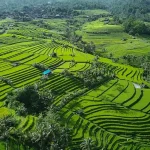
Tana Toraja in South Sulawesi gets more visitors than anywhere else on this list, but “more” is relative. By Bali standards, this highland region still feels completely undiscovered. The landscape alone justifies the journey: green rice paddies terraced into steep hillsides, traditional Tongkonan houses with their sweeping boat-shaped roofs, and limestone cliffs dotted with carved wooden balconies where effigies of the dead — the tau tau — stand watching over the valley below.
The Torajan approach to death and ceremony is unlike anything else in Indonesia. Funerals here are multi-day events involving hundreds of guests, buffalo sacrifices, and singing that carries through the night air. These are not performances staged for tourists. They are real community rituals that welcome respectful outside visitors. Between July and September, the funeral season peaks, and you can find ceremonies in villages around Rantepao — the main town — almost every week. Ask at your guesthouse rather than booking a tour operator in Makassar; local connections will get you into genuine ceremonies rather than designated “tourist-friendly” versions.
Beyond funerals, the burial sites at Lemo, Londa, and Kambira are among the most haunting and compelling places in all of Indonesia. At Londa, you walk into a cave by candlelight, past rows of coffins and stacks of skulls, while the air carries the deep, damp smell of centuries-old stone. It’s the kind of place that stays with you for years.
Lore Lindu National Park: Megaliths and Maleos in the Jungle
Most travelers who visit Central Sulawesi never make it to Lore Lindu National Park. Those who do tend to become quietly evangelical about it. The park covers over 2,000 square kilometres of montane rainforest in the highlands east of Palu, and it contains two things found almost nowhere else: an extraordinary concentration of endemic wildlife, and a collection of ancient megalithic stone statues whose origins remain genuinely debated by archaeologists.
The statues — scattered across the Bada, Napu, and Besoa valleys inside and around the park — are called the Bada Valley megaliths, and some stand nearly 4 metres tall. They depict human figures with flat faces and squat bodies. Nobody knows who made them, when, or why. Local guides know the paths between them, but the infrastructure is minimal. You are essentially hiking through farmland and forest to find stone figures standing in fields, surrounded by birds and total silence.

The wildlife component is just as compelling. Lore Lindu is one of the best places on earth to see the maleo — a strange, ground-nesting bird about the size of a chicken that incubates its eggs in geothermal soil. The park also hosts anoa (a miniature buffalo endemic to Sulawesi), babirusa (the tusked pig that looks prehistoric), and the Sulawesi bear cuscus. Early morning walks along the forest edge near Wuasa village are your best chance at multiple sightings in one trip.
Tentena and Lake Poso: The Quiet Center
Tentena is a small Christian town on the northern shore of Lake Poso in Central Sulawesi, and it serves as the ideal base for travelers moving between the Togean Islands and Tana Toraja by land. It’s not on most itineraries, which makes it exactly the kind of place worth building time around.
Lake Poso is the third deepest lake in Indonesia, and unlike Lake Toba, it has barely been developed. Dugout canoes still outnumber motorboats on the water. The lake’s endemic fish — the opudi — is smoked and sold at the morning market near the main bridge in Tentena, and eating it fresh-grilled with steamed rice and sambal while sitting by the lakeshore costs almost nothing. The air in Tentena smells of fish smoke and frangipani, and the pace of life here runs about three decades behind Makassar.
Nearby Saluopa Waterfall, about 13 kilometres outside town, drops through tiered limestone terraces into a series of cold, clear pools. On a hot afternoon — and Central Sulawesi gets properly hot — it’s one of the best places to swim in all of Sulawesi. The walk in takes about 20 minutes through secondary forest, and you’ll often have the pools entirely to yourself on weekday mornings.
Minahasa Highlands and Lake Tondano: Volcanic Country in North Sulawesi
Most travelers who fly into Manado head straight for Bunaken Marine Park and leave. That’s their loss. The Minahasa Highlands immediately south of Manado offer a completely different Sulawesi experience — cool air, volcanic crater lakes, and a local culture that blends Calvinist Christianity with distinctly non-mainland Indonesian flavors.
Lake Tondano sits in a broad crater basin about 40 kilometres from Manado, surrounded by hills planted with tomatoes, cloves, and cassava. The lake itself is serene and flat, mirroring the clouds on clear mornings. But the real attraction for food-focused travelers is the ring of restaurants on the lake’s western shore, serving grilled freshwater fish pulled from the water that morning. The local Minahasan cuisine here — featuring rica-rica (a fiery spice paste of chilies, ginger, and lime leaves) applied to everything from fish to dog meat — is some of the most distinctive food in Indonesia. The night market at Tomohon, about 20 minutes west of the lake, is where you encounter the full confronting sweep of Minahasan ingredients at the Extreme Market. It’s not for everyone, but it’s completely real.

Lokon and Mahawu volcanoes are both accessible from Tomohon with an early start, and the sulfuric morning mist around their craters — yellow-tinged, sharp in the throat — gives the highlands a primal atmosphere that no beach destination can replicate.
Wakatobi: Southeast Sulawesi’s Isolated Reef System
Wakatobi sits off the southeastern tip of Sulawesi, and in 2026 it remains one of the genuinely elite dive destinations in the world — not by reputation alone, but by the sheer condition of its reefs. Coral coverage rates here exceed almost anything in the Triangle outside of Raja Ampat, and the visibility regularly extends beyond 30 metres.
Getting here requires flying from Makassar to Wangi-Wangi (the main island), a route served by Wings Air several times a week. The Wakatobi Resort operates a private charter flight for its guests, but independent travelers use the commercial route and arrange diving through local operators on Wangi-Wangi or nearby Tomia island. A guided dive package including equipment typically runs Rp 600,000 to Rp 1,200,000 per dive depending on the operator — significantly less than what you’d pay in Raja Ampat for comparable access.
The house reef at Tomia is arguably the most accessible world-class reef in Indonesia. You wade in from shore and within 50 metres you’re drifting over hard coral gardens in 6 to 18 metres of water, watching Napoleon wrasse and sea turtles move through in unhurried loops. For non-divers, the snorkeling at Hoga Island is just as rewarding, with shallow coral tables extending 100 metres from the beach.
Getting Around Sulawesi Without Losing Your Mind
Sulawesi’s road network has improved since 2024 but still requires realistic expectations. The Trans-Sulawesi Highway connecting Makassar in the south to Manado in the north is technically complete, but sections through Central Sulawesi remain slow and poorly maintained. A bus from Makassar to Rantepao (Tana Toraja) takes 8 to 10 hours and costs Rp 150,000 to Rp 250,000 depending on the service. Night buses are the norm for these long hauls.

Flying is the practical choice for covering the island’s full length. Makassar’s Sultan Hasanuddin Airport is the main hub, with Manado’s Sam Ratulangi Airport handling North Sulawesi connections. In 2026, Batik Air has expanded its Makassar-Kendari and Makassar-Palu routes, making Central and Southeast Sulawesi more accessible than before. Budget around Rp 400,000 to Rp 900,000 for intra-Sulawesi flights booked 2 to 4 weeks ahead.
Within towns, Gojek and Grab operate in Makassar, Manado, and Rantepao. In smaller areas — Tentena, Ampana, Wangi-Wangi — you rely on ojek (motorcycle taxis) negotiated directly with drivers. Renting a motorbike is straightforward in most towns for Rp 70,000 to Rp 120,000 per day, and it’s the best way to explore areas like the Minahasa Highlands or the countryside around Rantepao at your own pace.
Where to Eat Like a Local Across Sulawesi
Sulawesi’s food geography changes dramatically as you move between regions. In Makassar, the night market strip along Jalan Penghibur near the waterfront is where you find coto Makassar (beef offal soup) served in clay bowls with ketupat, eaten standing at plastic tables while motorbikes squeeze past on either side. The soup arrives dark and rich, with a deep, fatty depth from roasted ground peanuts and candlenut. Warung Saudara on Jalan Nusantara is the kind of place with no sign outside and permanent queues at lunchtime — order the pallubasa.
In Rantepao, the morning market on Jalan Mappanyuki sells grilled pork ribs and black rice cakes wrapped in banana leaf from vendors who set up before 6am. In Manado, the Pasar Tradisional Pinasungkulan at Karombasan is the city’s main wet market and the place to eat pork noodle soup (mie cakalang) from the stalls along the eastern perimeter. In Tentena, the small warungs near the bridge serve fresh ikan danau (lake fish) for Rp 20,000 to Rp 35,000 a plate at any hour.
Accommodation Reality: What to Expect by Budget Tier
Accommodation across Sulawesi runs cheaper than Bali but the quality spread is wider. In Makassar, budget guesthouses in the Pantai Losari area start at Rp 150,000 to Rp 250,000 per night for a clean room with a fan and shared bathroom. Mid-range hotels with air conditioning, private bathrooms, and breakfast run Rp 400,000 to Rp 750,000. The Swiss-Belhotel and Rinra Hotel represent the comfortable upper tier at Rp 900,000 to Rp 1,500,000.

In Rantepao, the guesthouse scene is charming but simple. Mentirotiku Guesthouse and Indra Toraja Hotel are popular mid-range picks at Rp 300,000 to Rp 600,000. The Tongkonan-style bungalows at some properties add atmosphere worth paying a small premium for. In the Togean Islands, all-inclusive bungalow packages (room, three meals, snorkel gear) run Rp 350,000 to Rp 600,000 per person. In Wakatobi, independent guesthouses on Wangi-Wangi start at Rp 250,000, while the Wakatobi Resort at the luxury end charges well over Rp 5,000,000 per night.
Best Time to Visit and When Ceremonies Happen
Sulawesi’s weather follows a broad dry season from April to October and a wet season from November to March, but this varies significantly by region. North Sulawesi around Manado receives rain year-round, with the driest months typically being July to September. Central Sulawesi can be unpredictable, and the mountain roads around Lore Lindu become dangerous in heavy rain.
The best overall window for Sulawesi is June through September. This coincides with Tana Toraja’s funeral season — the period when families who have been saving for years hold their ceremonies before harvest. Attending a funeral in July or August is among the most memorable cultural experiences available anywhere in Southeast Asia in 2026. The harvest festival of Ma’bugi’ also runs during this period in some villages around Rantepao.
Avoid December and January in Central Sulawesi specifically — the Togean Islands ferry schedule becomes erratic and the crossing from Ampana can be rough to the point of cancellation. Wakatobi diving is best between October and April when the seas are calmer on the southeast coast.
Sulawesi Budget Breakdown for 2026
Daily costs across Sulawesi in 2026 vary enormously depending on where you are and what you’re doing. Here’s a realistic breakdown by tier:
- Budget traveler (Rp 250,000–Rp 500,000/day): Staying in fan-cooled guesthouses or homestays, eating at local warungs and market stalls, traveling by public bus and shared angkot, doing self-guided sightseeing. This is achievable in Rantepao, Tentena, and Ampana. Less realistic in Makassar or Manado without careful planning.
- Mid-range traveler (Rp 600,000–Rp 1,200,000/day): Air-conditioned hotel room, local restaurant meals plus occasional tourist restaurant, private ojek or rented motorbike, one guided activity per day. Comfortable for most of Sulawesi including the Togean Islands on the all-inclusive bungalow model.
- Comfortable traveler (Rp 1,500,000–Rp 3,000,000/day): Quality hotel, private car hire for day trips, guided diving or trekking, meals at the best local restaurants. This tier applies in Wakatobi if you’re diving regularly, or in Makassar staying at a business hotel with private transfers.
Diving costs sit outside these tiers as a variable. Budget Rp 600,000 to Rp 1,200,000 per dive for local operators, or Rp 300,000 to Rp 500,000 for a guided snorkel trip. The Togean Islands remain the best-value diving and snorkeling destination in all of Sulawesi by a significant margin.
Frequently Asked Questions
Is Sulawesi safe for solo travelers in 2026?
Yes, for the overwhelming majority of destinations covered here. Petty theft exists in Makassar as in any Indonesian city, but violent crime targeting tourists is rare. The main risks are logistical — bad roads, unreliable ferries, and medical facilities that are limited outside major cities. Carry travel insurance that covers evacuation, and you’re well prepared.
Do I need a visa to visit Sulawesi as a foreign tourist?
Sulawesi falls under Indonesia’s national visa rules. In 2026, citizens of most Western countries, Australia, Japan, and ASEAN nations enter Indonesia visa-free for up to 30 days, with a 30-day extension available. You arrive through Makassar or Manado international airports, both of which handle international arrivals with the standard immigration process.
How long should I spend in Tana Toraja?
A minimum of three full days gives you time to visit the main burial sites, walk between villages, and catch at least the edges of local activity. If you’re visiting during funeral season (July–September) and have flexibility, four to five days allows you to attend a ceremony and still explore the countryside without rushing. Two days is not enough to do it justice.
Can I visit the Togean Islands without booking in advance?
Technically yes, but practically unwise between June and September. Bungalow capacity is tiny across the main islands, and showing up without a reservation risks sleeping on a guesthouse porch or being turned away entirely. Outside peak season, the risk is lower, but the ferry schedule uncertainty means you may arrive on a day when there’s no onward boat. Book ahead and confirm your arrival date with the guesthouse by WhatsApp.
What’s the best base for exploring Sulawesi if I only have one week?
Makassar for two nights (explore the city, eat coto Makassar, day trip to Malino) followed by four nights in Rantepao for Tana Toraja gives you the strongest introduction to Sulawesi in seven days. If diving is your priority, fly Makassar–Wangi-Wangi and base yourself in Wakatobi for the full week — it’s a more focused but equally rewarding approach.
Explore more
Makassar Street Food: A Guide to the City’s Delicious Bites