On this page
- Why Sumatra Rewards Travelers Who Look Past the Obvious
- The Jungle Interior: Gunung Leuser and the Tripa Peat Swamps
- Forgotten Kingdoms: Muara Takus, Pagaruyung, and Batak Ruins
- Where Locals Actually Eat: Markets, Stalls, and Hidden Strips
- Getting There and Getting Around Without a Tour Operator
- Wild Coastlines: Beaches and Islands Most Tourists Never Reach
- Sleeping Off-Grid: Guesthouses, Homestays, and Jungle Lodges
- Volcanic Lakes and Highland Villages Beyond Toba
- Nightlife and After-Dark Culture in Sumatra’s Secondary Cities
- Shopping: What to Buy and Where Locals Actually Shop
- Best Time to Visit Each Region
- 2026 Budget Breakdown for Independent Travelers
- Frequently Asked Questions
💰 Click here to see Indonesia Budget Breakdown
💰 Prices updated: September, 2026. Budget figures are estimates — always verify before travel.
Exchange Rate: $1 USD = Rp17,928.47
Daily Budget (per person)
Shoestring: Rp358,569 – Rp896,424 ($20.00 – $50.00)
Mid-range: Rp1,254,993 – Rp2,689,271 ($70.00 – $150.00)
Comfortable: Rp2,689,271 – Rp4,482,118 ($150.00 – $250.00)
Accommodation (per night)
Hostel/guesthouse: Rp71,714 – Rp179,285 ($4.00 – $10.00)
Mid-range hotel: Rp448,212 – Rp896,424 ($25.00 – $50.00)
Food (per meal)
Budget meal: Rp26,893.00 ($1.50)
Mid-range meal: Rp143,428.00 ($8.00)
Upscale meal: Rp537,854.00 ($30.00)
Transport
Single metro/bus trip: Rp3,500.00 ($0.20)
Monthly transport pass: Rp200,000.00 ($11.16)
Why Sumatra Rewards Travelers Who Look Past the Obvious
By 2026, Lake Toba and Bukit Lawang have become genuinely crowded during peak season, with Bukit Lawang’s main trail now operating under a daily visitor cap enforced since late 2025. That pressure has done something useful: it’s pushed curious travelers to ask what else is out there. The answer is a lot. Sumatra is Indonesia’s sixth-largest island on Earth, and most of it sees almost no international tourism at all. The infrastructure has improved significantly — the Trans-Sumatra Highway is now paved and passable from Banda Aceh to Lampung — but the crowds haven’t followed yet. That window won’t stay open forever.
The Jungle Interior: Gunung Leuser and the Tripa Peat Swamps
Most people who visit the Gunung Leuser ecosystem do so through Bukit Lawang on the Sumatran orangutan trail. That route is worth doing — but the ecosystem covers 2.6 million hectares, and the Tripa peat swamp forest on the southwestern edge near Nagan Raya in Aceh is a completely different world. You walk on boardwalks over dark, tannic water that smells faintly of old wood and earth, with proboscis monkeys crashing through the canopy and the odd call of a hornbill cutting through the dense afternoon humidity.
For those who want deeper jungle, the Ketambe Research Station in Aceh Tenggara remains the best base. It’s a multi-day trek from the main road, and guides from the local Gayo community charge around IDR 450,000–600,000 per day — more experienced than most of the guides you’ll find in Bukit Lawang’s tourist strip. The station itself is a stripped-back research facility, not a resort. There are basic dormitory beds and cold showers. Bring a rain jacket regardless of the season.
The Leuser ecosystem in 2026 has also seen an expanded community ranger program, partly funded through carbon credit agreements. This means more checkpoints but also better trail maintenance and a lower chance of getting genuinely lost. Register with the BBTNGL (Balai Besar Taman Nasional Gunung Leuser) office in Kutacane before entering any trail system.
Forgotten Kingdoms: Muara Takus, Pagaruyung, and Batak Ruins
Sumatra has a deep archaeological record that barely registers on most travel itineraries. The Muara Takus temple complex in Riau province — a cluster of 9th-century Buddhist stupas sitting in the forest above the Kampar Kanan river — sees perhaps a few hundred visitors a month. The grounds are quiet, the grass is kept short by locals’ goats, and there’s a small warung nearby selling sweet tea and fried cassava. It’s a strange, vivid contrast: ancient Srivijaya-era brickwork crumbling gently in the equatorial heat while a man naps in a plastic chair twenty metres away.

The reconstructed Pagaruyung Palace in West Sumatra is better known but often skipped by travelers rushing between Bukittinggi and Padang. The original burned in 2007 and was rebuilt — the current structure is a faithful reproduction of the traditional Minangkabau royal palace, with its distinctive buffalo-horn roof sweeping dramatically upward. The interior museum has genuinely interesting artefacts including royal regalia and correspondence from the colonial period. Entry is IDR 20,000 for foreign visitors in 2026.
Less visited still are the Batak stone tombs and carved sarcophagi scattered across the hills around Samosir Island and the Toba plateau. Most tourists who visit Toba stay near Tuk Tuk and don’t cross the island. Head to the western shore near Simanindo or push further inland toward Parlilitan, and you’ll find stone effigies of Batak ancestors still standing in overgrown fields, often without any signage or fencing at all.
Where Locals Actually Eat: Markets, Stalls, and Hidden Strips
The best eating in Sumatra happens nowhere near the tourist guesthouses. In Medan, skip the restaurants on Jalan Semarang that cater to visitors and head instead to Pasar Sambu in the early morning — a chaotic, loud wet market where the back section opens into a row of tiny stalls serving soto Medan with thick, turmeric-heavy coconut broth, so fragrant the steam hits you from the street. Arrive before 8am. Most stalls are sold out by 9:30.
In Bukittinggi, the Pasar Atas (upper market) is a tourist staple, but the real eating is at Pasar Aur Kuning on the eastern edge of town — a working market where local traders eat at plastic-tabled warungs serving nasi kapau, the Bukittinggi variant of Padang food where dishes are displayed on raised wooden shelves and ladled over rice to order. A full plate of rice, two curried dishes, and a glass of iced tea runs IDR 25,000–35,000.
Palembang’s pempek scene is famous but the version most travelers try is the cleaned-up restaurant version. For the real thing, find Pasar 16 Ilir by the Musi River early in the morning. The pempek kapal selam (stuffed fishcake parcels) are pulled fresh from boiling water and dressed in black cuko vinegar sauce that has a sharp, fermented bite that no recipe quite replicates.

In Banda Aceh, Jalan Ahmad Yani is lined with mie Aceh stalls that don’t open until after Isya prayer, around 8pm. The thick yellow noodles arrive in a deep reddish-orange broth built on cardamom, fennel, and dried shrimp — a bowl that tastes like it belongs in a different cuisine entirely from the rest of Indonesian food.
Getting There and Getting Around Without a Tour Operator
Sumatra’s internal transport situation improved substantially between 2024 and 2026. The Trans-Sumatra Highway is now largely complete and toll roads connect Medan to Pekanbaru in under 7 hours by bus (previously 10–12 hours on the old route). Lion Air, Batik Air, and Wings Air have expanded domestic routes significantly — there are now direct flights from Medan to Meulaboh (Aceh Barat), Sabang, Nias, and Sibolga, all of which were poorly connected previously.
For getting around within regions, the best option in 2026 remains a combination of local buses (DAMRI and private operators) and Gojek or Grab for shorter hops in and out of towns. Gojek coverage now reaches secondary cities including Langsa, Tebing Tinggi, and Lubuklinggau. In areas where apps don’t work, becak motor (motorcycle taxis) are still negotiable — agree on the price before you get on.
Renting a motorcycle is straightforward in Medan, Padang, Bukittinggi, and Palembang. Daily rates run IDR 80,000–130,000 for a standard automatic scooter. An international driving licence is technically required, but enforcement on rural roads is rare. For jungle areas, hiring a 4WD with driver is safer and often only marginally more expensive when split among a group — expect IDR 600,000–900,000 per day including fuel.
The new Batam–Singapore fast ferry still runs multiple times daily, making Batam a practical entry point for travelers coming from Singapore. From Batam, there are connecting ferries and flights to Pekanbaru, Jambi, and Palembang.
Wild Coastlines: Beaches and Islands Most Tourists Never Reach
Sumatra’s west coast is one of Southeast Asia’s most underrated surf and beach destinations. The Hinako Islands off the coast of Nias see a fraction of the visitors that Nias’s main surf breaks attract. Getting there requires a local fishing boat from Sirombu — a 2-3 hour crossing depending on the swell — and accommodation is basic family homestays, but the reefs are almost entirely intact and the water is clear enough to see the bottom at 15 metres.

Further south, the Mentawai Islands off West Sumatra are known internationally as a surf destination but the northern islands — Siberut, in particular — are home to the Mentawai people, one of the few communities in Indonesia still maintaining significant elements of traditional tattooing and spiritual practice. The southern surf camps are well-trodden; Siberut’s interior is not. A permit is required to visit indigenous communities and must be arranged through the Dinas Pariwisata office in Padang before departure.
On the east coast, the Banyak Islands (Pulau Banyak) off the Aceh coast near Singkil have quiet white-sand beaches, sea turtle nesting sites, and almost zero tourist infrastructure. Accommodation is bungalow-level at best — wooden rooms, fan cooling, shared bathrooms — but the snorkelling just off the beach is genuinely excellent. A return boat from Singkil to Pulau Banyak costs around IDR 150,000–200,000 and takes 2–3 hours.
Sleeping Off-Grid: Guesthouses, Homestays, and Jungle Lodges
The accommodation landscape across Sumatra’s off-the-beaten-path areas is honest about what it is. Don’t expect boutique design hotels outside of Medan and Padang city centres. What you get instead are family-run penginapan (guesthouses) where the owner cooks breakfast, knows everyone in the area, and can connect you with guides, drivers, and local contacts that no app will surface.
In Ketambe, the main guesthouses — run by families who’ve been hosting researchers and trekkers since the 1980s — charge IDR 150,000–250,000 per night for a room with mosquito net and fan. Meals are served family-style at communal tables. The owners speak enough English for practical purposes and are a far better source of current trail conditions than any travel blog.
On Siberut, the community-based homestay program organized through local NGOs allows travelers to stay with Mentawai families for IDR 200,000–350,000 per night including meals. This money goes directly to the household. The program is structured so that visits don’t become performative — you’re expected to participate in daily life, not observe it from a distance.
In the highlands around Brastagi and on the road toward Berastagi’s volcanic flanks, there are several Dutch colonial-era guesthouses that still operate with their original tile floors and deep verandas. These are excellent value at IDR 180,000–300,000 and far more characterful than the chain business hotels in Medan.
Volcanic Lakes and Highland Villages Beyond Toba
Lake Toba is magnificent and rightly famous, but there are two other volcanic lakes in Sumatra that receive almost no international attention. Danau Maninjau in West Sumatra sits inside a caldera west of Bukittinggi — the road descends through 44 hairpin bends (locally called Kelok 44) to reach the lake surface, and the views on the descent are staggering. The lake itself is calmer and quieter than Toba, ringed by hillside villages and fish farms. A basic guesthouse room on the lakefront in Maninjau town runs IDR 100,000–180,000.
Danau Kerinci in Jambi province, near Gunung Kerinci — Sumatra’s highest volcano — is even less visited. The Kerinci Seblat National Park surrounding the lake is home to the Sumatran tiger (rarely seen, but tracks are documented) and the Rafflesia arnoldii, the world’s largest flower, which blooms unpredictably and is tracked by local rangers who post sighting updates on a WhatsApp group you can join through the park office in Sungaipenuh.
The villages around Kerinci — Kayu Aro, Lempur, Siulak — maintain a highland agricultural rhythm built around cinnamon, tea, and potato cultivation. The morning mist doesn’t lift until 10am, and the air at 1,500 metres above sea level has a sharpness that makes the rest of Sumatra feel tropical by comparison. Gunung Kerinci is climbable with a permit (IDR 250,000 for foreign visitors in 2026) and a guide arranged in Sungaipenuh.
Nightlife and After-Dark Culture in Sumatra’s Secondary Cities
Sumatra’s nightlife exists on its own terms and varies enormously by region. Medan has a genuine after-dark economy — Jalan Mojopahit in the Petisah area is lined with open-air seafood restaurants that run until midnight, and the Kesawan district has several heritage buildings converted into café-bars with live Batak music on weekends. Nothing is pretentious. People sit outside, drink iced Bintang or strong kopi tubruk, and talk loudly over the sound of a band covering 1980s Indonesian pop.
Padang and Bukittinggi are predominantly Muslim cities where alcohol is difficult to find and the nightlife centres on late-night eating and coffee culture. The Pasar Malam (night market) in Bukittinggi’s Pasar Atas area runs until 11pm and is genuinely lively, with street food, phone accessory stalls, and live acoustic music performed on a small stage near the clock tower.
Palembang has a more diverse nightlife than its conservative reputation suggests. The Palembang Icon Mall area has several rooftop cafés with views over the Musi River, open until midnight on weekends. The waterfront itself, along the Benteng Kuto Besak area, hosts weekend pop-up food and music events that draw large local crowds.
In Banda Aceh, nightlife is strictly alcohol-free — the province operates under syariah law — but the coffee shop culture is extraordinary. Acehnese coffee (kopi Aceh) is served in glass after glass from late afternoon through midnight, and the warungs around Jalan Sri Ratu Safiatuddin are packed every evening with students, civil servants, and traders all talking at maximum volume.
Shopping: What to Buy and Where Locals Actually Shop
Sumatra produces some of Indonesia’s most distinctive crafts and textiles, and buying directly from markets rather than tourist shops makes a significant difference both in price and in what you actually end up with. In Bukittinggi, Pasar Aur Kuning has a dedicated textile section on the upper floor where Minangkabau songket — heavy silk or cotton fabric woven with gold or silver thread — is sold by the metre. Prices run IDR 180,000–450,000 per metre depending on the weave density and fibre quality.
Batak ulos cloth from the Toba region is best bought in the villages around Samosir or at the weekly market in Balige on the southern shore of Toba. The market runs every Thursday and draws weavers from surrounding villages selling directly. A full ulos shawl runs IDR 150,000–400,000 depending on quality and age.
In Palembang, Songket Palembang (the city’s distinctive gold-threaded silk cloth) is sold in dedicated shops around Pasar 16 Ilir and along Jalan Kol. Atmo. Prices for genuine hand-woven Palembang songket start at IDR 800,000 for smaller pieces and go well above IDR 3,000,000 for full ceremonial lengths.
For coffee, Kerinci robusta and Gayo arabica are both significantly cheaper bought as loose-ground or whole beans from local producers or market stalls than from the branded packaging sold at airports. In Takengon (the Gayo highlands capital), the weekend market has several coffee sellers running direct from small farms — IDR 80,000–120,000 per 500 grams for single-origin arabica that would retail for three times that price in Bali or Jakarta.
Best Time to Visit Each Region
Sumatra straddles the equator, which means it doesn’t have a clean wet-dry seasonal divide the way Bali does. Rainfall patterns shift significantly by region and coast orientation.
- North Sumatra and Aceh (west coast): Driest from April to September. October through December sees heavy rainfall, especially in the highlands around Brastagi and Aceh Tengah.
- West Sumatra (Padang, Bukittinggi, Maninjau): September and October are the wettest months. June through August is the most reliable for clear skies. Avoid major Islamic holidays when guesthouses fill with domestic tourists.
- Riau and East Coast: The dry season here runs November to February — the opposite of the west coast — due to the sheltering effect of the Barisan mountain range.
- Jambi and Kerinci: May to August is the best window for climbing Gunung Kerinci. The summit is accessible but cloud-covered from October through January.
- South Sumatra and Palembang: May through September for the most comfortable travel. The August Sriwijaya Festival in Palembang is worth timing around — it’s a genuine local celebration, not a tourist event.
- Mentawai and Hinako Islands: April to October for surf. The northwest swell that makes the surf good also makes crossings rougher outside this window.
2026 Budget Breakdown for Independent Travelers
Sumatra is notably cheaper than Bali and Lombok for independent travelers who engage with local transport and accommodation. The following figures reflect realistic daily spending across the island in 2026.
Budget Tier (IDR 200,000–380,000 per day)
- Accommodation: IDR 100,000–180,000 (basic penginapan or homestay, fan room, shared or private bathroom)
- Food: IDR 50,000–80,000 (three meals from warungs and market stalls)
- Local transport: IDR 30,000–80,000 (angkot, local bus, Gojek for short hops)
- Entrance fees/activities: IDR 20,000–50,000 per day average
Mid-Range Tier (IDR 400,000–750,000 per day)
- Accommodation: IDR 200,000–350,000 (mid-range guesthouse, air-con room, private bathroom)
- Food: IDR 80,000–150,000 (mix of warungs and sit-down restaurants, one coffee shop per day)
- Transport: IDR 80,000–150,000 (hired motorcycle, occasional Grab car)
- Activities/guides: IDR 100,000–200,000 per day average
Comfortable Tier (IDR 800,000–1,500,000 per day)
- Accommodation: IDR 400,000–800,000 (better hotels in Medan or Padang, lodge-style stays in national parks)
- Food: IDR 150,000–250,000 (restaurant meals, specialty coffee, occasional splurge)
- Transport: IDR 200,000–400,000 (private car with driver, domestic flight legs)
- Guided experiences and permits: IDR 200,000–400,000 per day
Note: The 2026 Indonesian tourist levy (introduced for nature reserves under the revised Conservation Area regulation) adds IDR 25,000–50,000 to entry fees at national parks compared to pre-2025 rates. Factor this into daily activity budgets.
Frequently Asked Questions
Is Sumatra safe for independent travelers in 2026?
Yes, for the most part. Petty theft exists in Medan and Palembang as in any large city — keep your phone in your pocket in crowded markets. Remote areas like Kerinci and the Leuser ecosystem are physically challenging rather than dangerous. Aceh operates under syariah law; dress modestly and avoid alcohol in public. The Trans-Sumatra Highway has improved road safety significantly since 2024.
Do I need a visa to visit Sumatra?
Sumatra is part of Indonesia. Most nationalities enter visa-free for up to 30 days under the 2023 Visa on Arrival reform, which is still in effect in 2026. A 30-day extension is available through the nearest immigration office. Check the Direktorat Jenderal Imigrasi website for your specific nationality before travel, as the list is updated periodically.
What’s the best base for exploring off-the-beaten-path Sumatra?
It depends entirely on the region. Medan works as a hub for North Sumatra, Aceh, and the Leuser ecosystem. Padang or Bukittinggi covers West Sumatra. Sungaipenuh is the gateway for Kerinci. There’s no single base — Sumatra rewards planning around regions rather than trying to cover the whole island in one trip.
Can I get around Sumatra without speaking Indonesian?
In Medan, Padang, and Palembang you’ll find enough English speakers in tourism-adjacent roles. In rural areas and secondary cities, basic Indonesian is essential. Learning twenty key phrases makes an enormous practical difference — locals in off-the-beaten-path areas are patient and genuinely helpful once you make the effort to communicate. Google Translate with downloaded offline Indonesian works reasonably well as a backup.
How long do I need to see the highlights of off-the-beaten-path Sumatra?
A minimum of three weeks to do justice to two or three regions properly. Trying to cover North Sumatra, West Sumatra, and the east coast in under two weeks means spending most of your time on transport. One month allows you to go deep into a region rather than skimming the surface — the rewards increase significantly the longer you stay in one area.
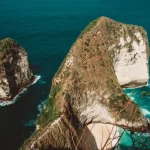
📷 Featured image by ahmad hidayat on Unsplash.