On this page
- Navigating Jakarta in 2026: What’s Changed and Why It Matters
- MRT & LRT: Jakarta’s Rail Network in 2026
- TransJakarta Bus Rapid Transit: The City-Wide Backbone
- KRL Commuter Line: Reaching the Outer Zones
- Ojek Online & Ride-Hailing Apps: Door-to-Door Movement
- Taxis, Blue Bird, and When to Use Them
- Beating Jakarta Traffic: Timing, Routes, and Realistic Expectations
- 2026 Budget Reality: What Transportation Actually Costs
- Frequently Asked Questions
Navigating Jakarta in 2026: What’s Changed and Why It Matters
Jakarta‘s traffic has a reputation that precedes it, and in 2026 that reputation is still partially deserved — but the city’s public transport network has quietly become one of the most functional in Southeast Asia. The problem most visitors face is that no single guide covers everything in one place. The MRT confuses people who don’t know where it stops. The TransJakarta route map looks like a plate of spaghetti. Ride-hailing apps work brilliantly in some zones and frustratingly in others. This guide cuts through all of that and tells you exactly how to move around Jakarta without wasting half your day sitting in a car.
MRT & LRT: Jakarta’s Rail Network in 2026
The Jakarta MRT is the cleanest, most reliable way to move through the city’s north-south corridor. As of 2026, the North-South Line runs from Lebak Bulus in the deep south all the way to Kota (the old colonial district) in the north — a full 27-kilometre stretch that took years to complete. The underground stations between Bundaran HI and Dukuh Atas are air-conditioned to the point of being almost cold, a sharp contrast to the 33°C heat on the street above.
The East-West Line (Phase 1) now connects Tomang to Ujung Menteng, opening up Kalideres and Daan Mogot corridors that previously had no rail option at all. This is genuinely new infrastructure that wasn’t operational before 2025.
The Jakarta LRT (Lintas Raya Terpadu) is a separate elevated system connecting Cawang, Dukuh Atas, and Bekasi in the east. It’s less useful for most tourists but valuable if you’re staying near the Sudirman-Kuningan business corridor and need to reach Cawang interchange.
Dukuh Atas station is the critical hub where MRT, LRT, KRL Commuter Line, and TransJakarta all intersect. Learn that name. It will save you constantly.
- MRT operating hours: 05:00–24:00 daily
- Frequency: Every 5 minutes during peak hours, every 10 minutes off-peak
- Payment: Tap-in/tap-out using a JakCard, Flazz, e-Money, or bank debit cards with NFC
- No cash accepted at gates — get a stored-value card at any station counter

TransJakarta Bus Rapid Transit: The City-Wide Backbone
TransJakarta is the network that actually reaches everywhere the MRT doesn’t. With 13 main corridors and dozens of feeder routes operating across the city, it covers neighbourhoods from Kalideres in the west to Pulogadung in the east. The iconic red articulated buses run in dedicated busway lanes on major arterials, which means they move faster than regular traffic — most of the time.
The busway experience has improved significantly. Sheltered halte (bus stops) are now fully integrated with real-time arrival displays at major stops. You tap in at the halte gate, not on the bus, and the single fare covers any transfer within 180 minutes. That makes it absurdly good value for cross-city travel.
Feeder minibuses (called Mikrotrans or JAK Lingko) connect residential areas to main corridors. These white minibuses with blue stripes operate on the same payment system — tap your card, same fare applies — and run routes through narrow gang (alleyways) that full-size buses can’t reach.
- Flat fare: IDR 3,500 per trip, covering unlimited transfers within 3 hours
- Operating hours: 05:00–23:00 on main corridors; feeder routes vary
- Best for: East-west travel, reaching Glodok, Tanah Abang, Blok M, and Kampung Melayu
- Avoid during: 07:00–09:00 and 17:00–19:30 — platforms get genuinely packed
KRL Commuter Line: Reaching the Outer Zones
The KRL Commuter Line is Jakarta’s suburban rail network, operated by PT KCI. It’s older and louder than the MRT — the trains rattle and the AC is inconsistent — but it connects Jakarta to Bogor, Tangerang, Bekasi, and Depok faster than any car on a normal day. If you’re doing a day trip to Bogor, the KRL from Manggarai or Gondangdia is your best option, full stop.
Manggarai Station was fully upgraded in 2024 and now functions as a proper interchange hub. Trains heading south to Bogor, east to Bekasi, and west toward Tanah Abang all pass through here. The platforms are elevated and the wayfinding signage is now bilingual.
One practical note: KRL carriages have designated women-only cars marked with pink signage, positioned at specific ends of the platform. These are enforced, and compliance is generally good.
- Fare: IDR 3,000 for the first 25 km, IDR 1,000 per additional 10 km
- Bogor from Manggarai: Approximately 1 hour 15 minutes, IDR 8,000–IDR 10,000
- Payment: Same stored-value cards as MRT and TransJakarta
- App: KRL Access app shows live train positions and platform assignments
Ojek Online & Ride-Hailing Apps: Door-to-Door Movement
Gojek and Grab remain the two dominant platforms in 2026, and between them they cover virtually every corner of Greater Jakarta. GoRide and GrabBike (motorcycle taxis) are how locals handle last-mile connections — the 2-kilometre gap between a TransJakarta stop and wherever you actually need to be. The fare is low, the helmet is mandatory by law, and the driver’s phone GPS handles routing so there’s no navigation stress on your end.

For car rides, GoCar and GrabCar are both reliable. Prices are set by the app before you confirm, so there’s no negotiation. Surge pricing applies during rain (which in Jakarta can mean multiply by 2.5 during a downpour at 18:00) and during major events around Senayan or the Gelora Bung Karno area.
InDrive, the bid-based ride platform, has grown significantly in Jakarta since 2024. You propose a price, drivers accept or counter. It can be 20–30% cheaper than Gojek or Grab during non-surge periods, but driver availability thins out in outer districts.
One thing worth knowing: ride-hailing pickups are banned in certain zones, particularly inside the Sudirman CBD and near major shopping malls during peak hours. Drivers will send you a designated pickup point via the app — walk the extra 100 metres rather than argue with the building security.
Taxis, Blue Bird, and When to Use Them
Blue Bird remains Jakarta’s most trustworthy metered taxi fleet in 2026. The meters are accurate, drivers are vetted, and the cars are maintained. You’ll pay more than a ride-hailing app during normal conditions, but at the airport, in areas with poor app connectivity, or when you have heavy luggage, a Blue Bird cab is the hassle-free choice.
Book through the My Blue Bird app for guaranteed metered service and digital tracking. Street hails still work in hotel zones and at major malls. Avoid unmarked taxis or anyone who approaches you at the airport offering a “special price” — these are consistently overpriced and occasionally unsafe.
Silver Bird is Blue Bird’s premium tier — larger cars, fixed rates for airport transfers, and a more polished experience if that matters to you.
Beating Jakarta Traffic: Timing, Routes, and Realistic Expectations
No transport guide for Jakarta is honest without addressing this directly: the city’s traffic is worst between 07:00–09:30 and 17:00–20:00 on weekdays. During those windows, a 10-kilometre car journey can take 90 minutes. The MRT and TransJakarta busway lanes are immune to much of this — which is exactly why using them during rush hour makes sense even if your hotel is near the road route.

Jakarta’s odd-even number plate rule (ganjil-genap) restricts private cars on 25 major road segments during peak hours based on whether the plate number ends in an odd or even digit. This applies to Gojek and Grab cars too — if your driver’s plate doesn’t match the day’s rule, they’ll route around affected roads, adding time. This system was expanded in 2025 to include more routes in Kebayoran and Kuningan.
Saturday mornings before 09:00 are genuinely the best time to move around Jakarta by car. The city feels like a different place — wide roads, light traffic, the smell of street food carts opening up along Jl. Sudirman. If you have an important cross-city meeting or connection, Saturday morning is when you should schedule it.
The Trans-Java Toll Road is irrelevant for inner-city travel but becomes useful if you’re self-driving toward Bandung or Semarang. Jakarta’s toll entry points are at Cawang, Semanggi, and Pondok Indah. Allow significant time to clear the toll plazas during long weekends.
2026 Budget Reality: What Transportation Actually Costs
Here’s what daily transport spending looks like depending on how you move around the city.
Budget
Using MRT, TransJakarta, and KRL almost exclusively. A full day of unlimited transfers with one MRT journey and a KRL trip runs approximately IDR 15,000–IDR 25,000 per person. Add two short GoRide motorbike trips for last-mile connections and you’re at IDR 35,000–IDR 50,000 total for the day.
Mid-Range
Mixing rail and occasional GrabCar or GoCar rides — particularly useful when it rains or you’re carrying shopping. Expect IDR 80,000–IDR 150,000 per day depending on distance and surge pricing. A standard GoCar from Blok M to Kota runs around IDR 65,000–IDR 90,000 via app.
Comfortable
Predominantly using GrabCar, Silver Bird, or hotel-arranged transport. A full day of on-demand car travel in central Jakarta typically runs IDR 200,000–IDR 400,000. Airport transfers from Soekarno-Hatta to central Jakarta by Blue Bird or Silver Bird cost IDR 180,000–IDR 250,000 via meter plus toll fees (approximately IDR 30,000–IDR 50,000).
- MRT single journey: IDR 4,000–IDR 14,000 depending on distance
- TransJakarta flat fare: IDR 3,500
- GoRide (3 km): IDR 12,000–IDR 18,000
- GoCar (10 km, off-peak): IDR 40,000–IDR 60,000
- Blue Bird airport transfer (toll included): IDR 210,000–IDR 280,000
Frequently Asked Questions
What is the easiest way to get from Soekarno-Hatta Airport to central Jakarta?
The Airport Railink Service (SHIA Express) runs from the airport to Manggarai Station in about 50 minutes and costs IDR 70,000. It’s the fastest option during peak hours. Blue Bird taxis are reliable for door-to-door service but take longer in traffic and cost around IDR 220,000–IDR 280,000 including tolls.

Can I use a credit card or foreign debit card on Jakarta’s public transport?
Not directly at transit gates. You need a stored-value card such as JakCard, Flazz, e-Money, or a local Indonesian bank debit card with NFC. Buy a JakCard at any MRT station counter for IDR 30,000, which includes a small starting balance you can top up as needed.
Is it safe to use motorcycle taxis (ojek) in Jakarta?
Gojek and Grab motorcycle taxis are safe and widely used by locals daily. Helmets are provided and legally required. Stick to app-based services rather than roadside ojek, where pricing and safety standards are less consistent. Women can request female drivers on Gojek through the GojekGirls feature in certain zones.
How bad is Jakarta traffic in 2026 — is it getting better?
It’s improved noticeably in the Sudirman-Kuningan corridor thanks to MRT expansion and the ganjil-genap enforcement. Outer areas like Bekasi, Tangerang, and Depok still experience serious congestion during peak hours. The city is measurably better than 2022, but planning around rush hours remains essential.
Which neighbourhoods are best served by public transport in Jakarta?
Sudirman, Senayan, Blok M, Dukuh Atas, Tanah Abang, Manggarai, and Kota are all extremely well connected by MRT or TransJakarta in 2026. Outer residential areas like Cibubur, Serpong, and Pondok Kelapa are harder to reach without a car or ride-hailing app.
Explore more
Where to Stay in Jakarta: A Guide to the City’s Best Neighborhoods
Beyond the Skyscrapers: Essential Things to Do in Jakarta
The Ultimate Guide to Shopping in Jakarta: Malls, Markets & More
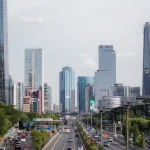
📷 Featured image by Tusik Only on Unsplash.