On this page
- What the Bali Arts Festival Actually Is
- When It Happens and How Long It Runs
- What You’ll See and Hear Inside the Grounds
- The Traditional Crafts and Visual Arts Exhibition
- Food and Culture Around the Festival
- 2026 Budget Reality
- Practical Tips for Getting the Most Out of Your Visit
- Frequently Asked Questions
What the Bali Arts Festival Actually Is
Every June, tens of thousands of visitors and Balinese locals converge on Denpasar for an event that has no real equivalent anywhere else in Southeast Asia. The Bali Arts Festival — known locally as Pesta Kesenian Bali — is not a tourist production. It is a government-backed celebration of Balinese and broader Indonesian culture that has run continuously since 1979, making 2026 its 48th edition. The difference matters. What you’re watching isn’t a performance designed for foreign audiences. It’s a genuine gathering of the island’s best dancers, musicians, painters, weavers, and craftspeople, competing and performing for Balinese pride.
The festival was founded under Governor Ida Bagus Mantra, who recognised that rapid tourism growth in the 1970s was putting pressure on traditional Balinese arts. His solution was to create an annual showcase that would keep those arts central, competitive, and financially supported. Nearly five decades later, that founding logic still holds. Participating in the festival brings prestige to a village or performing group. Winning a competition here is a serious achievement within Balinese society.
When It Happens and How Long It Runs
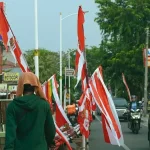
The Bali Arts Festival runs for approximately one month, traditionally opening in mid-June and closing in mid-July. In 2026, the opening ceremony is expected in the third week of June, though the exact date is confirmed closer to the event by the Bali Provincial Government. The opening parade — called Peed — is one of the most spectacular things you can witness in Bali. Hundreds of performers from across all nine regencies of Bali march down Jalan Sudirman in Denpasar in full ceremonial dress, accompanied by gamelan orchestras mounted on trucks and ceremonial offerings carried by women in intricate temple attire.
The festival runs daily at the Taman Werdhi Budaya Arts Centre in Denpasar, with performances typically starting in the late afternoon and running into the evening. Evening shows are cooler and more atmospheric, with the open-air stages lit by warm stage lighting against the tropical night sky. Weekends draw significantly larger crowds, particularly for major dance competitions.
If your travel dates give you flexibility, arriving in the first week of the festival maximises your options. The opening parade alone justifies planning your trip around it.
What You’ll See and Hear Inside the Grounds
The Taman Werdhi Budaya complex is large — multiple open-air stages, covered pavilions, exhibition halls, and an outdoor food area spread across several hectares. The programming runs simultaneously across venues, so you will need to choose. This is not a festival where you passively follow a single crowd.
The centrepiece performances include Kecak, the hypnotic fire dance performed by a chorus of dozens of men chanting in tight rhythmic unison, the sound building into something that vibrates in your chest. There’s Legong Keraton, a refined classical dance performed by young women in golden headdresses and intricate silk costumes, their finger movements and eye expressions following centuries-old choreographic rules. Barong and Rangda performances dramatise the eternal battle between good and evil using elaborate masked figures that Balinese audiences understand on a deeply spiritual level.
Beyond the iconic forms, the festival is one of the few places where you can see rare regional dances from eastern Bali and the Bali Aga villages — dances that predate Hindu influence and are performed almost nowhere else. The gamelan competitions are a highlight for anyone who has ever heard this percussion-based orchestra and wondered how deep the tradition goes. In competition, village ensembles push technical precision and interpretive originality to extremes.
The sounds layer together as you walk the grounds: the metallic shimmer of gamelan from one pavilion, the sharp rhythmic chanting of Kecak from another stage, the soft bells of a temple procession passing through — it is genuinely overwhelming in the best way, and no recording fully prepares you for it.
The Traditional Crafts and Visual Arts Exhibition
Separate from the performances, the arts festival hosts one of the largest exhibitions of traditional Balinese craftsmanship assembled in one place. Exhibition halls display tenun (hand-woven textiles) from different parts of Bali, each with distinct patterns that identify their region of origin. Geringsing double-ikat cloth from Tenganan — one of the most technically difficult textiles produced anywhere in the world — is often on display, made by a process so painstaking that a single cloth can take years to complete.
Wood carving and stone sculpture halls show both traditional religious iconography and contemporary Balinese art. Painting exhibitions include both the flat, tightly detailed Kamasan classical style and the more expressionist modern Balinese school that emerged in the 20th century. Several halls are dedicated to live demonstrations — you can watch a craftsperson carving or weaving in real time, which gives a sense of the labour involved that looking at a finished piece never quite does.
The silver and gold jewellery section draws serious attention. Balinese filigree work — intricate twisted wire designs — is among the finest in Asia, and the festival brings together silversmiths from Celuk and other craft villages who rarely exhibit outside their home areas.
Food and Culture Around the Festival
The food area inside the festival grounds is unpretentious and thoroughly Balinese. Warung-style stalls sell babi guling (Bali’s famous spit-roasted pork, the skin crackling and fragrant with turmeric and galangal), lawar (a spiced minced meat and vegetable mixture mixed with fresh coconut), and nasi campur Bali — rice with a rotating selection of small dishes that changes from vendor to vendor. For visitors used to tourist-oriented Balinese food, eating at the festival grounds is a useful recalibration of what the cuisine actually tastes like when it’s made for local palates: spicier, more herbaceous, with that distinctive hit of fresh shrimp paste.
The festival also reflects Bali’s broader social culture. Balinese families attend in large multigenerational groups — grandparents, parents, teenagers, and small children — treating it as a communal obligation as much as entertainment. Watching the crowd is as instructive as watching the stage. You’ll see women adjusting their temple dress between sets, young men discussing the technical merits of a gamelan performance with the seriousness of sports analysis, and children in full ceremonial costume running between their parents’ legs after completing a performance.
2026 Budget Reality
The Bali Arts Festival is one of the most affordable major cultural events you will find anywhere in the world for what it delivers.
- Entry to the grounds (general access): Rp 20,000–50,000 per day for most exhibition areas and smaller stages
- Headline performances (reserved seating): Rp 75,000–250,000 depending on the performance and seat category
- Opening ceremony parade (street viewing): Free — stake out a position along Jalan Sudirman at least 90 minutes early
- Food inside the grounds: Rp 25,000–60,000 for a full plate of nasi campur or babi guling
Accommodation in Denpasar (budget): Rp 200,000–450,000 per night for a clean guesthouse within walking distance or a short ride to the arts centre.
Accommodation in Denpasar (mid-range): Rp 600,000–1,200,000 per night for a hotel with air conditioning and breakfast included.
Accommodation in Denpasar (comfortable): Rp 1,500,000–3,000,000 per night for a boutique property or business hotel with reliable hot water and a pool.
Staying in Seminyak or Kuta and commuting to Denpasar adds Rp 80,000–150,000 per trip by ride-hailing app (Gojek or Grab). In 2026, traffic in Denpasar during the festival’s peak weekend evenings is significant — allow at least 45 minutes from the southern tourist strip.
Practical Tips for Getting the Most Out of Your Visit
Dress modestly and bring a sarong — not because there’s a dress code for the arts festival specifically, but because the venue sits adjacent to temple grounds and Balinese attendees will notice and appreciate the respect. The festival staff sell sarongs at the entrance for around Rp 50,000 if you don’t have one.
Bring cash. While larger vendors and ticketing booths now accept QRIS (Indonesia’s standardised QR payment system, now universally used across Bali in 2026), the smaller food stalls and souvenir sellers inside work on cash only. There are ATMs near the entrance but the queues grow long by 6 PM on busy nights.
The evening performances start around 7:30 PM but the grounds are worth arriving at by 5 PM to walk the craft exhibitions before the light fades and the crowds thicken. Bring a light jacket or layer — the evenings can feel cool relative to the midday heat, and you may be sitting still for two or three hours during longer performances.
Photography of performances is generally permitted from audience areas, but flash photography is considered disruptive and some sacred ceremonial elements may be restricted. Follow the lead of the Balinese audience around you — if people are putting phones away, there is a reason.
The festival website and official app (updated for 2026 with English-language programming schedules) publish the full performance calendar approximately two weeks before opening. Check it specifically for the inter-regency dance competitions — these are the events where Balinese audiences are most emotionally invested, and the energy in the stands during a close Legong competition is unlike anything else the festival offers.
Frequently Asked Questions
When exactly is the Bali Arts Festival in 2026?
The 2026 festival is expected to open in the third week of June and run through mid-July, covering approximately four weeks. The exact opening date is confirmed by the Bali Provincial Government roughly six to eight weeks in advance. The festival runs daily once it begins, with programming at Taman Werdhi Budaya Arts Centre in Denpasar.
Do I need to book tickets in advance?
For general entry and craft exhibitions, walk-up tickets are available at the gate. For headline performances — especially the opening ceremony, major dance competitions, and popular evening shows — advance booking through the official festival app is strongly recommended in 2026. Popular shows sell out three to five days ahead, particularly on weekends.
Is the Bali Arts Festival appropriate for children?
Absolutely. Balinese families attend with children of all ages, and many of the younger performers are children themselves. The visual spectacle of the costumes, masks, and gamelan performances holds children’s attention well. Evening shows run late, so families with very young children typically attend the earlier afternoon sessions in the craft and exhibition halls.
How is the Bali Arts Festival different from a typical Kecak performance at Uluwatu?
Uluwatu and similar tourist venues stage performances specifically adapted for foreign visitors — shorter, simplified, and scheduled around sunset. The Bali Arts Festival features performances designed for Balinese audiences and judges, with full traditional structure, longer duration, and genuine competitive stakes. The cultural context and audience energy are completely different.
Is the festival accessible without speaking Indonesian or Balinese?
Yes. The performances are visual and musical — language is not a barrier to experiencing them. In 2026, the official festival app includes English-language descriptions of each performance type and scheduled event. Festival staff at the main information booths in the grounds generally speak enough English to answer practical questions about venue locations and timing.
📷 Featured image by Aditya Chinchure on Unsplash.