On this page
- So, How Many Days Do You Actually Need in Yogyakarta?
- The Honest Answer: 3, 5, or 7 Days
- The 3-Day Itinerary: Tight But Doable
- The 5-Day Itinerary: The Sweet Spot
- The 7-Day Itinerary: For Those Who Go Deeper
- What Eats Your Time in Yogyakarta
- 2026 Budget Reality: What Each Extra Day Costs
- Frequently Asked Questions
So, How Many Days Do You Actually Need in Yogyakarta?
The most common mistake travellers make in Yogyakarta in 2026 is booking four nights and still leaving with a list of things they didn’t get to. The city has expanded its tourism infrastructure — the new Trans-Jogja bus routes now connect the airport directly to Prambanan, and the Borobudur visitor management system introduced in 2025 means timed entry slots that can disappear days in advance. If you haven’t planned your Yogyakarta trip with that in mind, you’ll spend precious morning hours scrambling for tickets instead of watching sunrise over ancient stone temples. This guide cuts through the guesswork and tells you exactly how many days you need — based on what kind of traveller you are.
The Honest Answer: 3, 5, or 7 Days
There is no single right answer, but there is a right answer for you. Yogyakarta — locally called Jogja — is a city that rewards patience. It has UNESCO World Heritage temples, a living royal court, a dense arts and batik scene, and surrounding volcanoes and beaches that each deserve a proper half-day. The question isn’t really “how much is there to do” — it’s “how much do you want to skim, and how much do you want to actually feel.”
- 3 days: First-time visitors on a tight schedule. You’ll hit the headlines but move fast.
- 5 days: The sweet spot for most independent travellers. Covers temples, culture, a day trip, and some breathing room.
- 7 days: Slow travellers, cultural deep-divers, digital nomads, or anyone who wants to include Mount Merapi, the south coast, and a batik or silversmithing workshop.
The 3-Day Itinerary: Tight But Doable
Three days in Jogja is a sprint. It works if you pre-book everything — especially Borobudur’s sunrise slot (book at least 5 days ahead via the Borobudur Heritage Site portal) and Prambanan’s skip-the-queue combo ticket. Here’s how to structure it:
Day 1 — Arrival and the Old City
Arrive early. Drop your bags and head straight to the Kraton (Sultan’s Palace) in the morning when it’s cooler and less crowded. Walk north along Jalan Malioboro — the street smells of clove cigarettes and grilled corn, and the batik shops are just opening their shuttered fronts. Spend the afternoon at Taman Sari water castle. Eat dinner at a lesehan restaurant along Malioboro: sit on floor mats, order gudeg — the slow-braised jackfruit stew that’s been simmering since before dawn, sweet and deeply savoury — and watch the evening foot traffic thicken.

Day 2 — Borobudur Sunrise, then Prambanan
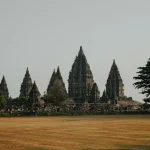
This is the big temple day. Wake at 4:00am. Your driver picks you up by 4:30am for the 45-minute drive to Borobudur. The sunrise slot puts you on the upper terraces as the mist lifts off the Kedu Valley below — stone Buddhas emerging from grey-pink light, bells the size of small cars surrounding you. By 9:30am you’re back in the car and heading to Prambanan for mid-morning, before the heat peaks. Afternoon: rest. Evening: optional Ramayana Ballet performance at Prambanan’s open-air theatre (check the 2026 schedule, performances run April–October).
Day 3 — Art, Food, and Departure
Morning at Kotagede for silver workshop browsing and the old mosque quarter. Quick stop at a wayang kulit (shadow puppet) art shop on Jalan Tirtodipuran. Late lunch near the airport at one of the warung strips on Jalan Parangtritis, then head to Yogyakarta International Airport (YIA) or Adisucipto if your flight departs from there. Note: in 2026, most domestic routes now operate out of YIA — confirm before booking transport.
The 5-Day Itinerary: The Sweet Spot
Five days lets you breathe. You keep the core itinerary from above but gain two days that change the quality of the trip entirely.
Day 4 — Mount Merapi and the Northern Villages
Hire a jeep tour from Kaliurang village. You’ll bounce across hardened lava fields left by the 2010 eruption, visit the Merapi Volcano Museum (updated with new exhibits in 2025), and if conditions allow, get within viewing distance of the active crater. The air up here is noticeably cooler and carries a faint mineral sharpness. This is adventure tourism done well — not reckless, but genuinely thrilling. Back in Jogja by early afternoon.
Day 5 — Parangtritis Beach and the Sand Dunes
The south coast is 27 kilometres from the city centre. Parangtritis Beach has powerful surf and shouldn’t be swum in, but the black volcanic sand and dramatic cliff backdrop make it striking. Just east, the Parangkusumo sand dunes are one of the few places in Java where you can sandboard — rental boards cost around IDR 50,000 for 30 minutes. Sunset here, then drive back for a final dinner in the Prawirotaman arts district, where the restaurants are slower-paced and the streets are lined with galleries.

The 7-Day Itinerary: For Those Who Go Deeper
Seven days turns Yogyakarta from a stop into an experience. Add these to your 5-day base:
Day 6 — A Full Batik or Silversmithing Workshop
Jogja is the creative capital of Javanese craftsmanship. A half-day batik workshop at one of the legitimate studios in the Prawirotaman or Kauman neighbourhoods lets you make a piece yourself — drawing wax lines with a canting tool onto cotton, watching the dye set, then washing the wax out to reveal the pattern. Most studios charge IDR 150,000–300,000 and you keep what you make. Silversmithing workshops in Kotagede are similar — you leave with a small ring or pendant you’ve shaped yourself.
Day 7 — Dieng Plateau Day Trip
This requires an early start — leave Jogja by 5:00am. The Dieng Plateau sits 2,093 metres above sea level, about 120 kilometres northwest of the city. It holds some of Java’s oldest Hindu temples (8th century), a coloured volcanic lake called Telaga Warna, and a cultural scene around the locally famous “golden children” (anak gimbal). The drive takes around 3 hours each way, so this is a full day. Go on a clear weekday — weekends get crowded with domestic tourists, and cloud cover can obscure the views entirely.
What Eats Your Time in Yogyakarta
Several things consistently blow out people’s schedules and cause frustration:
- Traffic on Jalan Malioboro and surrounding roads — avoid driving through the city centre between 7:00am–9:00am and 4:00pm–7:00pm. Use the Trans-Jogja bus or walk where possible.
- Underestimating temple distances — Borobudur is 42 kilometres from the city. Prambanan is 17 kilometres. Dieng is 120 kilometres. These aren’t quick taxi rides.
- Ticket queues — Prambanan can have 30–45 minute queues on weekends. Buy the combo ticket online at least the day before.
- Heat — between 11:00am and 3:00pm in Jogja, the humidity is genuinely draining. Budget a midday rest or indoor activity, especially in June–September when temperatures regularly hit 34°C.
- Batik shopping — budget at least 2 hours if you plan to shop seriously on Malioboro. It’s easy to lose a morning.
2026 Budget Reality: What Each Extra Day Costs
Yogyakarta remains one of the most affordable cities in Indonesia. Here’s what a realistic daily budget looks like in 2026:
Budget Traveller
- Accommodation: IDR 150,000–250,000/night (guesthouse or hostel dorm near Prawirotaman)
- Meals: IDR 80,000–150,000/day (warung food, local warungs, nasi gudeg from a street cart)
- Transport: IDR 50,000–100,000/day (Trans-Jogja bus, ojek via Gojek/Grab)
- Entrance fees (average temple day): IDR 100,000–350,000
- Daily total: approximately IDR 400,000–850,000

Mid-Range Traveller
- Accommodation: IDR 400,000–800,000/night (boutique guesthouse or 3-star hotel)
- Meals: IDR 200,000–400,000/day (mix of warungs and sit-down restaurants)
- Transport: IDR 150,000–300,000/day (private driver for temple days, Gojek for city)
- Entrance fees + activities: IDR 200,000–500,000
- Daily total: approximately IDR 950,000–2,000,000
Comfortable Traveller
- Accommodation: IDR 900,000–2,500,000/night (4-star hotel, pool, central location)
- Meals: IDR 400,000–800,000/day (hotel breakfast + restaurant lunches and dinners)
- Transport: IDR 300,000–600,000/day (private car, full-day driver)
- Activities including workshops, Borobudur sunrise, Merapi jeep: IDR 500,000–1,200,000/day
- Daily total: approximately IDR 2,100,000–5,100,000
Borobudur sunrise tickets (as of 2026) are priced at IDR 420,000 for foreign visitors. The standard Borobudur entry is IDR 350,000. Prambanan entry is IDR 350,000. The Merapi jeep tour runs IDR 350,000–500,000 per jeep (fits 4 people).
Frequently Asked Questions
Is 2 days enough for Yogyakarta?
Two days is genuinely not enough. You can see Borobudur and Prambanan, but you’ll skip everything else — the Kraton, Taman Sari, the food scene, Malioboro. If two days is all you have, prioritise Borobudur sunrise and one afternoon in the old city. You’ll leave wanting more.
What is the best time of year to visit Yogyakarta?
The dry season runs from May to September — lower humidity, clearer skies for Borobudur and Merapi views. June through August is peak tourist season, so book accommodation and Borobudur sunrise slots well ahead. The wet season (November–March) brings afternoon rain but fewer crowds and lower prices.
Do I need a guide for Borobudur and Prambanan?
Not strictly, but a local guide adds real context to both sites. Official licensed guides wait at the entrance of both temples and charge around IDR 150,000–250,000 for a 90-minute tour. For Borobudur especially, understanding the narrative carved into the gallery reliefs makes the climb far more meaningful than walking it blind.
How do I get between Yogyakarta’s main temples efficiently?
The most efficient option is hiring a private driver for IDR 300,000–500,000 for a full day. In 2026, the Trans-Jogja bus now connects to Prambanan directly, but Borobudur still requires a private vehicle or organised tour. Gojek operates across the city for shorter distances.
Can I visit Yogyakarta as a day trip from Bali or Jakarta?
Technically yes, but it wastes most of your time in transit. The flight from Bali is around 1 hour 20 minutes; from Jakarta about 1 hour. A day trip only makes sense for Borobudur alone. For anything resembling a proper Yogyakarta experience, stay at minimum two nights — three is more realistic.
Explore more
Yogyakarta Street Food: Your Essential Guide to Local Bites
The Ultimate Yogyakarta Shopping Guide: Where to Buy What
The Ultimate Guide to Yogyakarta: Unforgettable Things to Do & See
📷 Featured image by Alfonso giostanov on Unsplash.