On this page
- What Makes Ubud Different from the Rest of Bali
- Best Neighborhoods in Ubud
- Top Attractions and Highlights
- Where to Eat and Drink in Ubud
- Getting Around Ubud
- Day Trips from Ubud
- Nightlife and Evening Entertainment
- Shopping in Ubud
- Where to Stay in Ubud
- Best Time to Visit Ubud
- Practical Tips for 2026
- Daily Budget Breakdown in Ubud (2026)
- Frequently Asked Questions
💰 Click here to see Indonesia Budget Breakdown
💰 Prices updated: September, 2026. Budget figures are estimates — always verify before travel.
Exchange Rate: $1 USD = Rp17,928.47
Daily Budget (per person)
Shoestring: Rp358,569 – Rp896,424 ($20.00 – $50.00)
Mid-range: Rp1,254,993 – Rp2,689,271 ($70.00 – $150.00)
Comfortable: Rp2,689,271 – Rp4,482,118 ($150.00 – $250.00)
Accommodation (per night)
Hostel/guesthouse: Rp71,714 – Rp179,285 ($4.00 – $10.00)
Mid-range hotel: Rp448,212 – Rp896,424 ($25.00 – $50.00)
Food (per meal)
Budget meal: Rp26,893.00 ($1.50)
Mid-range meal: Rp143,428.00 ($8.00)
Upscale meal: Rp537,854.00 ($30.00)
Transport
Single metro/bus trip: Rp3,500.00 ($0.20)
Monthly transport pass: Rp200,000.00 ($11.16)
Ubud in 2026 has a problem that most Indonesian towns would envy: too many people want to be here. The Bali Provincial Government’s new tourist management zones, introduced in late 2025, now restrict vehicle access along Monkey Forest Road on weekend mornings, and the Bali Tourist Levy — raised to IDR 150,000 per international visitor in 2026 — is finally being collected digitally at the airport. If you arrived in Bali expecting to wing it in Ubud, these changes will catch you off guard. Plan ahead, and Ubud rewards you with something the beach resorts simply cannot: a living, breathing cultural landscape that still functions as a real Balinese town.
What Makes Ubud Different from the Rest of Bali
Ubud sits roughly 25 kilometres inland from Kuta and about 40 kilometres from Nusa Dua, which is far enough from the coast to operate on a completely different rhythm. There are no surf breaks, no all-night beach clubs, and no strip of hotels blocking the sea view — because there is no sea. What Ubud trades in instead is altitude (roughly 300 metres above sea level), a noticeably cooler temperature (typically 24–30°C during the day versus 32–35°C in coastal Bali), and a cultural density that is difficult to overstate.
On any given morning, you will see a Balinese woman placing a canang sari offering at the base of a temple gate, the faint smoke of incense drifting across a narrow lane. By afternoon, a gamelan orchestra may be rehearsing in an open-sided bale three streets from your guesthouse. This is not staged for tourists. Ubud functions as one of Bali’s most important centres for Balinese Hinduism, traditional painting, wood carving, and classical dance. That authenticity, despite the Instagram crowds, has not evaporated.
Best Neighborhoods in Ubud
Ubud Centre
The area around Jalan Raya Ubud and the Ubud Palace is the busiest and most convenient base. It suits first-time visitors who want everything walkable — the main market, restaurants, and the palace stage are all within a 10-minute walk. Noise from traffic and warung generators can be noticeable at night.
Penestanan
Cross the suspension bridge off Campuhan Ridge and you reach Penestanan — a tangle of rice field paths, artist studios, and low-key guesthouses that feels half a world from the main drag. It draws long-stay digital nomads and artists. The walk into central Ubud takes about 20 minutes, which keeps the crowds down.
Campuhan
Straddling the river gorge just west of the centre, Campuhan is where the ridge walk begins. Quieter than central Ubud, it has a handful of excellent mid-range restaurants and spa hotels built into the hillside above the river.
Nyuhkuning
South of the Monkey Forest, Nyuhkuning is a genuine Balinese village that has absorbed budget travellers for decades. Guesthouses here are cheaper than in the centre, the streets are quieter, and you share the neighbourhood with families, not just tourists.
Tegallalang (North of Ubud)
Technically its own village, Tegallalang is 8 kilometres north along Jalan Raya Tegallalang. It makes sense as a base for travellers who prioritise the rice terrace scenery over proximity to the town centre.
Top Attractions and Highlights
Sacred Monkey Forest Sanctuary
Three ancient temples inside a dense forest populated by roughly 1,260 long-tailed macaques — the Monkey Forest is genuinely impressive even if every Bali influencer has already photographed it. Entry in 2026 costs IDR 80,000 for adults. Go at 8:30am before tour buses arrive. Keep bags zipped and do not bring food.
Campuhan Ridge Walk
A paved path runs along a narrow ridge between two river valleys, with views of coconut palms and open grassland that feel surprisingly wild for somewhere 15 minutes’ walk from a café strip. Start before 7am to beat the heat and the crowds. The full walk to Bangkiang Sidem village and back is about 9 kilometres.
Tegallalang Rice Terraces
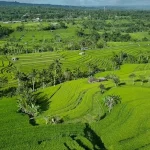
The UNESCO-listed subak irrigation system is most dramatically visible here. The terraces are layered in brilliant green or golden yellow depending on the growing season, dropping sharply into a river gorge below. Commercial swings and cafés now crowd the top — walk down into the terraces themselves for the real view.
Tirta Empul Temple
This 10th-century water temple at Tampaksiring, 12 kilometres north of Ubud, is one of Bali’s holiest sites. Worshippers bathe in the spring-fed pools as part of a purification ritual. Respectful visitors may watch; some guided tours allow participation with a local guide. Wear a sarong (available to rent at the gate).
Goa Gajah (Elephant Cave)
Just 4 kilometres from the centre, this 9th-century archaeological site features a carved cave entrance, bathing pools, and surrounding jungle. It is far less crowded than most Ubud attractions and takes about an hour to explore properly. Entry is IDR 50,000.
Ubud Palace (Puri Saren Agung)
The royal palace at the centre of town opens its inner courtyards to nightly traditional dance performances. The Kecak fire dance — performed under open sky with dozens of men chanting in interlocking rhythms around a central flame — runs most evenings at 7:30pm. Tickets are IDR 100,000–150,000 depending on the performance.

Where to Eat and Drink in Ubud
Pasar Ubud (Ubud Morning Market)
The ground floor of Ubud’s main market building operates as a food market from roughly 5am to 7am, when local vendors sell nasi campur, jaja Bali rice cakes, and fresh-cut fruit to the neighbourhood before the tourist crowds arrive. A full breakfast plate costs IDR 15,000–25,000. By 8am, the market transitions to tourist handicrafts.
Jalan Goutama Warung Crawl
This short pedestrian-friendly lane running south of Jalan Raya Ubud is Ubud’s best street for affordable, authentic eating. Warung Ibu Oka’s famous babi guling (roast suckling pig) is a short walk away on Jalan Tegal Sari, but Jalan Goutama itself has smaller family warungs serving nasi goreng, grilled fish, and cold Bintang at prices that haven’t yet caught up with the main strip.
Jalan Dewi Sita
A slightly more international café and restaurant corridor, Dewi Sita has strong options for all-day brunch, specialty coffee, and plant-based menus popular with the long-stay nomad crowd. Look for Kafe, a longstanding Ubud favourite with an open garden setting, for fresh juices and Indonesian staples starting at IDR 45,000 per dish.
Pasar Malam (Night Market)
The informal night market near the football field on Jalan Raya Ubud sets up from around 5pm, with local vendors grilling satay on bamboo skewers over coconut-shell charcoal — the smoke carries half a street away and the peanut sauce is thick and freshly ground. Satay skewers run IDR 3,000–5,000 each. This is genuinely the best-value eating in Ubud after dark.
Coffee Culture
Ubud has a legitimate specialty coffee scene. Seniman Coffee on Jalan Sri Wedari uses single-origin Bali beans and has its own roastery. Surprisingly, prices are fair — a filter coffee runs IDR 35,000–45,000. A growing cluster of third-wave cafés around Jalan Bisma caters to remote workers who need reliable WiFi alongside their pour-overs.
Getting Around Ubud
Ubud has no public bus system and no angkot routes worth mentioning for tourists. This is the single biggest practical reality for first-time visitors. Your options are:

- Gojek and Grab: Both apps work well in central Ubud as of 2026. Expect to pay IDR 15,000–35,000 for most rides within the town area. Note that during weekend mornings on Monkey Forest Road, vehicle restrictions may force drivers to drop you slightly further away.
- Scooter rental: IDR 60,000–80,000 per day from dozens of rental points along Jalan Raya Ubud. You need an international driving permit valid for motorcycles. Traffic enforcement has increased in 2026, and tourists on scooters without valid licenses face fines starting at IDR 500,000.
- Walking: Central Ubud is genuinely walkable — the Monkey Forest, the palace, and the main market form a rough triangle that you can cover on foot. Footpaths are uneven in places, so solid shoes matter.
- Metered taxis: Bluebird Taxi operates in Ubud and is the most transparent metered option for longer rides. Agree on a rate before getting in if the meter isn’t running.
- Airport transfer: From Ngurah Rai International Airport (DPS) in Denpasar, Ubud is approximately 40 kilometres and takes 1–1.5 hours depending on traffic. A fixed-rate private transfer booked in advance costs IDR 250,000–350,000. The Damri airport bus now stops at the Batubulan terminal, from where you’ll need a connecting ride into central Ubud.
Day Trips from Ubud
Kintamani & Mount Batur (2–3 hours each way)
The road north from Ubud climbs to the caldera rim at Kintamani, where Mount Batur volcano and its crater lake fill the view. Most visitors hire a driver for the day (IDR 400,000–600,000 for the full day). Serious hikers pre-book a 4am Batur summit hike through a registered guide (IDR 350,000–500,000 per person including guide).
Jatiluwih Rice Terraces (1.5 hours each way)
West of Ubud in Tabanan Regency, Jatiluwih’s UNESCO-listed terraces are larger and less commercialised than Tegallalang. Entry fee is IDR 40,000. The drive through mountain villages is part of the experience — best done with a private driver who knows the back roads.
Tirta Gangga Water Palace (1.5 hours each way)
In the far east of Bali near Karangasem, this royal water palace features tiered fountains, stone sculptures, and stepping-stone pools set against a backdrop of rice fields and distant Mount Agung. Entry is IDR 50,000. Combine with a stop at Candidasa beach for a full day.
Besakih Temple (1 hour each way)
Bali’s largest and most sacred temple complex sits on the slopes of Mount Agung at roughly 1,000 metres elevation. Access rules changed in 2025 — foreign visitors must now enter with a registered local guide (mandatory, non-negotiable at the gate). Budget IDR 150,000–200,000 for a guide on top of the IDR 60,000 entry fee.

Sidemen Valley (45 minutes each way)
An easy half-day trip southeast of Ubud, Sidemen is a quiet farming valley with some of Bali’s most beautiful rice terrace scenery and almost none of Ubud’s tourist infrastructure. Walk the village paths in the morning and be back in Ubud for lunch.
Nightlife and Evening Entertainment
Ubud’s nights run quieter than Seminyak or Canggu, which suits many visitors perfectly. The entertainment tilts toward culture over clubbing.
- Ubud Palace Kecak Dance: The unmissable evening event. Men chanting in hypnotic unison around a fire, performers in elaborate golden headdresses — the sound fills the open-air courtyard and the smoke from the central flame drifts across the audience. Book tickets at the palace box office or through your accommodation.
- CP Lounge (Cafe Lotus area): Live jazz and acoustic sets most nights from 7pm onward, with cocktails starting at IDR 80,000 and a lotus pond view that earns its reputation.
- Laughing Buddha Bar: On Jalan Monkey Forest, this is Ubud’s most reliably lively bar for backpackers and younger travellers, with live music several nights a week and Bintang on tap.
- Indus Restaurant: Perched above the Campuhan River gorge, Indus offers the closest thing to a sophisticated rooftop experience in Ubud. The cocktail list is strong, the view of the river valley at dusk is worth the prices (cocktails IDR 120,000–180,000).
- Night warung culture: Many visitors discover that the most enjoyable Ubud evenings involve nothing more than a cold beer and a plate of mie goreng at a roadside warung table, watching the town wind down. Jalan Goutama and the lanes off Jalan Hanoman are best for this.
Shopping in Ubud
Pasar Seni (Ubud Art Market)
The tourist market adjacent to the palace is the starting point for most shopping in Ubud — batik sarongs, silver jewellery, wood carvings, and woven bags. Prices are marked up and bargaining is expected. Open daily from around 8am.
Jalan Hanoman
Running south from the market, Hanoman has a strong mix of boutique clothing shops, ethical fashion labels, and a handful of studios selling original paintings directly from the artist. Better quality and slightly more fixed pricing than the market.
Jalan Raya Ubud (West Section)
The main road heading west toward Campuhan has several established galleries and antique dealers selling pieces from across the Indonesian archipelago — old textiles from Sumba, carved doors from Java, ikat from Flores. Prices are real (and often high), but so is the quality.
Sukawati Market (Day Trip)
Fifteen minutes south of Ubud by scooter or driver, Pasar Seni Sukawati is where Balinese retailers themselves buy handicrafts wholesale. Prices for batik, masks, and decorative items are significantly lower than in Ubud. Arrive before 10am for the best selection and least crowded experience.
Where to Stay in Ubud
Budget (Under IDR 400,000/night)
Nyuhkuning and the lanes off Jalan Monkey Forest have the best concentration of family-run guesthouses with clean rooms, a simple breakfast included, and a garden or small pool. Expect fan rooms for IDR 150,000–250,000, air-conditioned rooms for IDR 300,000–400,000.
Mid-Range (IDR 500,000–1,500,000/night)
Penestanan and Campuhan deliver the best value at this tier — boutique guesthouses and small hotels with private pools, rice field or jungle views, and genuine Balinese architecture. Properties along Jalan Bisma also offer good value with gorge or forest views.
Luxury (IDR 2,000,000+/night)
The Sayan ridge west of central Ubud has some of Bali’s most renowned luxury properties built into the river valley hillside. Ubud’s luxury hotels are designed around their settings — infinity pools hanging over river gorges, open-air villas with jungle canopy views. This tier is genuinely exceptional and worth the price if the budget allows.
Best Time to Visit Ubud
Ubud’s inland location gives it a slightly different weather pattern than coastal Bali. The dry season (May to September) is reliably sunny with low humidity — July and August are peak season, and accommodation prices spike 30–50% with much lower availability. April and October are the sweet spots: dry enough for comfortable trekking and sightseeing, significantly fewer visitors, and mid-range accommodation available at normal rates.
The wet season (November to March) brings afternoon and evening rain, sometimes heavy. Mornings are often clear and fine for outdoor activities. The rice terraces are at their most vivid green during the wet season, which appeals to photographers. January and February are the quietest months of the year.
Festival timing worth planning around: Galungan (a 10-day Balinese Hindu celebration) transforms Ubud’s streets with towering penjor bamboo poles decorated with offerings — visually spectacular and worth coinciding with. The date shifts each year on the Balinese Pawukon calendar; in 2026, Galungan falls in late May and again in late December. Nyepi (Balinese New Year’s Day of Silence) means the entire island shuts down completely for 24 hours — no movement outside, no lights, no noise. International flights are suspended. Plan around it or plan for it.
Practical Tips for 2026
- Bali Tourist Levy: The IDR 150,000 international visitor levy is collected digitally — you pay and receive a QR code before or upon arrival. Keep this on your phone; it may be checked at major temples.
- Temple dress code: A sarong and sash are required to enter any temple. Most sites have them available to rent at the gate for IDR 10,000–20,000, but carrying your own is easier.
- SIM cards: Telkomsel and XL Axiata have the best coverage in the Ubud hills. Buy a tourist SIM at the airport (IDR 80,000–150,000 for 30 days data). Many cafés have strong WiFi, but mobile data is essential for Gojek.
- Drinking water: Do not drink tap water. Refill stations (Nazava and similar brands) are available throughout Ubud at IDR 5,000 per litre — far cheaper and less wasteful than buying plastic bottles.
- Scooter safety: Ubud’s narrow lanes and the road to Tegallalang see regular tourist accidents. If you’re not experienced on a scooter in traffic, hire a driver instead.
- Tipping: Not mandatory but appreciated. Rounding up at warungs, leaving IDR 20,000–50,000 for a massage therapist, and tipping drivers IDR 30,000–50,000 for a full day is considered generous and appropriate.
Daily Budget Breakdown in Ubud (2026)
Budget Traveller — IDR 300,000–500,000/day
- Guesthouse room (fan, shared breakfast): IDR 150,000–250,000
- Three meals at warungs and the morning market: IDR 60,000–90,000
- Two Gojek rides: IDR 30,000–50,000
- One attraction entry (e.g. Monkey Forest): IDR 80,000
Mid-Range Traveller — IDR 800,000–1,500,000/day
- Boutique guesthouse with private pool in Penestanan: IDR 500,000–900,000
- Mix of warungs and sit-down cafés: IDR 150,000–200,000
- Driver for a day trip (shared with another traveller): IDR 200,000–300,000
- Kecak dance evening ticket: IDR 100,000–150,000
Comfortable/Luxury Traveller — IDR 2,500,000–6,000,000+/day
- Luxury villa or boutique hotel in Sayan: IDR 2,000,000–4,500,000
- Private driver full day: IDR 500,000–700,000
- Restaurant meals with cocktails: IDR 300,000–600,000
- Spa treatment (1.5–2 hours): IDR 250,000–500,000
Frequently Asked Questions
How many days should I spend in Ubud?
Three to four days is the practical minimum to cover the main attractions, take one day trip, and spend time simply walking the rice fields and lanes at your own pace. A full week suits travellers who want yoga retreats, multiple day trips, or a slower, deeper experience of the town.
Is Ubud safe for solo travellers?
Yes, Ubud is one of Bali’s safest areas for solo travel, including solo women. The main risks are traffic-related — scooter accidents on narrow roads. Petty theft can occur in crowded market areas. Keep valuables secured and use Gojek rather than unmarked taxis after dark.
Do I need a car or scooter to get around Ubud?
Not necessarily. Central Ubud is walkable, and Gojek covers most short rides within town at low cost. For day trips to Kintamani, Jatiluwih, or Tirta Gangga, hiring a private driver for the day is more comfortable and safer than navigating mountain roads on a scooter, especially for first-time visitors.
What is the Bali Tourist Levy and do I have to pay it?
The Bali Tourist Levy is IDR 150,000 charged to all international visitors entering Bali. Since 2026, it is collected digitally and can be paid online before arrival at lovebali.baliprov.go.id. You receive a QR code as proof of payment. Indonesian nationals are exempt. Failure to pay may result in delays at the airport.
Is Ubud worth visiting during the rainy season?
Yes, with adjusted expectations. Rain typically arrives in the afternoon or evening rather than all day, so morning activities — the ridge walk, rice terrace visits, and temple trips — are usually unaffected. Accommodation is cheaper, crowds are thinner, and the landscape is strikingly green. Pack a lightweight rain jacket and plan active activities before noon.