On this page
- The Real IDR Exchange Rate in 2026
- How to Spot and Avoid Money Changer Scams
- ATMs in Indonesia: Fees, Limits, and the DCC Trap
- QRIS: Indonesia’s Universal Payment System
- E-Wallets for Tourists: GoPay, OVO, DANA, and ShopeePay
- Credit and Debit Cards: Where They Work and Where They Don’t
- 2026 Budget Reality: What Everything Actually Costs in IDR
- Tipping in Indonesia: The Unwritten Rules
- Common Financial Mistakes Tourists Make
- Frequently Asked Questions
💰 Click here to see Indonesia Budget Breakdown
💰 Prices updated: September, 2026. Budget figures are estimates — always verify before travel.
Exchange Rate: $1 USD = Rp17,928.47
Daily Budget (per person)
Shoestring: Rp358,569 – Rp896,424 ($20.00 – $50.00)
Mid-range: Rp1,254,993 – Rp2,689,271 ($70.00 – $150.00)
Comfortable: Rp2,689,271 – Rp4,482,118 ($150.00 – $250.00)
Accommodation (per night)
Hostel/guesthouse: Rp71,714 – Rp179,285 ($4.00 – $10.00)
Mid-range hotel: Rp448,212 – Rp896,424 ($25.00 – $50.00)
Food (per meal)
Budget meal: Rp26,893.00 ($1.50)
Mid-range meal: Rp143,428.00 ($8.00)
Upscale meal: Rp537,854.00 ($30.00)
Transport
Single metro/bus trip: Rp3,500.00 ($0.20)
Monthly transport pass: Rp200,000.00 ($11.16)
In 2026, Indonesia‘s payment landscape is more fragmented than ever — in the best and worst ways. Urban Bali and Jakarta have gone nearly cashless in some neighbourhoods, while a village in Flores or a ferry terminal in Maluku might still look at your phone with mild suspicion when you try to scan a QR code. The gap between what travel blogs say (“Indonesia is very digital now!”) and what actually happens when you’re standing at a warung on the edge of a rice field is where most tourists lose money, get shortchanged, or end up stranded without cash. This guide cuts through that gap.
The Real IDR Exchange Rate in 2026
The Indonesian Rupiah (IDR) is the country’s official currency, and its large denominations catch first-time visitors off guard. Handing over IDR 300,000 for a meal feels alarming until you realise that’s roughly USD 19. Getting your head around the scale quickly saves you from both panic and being ripped off.
As of mid-2026, projected exchange rates are:
- USD 1 ≈ IDR 15,800 – 16,300
- EUR 1 ≈ IDR 17,000 – 17,500
- AUD 1 ≈ IDR 10,500 – 11,000
- SGD 1 ≈ IDR 11,500 – 12,000
These figures fluctuate daily. Before you travel, bookmark a live rate tool like xe.com or Google’s currency converter and check it the morning you plan to exchange. That number is your baseline — any authorised money changer offering significantly less than the interbank rate (usually 1–3% below) is either skimming too hard or running a scam.
Where to exchange: The best rates come from authorised independent money changers, not banks or airports. Well-established chains like BMC Money Changer and PT Kuta Utama are known for competitive rates and legitimate operations, particularly in Bali’s tourist corridors. They hold licences from Bank Indonesia — look for that licence displayed at the counter. The process is straightforward: present your passport, agree on the rate, watch the counting, then confirm the total with your phone calculator before pocketing the cash.

Banks — BCA, Mandiri, BRI, BNI — are safer in reputation but offer worse rates and operate only Monday to Friday, roughly 08:00 to 15:00. They’re best used as a last resort or for large amounts where you prioritise security over rate.
Airport counters at Soekarno-Hatta (CGK) in Jakarta and Ngurah Rai (DPS) in Bali offer the worst rates on the island. Exchange just enough at the airport for a taxi or snack — IDR 200,000 to 300,000 maximum — then find a proper money changer once you’re settled.
What changed since 2024: Bank Indonesia has tightened oversight of money changers, and there are noticeably fewer unlicensed street operators in major tourist areas compared to two years ago. That said, outside Bali, Lombok, and central Jakarta, the informal exchange market hasn’t disappeared. Stay alert.
How to Spot and Avoid Money Changer Scams
This section deserves its own space because the money changer scam is still the single most common way tourists lose money in Indonesia in 2026. It doesn’t happen in ATMs or on apps — it happens in person, at a counter that looks completely legitimate.
Shortchanging: The most prevalent tactic. A changer counts out IDR 3,200,000 in front of you, but somewhere in the shuffle — especially when counting fast through a thick stack of IDR 100,000 notes — a few notes get palmed or “accidentally” folded together. The cure is simple: count every note yourself, slowly, at the counter. Not in your bag. Not walking away. Right there. Nobody legitimate will object to this.
Sleight of hand: A variation of shortchanging that involves deliberate distraction — the changer might suddenly point at something, ask a question, or knock over a pen holder. The moment your eyes move, notes disappear. Keep your eyes on the cash until it’s in your hands.
The “no commission” lie: A sign advertising “NO COMMISSION — BEST RATE” is not necessarily a red flag on its own, but when their posted rate is IDR 1,000–2,000 worse per dollar than the live interbank rate, that’s the commission disguised as the rate. Pull out your phone and check before handing over your currency.

Street and hotel offers: Anyone approaching you unsolicited to exchange money — outside a hotel, near a temple, in a car park — should be declined immediately. Even if the rate sounds extraordinary, the follow-through involves tricks that are very hard to reverse once you’ve walked away.
Damaged notes: Reputable changers give you clean, intact notes. Severely torn or heavily taped IDR bills can be refused by smaller vendors and market stalls. If the stack you receive looks rough, ask for replacements before leaving.
ATMs in Indonesia: Fees, Limits, and the DCC Trap
ATMs are your most reliable fallback for cash in Indonesia, and they’re widely available in cities, shopping malls, Alfamart and Indomaret minimart chains, and petrol stations. In remote areas, assume the nearest ATM is in the closest town — not the village itself.
Which ATMs to use: BCA and Mandiri ATMs are the most tourist-friendly and have the most reliable international card acceptance. BRI and BNI work too, but BCA machines are particularly common in Bali. Stick to ATMs inside bank branches or inside minimarts rather than standalone street machines, which are slightly more vulnerable to card skimming devices.

Withdrawal limits (2026):
- Older ATMs dispensing IDR 50,000 notes: maximum IDR 2,500,000 per transaction
- Standard ATMs dispensing IDR 100,000 notes: IDR 2,500,000 – IDR 3,000,000 per transaction
- Select BCA and Mandiri premium ATMs: up to IDR 5,000,000 – IDR 10,000,000 per transaction at specific locations
Your daily limit is set by your home bank, not the Indonesian machine. If you’re planning a week in a remote area, withdraw enough before you leave urban infrastructure.
Fees to expect: Indonesian banks typically charge IDR 30,000 – IDR 35,000 per international withdrawal transaction. On top of that, your home bank will likely charge its own foreign ATM fee — often a flat fee equivalent to USD 3–5, plus a foreign transaction fee of 1–3% of the amount. Two withdrawals per day across a two-week trip can quietly cost you IDR 900,000 or more in bank fees alone. Minimise this by withdrawing larger amounts less frequently.
The DCC trap: This is critical. When an Indonesian ATM detects a foreign card, it often offers to complete the transaction in your home currency — “Would you like to be charged in USD?” This is Dynamic Currency Conversion (DCC), and it applies an exchange rate set by the ATM operator that is reliably worse than your home bank’s rate. Always choose IDR. Always. Without exception. The same rule applies at card payment terminals in shops and restaurants.
Before travelling, inform your home bank of your travel dates. A blocked card in rural Java or on a Komodo-bound ferry is a genuinely difficult situation to resolve.
QRIS: Indonesia’s Universal Payment System
QRIS — Quick Response Code Indonesian Standard — is the most important development in Indonesian payments in recent years, and by 2026 it has genuinely changed daily financial life across the country. Launched by Bank Indonesia, it standardises QR codes so that one code works with any participating app. A sarong seller at Tanah Lot in Bali, a satay cart outside a Yogyakarta university, and a cold-drink vendor at a Lombok bus terminal might all display the same-looking QRIS code — and any e-wallet or banking app on your phone can scan it.

How to pay with QRIS, step by step:
- Open your QRIS-enabled app — GoPay, OVO, DANA, ShopeePay, or your mobile banking app if it supports QRIS
- Tap “Scan QR” or the QRIS option in the app menu
- Point your camera at the merchant’s printed or screen-displayed QRIS code
- Enter the payment amount in IDR — some merchants pre-fill this, others don’t
- Confirm with your PIN or fingerprint/face ID
- Show the green confirmation screen to the merchant
The transaction completes in seconds, there’s no fee for the consumer, and there’s a digital receipt you can screenshot. It’s the smoothest way to pay in Indonesia right now.
What changed since 2024 — international interoperability: This is genuinely new and important. By 2026, QRIS has expanded its cross-border compatibility significantly. Travellers from Malaysia, Thailand, Singapore, and several other countries can now use their home country’s QR payment systems — DuitNow, PromptPay, and equivalents — directly at Indonesian QRIS merchants. If you’re coming from one of these countries, check whether your banking app already supports this before you travel. It can reduce your need for cash exchange considerably.
NFC-based “QRIS Tap and Go” is being piloted in select cities as of 2026, allowing faster contactless payments without scanning. Coverage is still limited but expanding. For now, assume you’ll be scanning rather than tapping.
For official information, Bank Indonesia’s website at www.bi.go.id covers QRIS in English.
E-Wallets for Tourists: GoPay, OVO, DANA, and ShopeePay
These four apps dominate Indonesian digital payments and all work within the QRIS framework. Each has its own ecosystem, so which one you prioritise depends on how you’re getting around and spending.

GoPay lives inside the Gojek super-app. If you’re using Gojek for motorbike taxis, car rides, and food delivery — which you almost certainly will be — GoPay is the most natural wallet to load. Website: www.gojek.com
OVO integrates closely with Grab and earns loyalty points across a wide merchant network. It’s accepted independently at thousands of outlets too. Website: www.ovo.id
DANA is the most standalone option — no major ride-hailing app dependency — and is strong for bill payments and P2P transfers. Website: www.dana.id
ShopeePay is built into the Shopee e-commerce platform and works well if you’re shopping online or at Shopee-partnered merchants. Website: www.shopee.co.id
Setting up as a tourist: Almost all apps require a local Indonesian SIM card for the registration OTP. This is the most common barrier for tourists. Get a SIM card at the airport or a Telkomsel/Indosat outlet before you try to register. Most apps allow basic account access using your phone number and a passport-based verification, but full features — higher top-up limits, transfers — typically require a local Indonesian ID (KTP). As a tourist, you’ll be operating with basic account limits, which are usually sufficient for day-to-day spending.
Topping up your e-wallet: The easiest method for tourists is at Alfamart or Indomaret minimarts, which are everywhere in Indonesia — there are more of them in Bali than there are temples, practically speaking.
- Walk up to the cashier
- Say “Top up GoPay” (or OVO, DANA, etc.) and give your phone number
- State the amount — IDR 50,000 and IDR 100,000 are common starting amounts
- Pay cash
- The cashier processes it, and your balance updates within a minute

Convenience stores charge a small top-up fee of approximately IDR 1,500 – IDR 2,500. It’s a minor cost for major convenience. Some apps allow linking an international credit or debit card for top-ups, but this varies by app and incurs additional fees — check within each app’s settings after registering.
Credit and Debit Cards: Where They Work and Where They Don’t
Cards are reliable in a specific slice of Indonesia: major hotels, upscale restaurants, large supermarkets (like Ranch Market, Grand Lucky, or Hypermart), department stores, and international chain outlets. Visa and Mastercard are accepted in these environments without issue. American Express and JCB have significantly narrower acceptance — don’t count on them outside five-star properties.
The moment you step outside that polished slice — into a local restaurant, a market, a smaller guesthouse, a petrol station in a rural town — card acceptance drops sharply. Even places that technically have a card machine might tell you it’s “broken” today. Always have IDR cash as a backup.
Merchant surcharges: Bank Indonesia regulations prohibit merchants from adding surcharges for card payments. In practice, some smaller businesses still try to add 2–3% for the “card fee.” Politely decline, and ask if QRIS or cash is an alternative. As enforcement improves in 2026, this practice is becoming less common in tourist-heavy areas, but it hasn’t vanished entirely.
Best cards to bring: Cards with no foreign transaction fees and no international ATM withdrawal fees are ideal for Indonesia. Look for travel-focused debit cards from your home country that reimburse ATM fees — they can save you a meaningful amount over a two-week trip. Whatever card you bring, confirm the foreign transaction fee percentage with your bank before leaving home.
As noted in the ATM section: if any terminal asks whether you want to pay in your home currency, decline it. Always choose IDR.

2026 Budget Reality: What Everything Actually Costs in IDR
Prices have shifted since 2024, driven by modest inflation and the continued growth of tourism infrastructure. Here’s an honest breakdown of what to expect across spending tiers.
Food and Drink
- Budget: Warung meal (nasi campur, mie goreng) IDR 15,000 – IDR 30,000 | Bottled water IDR 5,000 | Street satay per skewer IDR 3,000 – IDR 5,000
- Mid-range: Local restaurant meal IDR 50,000 – IDR 120,000 | Coffee at a local café IDR 25,000 – IDR 45,000
- Comfortable: Dinner at a tourist-area restaurant IDR 150,000 – IDR 400,000 per person | Bali beach club cocktail IDR 120,000 – IDR 200,000
Accommodation (per night)
- Budget: Hostel dorm or basic guesthouse IDR 120,000 – IDR 250,000
- Mid-range: Clean private room or 2–3 star hotel IDR 350,000 – IDR 750,000
- Comfortable: 4–5 star hotel or private villa IDR 1,200,000 – IDR 4,000,000+
Transport
- Budget: Trans-Jakarta BRT bus IDR 3,500 | Gojek ojek short ride IDR 10,000 – IDR 20,000 | Angkot (local minibus) IDR 4,000 – IDR 8,000
- Mid-range: GoCar or GrabCar across a city IDR 40,000 – IDR 100,000 | Economy train Jakarta–Yogyakarta IDR 200,000 – IDR 350,000 (booked via KAI Access app or www.kai.id)
- Comfortable: Executive train IDR 450,000 – IDR 700,000 | Private driver for the day IDR 600,000 – IDR 1,000,000
Activities
- Budget: Temple entrance fee IDR 15,000 – IDR 50,000 | Public beach access free – IDR 10,000
- Mid-range: Snorkelling day trip IDR 250,000 – IDR 500,000 | Cooking class IDR 300,000 – IDR 600,000
- Comfortable: Private surf lesson IDR 500,000 – IDR 900,000 | Full-day private guided tour IDR 800,000 – IDR 1,500,000
Tipping in Indonesia: The Unwritten Rules
Tipping is not embedded in Indonesian culture the way it is in the United States. Service staff don’t depend on tips to reach a living wage, and you won’t be chased down the street for not leaving one. That said, tipping is a genuine gesture of appreciation that is always warmly received — and in a country where service can be genuinely excellent, it’s often deserved.
Restaurants: Check your bill first. Most mid-range and upscale restaurants already add a service charge of 5–10% plus government tax of 11% — sometimes listed together as “++ charges.” If those are already on the bill, you’ve already tipped. If the warung you’re eating at is a plastic-stool, rice-in-a-bag situation with no bill at all, rounding up to the nearest IDR 5,000 is more than enough.

For genuinely excellent service, leaving IDR 10,000 – IDR 20,000 on the table is a kind gesture and won’t go unnoticed.
Ride-hailing: Gojek and Grab both have in-app tip options. IDR 5,000 – IDR 10,000 added through the app after a good ride is appreciated. Cash handed directly to the driver works too. On a motorbike ride through evening Jakarta traffic — the kind where the driver weaves through gridlock with calm precision and gets you there faster than any car could — that IDR 5,000 feels right.
Hotel staff: Porters IDR 10,000 – IDR 20,000 per bag. Housekeeping IDR 20,000 – IDR 50,000 per day, left as cash on the pillow or in an obvious spot — leave it daily rather than at the end of your stay, since different staff may clean your room each day.
Tour guides and drivers: For a full day of guiding, IDR 50,000 – IDR 100,000 per person in your group is a generous and appropriate amount. For a multi-day private driver who navigates mountain roads and waits patiently while you photograph sunrise over Bromo, the upper end of that range or beyond is worth it.
Spa and massage: IDR 20,000 – IDR 50,000 depending on the length and quality of the session. In the quiet, candlelit back rooms of a traditional Balinese spa, where the therapist has worked on your shoulders with warm coconut oil for 90 minutes, that tip lands as genuine gratitude.
Common Financial Mistakes Tourists Make
Most financial losses in Indonesia are avoidable. These are the patterns that show up repeatedly.
Accepting DCC without realising it: As covered earlier, this catches people off guard at ATMs and card terminals. The screen looks helpful — “We can charge you in your home currency for convenience!” — but it’s a money-losing choice every single time. Choose IDR, always.

Not telling their home bank they’re travelling: Banks flag foreign transactions as potential fraud. A blocked card in a town without an international ATM is a very stressful experience. Call or message your bank before you leave, confirm international access is enabled, and have a backup card from a different network just in case.
Arriving without any IDR: Some travellers plan to withdraw cash from an ATM on arrival and skip airport exchange entirely. The ATM plan is fine — but if the first ATM is out of service, or your card doesn’t connect on the first try, or the queue is 20 people long, having zero cash in a new country is uncomfortable. Bring USD 50–100 in small notes from home as genuine emergency backup, or exchange a small amount at the airport.
Relying on cards in rural and inter-island areas: Lombok’s Rinjani trekking area, the Togean Islands in Sulawesi, the remote beaches of Nusa Penida’s south coast — these places operate on cash. No ATM nearby, no QRIS, no card terminal. Estimate your cash needs for any off-the-grid stretch and carry more than you think you need.
Walking away from a money changer without counting: This one is worth repeating. The count matters. The count always matters. Do it at the counter, every time.
Paying in foreign currency at vendors: Some tourist-facing vendors in Bali accept USD or AUD directly. The convenience comes at a cost — their conversion rate is rarely favourable. Pay in IDR wherever possible.
Frequently Asked Questions
Is it better to exchange money before arriving in Indonesia or once I’m there?

Exchange a small amount before you travel for airport emergencies, but the best rates are found at authorised independent money changers in Indonesia — particularly in Bali and Jakarta. Airport and hotel rates are significantly worse. Carry USD, EUR, AUD, or SGD in clean, undamaged notes for exchange once you arrive.
Can I use my foreign credit or debit card to pay at most places in Indonesia?
Cards work reliably at major hotels, upscale restaurants, large supermarkets, and chain stores. Outside those environments — warungs, traditional markets, small guesthouses, rural transport — cash is essential. Always carry IDR alongside your card. Visa and Mastercard have the widest acceptance; American Express is limited to higher-end properties.
Do I need a local SIM card to use GoPay, OVO, or DANA?
Yes, in almost all cases. These apps require a local Indonesian phone number for registration and OTP verification. Buy a SIM card from Telkomsel, Indosat Ooredoo, or XL Axiata at the airport or a licensed outlet on arrival. Tourist SIM packages are available and can be topped up easily. Without a local number, e-wallet registration is effectively blocked.
What is QRIS and do I need to set it up before I travel?
QRIS is Indonesia’s universal QR payment standard. Any QRIS-enabled app can scan any QRIS merchant code. To use it, you need a local e-wallet or a banking app that supports QRIS. Travellers from Malaysia, Thailand, and Singapore can often use their home country’s QR payment apps directly at QRIS merchants in Indonesia as of 2026 — check your banking app before you leave.
Is tipping expected in Indonesia, and how much should I give?
Tipping is appreciated but not obligatory. Check restaurant bills for included service charges before adding extra. General guidelines: IDR 10,000–20,000 for good restaurant service if no charge is included, IDR 5,000–10,000 for ride-hailing drivers, IDR 50,000–100,000 per person per day for tour guides, and IDR 20,000–50,000 per day for hotel housekeeping. Cash tips are preferred in most situations.
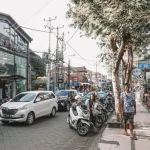
📷 Featured image by Afif Ramdhasuma on Unsplash.