On this page
- Why Indonesia’s Cultural Diversity Goes Far Beyond One Island
- The Javanese World: Hierarchy, Harmony, and Unspoken Rules
- Minangkabau Culture: Matrilineal Society and the Art of Merantau
- Balinese Hindu Customs: Temple Protocol and Sacred Boundaries
- Dayak, Torajan, and Papuan Traditions: The Outer Islands Explained
- Sundanese and Madurese: Two Cultures Often Confused with “Javanese”
- How Religion Shapes Daily Life Across the Archipelago
- Practical Etiquette Rules That Apply Everywhere in Indonesia
- 2026 Budget Reality: Experiencing Cultural Indonesia
- Frequently Asked Questions
Why Indonesia’s Cultural Diversity Goes Far Beyond One Island
In 2026, Indonesia tourism marketing still leans heavily on Bali — the terraced rice fields, the temple ceremonies, the surf. And Bali deserves every bit of that attention. But a growing number of travellers arrive in Indonesia expecting one coherent culture, only to discover that Bali represents a single thread in a fabric made from over 1,300 distinct ethnic groups, spoken across more than 17,000 islands. Misreading this diversity causes real problems: the etiquette that earns you respect in a Javanese palace town can feel oddly formal in a Torajan village. The way you dress for a Balinese Hindu temple is completely different from what you need entering a mosque in Aceh. This article is not about Bali specifically. It is about everything else — the customs, social codes, and cultural logic that shape Indonesian life from Sumatra to Papua, and how to navigate it without causing offence or missing the deeper story.
The Javanese World: Hierarchy, Harmony, and Unspoken Rules
Java is home to roughly 145 million people and the Javanese ethnic group is the largest in Indonesia. Understanding Javanese culture is essential because it quietly shapes national institutions, government language, and social norms across the whole country — the national capital has historically been a Javanese-dominated space, and even the move of the capital to Nusantara in East Kalimantan, which accelerated significantly through 2024 and 2025, has been largely led by a Javanese-dominated bureaucratic class.
The central concept in Javanese culture is rukun — social harmony. Javanese communication is built to protect this harmony at almost any cost. This means that a Javanese person will very rarely say “no” directly. If you ask whether a road leads to a certain village and the local is unsure, they may say “yes” rather than create the discomfort of uncertainty. This is not dishonesty — it is a deeply ingrained social reflex. As a traveller, learn to ask questions that don’t require a yes-or-no answer: “Which direction is the temple from here?” gets you more reliable information than “Is the temple this way?”

Javanese society is also highly hierarchical. Age and social rank determine how people address each other, which forms of the language they use, and how direct conversation can be. Older people are addressed with titles — Bapak (Father, for men) and Ibu (Mother, for women) are the standard respectful forms used for anyone older than you or in a position of authority. Using someone’s first name without these titles can feel jarring. In Yogyakarta and Solo, where the Javanese royal courts (the Kraton) still hold cultural influence, this hierarchy is especially visible. Walking through the Sultan’s palace in Yogyakarta, the air thick with incense and the distant sound of gamelan being rehearsed in the open pavilions, you quickly understand that this is not a museum piece — the court is a living institution with real social weight.
Dress and Body Language in Javanese Contexts
Pointing with your index finger is considered rude across much of Indonesia, but especially so in Javanese contexts. Use your right thumb, with your hand loosely closed. Crossing your arms while talking to an elder signals aggression or disrespect. When entering someone’s home, remove your shoes unless explicitly told otherwise. Sitting higher than an elder — for example, on a chair when they are seated on the floor — is a small but noted social misstep worth avoiding.
Minangkabau Culture: Matrilineal Society and the Art of Merantau
West Sumatra is home to the Minangkabau people, one of the most fascinating cultures in Southeast Asia. The Minangkabau are the world’s largest matrilineal society — land, property, and family names pass through the female line. A man’s most important social and financial obligations are traditionally to his mother’s clan, not his wife’s household. This is not a patriarchy flipped upside down. Power is more distributed than that. Men hold political and religious leadership roles, but women control assets and domestic continuity.

This produces a distinctive social pattern called merantau — the tradition of young Minangkabau men leaving their homeland to seek education, experience, and wealth, then returning (ideally) with status and resources. Minangkabau traders and entrepreneurs spread across Indonesia for centuries through merantau, which is why you find Rumah Makan Padang (Padang restaurants) in almost every Indonesian city and town. The food itself — the fiery, coconut-rich dishes of West Sumatra — became a national institution through this diaspora.
When visiting West Sumatra, be aware that the Minangkabau are devoutly Muslim, and Islamic practice is woven tightly into the matrilineal adat (customary law). This combination surprises some visitors who expect tension between the two systems — in practice, the Minangkabau have integrated Islam and matrilineal inheritance for centuries, and both are points of intense local pride. Dress conservatively, especially outside Padang city. Women should cover their hair when entering any public religious space. The distinctive curved-roof architecture of traditional Minangkabau buildings (Rumah Gadang) is tied to clan identity — if you are invited into one of these homes, it is a genuine honour.
Balinese Hindu Customs: Temple Protocol and Sacred Boundaries
Bali is roughly 87% Hindu in a country that is approximately 87% Muslim — a near-perfect statistical inversion that tells you everything about how distinct the island is. Balinese Hinduism is not identical to Indian Hinduism. It evolved in isolation, absorbing animist traditions and local ancestor veneration over centuries, producing a form of worship that is visual, communal, and embedded in daily life at every level.

The most important practical rule for visitors: a sarong is not optional at temples, it is mandatory. Most major temples provide loaner sarongs at the entrance for a small donation (usually IDR 10,000–20,000). Wearing one over shorts is acceptable — the requirement is about the act of wrapping the lower body, which signals respect for sacred ground. Women menstruating are asked not to enter temple inner sanctuaries. This is not a discrimination issue in the local framework — it is tied to concepts of ritual purity (cuntaka) that apply equally to men who are grieving, ill, or in certain states of spiritual impurity.
Balinese people greet each other with a slight bow and hands pressed together — the sembah gesture, similar to the Indian namaste. As a foreigner, a simple slight bow with a smile is completely adequate. Do not try to mimic religious gestures unless you are participating in a ceremony you have been explicitly invited to join.
The canang sari — small woven palm-leaf offerings left on the ground throughout Bali — are everywhere, from hotel lobbies to the base of telephone poles. Never step on them, even accidentally, and never kick them aside. They are fresh offerings placed that morning by Balinese women as part of a daily spiritual practice that takes genuine time and devotion. The smell of incense lingering around these offerings, mixed with frangipani flowers already wilting in the afternoon heat, is one of those sensory details that makes Bali feel different from anywhere else on earth.

Dayak, Torajan, and Papuan Traditions: The Outer Islands Explained
Indonesia’s outer islands contain cultures that many Indonesians in Java and Bali know only vaguely, despite being part of the same nation. Understanding these cultures requires setting aside any assumptions imported from the more-visited parts of the country.
The Dayak peoples of Kalimantan are not a single culture but a collective term for hundreds of distinct indigenous groups spread across Indonesian Borneo. Many Dayak communities observe a blend of Christianity, animism, and their own adat traditions. Hospitality is central — being welcomed into a lamin (longhouse) is a significant gesture. Bring a small gift of food. Never refuse a drink offered ceremonially, even if it is tuak (palm wine) — a polite first sip followed by placing the cup down is acceptable. Photographing sacred objects or ritual preparations without explicit permission is not.
The Torajan people of South Sulawesi are famous outside Indonesia for their elaborate funeral ceremonies, which can last days or weeks and involve the sacrifice of water buffaloes. These are not tourist performances — they are genuine, expensive, deeply emotional family events. In 2026, Torajan communities receive visitors at funerals with a formality that has become more structured: you should arrive with a gift (cigarettes, sugar, or betel nut are traditional), wear dark or muted clothing, and sit quietly in the designated guest area. The Torajan relationship with death is complex — bodies may be kept in the family home for months before burial while funds for the ceremony are gathered. Treated with respect, a Torajan funeral is one of the most profound cultural experiences available anywhere in Indonesia.
Papua is culturally and geographically closer to Melanesia than to the rest of Indonesia. The hundreds of distinct tribes in the highlands and coastal areas each have their own social codes, languages, and spiritual frameworks. Visiting Papua requires more preparation than other parts of Indonesia — not because it is unsafe, but because the cultural distance is greater. Local guides are not optional here, they are essential. Learn at minimum a few phrases of Bahasa Indonesia (which functions as a bridge language), and be prepared for social norms around gender mixing, photography, and entering village spaces that differ significantly from anywhere else in the archipelago.

Sundanese and Madurese: Two Cultures Often Confused with “Javanese”
West Java is Sundanese territory, not Javanese — a distinction that matters enormously to Sundanese people and is frequently missed by foreign visitors who see “Java” on a map and assume cultural uniformity. Sundanese culture is distinct in language, music, cuisine, and social character. While Javanese culture prizes controlled formality and indirectness, Sundanese people are often described by other Indonesians as more openly warm and expressive. The angklung — a bamboo instrument recognised by UNESCO — is Sundanese, not Javanese. Sundanese cuisine (fresh raw vegetables, lalapan, grilled fish) reflects a different agricultural and ecological environment from the rice-centred Javanese table.
Madura, a small island off the northeast coast of East Java, is home to the Madurese — Indonesia’s third-largest ethnic group and one of the most widely dispersed, with large Madurese communities across Kalimantan and other outer islands. Madurese culture values directness and personal honour in ways that contrast sharply with Javanese indirectness. The tradition of carok — a form of ritualized conflict resolution involving bladed weapons — is largely historical but reflects a cultural code around dignity and reputation that still shapes social interactions. This does not mean Madura is dangerous for visitors. It means understanding that perceived disrespect carries more weight here than in Javanese contexts, and that social directness is a sign of respect rather than aggression.

How Religion Shapes Daily Life Across the Archipelago
Indonesia is the world’s largest Muslim-majority country by population, but “Muslim Indonesia” is not a monolith. Islam in Aceh (the northernmost province of Sumatra) operates under a regional Sharia legal framework — the only place in Indonesia where this applies — with dress codes enforced and alcohol effectively prohibited. Islam in Java, by contrast, has historically been shaped by centuries of Hindu-Buddhist influence, producing a syncretic tradition that many devout Muslims in other parts of the world would find unorthodox. This version of Islam, sometimes called Javanese Islam or abangan in its more syncretic form, is increasingly in tension with more scripturally conservative strands of practice that have grown in influence since the 1990s.
For visitors, the call to prayer (adhan) five times daily is a constant backdrop. In cities, it echoes from dozens of mosques simultaneously, overlapping and reverberating across rooftops. It begins before sunrise and continues through to the evening prayer at isya. This is not background noise — it is the spine of the Muslim day, and adjusting your schedule around it (avoiding loud music or disruptive behaviour during prayer times, especially Friday’s Jumah midday prayer) earns quiet appreciation.
Indonesia also has significant Christian communities in North Sulawesi, Papua, parts of Kalimantan, Flores, and among the Batak people of North Sumatra. Hindu communities exist outside Bali — particularly in Lombok’s Sasak highlands and in parts of East Java near Tengger. Buddhist communities, mostly among Indonesian Chinese populations, maintain active temples across major cities. Treating all of these with equal seriousness — not treating Islam as “the real Indonesia” and everything else as exotic minority — is both accurate and respectful.

Practical Etiquette Rules That Apply Everywhere in Indonesia
Across the enormous cultural variation described above, a set of practical norms holds broadly true across most of Indonesia. These are not rules that change from island to island — they are baseline courtesies that apply whether you are in a Java city, a Kalimantan longhouse, or a Sulawesi fishing village.
- Use your right hand. The left hand is associated with bathroom hygiene and is considered unclean across Muslim and Hindu contexts alike. Pass food, money, and objects with your right hand. Eat with your right hand if eating with hands. Receiving something with your left hand, especially from an elder, is a noticeable faux pas.
- Never touch someone’s head. The head is spiritually significant across Javanese, Balinese, and many other Indonesian cultures. Ruffling a child’s hair as a friendly gesture — common in Western contexts — is considered inappropriate.
- Show respect when entering homes. Remove shoes at the entrance. Wait to be invited to sit. Complimenting the home is appreciated; photographing it without asking is not.
- Public displays of anger are deeply shameful. Raising your voice, even in frustration, causes enormous social disruption. If a transaction goes wrong or a service disappoints, express this quietly and calmly. The concept of malu (shame) runs deep — publicly shaming someone, even accidentally, creates a social rupture that is very difficult to repair.
- Dress modestly outside tourist zones. In most Indonesian towns and villages, shorts and sleeveless tops on either gender read as disrespectful or simply strange. A light linen shirt and long pants or a modest dress costs nothing in comfort and communicates enormous respect.
- Ask before photographing people. This seems obvious but is frequently ignored. A brief gesture toward your camera and a questioning look is sufficient. If someone looks away or says no, respect it immediately.

The concept of gotong royong — communal cooperation and mutual assistance — is one of the most important values in Indonesian public life. It appears in national rhetoric, in village decision-making, and in the way communities respond to disasters or celebrations. As a visitor, you participate in this spirit simply by contributing positively to the spaces you move through — cleaning up after yourself, supporting local businesses, engaging with curiosity rather than entitlement.
2026 Budget Reality: Experiencing Cultural Indonesia
Cultural Indonesia — the temples, ceremonies, traditional art forms, and community experiences — spans a wide price range in 2026. Here is a realistic breakdown.
Budget Tier (Under IDR 200,000 per activity)
- Temple entrance fees (most local temples): IDR 20,000–75,000
- Sarong rental at temple entrances: IDR 10,000–20,000
- Community wayang kulit performances (public events in Yogyakarta): often free or by donation
- Attending Friday prayers at a large mosque (as a respectful observer, not worshipper): free
- Local village cultural festivals (if you happen to be in the area during a scheduled event): usually free for visitors
Mid-Range Tier (IDR 200,000–750,000 per activity)
- Guided cultural walking tour of Yogyakarta’s Kraton district: IDR 250,000–400,000
- Batik-making workshop (half day, Central Java): IDR 300,000–500,000
- Traditional dance performance ticket (formal venue, Bali or Java): IDR 150,000–400,000
- Gamelan introduction class (Javanese or Balinese, 2 hours): IDR 200,000–350,000
- Entrance to Torajan funeral ceremony with appropriate gifts: IDR 200,000–400,000 including gift
Comfortable Tier (IDR 750,000 and above per activity)
- Full-day guided cultural immersion with licensed local guide (Yogyakarta, Ubud, or Toraja): IDR 800,000–1,500,000
- Multi-day cultural homestay in a traditional Minangkabau or Torajan community: IDR 400,000–700,000 per night including meals
- Private batik or silver-working masterclass with a named artisan: IDR 1,000,000–2,500,000
- Organised cultural tour of Papua’s Baliem Valley including guide, permits, and accommodation: IDR 3,500,000–6,000,000 for a 4-day itinerary
One important 2026 update: the Indonesian government introduced standardised cultural site fee structures in late 2024, which took effect fully in 2025. Foreign visitor rates at major cultural heritage sites (Prambanan, Borobudur, and several kraton complexes) are now separated from domestic rates, with foreign fees running IDR 350,000–750,000 at the largest sites. These fees fund conservation directly. Budget accordingly if your trip involves the major UNESCO sites.

Frequently Asked Questions
Is it rude to refuse food offered by an Indonesian host?
Refusing food outright is considered impolite across most of Indonesia. If you cannot eat something for dietary or religious reasons, explain briefly and politely — most hosts understand. A better approach is to accept a small portion and taste it. Completely declining without explanation reads as a rejection of hospitality, which carries significant social weight in Indonesian culture.
Can I visit a mosque as a non-Muslim tourist in Indonesia?
Yes, most Indonesian mosques welcome respectful non-Muslim visitors outside prayer times. Dress modestly — covered arms and legs for both genders, women should cover their hair. Remove shoes at the entrance. Avoid visiting during the five daily prayer times and especially during Friday’s Jumah prayer. Some very large mosques in 2026 have specific visitor entrances and may require signing a guest register.
How different is Balinese culture from the rest of Indonesia?
Very different in religion, ceremony, and daily ritual. Bali is predominantly Hindu while the rest of Indonesia is mostly Muslim. The physical appearance of the island — temple gates, daily offerings, cremation processions — reflects this completely. Social values like hospitality and community obligation are shared across Indonesia, but the spiritual framework and its visible expressions are unique to Bali.
What is the best way to show respect when attending a traditional ceremony?
Follow the lead of your local host or guide at all times. Dress appropriately for the specific culture — this varies between a Balinese temple, a Torajan funeral, and a Javanese court ceremony. Sit where you are directed, stay quiet unless engaged, and never position yourself physically higher than the officiating figures. Ask before photographing anything.
Do I need to speak Bahasa Indonesia to engage meaningfully with Indonesian culture?
Not fluently, but learning a handful of phrases makes an enormous difference. Terima kasih (thank you), Selamat pagi (good morning), Permisi (excuse me), and Boleh foto? (May I take a photo?) open doors instantly. Indonesian is phonetically consistent and relatively easy to pronounce for English speakers — even basic effort is met with genuine warmth across the archipelago.
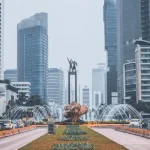
📷 Featured image by Eyestetix Studio on Unsplash.