On this page
- Domestic Flights: Crossing the Archipelago Fast
- Jakarta’s Urban Rail Network: MRT, LRT Jabodebek, and KRL
- Trans-Jakarta BRT: The Bus Network That Fills the Gaps
- Intercity Trains on Java: KAI and the Whoosh High-Speed Rail
- Ride-Hailing with Gojek and Grab
- Getting Between Islands by Sea: PELNI Ferries and Fast Boats
- Traditional Local Transport: Becak and Bajaj
- 2026 Budget Reality: What Transport Actually Costs
- Common Mistakes Travelers Make Getting Around Indonesia
- Frequently Asked Questions
Indonesia covers more than 5,000 kilometres from west to east and spreads across over 17,000 islands. That scale is what makes transport planning genuinely confusing for first-time visitors — and even for people who have been here before. In 2026, the situation is better than it has ever been: Jakarta’s rail network has expanded, ride-hailing apps work in dozens of cities, and inter-island ferry booking is finally easier online. But prices have shifted since 2024, some routes have changed, and a few old habits — like assuming you can just turn up and buy a train ticket — will leave you stranded. This guide cuts through all of it.
Domestic Flights: Crossing the Archipelago Fast
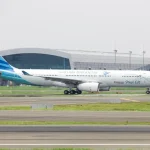
For any journey that crosses the water between major islands — Jakarta to Bali, Bali to Makassar, Surabaya to Manado — a Domestic flight is almost always the most practical option. The four carriers that handle the bulk of routes in 2026 are Garuda Indonesia (full-service, [https://www.garuda-indonesia.com/](https://www.garuda-indonesia.com/)), Citilink (Garuda’s low-cost subsidiary, citilink.co.id), Lion Air (the largest low-cost carrier, lionair.co.id), and Batik Air (Lion Air’s full-service arm, batikair.com). Regional operators fill smaller routes that these four do not cover.
Booking directly through airline apps or websites usually gives you the clearest fare breakdown. Indonesian OTAs — Traveloka, Tiket.com, and Agoda — are also reliable and let you compare carriers side by side. Traveloka in particular has a well-designed interface for filtering by baggage inclusion, which matters because low-cost fares on Lion Air and Citilink often come with 15–20 kg checked allowance while Garuda and Batik Air typically include 20–30 kg. Excess baggage fees start from around IDR 60,000 per kilogram, so weigh your bags before you leave your accommodation.
On popular routes, prices swing dramatically with demand and booking lead time. Jakarta (CGK) to Bali (DPS) runs from IDR 750,000 to IDR 2,500,000 one-way in economy. Jakarta (CGK) to Surabaya (SUB) costs IDR 600,000 to IDR 1,800,000 one-way. Those lower figures exist — but only if you book weeks ahead and avoid travelling over Eid al-Fitr, Christmas, or New Year, when every seat fills and fares spike hard. Dynamic pricing has intensified since 2024, so the same seat can cost three times as much if you wait too long.
Jakarta’s Urban Rail Network: MRT, LRT Jabodebek, and KRL
Jakarta’s public rail system in 2026 is genuinely usable in a way it was not five years ago. Three overlapping networks now cover most of the city and its suburbs, and they share a common ticketing infrastructure that makes switching between them straightforward.
Jakarta MRT
The North-South Line runs between Lebak Bulus Grab in the south and Bundaran HI in the city centre. Trains run from around 05:00 to 24:00, every 5 minutes during peak hours and every 10 minutes off-peak. The Phase 2A extension pushing north toward Kota is under construction, with partial operations toward Harmoni expected around late 2026 or early 2027 — worth checking jakartamrt.co.id for the latest update before your trip. Fares are distance-based, ranging from IDR 3,000 to IDR 14,000. The full end-to-end journey from Lebak Bulus Grab to Bundaran HI costs IDR 14,000.
LRT Jabodebek
Fully operational since 2023, LRT Jabodebek connects Dukuh Atas in central Jakarta with Cibubur and Jati Mulya in Bekasi. This is the line to use if you are staying in East Jakarta or travelling from Bekasi. Fares start at IDR 5,000 for the first kilometre and add IDR 700 per subsequent kilometre, capped at IDR 27,000. Separate from this is the smaller LRT Jakarta line (Velodrome to Pegangsaan Dua), which runs a flat IDR 5,000 fare.

KRL Commuter Line
The KRL network is the oldest and most extensive of the three, running electric commuter trains across Jabodetabek — Jakarta, Bogor, Depok, Tangerang, and Bekasi. Trains operate from around 04:00 to 24:00. Fares are distance-based: IDR 3,000 for the first 25 km, then IDR 1,000 for every additional 10 km. This is the cheapest way to get from central Jakarta to Bogor, for example.
Ticketing Across All Three
All three networks accept the same e-money cards: Flazz (BCA), TapCash (BNI), Brizzi (BRI), and e-Money (Mandiri). Cards cost around IDR 20,000–30,000 to buy (card only, without balance) at minimarts like Indomaret or Alfamart, or at bank branches. Top up at station machines, minimarts, or through mobile banking. The Jak Lingko card works across MRT, LRT Jakarta, and Trans-Jakarta. For KRL and LRT Jabodebek, the KAI Commuter Multi Trip Card (KMT) — purchased at any KRL station for IDR 30,000 including IDR 10,000 balance — is also accepted. QR code payment via the MRT-J app, KAI Access app, GoPay, OVO, Dana, ShopeePay, and LinkAja works on all lines too.
Trans-Jakarta BRT: The Bus Network That Fills the Gaps
Jakarta’s MRT and LRT lines are excellent but they do not go everywhere. Trans-Jakarta’s Bus Rapid Transit system, with its dedicated bus lanes cutting across the city in all directions, plugs those gaps. Most main corridors run 24 hours, with reduced frequency after midnight.
The flat fare is IDR 3,500 regardless of distance or how many route changes you make within the system. That is genuinely good value for a city Jakarta’s size. There is one important rule: Trans-Jakarta is cashless only. You need an e-money card (Flazz, TapCash, Brizzi, or e-Money) or a Jak Lingko card. You cannot pay with cash or scan a QR code at most bus stops — the system uses tap-in, tap-out gates at enclosed bus shelters.

To use it: top up your card, tap at the entrance gate of the bus shelter to enter, board the bus, and tap out at the exit gate of your destination shelter. The Jak Lingko integration means a single tap-in can cover a transfer to the MRT or LRT within a set time window, saving you from paying twice. Check transjakarta.co.id for the current corridor map before navigating — the network looks complex at first but becomes logical once you identify the trunk corridors.
Intercity Trains on Java: KAI and the Whoosh High-Speed Rail
For travelling between cities on Java — Jakarta to Bandung, Jakarta to Yogyakarta, Yogyakarta to Surabaya — the train is almost always the better choice over a bus or private car. Air-conditioned, on time (increasingly), and departing from city-centre stations rather than outer-ring bus terminals.
Standard KAI Services
PT Kereta Api Indonesia (KAI) runs intercity trains in three classes. Economy class offers basic seating in a 3-2 configuration. Business class upgrades you to reclining seats in a 2-2 layout. Executive gives you more legroom, better recline, power outlets, and the quietest ride — worth it on journeys over four hours. Journey times on popular routes: Jakarta (Gambir station) to Bandung around 3 hours, to Yogyakarta around 6–7 hours, and Jakarta (Pasar Senen) to Surabaya around 9–11 hours.
Fares vary by class, route, booking timing, and demand. Jakarta to Bandung in Executive costs IDR 150,000–250,000. Jakarta to Yogyakarta in Executive runs IDR 300,000–550,000. Jakarta to Surabaya in Executive ranges from IDR 450,000–800,000. Booking opens 90 days in advance, and popular trains — particularly Friday afternoons and Sunday evenings — sell out weeks ahead.

Book through the KAI Access app (the smoothest option), the official website at kai.id, or at Indomaret and Alfamart counters (a small booking fee applies at minimarts). You will need to register an account with your passport details before your first booking.
Whoosh High-Speed Rail: Jakarta to Bandung in 45 Minutes
The Whoosh high-speed rail service between Jakarta Halim station and Bandung (Padalarang/Tegalluar) is now fully operational in 2026, covering the route in approximately 45 minutes compared to 3 hours by conventional train. This is a significant change from 2024, when the service was still in its early rollout phase. Fares sit above KAI standard prices but the time saving is substantial for business travellers or anyone with a tight itinerary in Bandung. Check kai.id for current Whoosh schedules and fares.
Ride-Hailing with Gojek and Grab
In any Indonesian city of meaningful size, Gojek and Grab are how most people move around day to day. Both apps work the same way: open the app, enter your destination, choose a bike (GojekBike / GrabBike) or car (GoCar / GrabCar), see the upfront fare estimate, confirm the booking, and wait for your driver. The fare is shown before you commit, which eliminates the haggling that came with traditional taxis.
Motorbike rides (ojek) make the most sense for solo travellers, short distances, and Jakarta traffic that would turn a 3 km car ride into a 25-minute crawl. A 5 km motorbike trip costs roughly IDR 12,000–25,000. A 5 km car trip runs IDR 25,000–45,000. Both figures go up during surge pricing — rain, rush hour, and large events trigger it. If a fare looks unusually high, close the app for a few minutes and retry.
Payment by cash is accepted by most drivers, but paying through GoPay (Gojek’s built-in wallet) or GrabPay Credits often unlocks promotional discounts. OVO, Dana, ShopeePay, and LinkAja are also accepted within both apps. Coverage extends well beyond Jakarta in 2026 — Gojek and Grab operate in Bandung, Surabaya, Yogyakarta, Bali, Medan, Makassar, and many smaller cities. In Bali, GrabCar is especially useful for airport transfers and longer drives between Seminyak and Ubud, where the heat makes walking impractical and the roads are too winding for a motorbike if you are carrying bags.

Both platforms have tightened driver background checks since 2024 and expanded electric vehicle fleets in major metro areas. The experience in Jakarta and Bali now includes a visible driver rating, license plate confirmation, and an in-app safety button — use the app rather than flagging down a street-side motorbike for a random fare, which carries no price protection or accountability.
Getting Between Islands by Sea: PELNI Ferries and Fast Boats
PELNI for Long-Haul Island Crossings
PELNI (Pelayaran Nasional Indonesia) runs the backbone of Indonesia’s inter-island passenger shipping network, connecting ports from Sumatra across to Papua. If you are heading somewhere a plane cannot reach economically, PELNI likely has a route. Voyages range from a few hours to several days at sea depending on the destination.
Economy class means dormitory-style bunk beds shared with other passengers — think overnight ferry, not cruise ship. Some vessels offer private cabins in Class 1, 2, or 3 at higher prices. Economy fares are affordable: Jakarta to Surabaya by sea costs around IDR 250,000–350,000. Makassar to Ambon runs IDR 400,000–600,000 in economy. Book through PELNI offices at major ports, online at pelni.co.id, or through select OTAs for popular routes. Schedules are irregular and weather-dependent — always verify departure times directly on the PELNI website before travelling, not from third-party sources that may have outdated information.

Since 2024, PELNI has been modernising its fleet, and several routes now operate newer vessels with better ventilation, cleaner facilities, and improved online booking. The core experience remains a slow, affordable, and genuinely Indonesian way to cross the archipelago.
Fast Boats for Bali, Lombok, and the Gili Islands
For the Bali–Lombok–Gili triangle, fast boats operated by private companies are the standard choice. The crossing from Bali to Gili Trawangan takes roughly 1.5–2.5 hours depending on the departure port and sea conditions. Main Bali departure points include Padang Bai, Sanur, and Serangan. The Gili islands (Trawangan, Meno, Air) and Lombok (Bangsal, Senggigi) are the primary destinations, with some services also calling at Nusa Lembongan.
Established operators include BlueWater Express (bluewater-express.com), Gili Getaway (giligetaway.com), and Scoot Fast Cruises. Fares for a one-way Bali to Gili Trawangan crossing run IDR 400,000–700,000. Return tickets are usually slightly cheaper than two separate one-way purchases. Book online in advance through operator websites or aggregators — turning up at the harbour on the day is possible but not recommended in peak season (July, August, and the Christmas–New Year period), when boats fill completely.
Maritime safety regulations tightened after 2024 following enforcement reviews. Reputable operators now carry required safety equipment, have maintained vessels, and provide life jackets before departure. Avoid anonymous kiosk operators offering unusually low fares — the saving is not worth the risk on a stretch of water that can get choppy quickly.
Traditional Local Transport: Becak and Bajaj
The becak — a pedal-powered three-wheeled rickshaw where you sit in front while the driver pedals behind — and the bajaj — a motorised orange three-wheeler found mainly in Jakarta — occupy a niche that ride-hailing has not fully replaced. You will encounter becak most often in smaller cities, tourist areas like Yogyakarta’s Kraton district, and residential side streets where motorbikes cannot easily manoeuvre. In Jakarta, bajaj persist around Kota Tua (Old Town) and Glodok.

There are no meters on either vehicle. Negotiate the fare before you get in, always. A short 1–2 km ride costs IDR 15,000–50,000 depending on where you are and how confidently you bargain. In tourist areas, the initial quoted price is almost always two to three times higher than what a local would pay — counter-offer at roughly half and settle somewhere in the middle. The becak driver pedalling you slowly through the batik-scented lanes near Yogyakarta’s Malioboro at dusk is genuinely one of the more pleasant travel experiences on Java, and at IDR 30,000 for 20 minutes, it is hard to argue against it.
Their presence in central Jakarta has declined significantly as urban development and ride-hailing have squeezed their operating space. Some city areas have introduced zoning restrictions on becak. Think of them now as a charming last-mile option and occasional tourist experience rather than a primary transport mode.
2026 Budget Reality: What Transport Actually Costs
Prices across all categories have seen moderate increases since 2024, primarily driven by fuel adjustments and inflation. Here is a realistic breakdown by tier.
Budget Traveller
- City transport: Trans-Jakarta BRT at IDR 3,500 flat fare; KRL commuter from IDR 3,000; MRT from IDR 3,000
- Intercity train (Economy class): Jakarta–Yogyakarta from around IDR 150,000–200,000
- Domestic flight (booked 4+ weeks ahead, low-cost): CGK–DPS from IDR 750,000
- Ojek (Gojek/Grab motorbike): IDR 12,000–25,000 for short trips
- PELNI ferry (Economy): IDR 250,000–600,000 depending on route
Mid-Range Traveller
- Gojek/Grab car trips: IDR 25,000–80,000 per trip
- Intercity train (Business/Executive): IDR 250,000–550,000
- Domestic flight (standard booking, 2–3 weeks ahead): IDR 1,000,000–1,500,000
- Fast boat Bali to Gili Trawangan: IDR 400,000–550,000
Comfortable Traveller
- Domestic flight (flexible dates, full-service Garuda/Batik Air): IDR 1,500,000–2,500,000+
- Whoosh high-speed rail Jakarta–Bandung: Premium fare above standard KAI Executive
- Private car hire with driver (full day in Bali): IDR 600,000–1,000,000
- Fast boat with reputable operator, peak season: Up to IDR 700,000 one-way

Common Mistakes Travelers Make Getting Around Indonesia
Buying train tickets at the station on the day. KAI trains on popular routes sell out 2–4 weeks in advance for good seats. Download the KAI Access app and register before your trip, not after you arrive in Jakarta with nowhere to go.
Carrying no e-money card in Jakarta. Trans-Jakarta is cashless. Several MRT and LRT entry points are also awkward to pay with cash. Pick up a Flazz or TapCash card from any Indomaret on your first day and top it up with IDR 50,000.
Assuming ride-hailing works everywhere. In remote areas — parts of West Papua, small islands, rural Kalimantan — Gojek and Grab simply do not operate. Research local transport options before you leave the city, and carry enough cash for ojek or hired vehicles arranged at your accommodation.
Not confirming PELNI departure times. Schedules on third-party sites are frequently outdated. PELNI voyages can be delayed by 12–24 hours or rescheduled without much warning. Check pelni.co.id directly, and if possible call the port office the day before departure.
Booking fast boats from a random harbour kiosk. In Bali and Lombok, unofficial touts near harbours offer fast boat tickets at lower prices than established operators. The risks — poorly maintained vessels, no proper safety equipment — are real. Stick to operators with online booking systems and visible safety records.
Forgetting about surge pricing. Gojek and Grab prices spike during Jakarta evening rush hour (roughly 17:00–19:30), during rain, and near event venues after concerts or matches. If your budget is tight, walk to a slightly different pickup point 200 metres away — the algorithm accounts for your location and distance from driver clusters.

Frequently Asked Questions
What is the cheapest way to get from Jakarta to Bali?
A domestic flight booked 3–6 weeks in advance on Lion Air or Citilink is the cheapest realistic option, starting from around IDR 750,000 one-way. There is no practical overland-and-ferry option between Java and Bali that competes on total time and cost for most travellers.
Do I need cash to use public transport in Jakarta?
For Trans-Jakarta BRT, you need an e-money card — cash is not accepted at bus stops. For MRT, LRT, and KRL, e-money cards or QR code payment through apps like GoPay, OVO, or the MRT-J app all work. Buy a Flazz or TapCash card at any Indomaret on arrival and top it up as needed.
How far in advance should I book KAI intercity trains?
Booking opens 90 days before departure. For travel on weekends, public holidays, or over Eid al-Fitr and Christmas, book as early as possible — popular Executive class seats on routes like Jakarta–Yogyakarta can sell out within days of the booking window opening. Use the KAI Access app for the fastest booking experience.
Is the Whoosh high-speed train worth it compared to the regular train to Bandung?
If your time in Bandung is limited or you are connecting to another journey, yes — 45 minutes versus 3 hours is a significant difference. The fare is higher than standard Executive class, but for a day trip from Jakarta or a tight schedule, Whoosh genuinely changes what is feasible. Check current fares at kai.id before deciding.
Are fast boats between Bali and the Gili Islands safe?
Reputable operators with established safety records are generally safe. Since 2024, maritime safety enforcement has tightened, and established operators like BlueWater Express and Gili Getaway carry the required equipment and maintain their vessels. Avoid booking through unverified harbour touts or operators with no online presence, particularly outside of peak season when cheaper but less maintained boats are more likely to be used.
📷 Featured image by Alviansyah Kuswidyatama on Unsplash.