On this page
- Which Islands Actually Deserve the “Hidden” Label in 2026
- Banda Islands — Nutmeg, History, and Almost No One Else
- Morotai — War Relics, Coral Gardens, and a New Airport Changing Everything
- Belitung — Granite Boulders, White Sand, and the Day-Trip vs. Overnight Question
- Savu and Raijua — For Travellers Who Mean It
- Getting There: Flights, Ferries, and the New 2026 Routes
- 2026 Budget Reality — What These Islands Actually Cost
- Food on the Outer Islands — What and Where to Eat
- Practical Tips That Actually Matter Out Here
- Frequently Asked Questions
💰 Click here to see Indonesia Budget Breakdown
💰 Prices updated: September, 2026. Budget figures are estimates — always verify before travel.
Exchange Rate: $1 USD = Rp17,928.47
Daily Budget (per person)
Shoestring: Rp358,569 – Rp896,424 ($20.00 – $50.00)
Mid-range: Rp1,254,993 – Rp2,689,271 ($70.00 – $150.00)
Comfortable: Rp2,689,271 – Rp4,482,118 ($150.00 – $250.00)
Accommodation (per night)
Hostel/guesthouse: Rp71,714 – Rp179,285 ($4.00 – $10.00)
Mid-range hotel: Rp448,212 – Rp896,424 ($25.00 – $50.00)
Food (per meal)
Budget meal: Rp26,893.00 ($1.50)
Mid-range meal: Rp143,428.00 ($8.00)
Upscale meal: Rp537,854.00 ($30.00)
Transport
Single metro/bus trip: Rp3,500.00 ($0.20)
Monthly transport pass: Rp200,000.00 ($11.16)
Bali handled around 6.3 million international arrivals in 2025, and by mid-2026 the pressure on Seminyak, Ubud, and Canggu is showing in longer queues, higher prices, and a creeping sense that the island’s quieter soul has retreated somewhere further east. The good news is that Indonesia has 17,000 islands. The uncomfortable truth is that maybe 30 of them see any meaningful tourism at all. That gap — between what exists and what most travellers ever see — is where the real country lives. This guide focuses on the islands that are genuinely worth the extra effort in 2026, with specific detail on how to reach them, what they cost, and what you will actually find when you arrive.
Which Islands Actually Deserve the “Hidden” Label in 2026
The word “hidden” gets stretched far too thin in travel writing. Gili Trawangan is not hidden. Neither is Nusa Penida, which now receives ferry traffic that rivals some domestic airports. For the purposes of this guide, an island qualifies if it has no international direct flights, limited accommodation that sits under 50 rooms total across the island, and a local population that still outnumbers tourists on any given weekday.
By that measure, the islands that genuinely hold up in 2026 are concentrated in three regions: the Maluku archipelago in the east, the Nusa Tenggara chain stretching toward Timor, and the Bangka-Belitung group off Sumatra’s southeast coast. Each region offers something structurally different — Maluku gives you history and diving, Nusa Tenggara gives you raw, arid landscapes and traditional culture, and Bangka-Belitung gives you accessibility without the crowds, at least for now.
A few islands that were genuinely obscure in 2022 have since crossed into mainstream awareness. Sumba is one of them. Raja Ampat, while still spectacular, is no longer a secret by any definition — new luxury eco-lodges have pushed entry costs up significantly and the Indonesian government introduced a marine entry fee increase in early 2026. These places are still worth visiting, but they belong to a different category now.

Banda Islands — Nutmeg, History, and Almost No One Else
The Banda Islands sit in the Banda Sea, roughly 140 kilometres southeast of Ambon in Maluku. At their peak in the 17th century, they were the only place on earth where nutmeg grew, making them the most valuable real estate in the world. The Dutch, English, and Portuguese fought and killed for control of these ten small islands. Today, the total population across the archipelago is around 20,000 people, and on a busy week in high season, you might share the islands with 60 to 80 foreign travellers.
Banda Neira is the main island and the place you will arrive at. The fort there — Fort Belgica — sits on a hill above town and is in better condition than most colonial fortifications in Indonesia. Walking up at late afternoon, the light turns the old Dutch walls amber and the Banda Sea stretches out below in every direction, a deep blue interrupted only by the perfect cone of Gunung Api, the active volcano that last erupted in 1988. That view costs nothing and takes about fifteen minutes.
Below the surface is where Banda becomes extraordinary. The walls around the Banda Islands drop steeply into deep water, and the lack of commercial fishing pressure means the marine life is dense and largely undisturbed. Reef sharks, napoleons, and schooling barracuda are common. Visibility regularly exceeds 30 metres. There are a handful of dive operators based in Banda Neira — most are small, locally run, and charge between Rp 400,000 and Rp 650,000 per dive including equipment rental.
The nutmeg trade still exists in a small way. Walking through the perkeniers — the old Dutch plantation estates now mostly overgrown — you catch the sweet, slightly medicinal scent of nutmeg ripening in the heat. It is one of those smells that anchors a place in memory long after you leave.
Morotai — War Relics, Coral Gardens, and a New Airport Changing Everything
Morotai is in North Maluku, just south of the Philippines. During World War II it was a major Allied base — General MacArthur launched operations from here, and the island’s jungle and shallow bays still hold the physical evidence: sunken landing craft, Sherman tanks visible through clear water, and rusting ordnance half-buried in beach sand. For a certain kind of traveller, this is one of the most compelling wreck diving destinations in all of Southeast Asia.
What changed in 2026 is the airport. Morotai’s Leo Wattimena Airport completed its runway extension in late 2025, and Wings Air now operates direct connections from Ternate three times a week. Previously, reaching Morotai involved a ferry from Tobelo that was unreliable in rough weather. The new routing cuts travel time significantly and has made the island reachable as a four-to-five day trip rather than requiring a full week minimum.
This is genuinely good news, but it comes with a caveat: infrastructure on the island remains basic. The main town of Daruba has a small market, a few warungs, and three guesthouses that range from acceptable to very simple. Electricity runs on a generator schedule in some areas. Mobile data coverage from Telkomsel exists in Daruba but drops off quickly outside town. If you need reliable connectivity, bring a physical task list and download everything offline before you arrive.

The beaches on Morotai’s west coast — particularly around Tanjung Sopi — are genuinely stunning: white sand, no development, clear water over coral that starts almost at the shoreline. Snorkelling here without a guide is fine; the entry points are obvious and the currents are mild.
Belitung — Granite Boulders, White Sand, and the Day-Trip vs. Overnight Question
Belitung sits off the southeast coast of Sumatra, about 400 kilometres northeast of Jakarta. It became widely known in Indonesia after the 2008 film Laskar Pelangi was set here, but international awareness has remained relatively low. The island’s signature landscape — enormous smooth granite boulders scattered across white beaches and turquoise shallows — is legitimately unlike anything else in Indonesia.
Tanjung Tinggi Beach is the image you will have seen if you have searched for Belitung at all: stacked granite formations rising from perfectly clear water, with almost no wave action because the offshore islands break the swell. In person it holds up. The water is the kind of clear that makes you double-check you are not looking at glass.
Day Trip or Overnight?
Belitung is connected to Jakarta by direct flights — Batik Air and Citilink both operate the route, with flight times around one hour. This makes it technically viable as a day trip from Jakarta, and some domestic tour operators sell it that way. That approach is a mistake. The eastern coast of Belitung, around Tanjung Kelayang and the offshore islands of Pulau Lengkuas and Pulau Babi, requires at least a half day of boat time to explore properly. The lighthouse on Pulau Lengkuas is a 19th-century structure you can climb, and the snorkelling around its base involves more marine life than the main beach areas.

Two nights minimum is the honest recommendation. Stay in Tanjung Kelayang rather than in the main town of Tanjung Pandan — it puts you closer to the boat departure points and the better beaches, and the accommodation options in that area have improved noticeably since 2024, with several new mid-range guesthouses opening along the coast road.
Savu and Raijua — For Travellers Who Mean It
Savu (also spelled Sabu) and its tiny neighbour Raijua sit in the Savu Sea, west of Timor. They are among the driest inhabited islands in Indonesia — the landscape in the dry season looks more like the Australian outback than a tropical island, all brown grass, lontar palms, and red earth. The islands are known for ikat weaving of exceptional quality, a strong tradition of traditional animist belief running alongside Christianity, and a surfing wave at Raijua that has been quietly circulating among serious surfers for about a decade without ever going fully public.
Getting here is the filter that keeps the crowds away. From Kupang (West Timor), there is a small aircraft operated by Susi Air that connects to Savu’s airstrip — but schedules change seasonally and booking requires either a local travel agent in Kupang or direct phone contact with the airline. The ferry from Waingapu (Sumba) takes roughly 12 hours and runs twice a week. Neither option is plug-and-play.
Raijua is reached by a local boat from Savu’s main town of Seba — a crossing of around two hours that depends on sea conditions. There is one homestay on Raijua that receives foreign guests. One. It is run by a local family and costs around Rp 250,000 per night including meals. The surf at the point break off Raijua’s west coast peels for long, clean rides in the dry season (June through September) with almost zero competition in the water.

Savu and Raijua are not for travellers who want comfort or certainty. They are for travellers who can tolerate logistical ambiguity and genuinely want to see a place that has not been packaged for outside consumption.
Getting There: Flights, Ferries, and the New 2026 Routes
The domestic aviation map shifted meaningfully in late 2025 and early 2026. Garuda Indonesia restructured several regional routes after its post-pandemic recalibration, but Wings Air and TransNusa have expanded to cover gaps, particularly in Maluku and Nusa Tenggara Timur. Key route updates relevant to the islands in this guide:
- Banda Islands: Fly to Ambon (Pattimura Airport) from Jakarta, Makassar, or Surabaya. Ambon now has direct connections from Singapore via Batik Air Malaysia as of early 2026. From Ambon, take the twice-weekly fast boat (roughly 8 hours) or charter a small plane through a local aviation agent — the airstrip on Banda Neira handles small propeller aircraft.
- Morotai: Fly to Ternate (Sultan Babullah Airport) from Jakarta, Makassar, or Manado, then take Wings Air to Morotai. Alternatively, fly to Galela in North Halmahera and take a vehicle to Tobelo, then ferry — this option is slower but cheaper by about 30 percent.
- Belitung: Direct flights from Jakarta (Soekarno-Hatta) with Citilink and Batik Air to Hanandjoeddin Airport in Tanjung Pandan. Flight time is approximately 55 minutes. Budget fares start around Rp 400,000 one way if booked two to three weeks in advance.
- Savu: Fly Kupang from Bali, then Susi Air or charter to Savu. Alternatively, take the weekly ASDP ferry from Waingapu.
The Trans-Java toll road expansion is not relevant to any of these islands, but the upgraded Makassar port (Pelabuhan Makassar) completed its Phase 2 expansion in 2025, which has improved the reliability of PELNI ferry schedules through eastern Indonesia significantly. If you are building a slow-travel multi-island route through Maluku, factoring in PELNI ships is now a more realistic option than it was two years ago.

2026 Budget Reality — What These Islands Actually Cost
Outer island travel in Indonesia carries a counterintuitive cost structure: getting there is expensive relative to the region, and accommodation is cheap, but food variety is limited and some supplies have to be shipped in, which raises prices on certain goods.
Banda Islands
- Budget: Rp 300,000–450,000 per night (basic guesthouse, fan room, shared bathroom). Street food and warung meals: Rp 20,000–50,000. Diving: Rp 400,000–650,000 per dive.
- Mid-range: Rp 600,000–900,000 per night (private bathroom, some offer air conditioning via generator).
- Comfortable: The one boutique property near Fort Belgica runs Rp 1,200,000–1,800,000 per night, breakfast included.
Morotai
- Budget: Rp 200,000–350,000 per night. Meals from local warungs: Rp 15,000–40,000. Expect limited menu options — rice, fish, tempeh.
- Mid-range: Rp 450,000–700,000 (the better guesthouses in Daruba, with private facilities).
- There is no comfortable-tier accommodation on Morotai in 2026. A resort has been announced but is not yet operational.
Belitung
- Budget: Rp 250,000–400,000 per night in Tanjung Pandan. Rp 350,000–500,000 near Tanjung Kelayang.
- Mid-range: Rp 550,000–900,000 (several newer properties with pools opened in 2024–2025).
- Comfortable: Rp 1,000,000–2,000,000 (a small number of boutique beach properties).
- Boat rental to explore the offshore islands: Rp 400,000–700,000 for a half-day charter, split among the group.
Savu and Raijua
- Homestay on Raijua: Rp 200,000–300,000 per night including meals.
- Seba guesthouses: Rp 150,000–280,000 per night.
- The cost of getting here — flights and ferries combined — will be the dominant expense, typically Rp 1,500,000–2,500,000 per person depending on routing.
Food on the Outer Islands — What and Where to Eat
Managing food expectations is one of the most practically useful things this guide can do. On Bali, you can eat Korean barbecue at midnight if you want. On Banda Neira, the warung near the market closes at 7 p.m. and the menu is whatever was caught that day.

In the Banda Islands, the local fish — kakap (snapper), tuna, and kerapu (grouper) — is exceptional, and the Bandanese style of grilling fish over coconut shell charcoal gives it a faint smokiness that is completely different from charcoal-grilled fish elsewhere in Indonesia. Order it with nasi and sambal colo-colo (a fresh Maluku sambal made with shallots, chilli, and key lime juice that hits sharp and clean). Bu Lina’s warung on the main road in Banda Neira has been feeding travellers for years and remains the most reliable place to eat on the island.
Belitung has a more developed food scene because of its domestic tourism base. The local specialty is mie Belitung — a yellow noodle soup with prawn, tofu, and cucumber served in a light, clear broth that is deceptively good. Find it at the night market in Tanjung Pandan, where stalls set up from around 5 p.m. A bowl costs Rp 20,000–35,000.
On Savu, food is simple and often communal. If you are staying with a local family, you eat what they eat: rice, dried fish, sometimes vegetables, occasionally meat during festivals. Bringing your own snack supplies from Kupang before the crossing is sensible, not rude.
Practical Tips That Actually Matter Out Here
These are not generic Indonesia travel tips. They are specific to the realities of visiting low-infrastructure islands in 2026.
- Cash is non-negotiable. ATMs exist on Belitung and in Banda Neira’s town centre, but they run out of cash during peak periods and are unreliable on smaller islands. Bring more IDR than you think you need, in small denominations. On Raijua there are no ATMs at all.
- Telkomsel or Smartfren SIM cards have the best outer island coverage. XL and Indosat drop out quickly beyond the main towns. Reload your credit before leaving the last major hub city.
- Dive certification matters in Maluku. Several dive sites in the Banda Sea and around Morotai involve currents and depth that require at least Open Water certification. Some operators will take uncertified snorkellers to shallower sites, but do not arrive expecting to be guided around the deep walls without a cert card.
- Rainy season timing: The outer eastern islands (Maluku, Savu, Morotai) are generally best visited April through October. Belitung’s rainy season peaks November through January, though the island is small enough that weather can shift quickly — and the wet season is low season, meaning accommodation prices drop 20–30 percent.
- Respect for local custom: Banda and the Maluku islands have a predominantly Muslim population. Savu and Raijua are predominantly Christian but with strong animist traditions woven in. Asking before photographing people, covering shoulders and knees in villages, and accepting offered food or drink gracefully — these matter more in places that see few outsiders than in high-tourist areas where locals have developed a tolerance for oblivious behaviour.
- Travel insurance that covers medical evacuation is not optional on these islands. The nearest hospitals with meaningful capacity are in Ambon (for Banda and Morotai), Tanjung Pandan (for Belitung), and Kupang (for Savu). Evacuation from a remote island is expensive and slow without a policy that covers it.

Frequently Asked Questions
Is it safe to travel to Indonesia’s outer islands as a solo traveller in 2026?
Yes, generally. The outer islands covered in this guide — Banda, Morotai, Belitung, and Savu — have stable security situations and low crime rates. The main risks are logistical rather than personal: missed ferries, weather delays, and limited medical access. Solo travellers should carry a local SIM, have emergency contacts registered, and hold travel insurance with evacuation cover.

How far in advance should I book accommodation on Banda Neira?
At least six to eight weeks ahead for July through September travel. Banda Neira has fewer than 120 guesthouse beds across the island, and the combination of diving tourists, Indonesian domestic visitors, and researchers fills rooms quickly in peak season. Outside that window, two to three weeks is usually sufficient.
Can I visit Morotai without being a diver or war history enthusiast?
You can, but the island’s strongest appeal is tied to its underwater wrecks and WWII history. The beaches are beautiful and the snorkelling over the shallow wrecks is accessible without certification. If you want tropical beach relaxation with more amenities and food options, Belitung is a more comfortable fit for a non-specialist traveller.
What is the best way to get from Bali to Belitung?
There is no direct Bali-to-Belitung flight in 2026. The standard routing is Bali to Jakarta (under two hours), then Jakarta to Belitung (under one hour). Budget for a layover of two to four hours in Jakarta. The full journey from Bali, including transit, typically takes five to seven hours depending on connection timing. Total flight costs start around Rp 700,000–1,200,000 one way when booked in advance.
Do I need a visa to visit Indonesia’s outer islands as a foreign traveller?
Visa rules apply at the national level, not per island. Most nationalities enter Indonesia visa-free for 30 days under the 2026 Free Visa policy, or can obtain a Visa on Arrival at major entry points (Jakarta, Bali, Surabaya, Makassar, Manado, Ambon). You do not clear customs again when moving between domestic islands — your entry visa covers the whole country for its duration.
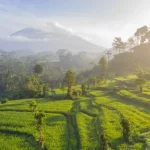
📷 Featured image by Denissa Devy on Unsplash.