On this page
- Why Semarang Deserves Two Full Days
- Day 1 — Kota Lama, the Dutch Colonial Quarter
- Day 2 — Temples, Hills, and a Harbour View
- Where to Eat in Semarang
- Getting to Semarang in 2026
- Getting Around the City
- 2026 Budget Reality — What to Expect to Spend
- Day Trip or Overnight?
- Practical Tips Before You Go
- Frequently Asked Questions
💰 Click here to see Indonesia Budget Breakdown
💰 Prices updated: September, 2026. Budget figures are estimates — always verify before travel.
Exchange Rate: $1 USD = Rp17,928.47
Daily Budget (per person)
Shoestring: Rp358,569 – Rp896,424 ($20.00 – $50.00)
Mid-range: Rp1,254,993 – Rp2,689,271 ($70.00 – $150.00)
Comfortable: Rp2,689,271 – Rp4,482,118 ($150.00 – $250.00)
Accommodation (per night)
Hostel/guesthouse: Rp71,714 – Rp179,285 ($4.00 – $10.00)
Mid-range hotel: Rp448,212 – Rp896,424 ($25.00 – $50.00)
Food (per meal)
Budget meal: Rp26,893.00 ($1.50)
Mid-range meal: Rp143,428.00 ($8.00)
Upscale meal: Rp537,854.00 ($30.00)
Transport
Single metro/bus trip: Rp3,500.00 ($0.20)
Monthly transport pass: Rp200,000.00 ($11.16)
Most travellers passing through Semarang treat it like a corridor — a place to catch a connecting train to Yogyakarta or a flight onward to Bali. That’s a mistake. In 2026, Semarang has become one of Central Java’s most rewarding city breaks, with Kota Lama’s restored Dutch colonial district now fully walkable after years of flood-mitigation infrastructure work completed in late 2024. If you’ve been putting Semarang off because it “doesn’t have much,” this guide is for you.
Why Semarang Deserves Two Full Days
Semarang sits on the north coast of Java, capital of Central Java province, and it carries a layered history that most visitors completely miss. The city was a major Dutch East Indies trading port, and that past is still physically present — in church facades, warehouse facades, and narrow tiled corridors that haven’t changed much since the 1800s. But Semarang isn’t frozen in time. Alongside the colonial quarter, you have active Chinese temples that smell of sandalwood smoke, a hillside neighbourhood with some of the best views in Java, and a food culture that is genuinely different from Yogyakarta or Solo — sharper, more coastal, more eclectic.
Two days gives you enough time to walk Kota Lama properly, visit the major landmarks without rushing, eat well twice, and leave with a real sense of the city rather than just a selfie in front of a Dutch church.
Day 1 — Kota Lama, the Dutch Colonial Quarter
Start your morning at Taman Srigunting, the central park of Kota Lama. Get there before 9:00 — the light is soft, the square is quiet, and the surrounding buildings look their best before the heat of the day sets in. The restored facades of the old warehouses and trading houses line the streets in faded ochre and dusty cream, and the silence in the early morning makes it feel like a film set.
From the park, walk west toward Gereja Blenduk, Semarang’s most photographed landmark — a Dutch Reformed church from 1753 with a distinctive copper dome that has turned a muted green with age. The interior is open most mornings; step inside for the cool air and the old wooden pews worn smooth by two centuries of congregation.
Spend the late morning exploring the side streets of Kota Lama on foot. Many of the old VOC-era warehouses have been converted into cafes, small galleries, and boutique shops since the district’s revitalisation push. The area around Jalan Letjen Suprapto has particularly well-preserved streetscapes. Look for the iron drainage covers set into the cobblestones — some still bear Dutch foundry markings from the 1800s.
In the afternoon, head to Klenteng Sam Poo Kong, about 4 kilometres southwest of Kota Lama. This is one of the most important Chinese temples in Java, built on the site where the Chinese Muslim explorer Zheng He reportedly sheltered during a storm in the 15th century. The complex is enormous — red pavilions, giant incense coils hanging from the ceilings, and a constant low murmur of prayer. The air inside is thick with sandalwood smoke, and the colours are dazzling even on an overcast day.
End Day 1 with a walk along Kali Semarang, the river canal that runs through Kota Lama. The flood-mitigation works finished in 2024 have transformed this area — the canal embankments are now clean, lit at night, and lined with small food stalls that open from around 17:00. It’s a genuine evening gathering spot for local families, not a tourist construction.
Day 2 — Temples, Hills, and a Harbour View
Day 2 takes you out of Kota Lama and into two contrasting parts of the city. Start the morning at Lawang Sewu — the “Thousand Doors” building, a former Dutch colonial railway headquarters from 1904 that is now a museum. The building’s corridors are long, arched, and slightly eerie, especially the basement levels that served various grim purposes during the Japanese occupation. Allow 90 minutes to explore it properly. Entry is Rp 20,000.
From Lawang Sewu, take an online ojek up to Candi Gedong Songo — this requires a 45-minute drive south into the highlands near Ungaran. The name means “nine temple compounds,” and they are spread across a volcanic hillside at roughly 1,200 metres elevation. The air is noticeably cooler, smelling faintly of sulphur from nearby fumaroles. The temples themselves date from the 8th and 9th centuries and the walk between them takes about two hours at a comfortable pace. The views across the Central Java highlands on a clear morning are exceptional.
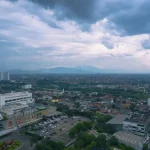
Return to the city in the afternoon and finish at Bukit Simongan or the viewpoint near Gombel Hill for a late-afternoon perspective over the city and the Java Sea. The harbour visible in the distance is Tanjung Emas, Semarang’s working commercial port — a reminder that this city still functions as a major trade hub, just as it did under the Dutch.
Where to Eat in Semarang
Semarang’s food is one of its strongest arguments for an overnight stay. The city’s signature dish is lumpia Semarang — a spring roll filled with bamboo shoots, egg, and shrimp or pork, served with sweet soy sauce and fresh chilli. It’s nothing like the lumpia you get elsewhere in Java. The filling is wetter, more savoury, and the wrapper is thinner. The best versions come from Lumpia Gang Lombok on Jalan Gang Lombok in the old Pecinan (Chinatown) district — a stall that has operated from the same spot for decades.
For breakfast on both mornings, find a warung serving nasi ayam Semarang — steamed rice with chicken in a rich coconut broth, topped with soy-braised egg and crispy shallots. It’s warming, savoury, and exactly what you want before a long day of walking. Several warungs around Jalan Imam Bonjol open by 06:30 and serve it until it sells out, usually by 09:00.
For an evening meal in a more relaxed setting, Ikan Bakar Cianjur near Simpang Lima square does grilled seafood that is straightforward and well-executed. Order the bawal bakar (grilled pomfret) with sambal matah and kangkung tumis. The fish comes to the table smelling of charcoal and lemongrass, and the sambal has a raw, sharp heat from fresh shallots and birds-eye chilli.
Getting to Semarang in 2026
By air: Ahmad Yani International Airport sits just 6 kilometres from the city centre — one of the most conveniently located airports in Java. In 2026, direct routes from Bali (Denpasar), Jakarta (Soekarno-Hatta and Halim), Surabaya, and Makassar operate daily. Flight time from Jakarta is under an hour. Grab or Gojek drivers are available directly outside the terminal.
By train: Semarang Tawang station (the main station, not Poncol) connects to Jakarta’s Gambir station via the Argo Muria and Argo Sindoro express services — journey time around 5.5 to 6 hours. From Yogyakarta, trains run regularly and take around 2 to 2.5 hours. The Trans-Java toll road has also improved intercity bus services significantly since 2024, with comfortable executive coaches from Yogyakarta taking under 3 hours.
Getting Around the City
Semarang’s city layout is not particularly walkable between districts, but within Kota Lama itself, walking is the only sensible option — the streets are too narrow and characterful for anything else. For moving between neighbourhoods, Gojek and Grab are both reliable and cheap. A ride from Kota Lama to Sam Poo Kong costs around Rp 15,000 to Rp 20,000.
The city’s BRT Trans Semarang bus network covers most major routes and costs Rp 4,000 flat fare. It’s slow but functional, and the Corridor 1 line connects the airport to the city centre. For the Gedong Songo trip, hire a driver for the day — negotiate a rate of around Rp 350,000 to Rp 450,000 for a half-day return trip including waiting time.
2026 Budget Reality — What to Expect to Spend
- Budget traveller (Rp 250,000–400,000/day): Guesthouse or budget hotel near Kota Lama, warung meals, BRT buses, temple entrance fees. Comfortable if you plan ahead.
- Mid-range (Rp 600,000–1,000,000/day): 3-star hotel, restaurant meals twice daily, Gojek for transport, half-day hired driver for Day 2 highlands trip.
- Comfortable (Rp 1,500,000+/day): Boutique heritage hotel in or near Kota Lama, full-day private car hire, sit-down seafood dinners, spa in the evening.
Hotel prices in 2026 range from Rp 150,000–250,000 for a clean guesthouse to Rp 600,000–900,000 for a well-reviewed 3-star property. The heritage boutique segment (converted colonial buildings) runs Rp 900,000–1,500,000 per night and has expanded since 2024 with several new openings in and near Kota Lama.
Day Trip or Overnight?
Semarang is sometimes attempted as a day trip from Yogyakarta — technically possible by train, but a poor use of your time. You’d arrive mid-morning, have four or five hours in the city, and leave feeling like you only scratched the surface. The train back to Yogyakarta departs in the early evening, which means you lose the best part of the day.
Two nights is the sweet spot. One night is enough if you’re genuinely tight on time — prioritise Kota Lama on the afternoon you arrive, Sam Poo Kong and Lawang Sewu the next morning, and leave after lunch. But if you can manage two nights, the second day’s highland excursion to Gedong Songo alone is worth the extra time.
Practical Tips Before You Go
- Semarang is coastal and humid — average temperatures sit around 28–32°C year-round. Pack light, breathable clothing and carry water.
- The rainy season (November–March) brings afternoon downpours. Kota Lama’s flood-mitigation infrastructure now handles light to moderate rain well, but flash flooding after heavy storms is still possible on lower streets near the canal.
- Most ATMs in Semarang are clustered around Simpang Lima and the main hotel corridors. Carry enough cash for a full day before heading to outer areas like Sam Poo Kong or Gedong Songo.
- Friday midday affects traffic around the main mosque near Simpang Lima — avoid scheduling transport at that time if you’re on a tight schedule.
- Indonesian tourist tax rules updated in 2025 do not apply to domestic city tourism — no additional levies for visiting Semarang’s attractions beyond standard entrance fees.
Frequently Asked Questions
Is Semarang worth visiting for 2 days?
Yes, genuinely. Two days gives you time to properly explore Kota Lama’s colonial streetscapes, visit Sam Poo Kong and Lawang Sewu, make the trip to Gedong Songo in the highlands, and eat your way through some of Central Java’s most distinctive food. It’s not a stretched itinerary — there’s enough to fill it without padding.
What is Kota Lama Semarang and why is it famous?
Kota Lama is Semarang’s Dutch colonial quarter, built during the VOC era in the 17th and 18th centuries. It contains some of the best-preserved colonial architecture in Java, including the 1753 Gereja Blenduk church. Major restoration and flood-mitigation works completed in 2024 have made it more accessible and walkable than it has been in decades.
How do I get from Yogyakarta to Semarang?
Train from Yogyakarta’s Tugu station to Semarang Tawang is the most comfortable option. Budget around Rp 80,000–150,000 for tickets depending on class and how far in advance you book.
What food should I try in Semarang?
Lumpia Semarang is the dish the city is most known for — bamboo shoot spring rolls that taste completely different from other regional versions. Nasi ayam Semarang (rice with coconut broth chicken) is the essential breakfast. Wingko babat, a flat coconut cake sold at the train station and markets, is the classic thing to bring home for others.
Is Semarang safe for solo travellers?
Semarang is generally safe for solo travellers, including women travelling alone. Kota Lama is well-lit and active in the evenings since the 2024 revitalisation. Standard precautions apply — keep valuables out of sight in crowded markets, use Grab or Gojek rather than unmarked taxis, and stay aware of your surroundings near the train station at night.
📷 Featured image by Geio Tischler on Unsplash.